The transformation of the notion of monuments and the way cultural institutions choose to deal with it find in Maurizio Cattelan an interpreter capable of manipulating historical memory and shared symbols, to the point of turning them into a terrain of doubt and play. Lisa Parola and Lorenzo Giusti investigate the potential of contemporary art within the public sphere.
This is a visual archive of 12 years of developing, designing and exhibiting the House of One, a multireligious sacred space in the heart of Berlin. The architecture, conceived by Kuehn Malvezzi, has been displayed at various venues while being developed in close collaboration with three local religious communities in Berlin since 2012.
The first major monograph on artist Jill Mulleady, whose paintings thread motifs of decay, memory, history, and private myth, featuring humans and animals enacting their instinctive psychological reactions to ever-present threats of danger.
The essays in this first-ever monograph dedicated to Swiss artist Jan Vorisek, alongside image portfolios of the exhibitions they explore and an appendix that features photos and documentation of Vorisek’s performances, recordings and ephemera, grant us unprecedented access to the private fictions that the work reveals.
Since the 1990s Costa has been challenging hierarchies of art production and the fetishization of the “finished” artwork, inviting viewers to reconsider what is discarded, both materially and socially. Through over 300 artworks, accompanied by new writing, this catalogue explores Adriano Costa’s work, a meditation on transformation—of objects, meanings, and systems of value.
This richly illustrated book considers the dazzling oeuvre of choreographer and dancer Marlene Monteiro Freitas. In line with her creative methodology, Alexandra Balona unfolds an “atlas of affects” through five emblematic dance pieces that reveal the intensity, humor, and humanity of one of today’s most radical choreographic voices.
Edited by Fabian Schöneich
Texts by Lawrence Abu Hamdan, Natasha Ginwala, Ruba Katrib, Andrea Lissoni, Ramona Naddaff,
Fabian Schöneich, Yasmine Seale, Theodor Ringborg, Eyal Weizman
Designed by David Bennewith
Co-published with Bonnier Konsthall
2022, English, hardcover, 19 x 25 cm, 256 pages
ISBN 979-12-80579-08-9
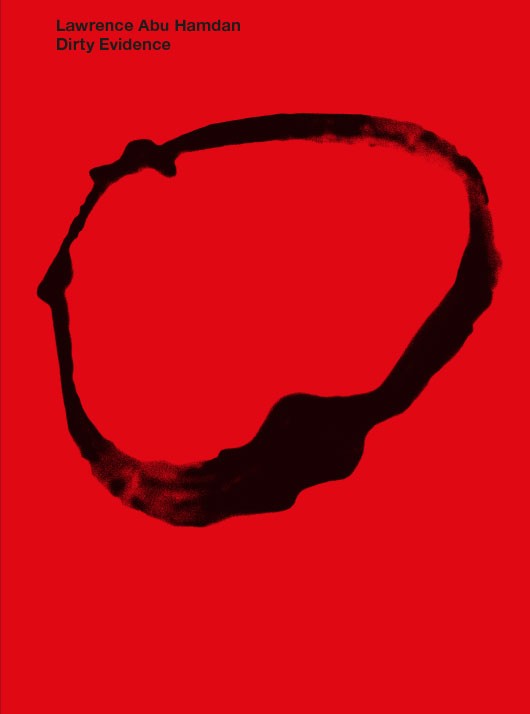
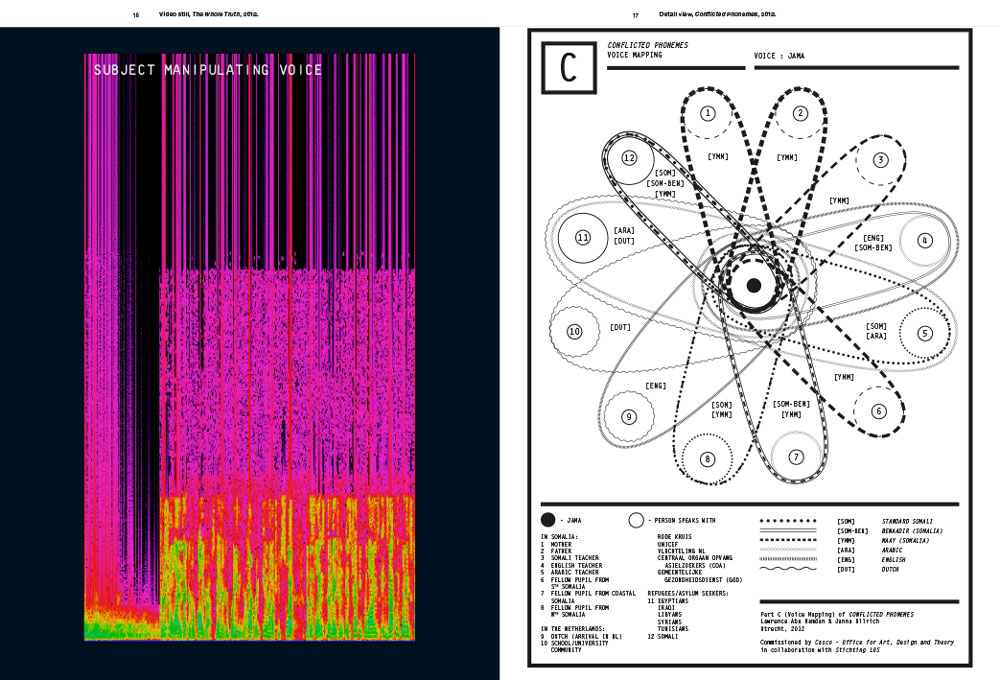
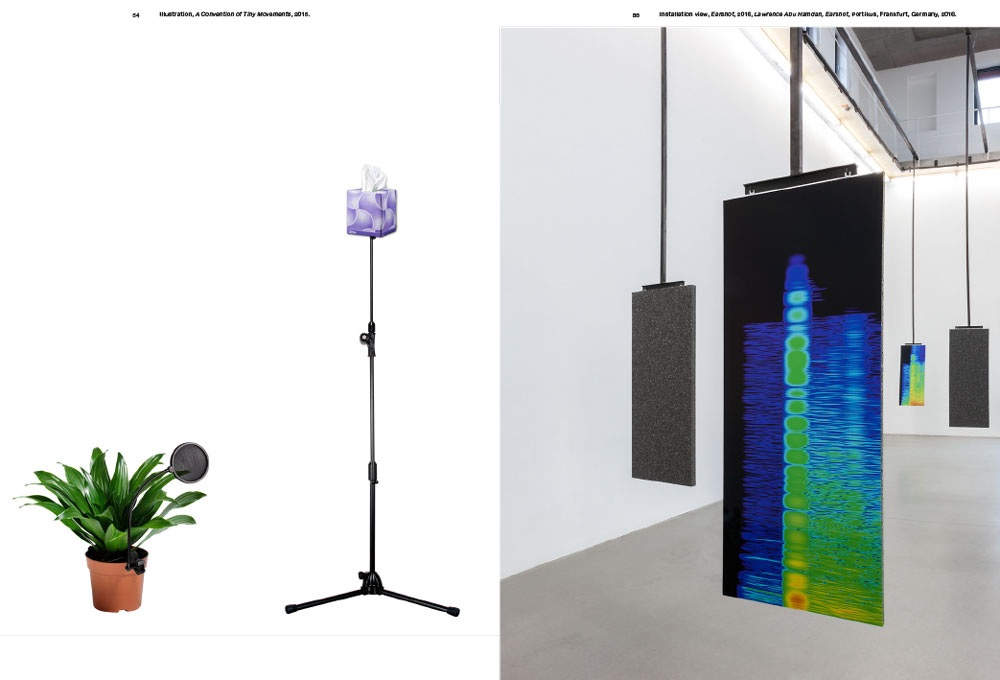
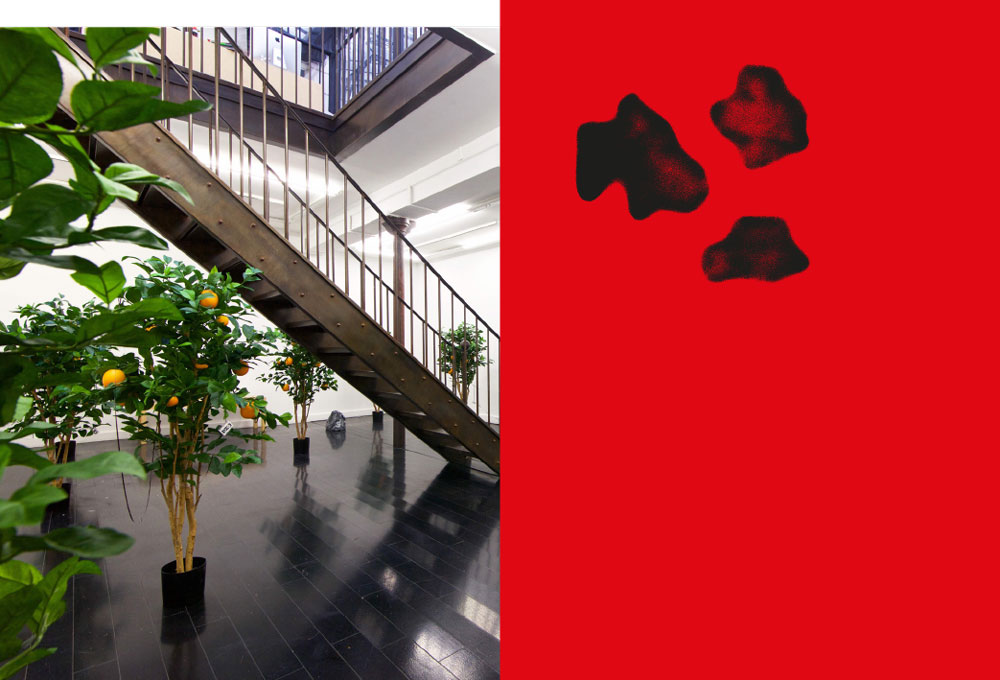
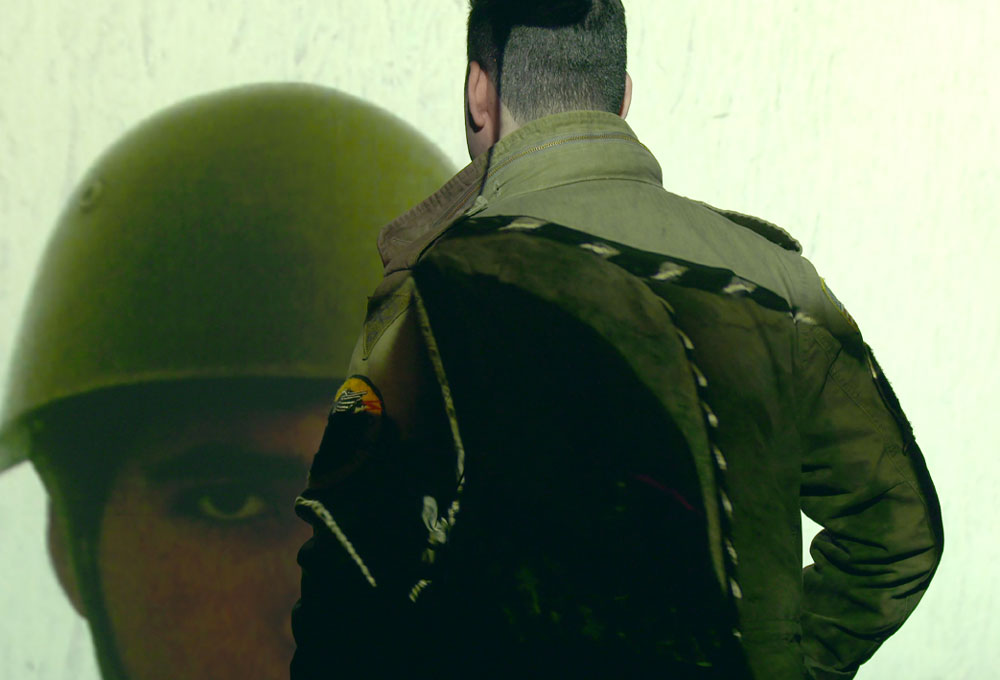
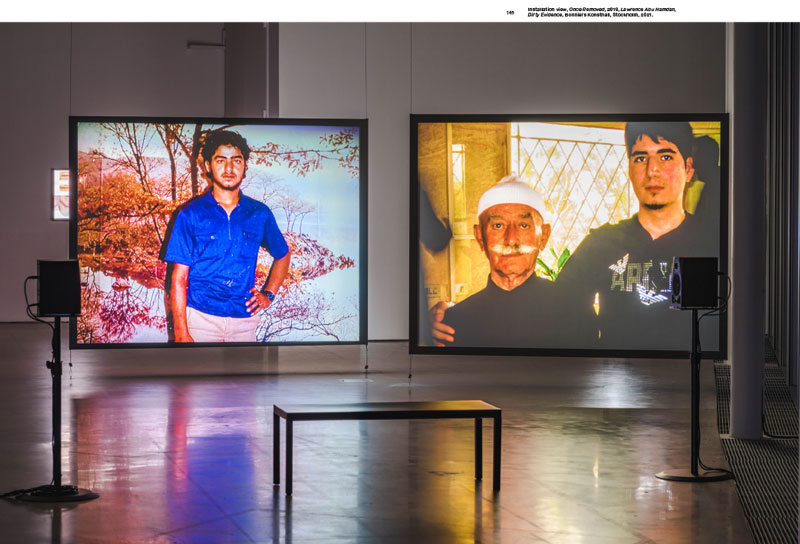
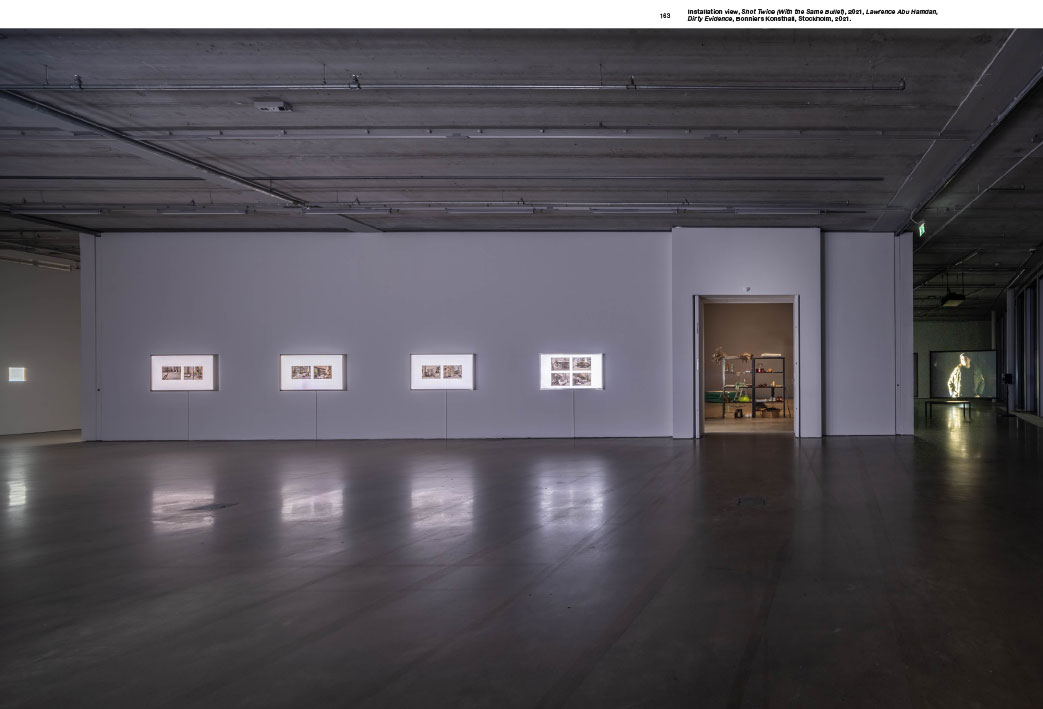
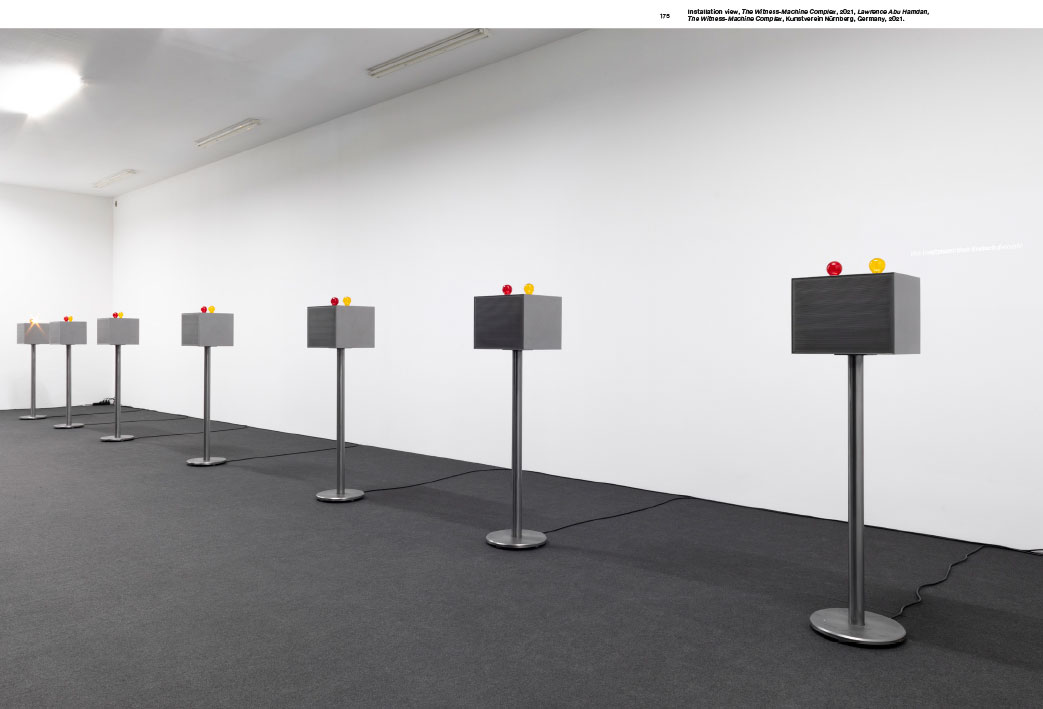
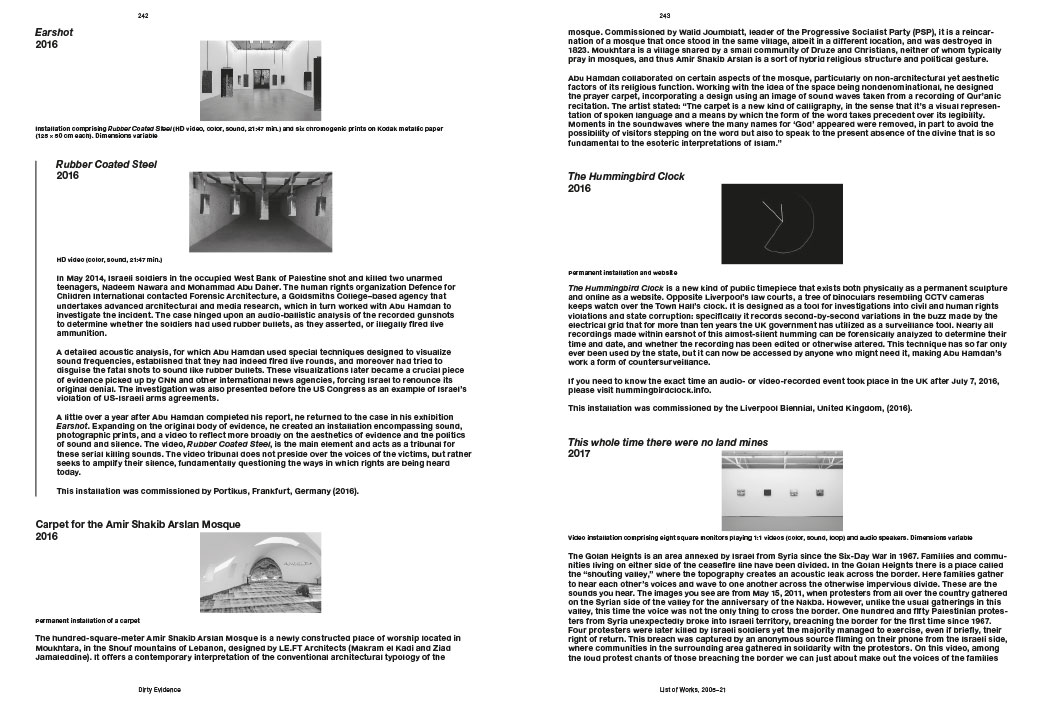
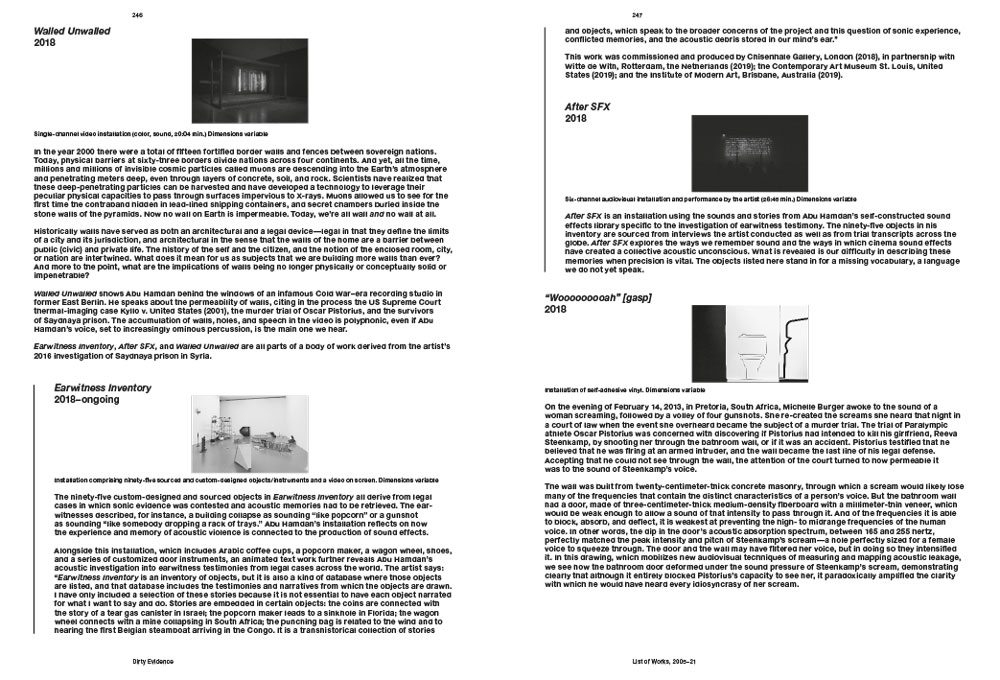
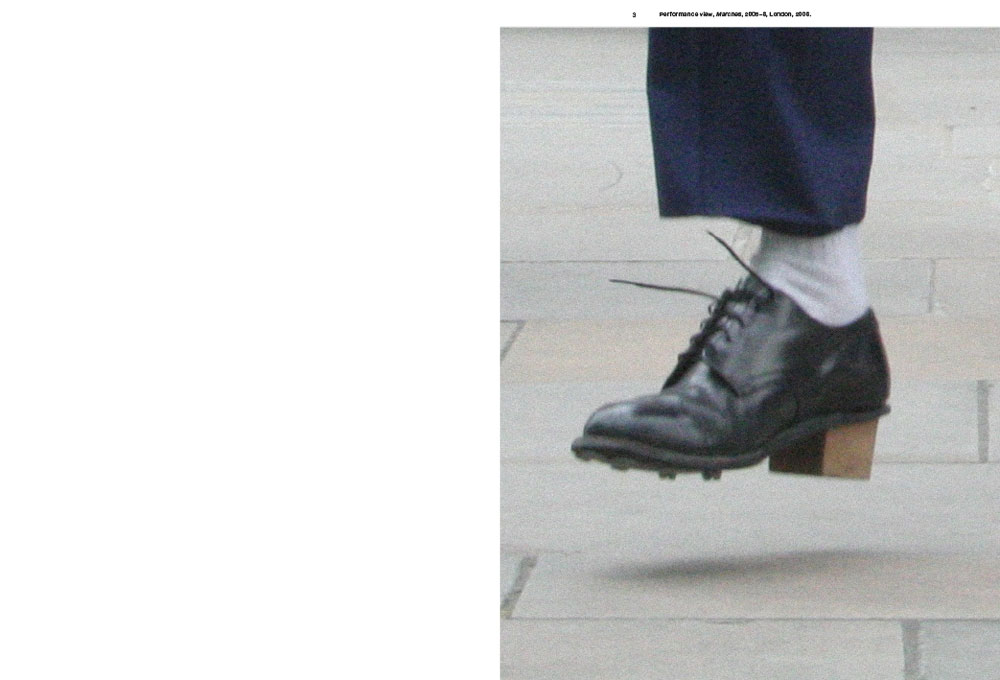
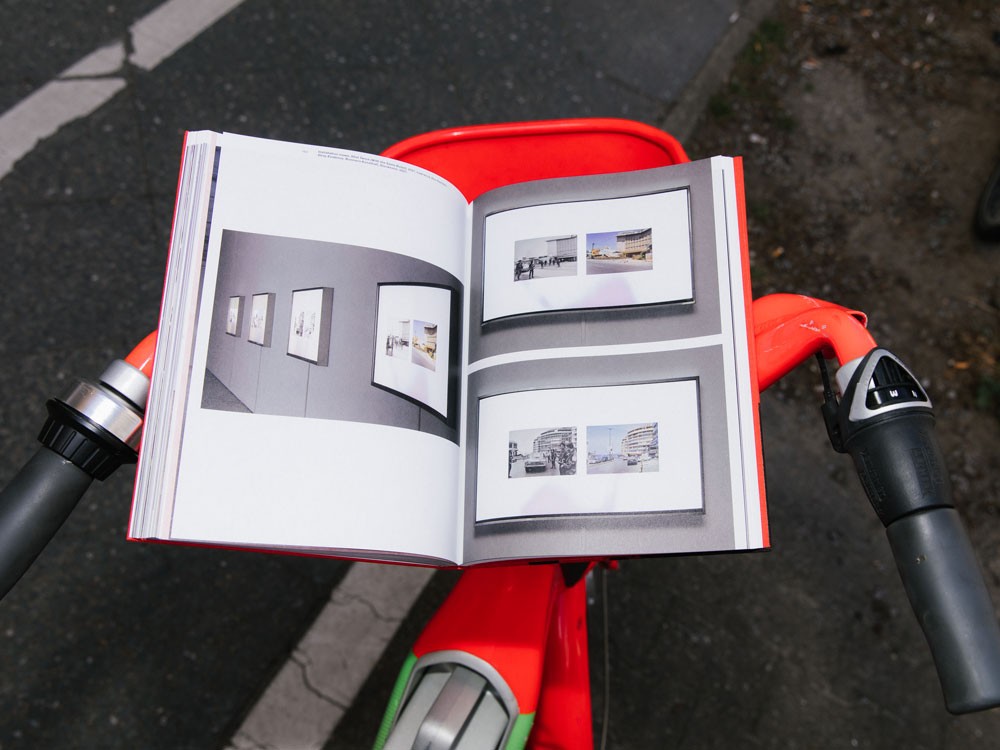
Richly illustrated, this book provides for the first time a visual overview of Lawrence Abu Hamdan’s works of more than a decade, and elaborates on a formal vocabulary characterized by the aesthetics of sound and language. Published on the occasion of his exhibition at Bonniers Konsthall in Stockholm, a group of authors have been invited to engage with individual works and their underlying concepts. Abu Hamdan recognizes the space for art as a site where attention can be drawn to real socio-political conditions in order to challenge the structures behind them. The artist can therefore push at the boundaries of what constitutes testimony. The title “Dirty Evidence” comes from Abu Hamdan’s definition of evidence in which a truth value is derived from its very inadmissibility before the law. It is precisely the evidence’s figurative dirt and dirtiness that works toward the production of truth.