Martin Heidegger, Glenn Gould, Jacques-Louis David, Cy Twombly, Paul Engelmann and Ludwig Wittgenstein: characters that Francesco Arena has chosen or rediscovered in multiple contexts over the time recur in this book. Ranging from philosophy, to music, to visual arts, they embrace the whole world of knowledge.
This first institutional monograph on the multimedia practice of artist and director Ali Cherri aims to highlight the themes and formal concerns running through his most recent, highly significant projects at GAMeC, Bergamo; Frac Bretagne, Rennes; Swiss Institute, New York; Biennale Arte 2022, Venice; and the National Gallery, London.
The book highlights the main characteristics of the collective trauma that gave rise to Rachel Whiteread’s project for GAMeC. The psychoanalysts Angelo Antonio Moroni and Pietro Roberto Goisis map out a composite picture, starting from the sense of vulnerability and collective loss associated with the Covid-19 pandemic.
This book, with follows the eponymous exhibition at Mudam Luxembourg, is constructed as a story, with a prologue, four acts, and an epilogue: an intuitive journey through the voices of thirty-four artists from different generations who are experimenting with the idea of the performative.
Dreaming Alcestis is an artist’s book by artist and filmmaker Beatrice Gibson, conceived as an accompaniment to her holographic film installation of the same name. It features a commissioned essay by poet and translator Allison Grimaldi Donahue, as well as a reprint of the American poet Alice Notley’s 1991 essay What Can Be Learned From Dreams?
What if clay is the future and the future is clay? Curators Chus Martínez and Filipa Ramos brought together a group of artists to think and create through this old, maleable and fascinating matter. The result was materialized in an exhibition and book format entitled Feet of Clay.
Edited by Eva Fabbris, Lilou Vidal, Stefania Zuliani with Anna Cuomo
Texts by Tomaso Binga, Eva Fabbris, Daria Khan, Quinn Latimer, Luca Lo Pinto, Lilou Vidal, Stefania Zuliani
Designed by Lorenzo Mason Studio
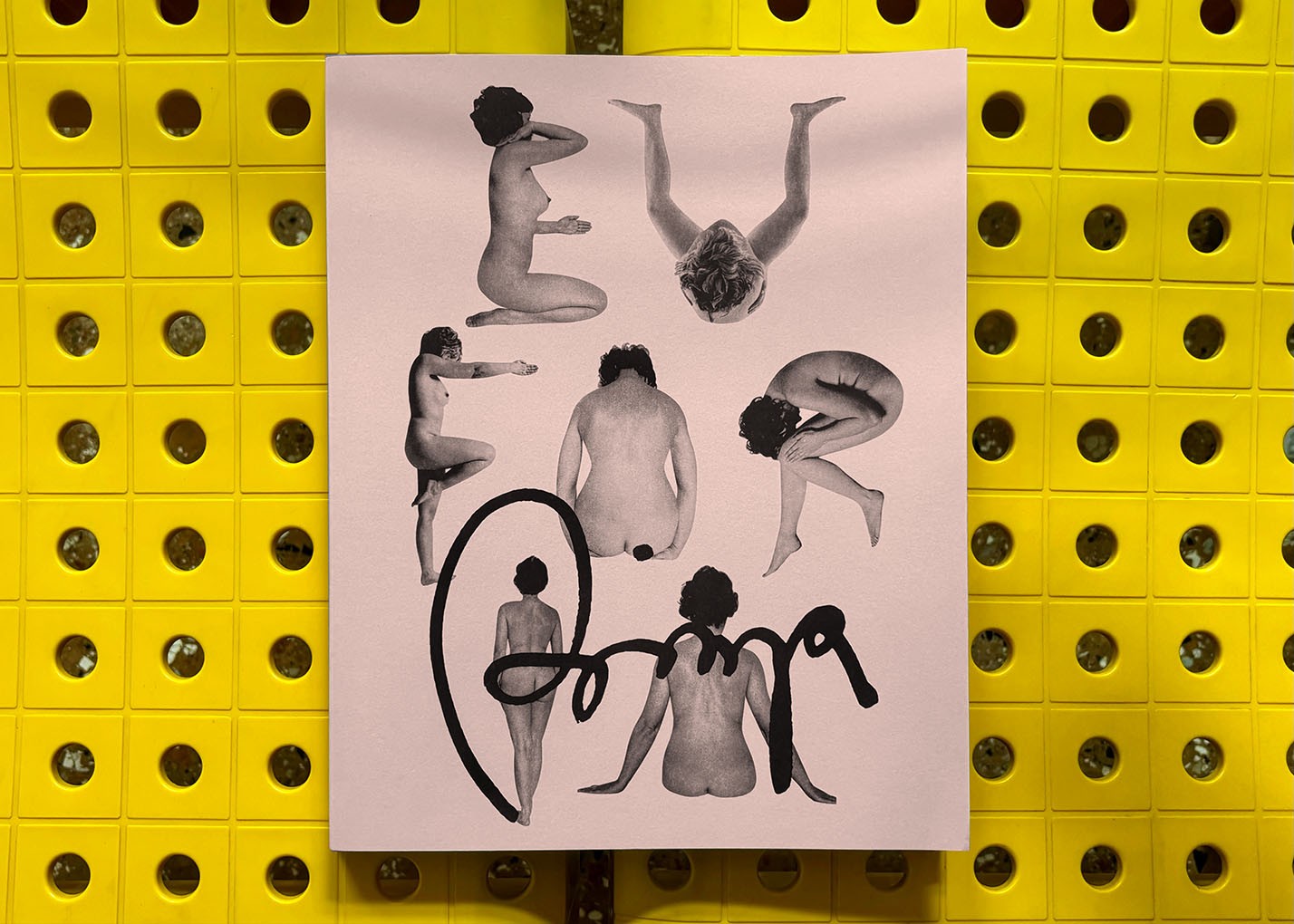
2024, English / Italian, softcover, 24 x 30 cm, 304 pages
ISBN: 979-12-80579-42-3
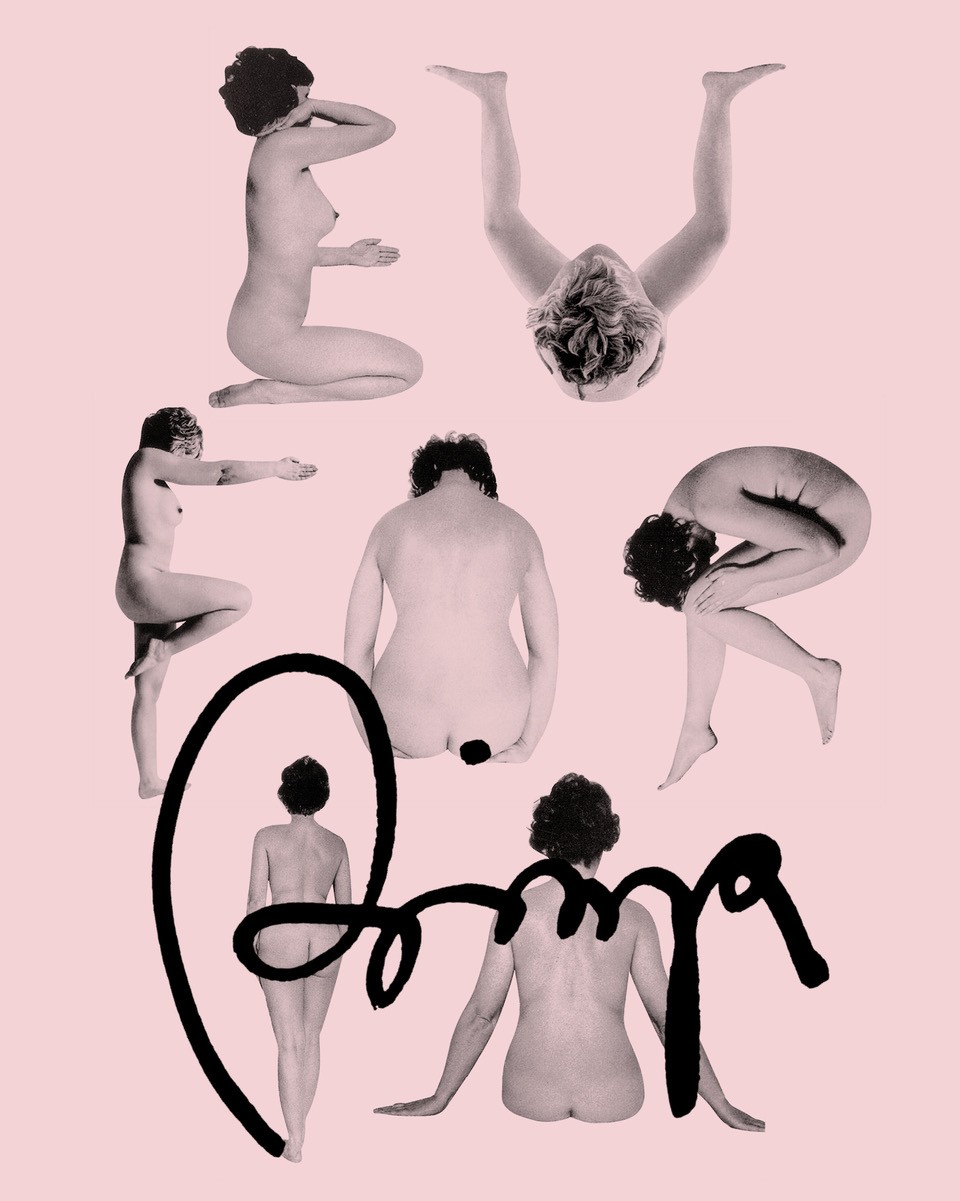
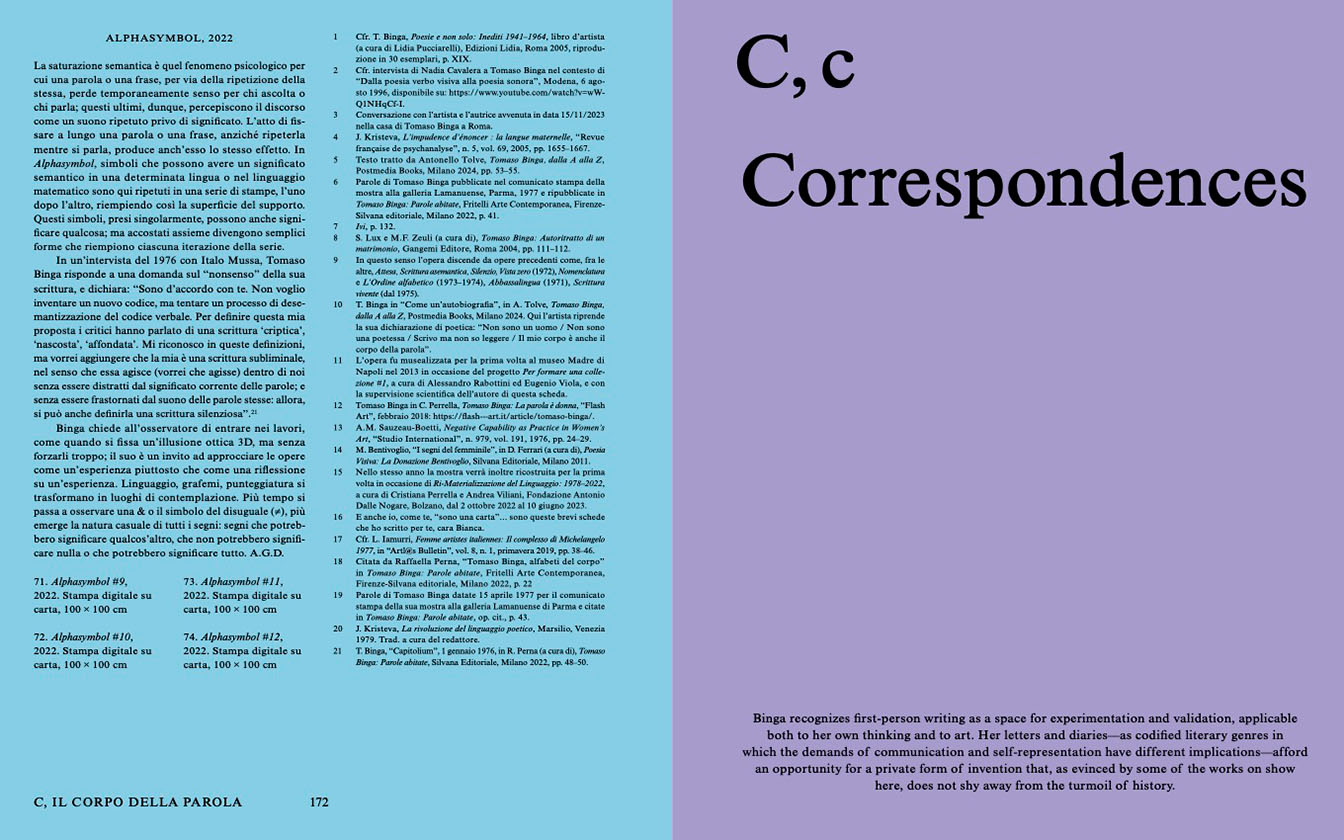
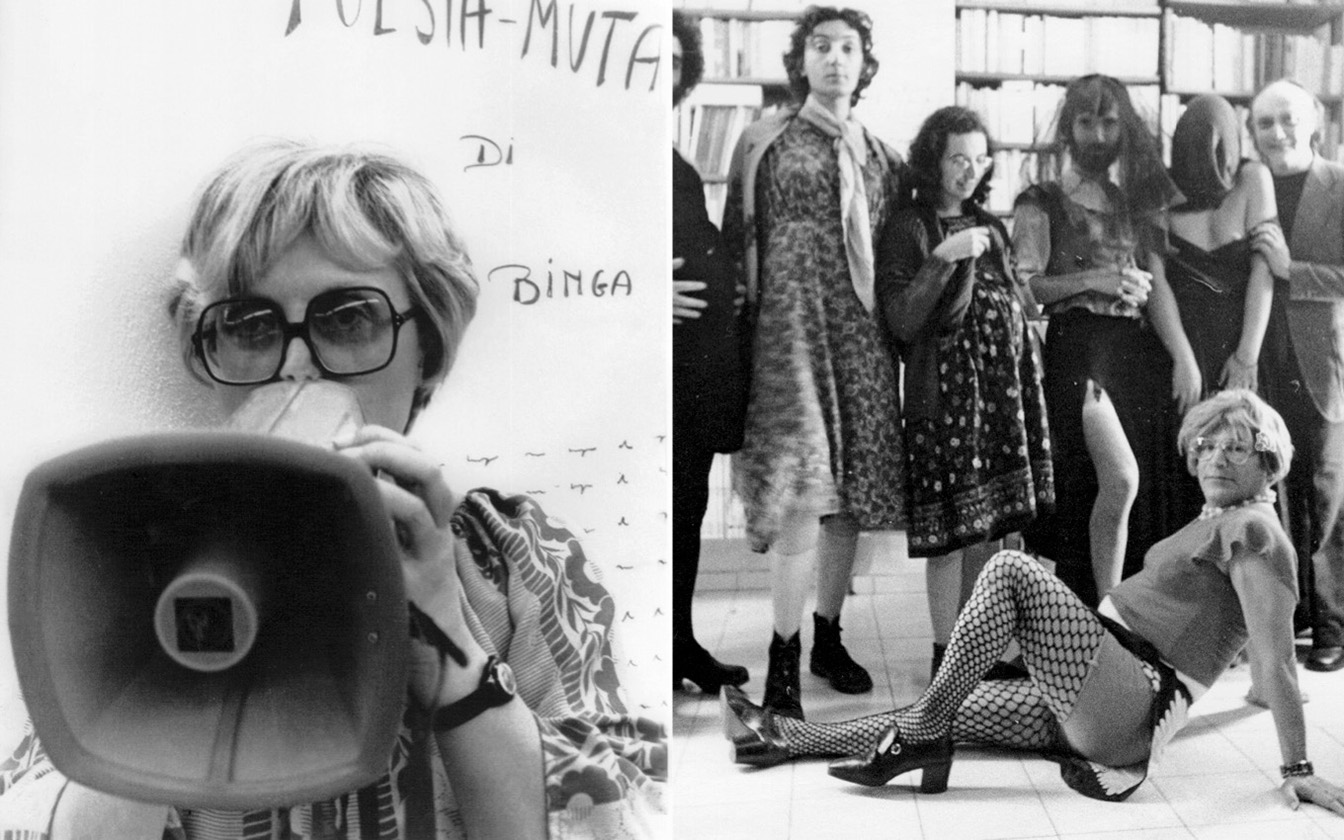
Embedded in the language of visual and sound poetry, the practice of Tomaso Binga (Bianca Pucciarelli Menna, born in Salerno in 1931) is based on an ironic, insightful questioning of the idea of gender. In her work, this theme is not only a generator of identity, but also a way of looking afresh at the social roles, rights and opportunities traditionally available to women. Her decision to work under a male pseudonym from 1971 onwards was intended to parody male privilege and to provoke a barbed reflection on the political dimension of what it is to be a woman. Her attitude has served as a key marker within the gender equality issues at the center of the debate raging amongst the younger generations.
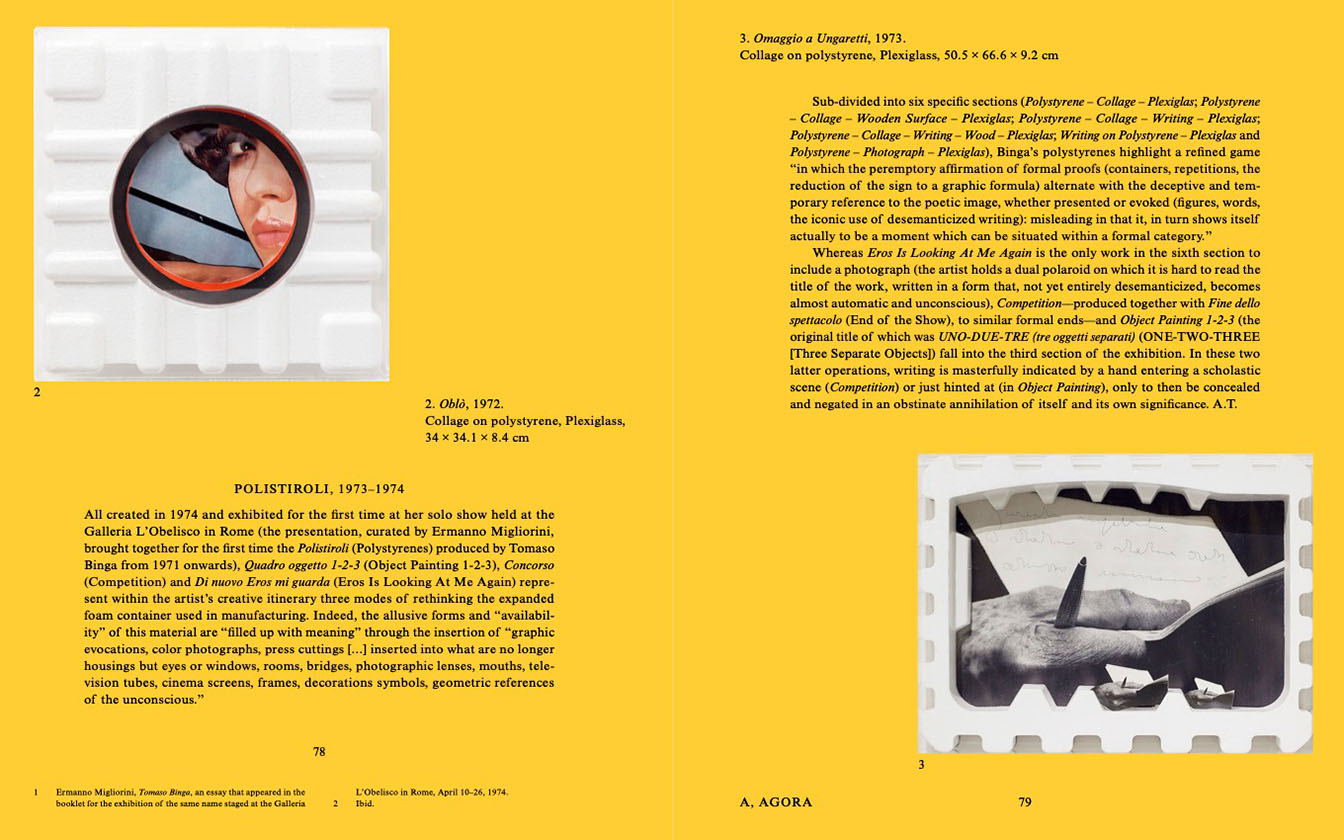
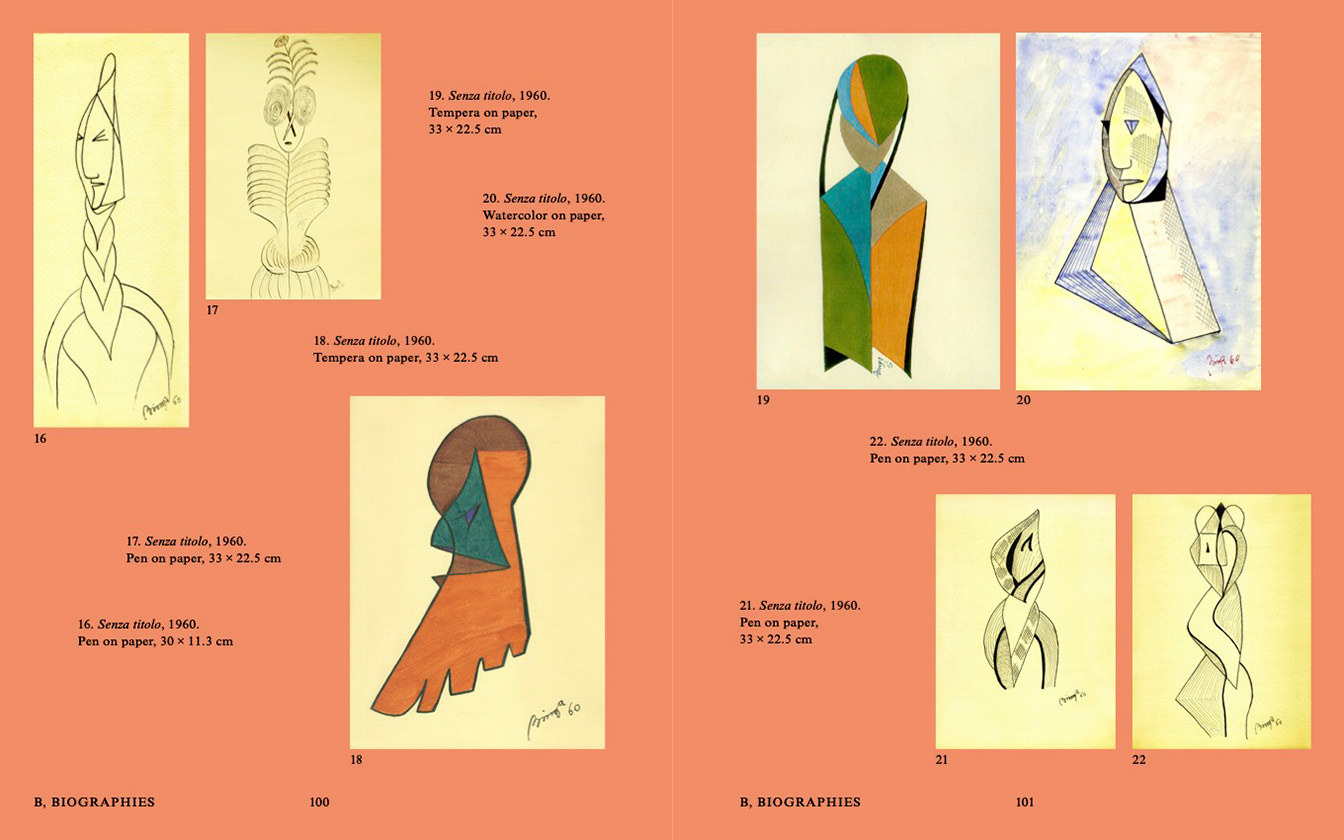
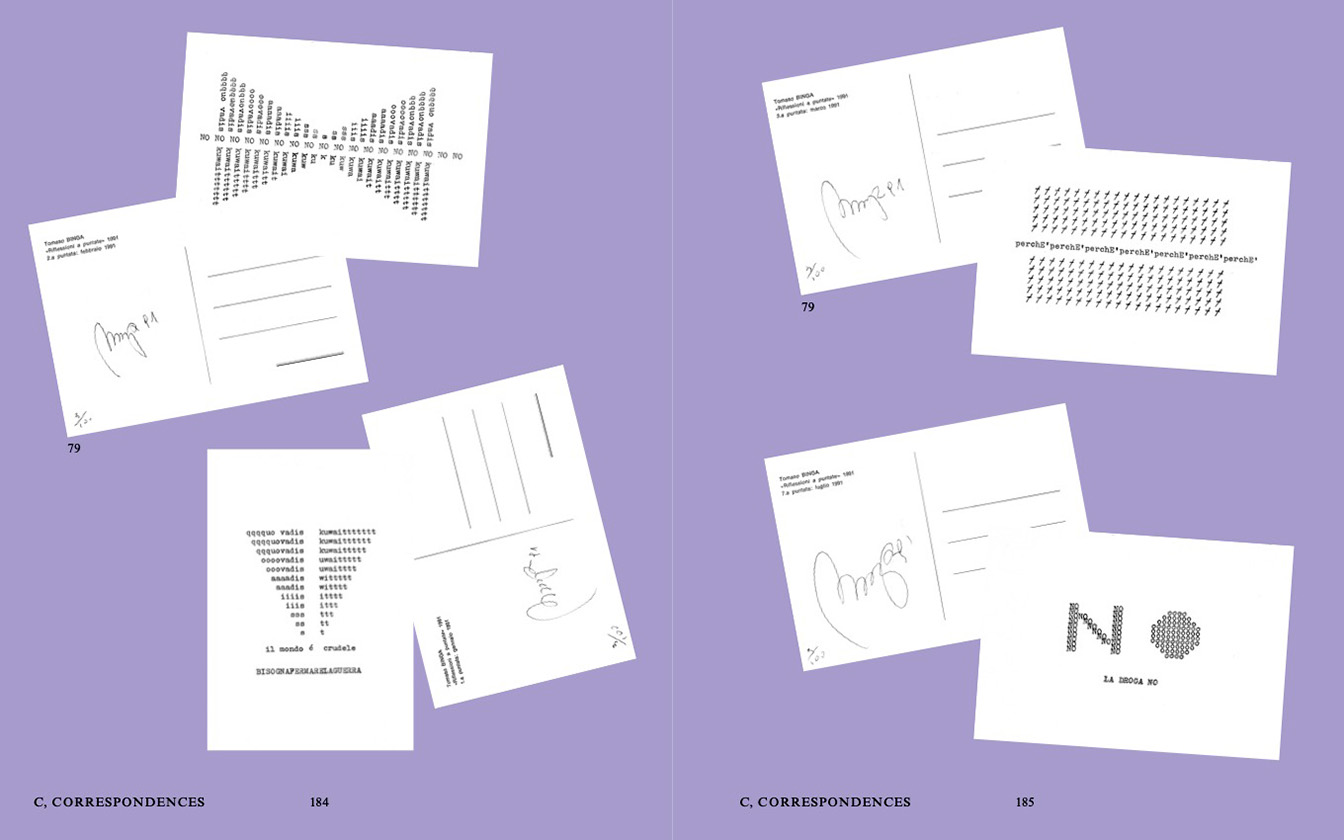
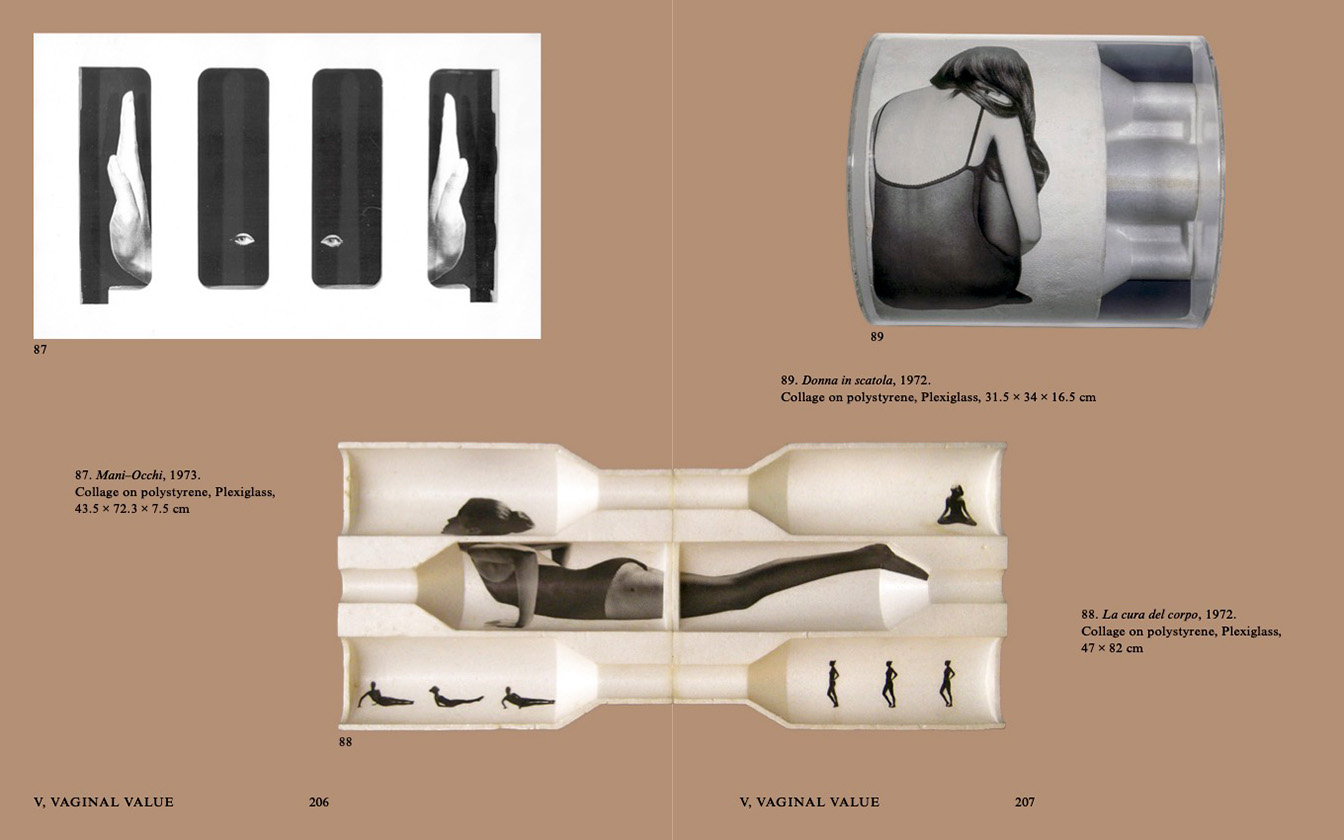
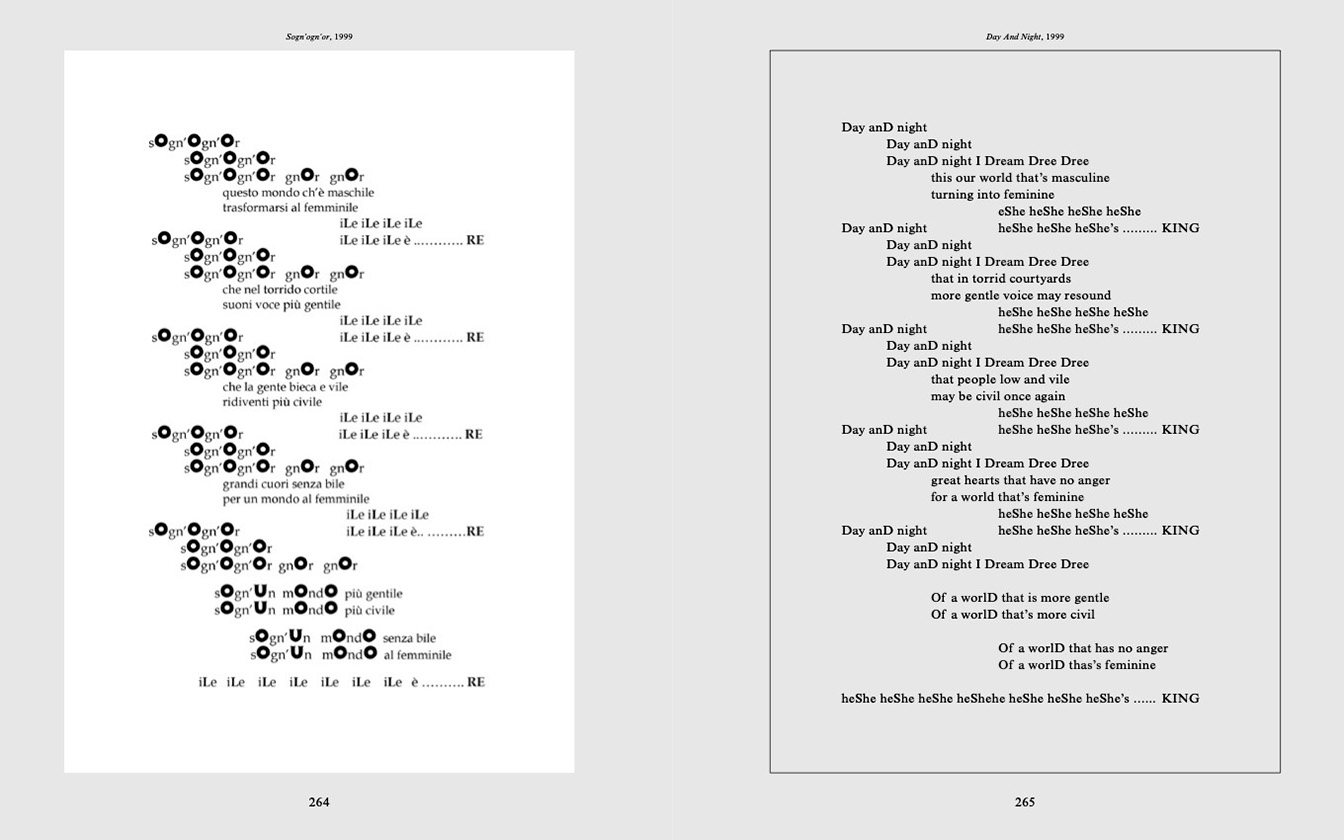
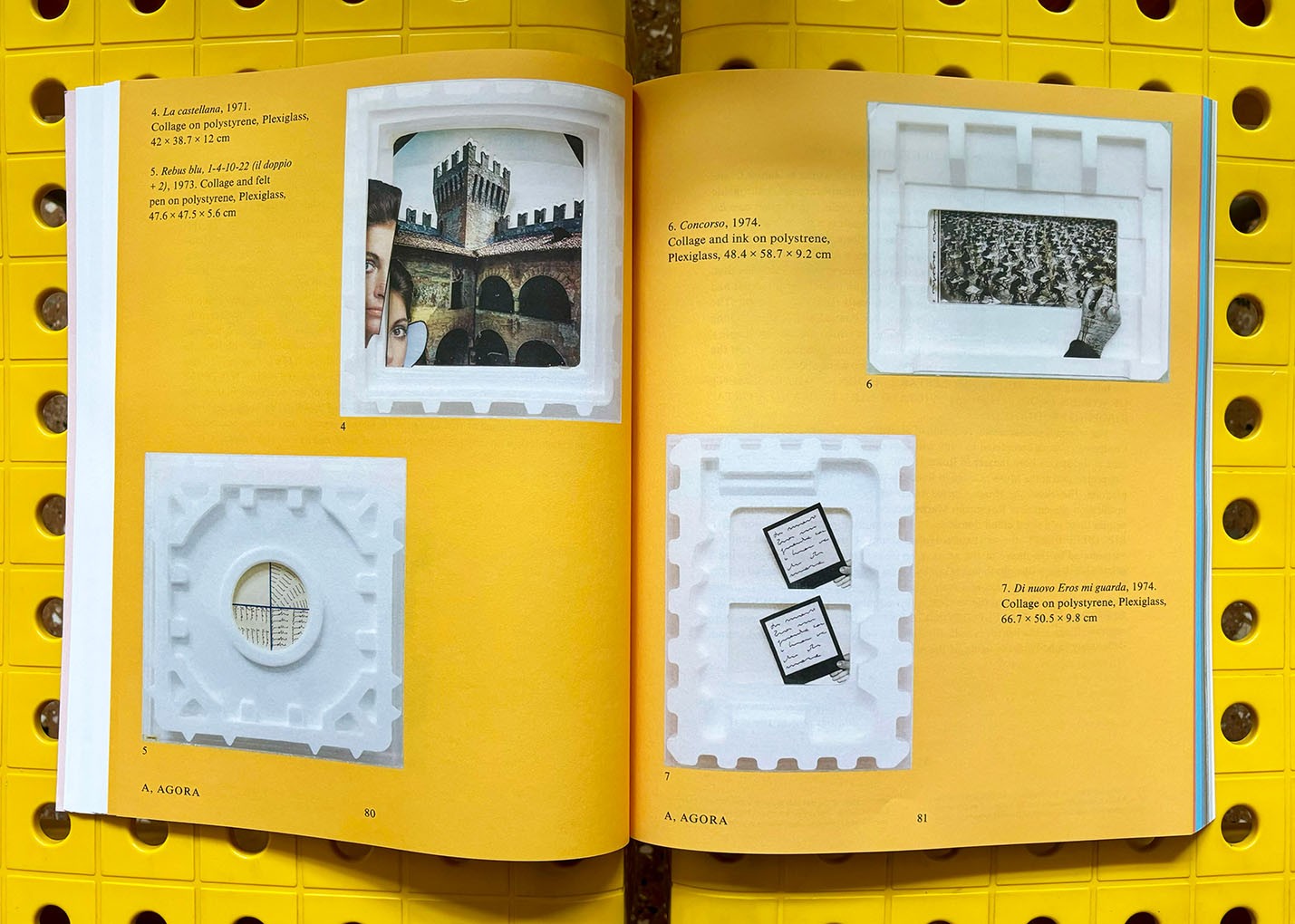
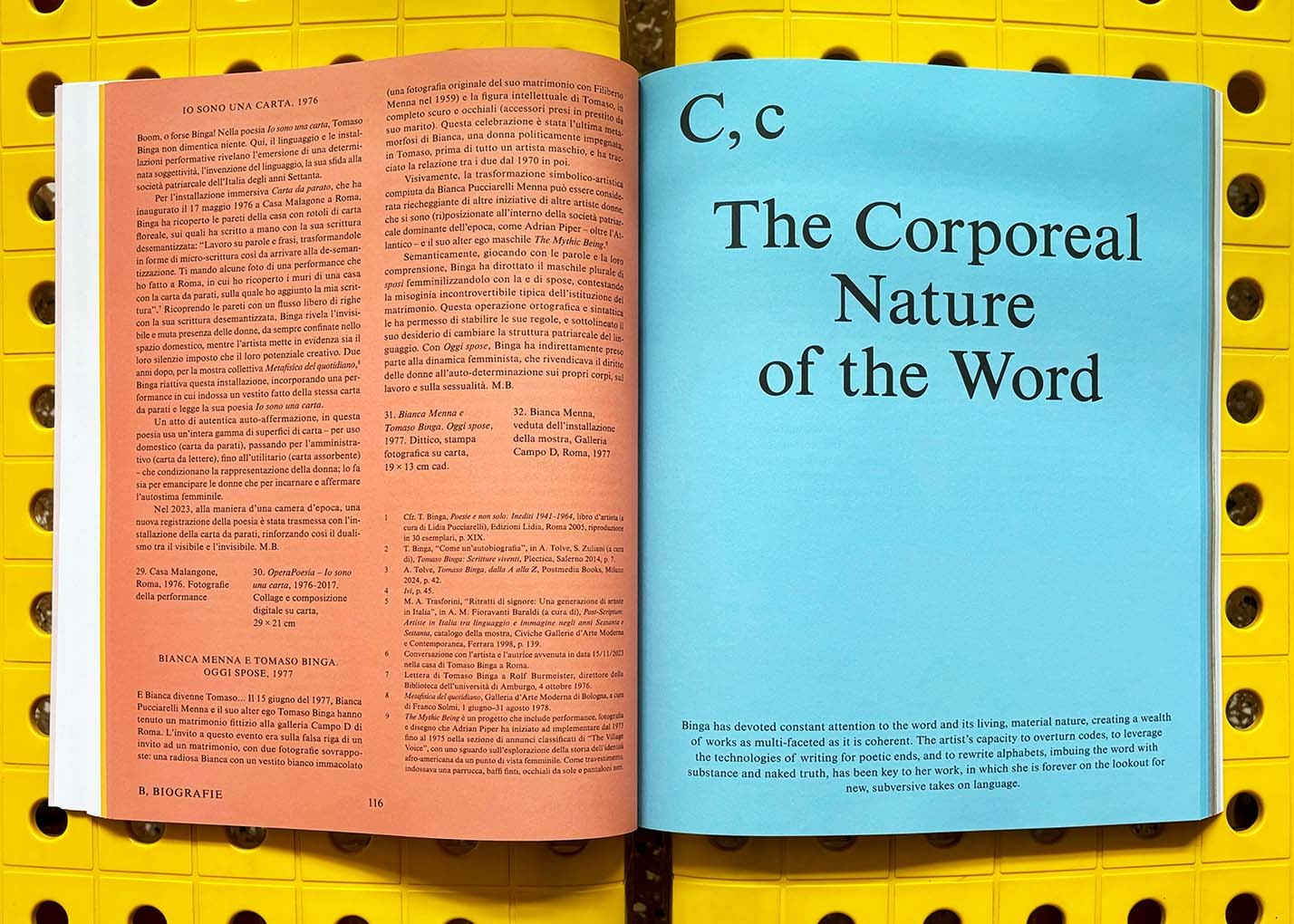
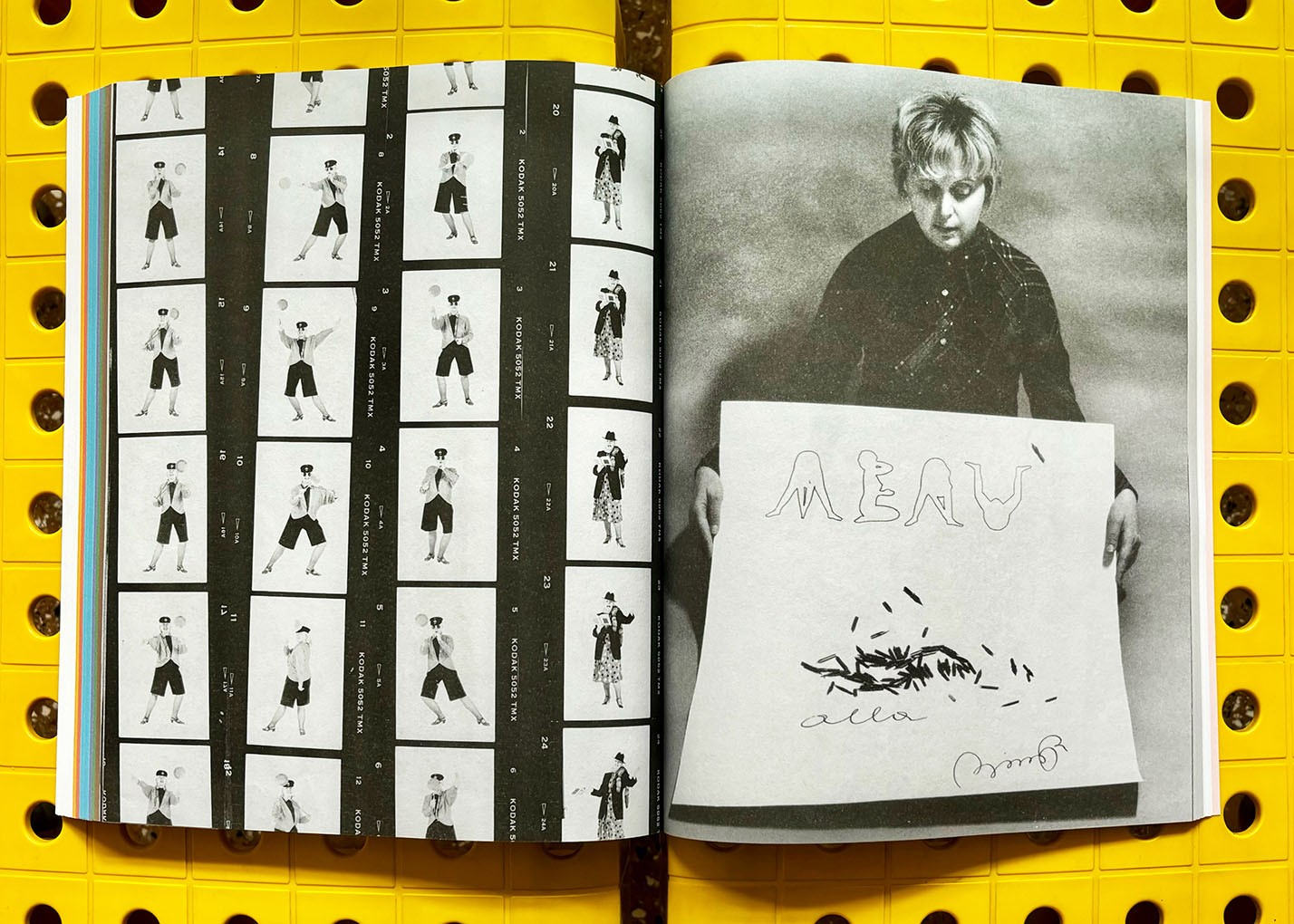
This monograph explores the work and the artistic activities of Tomaso Binga through a specific lexicon (Agora, Biographies, the Corporeal Nature of the Word, Correspondences, Geographies, Vaginal Value), and also features a selection of poems by the artist.
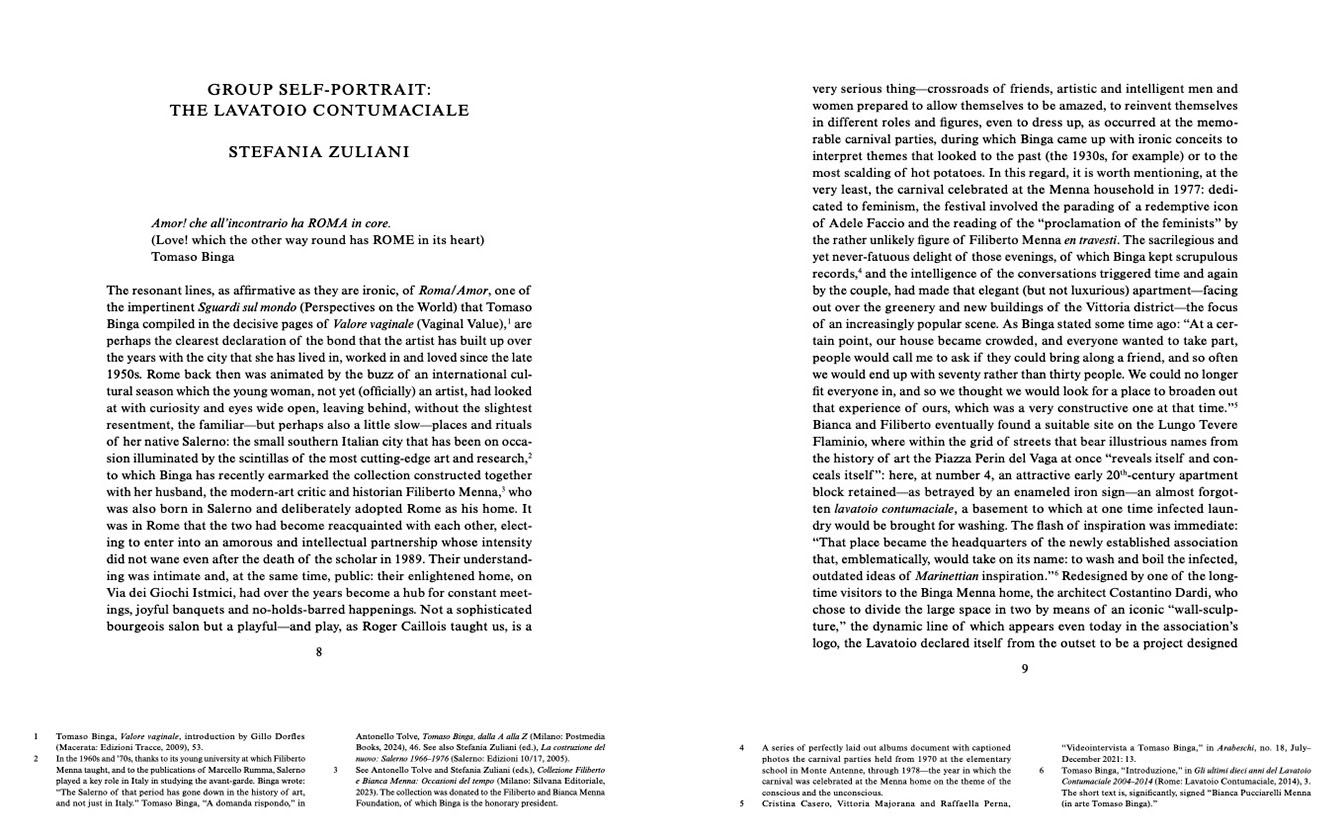
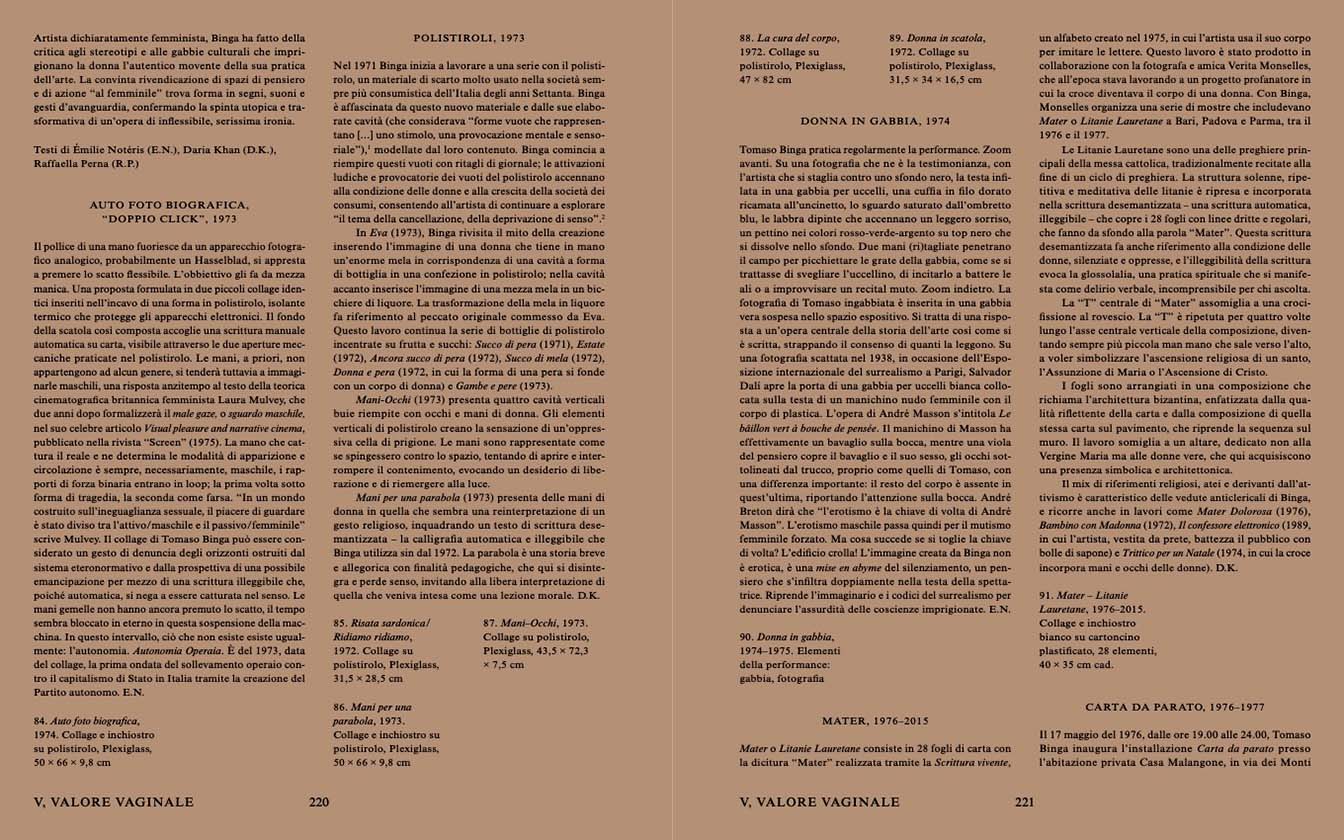
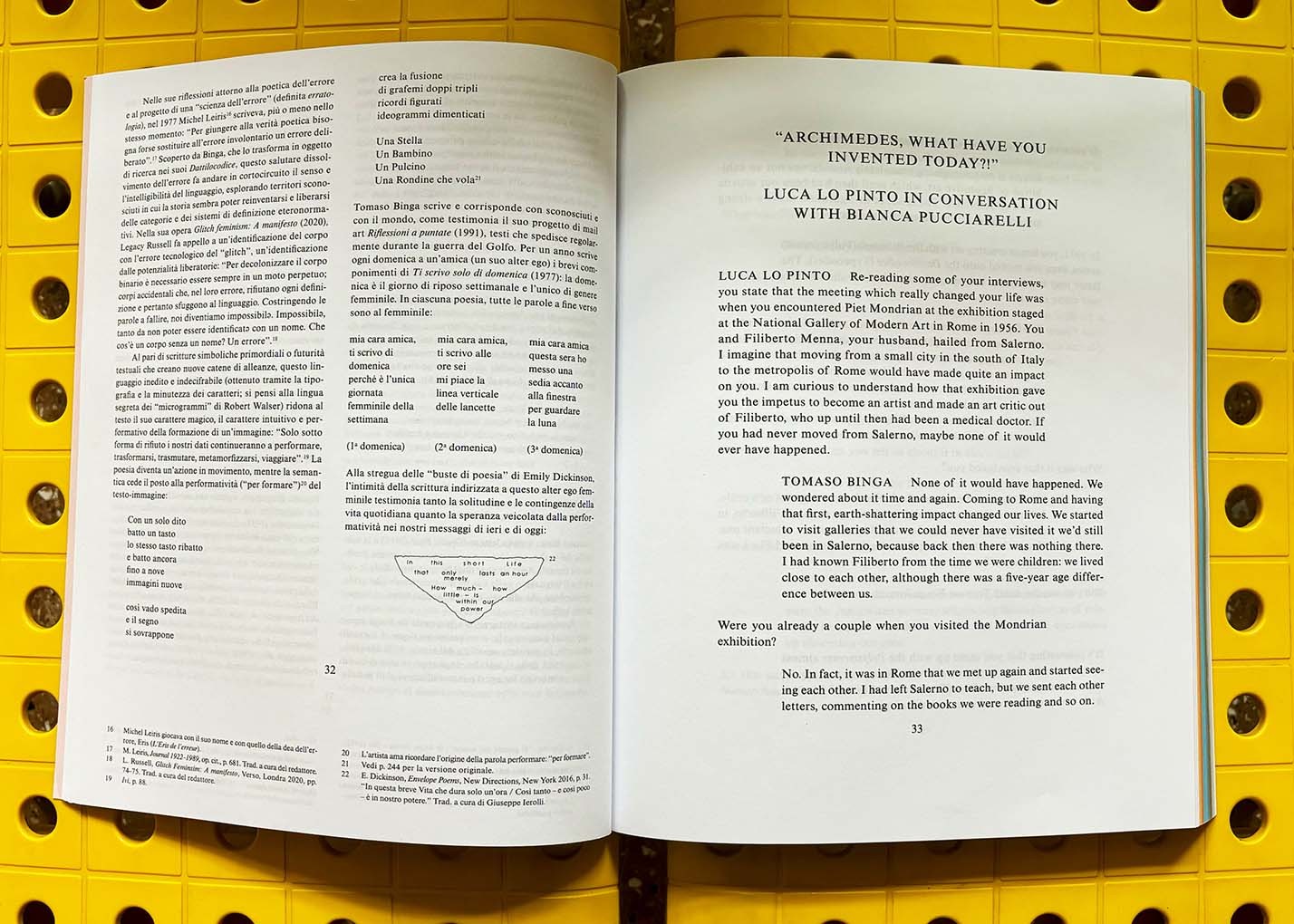
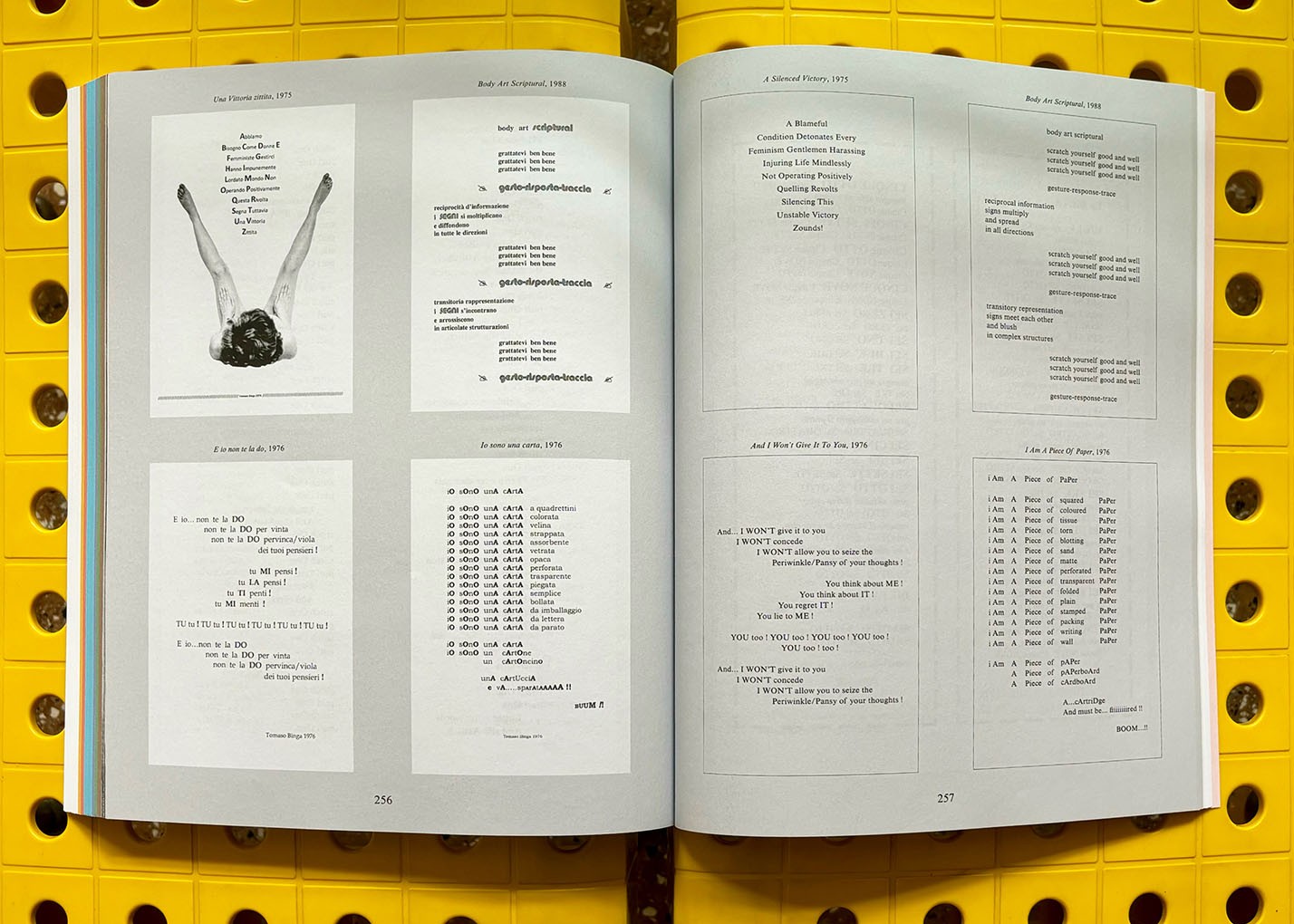
The volume explores the key passages of Tomaso Binga’s artistic practice, and as such is divided into three macro areas. The first, purely textual, following institutional introduction by the President of the Fondazione Donnaregina per le arti contemporanee Angela Tecce, features texts by Eva Fabbris, Daria Khan, Quinn Latimer, Lilou Vidal, and Stefania Zuliani, as well as a conversation between the artist herself and Luca Lo Pinto. The second part brings together a series of short critical texts that offer an in-depth analysis of single works and small bodies of work by Tomaso Binga. These contents are further subdivided into six categories (Agora, Biographies, The Body of the Word, Correspondences, Geographies, Vaginal Value) with the aim of delving into the key areas of interest in Tomaso Binga’s practice in chronological order. Critical contributions are thus provided by Marc Bembekoff, Barbara Casavecchia, Martina Cavalli, Chiara Costa, Anna Cuomo, Valérie Da Costa, Allison Grimaldi Donahue, Daria Khan, Émilie Notéris, Raffaella Perna, Antonello Tolve, and Andrea Viliani. The third and final part is dedicated to the artist’s visual poems. Each poem is accompanied by an English translation, in several cases published here for the first time.
The publishing project was the winner of the twelfth edition of Italian Council, supported by the General Directorate for Contemporary Creativity of the Ministry of Culture, promoted by the Fondazione Donnaregina per le arti contemporanee and made possible with the support of the Associazione Amici del Madre.