First Meeting is the first monograph on Argentinian artist Santiago de Paoli. From his early, experimental projects to his most recent explorations, the book delves into his innovative approach of painting on unconventional materials. The book features commissioned essays by Fernanda Brenner and Mariano Mayer, as well as a conversation between Christian Rattemeyer and the artist.
Infinite Memory is Caroline Poggi and Jonathan Vinel’s first monograph, co-published with Fondation Cartier pour l’art contemporain and Lenz. Like a memory card, the book stores information about a selection of films from the initial decade of the artists’ practice. Considered as an object, much like a piece of hardware that stores digital memory, the book offers the possibility to scroll infinitely, with no beginning or end.
Through the words of the sound artist and theorist Brandon LaBelle, the book explores the social and relational component of sound that gave rise to Benevolence, the site-specific project by Sonia Boyce. The Joy of Cacophony is the second book in a series of essay collections inspired by the site-specific projects conceived for GAMeC at Palazzo della Ragione.
Consisting of a richly illustrated booklet and a record vinyl, this special release accompanies the performative sound-based project A Comparative Dialogue Act by artists Andrea Mancini and the collective Every Island, hosted in the Luxembourg Pavilion at the 60th Venice Biennale.
Conceived as a catalogue and an artist’s book, the publication offers a deeper insight into the eponymous 2022 exhibition staged at Indipendenza Roma, and explores tensions that can be generated between artworks and their surrounding architectural context, raising questions of taste, value, function and decoration.
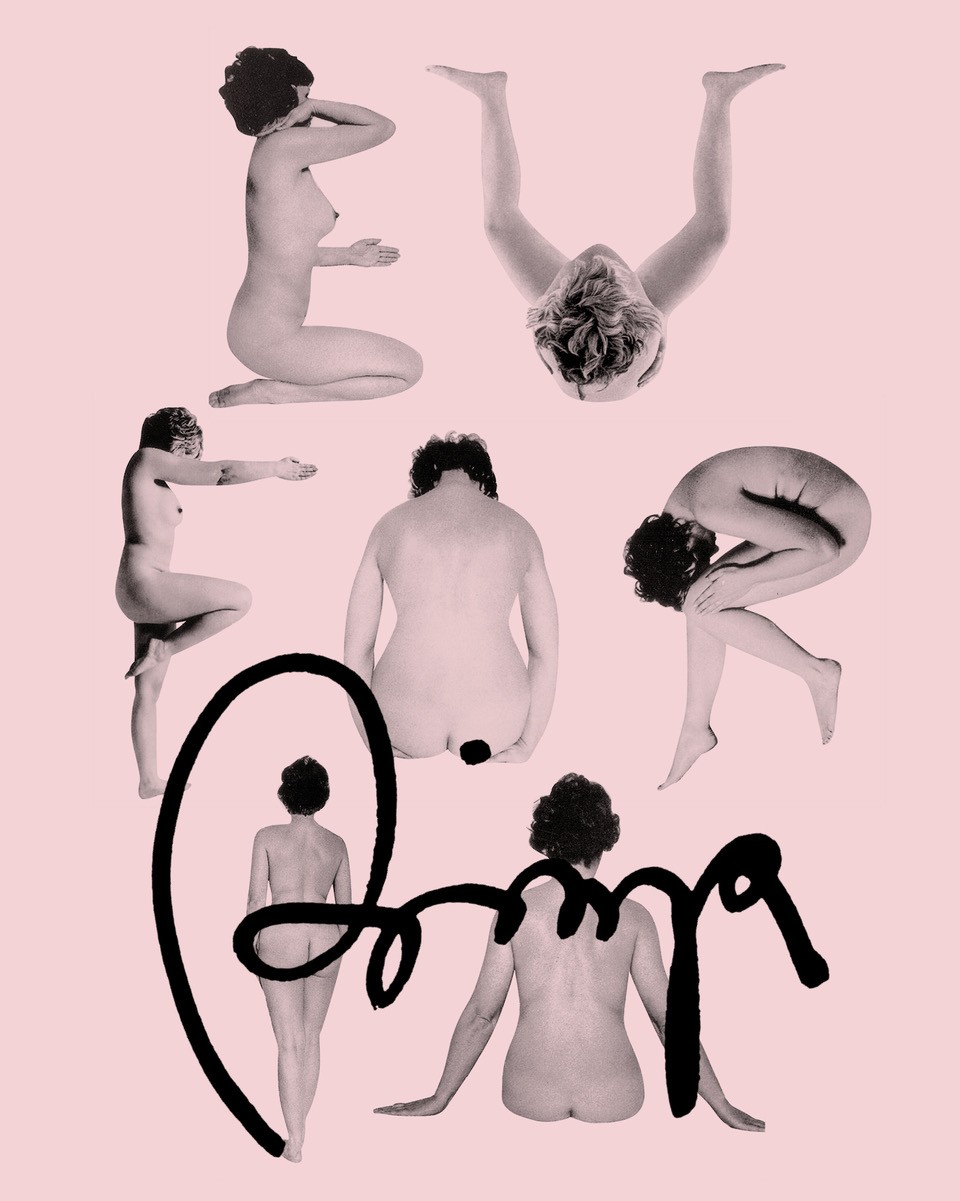
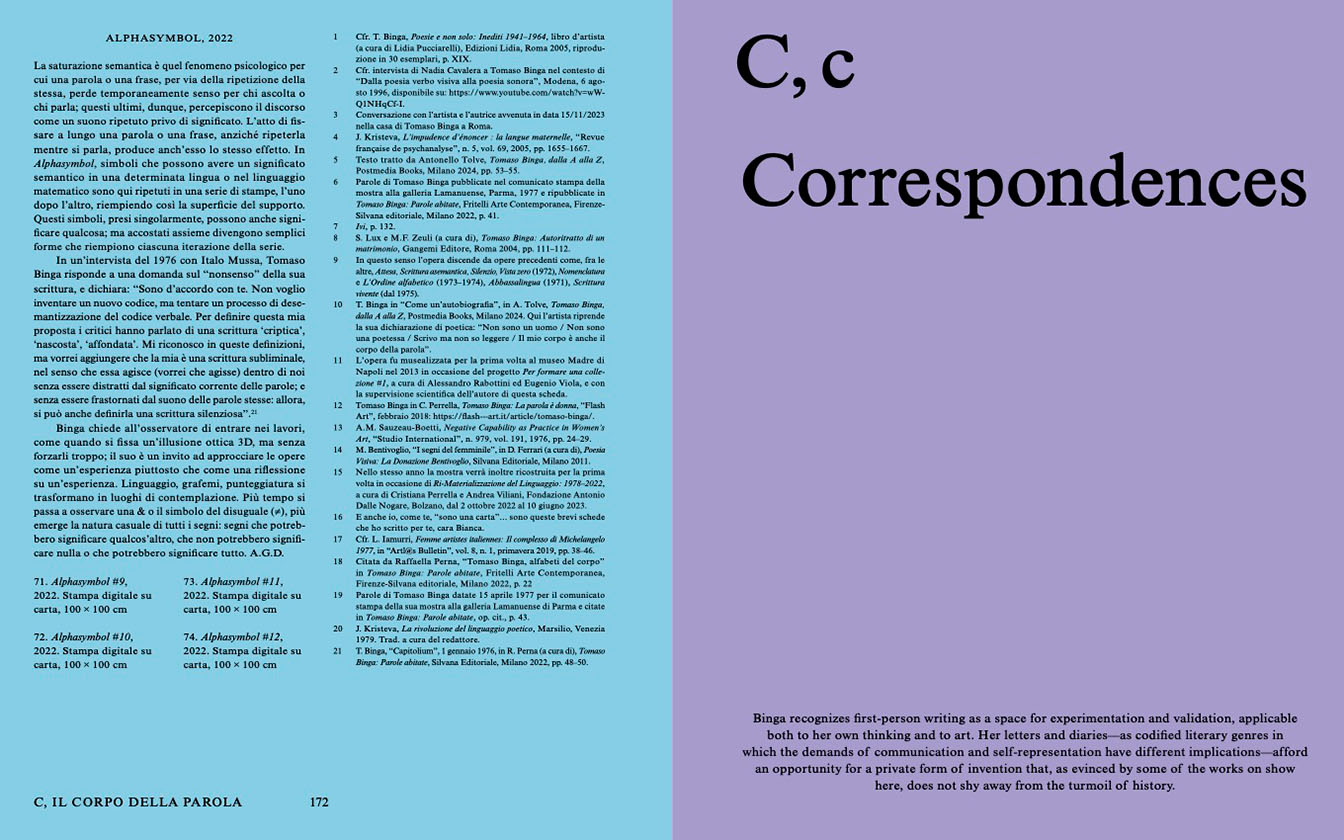
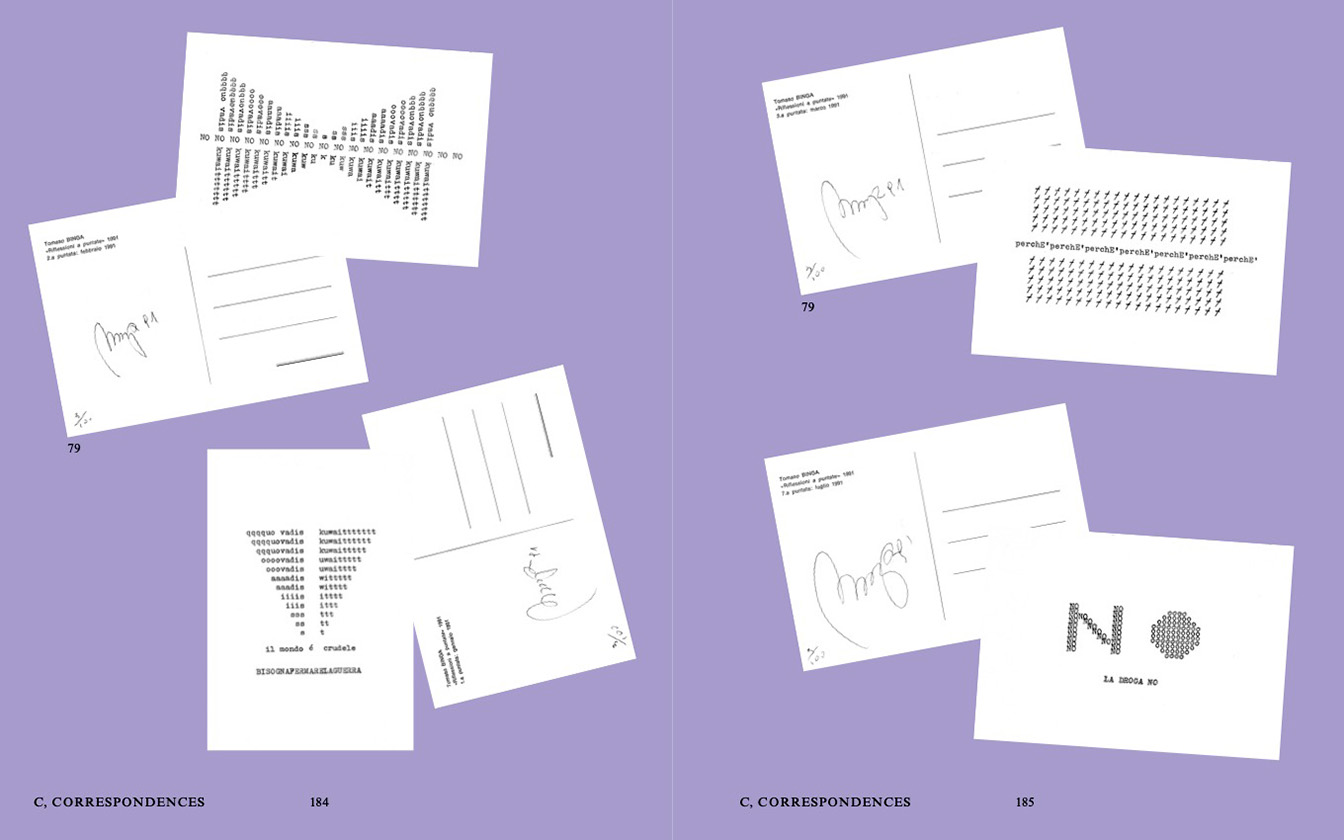
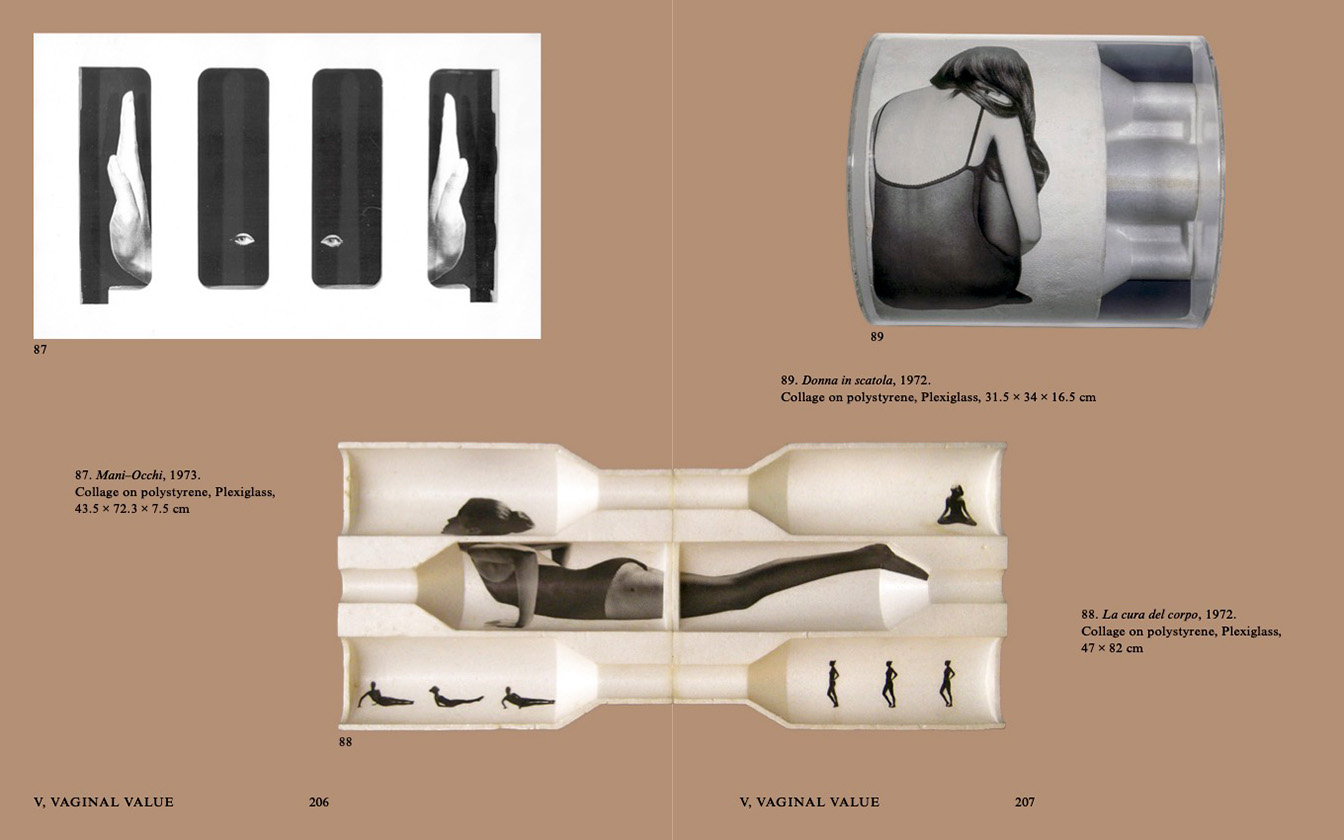
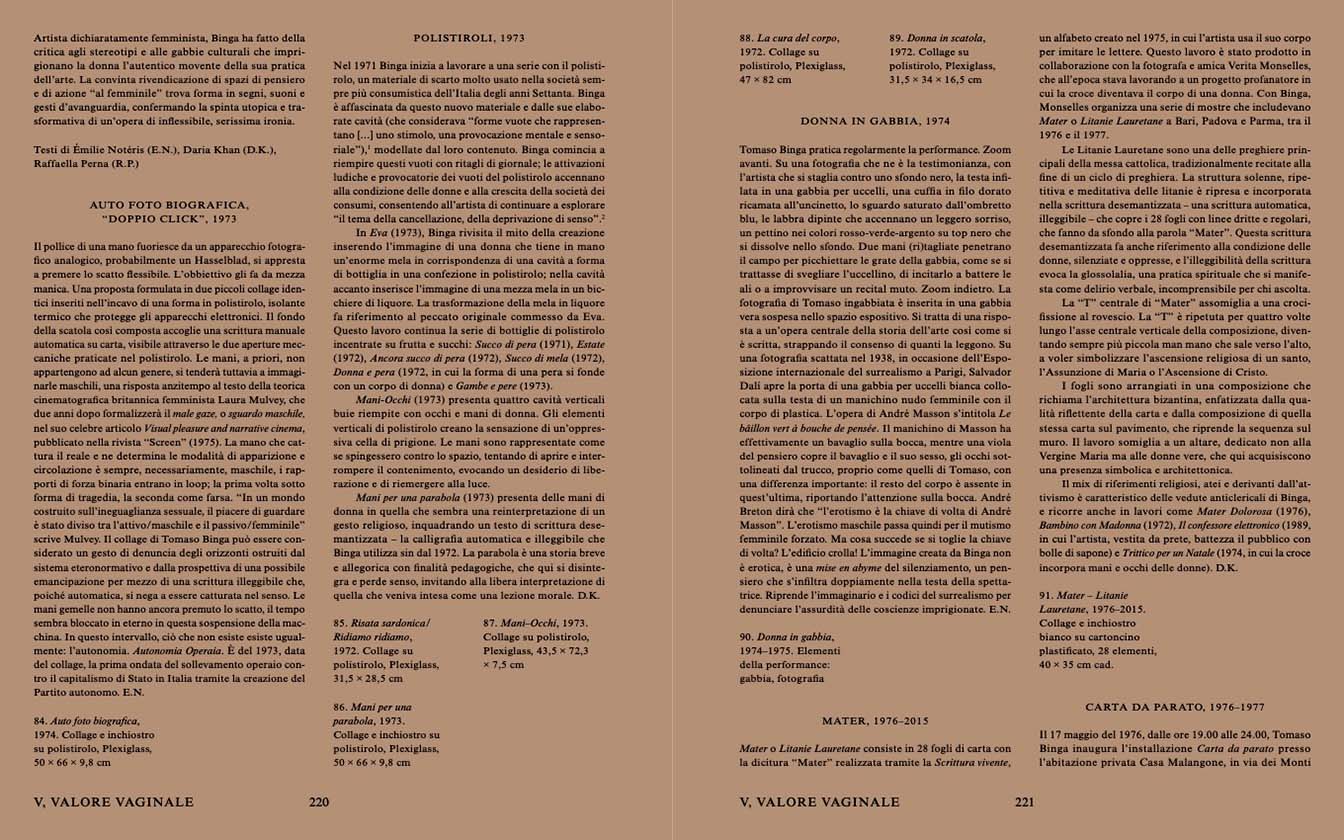
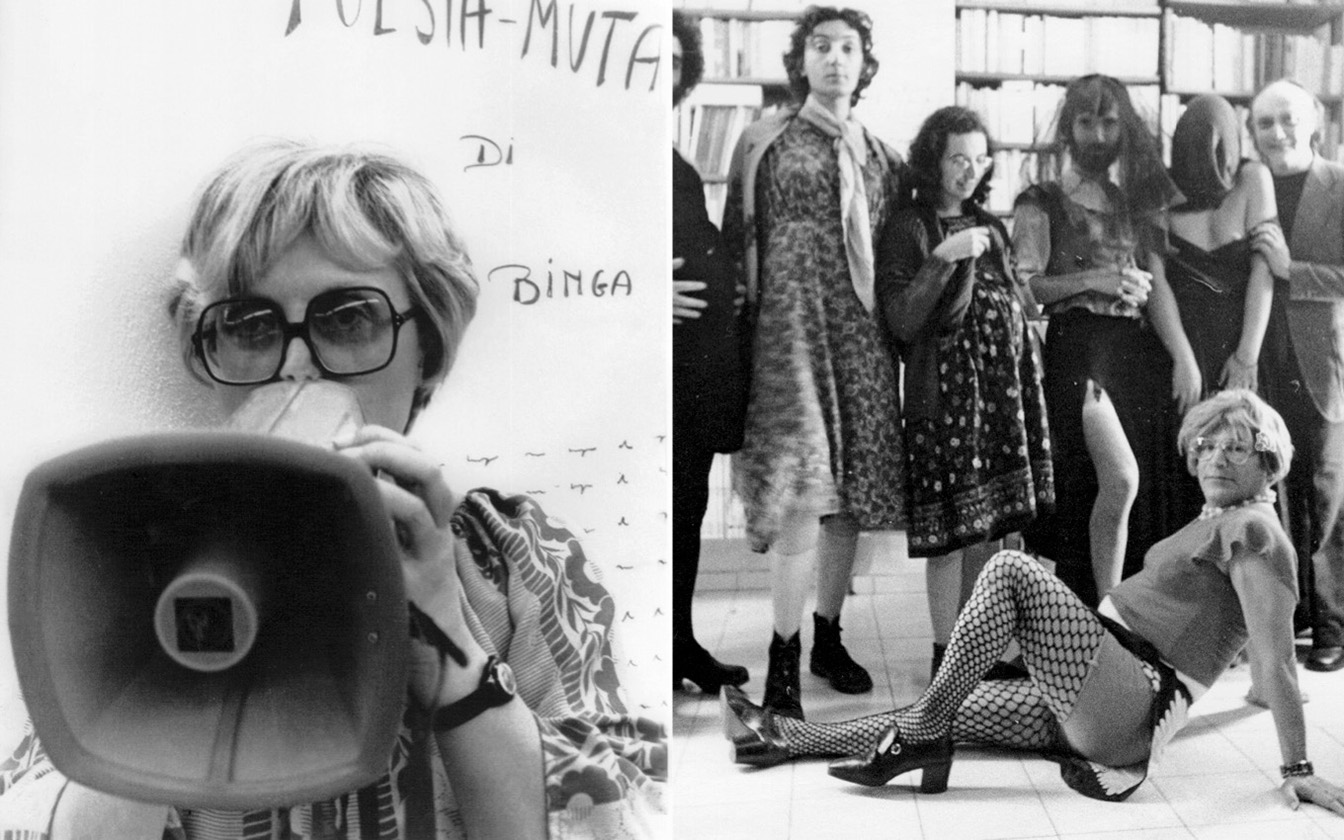
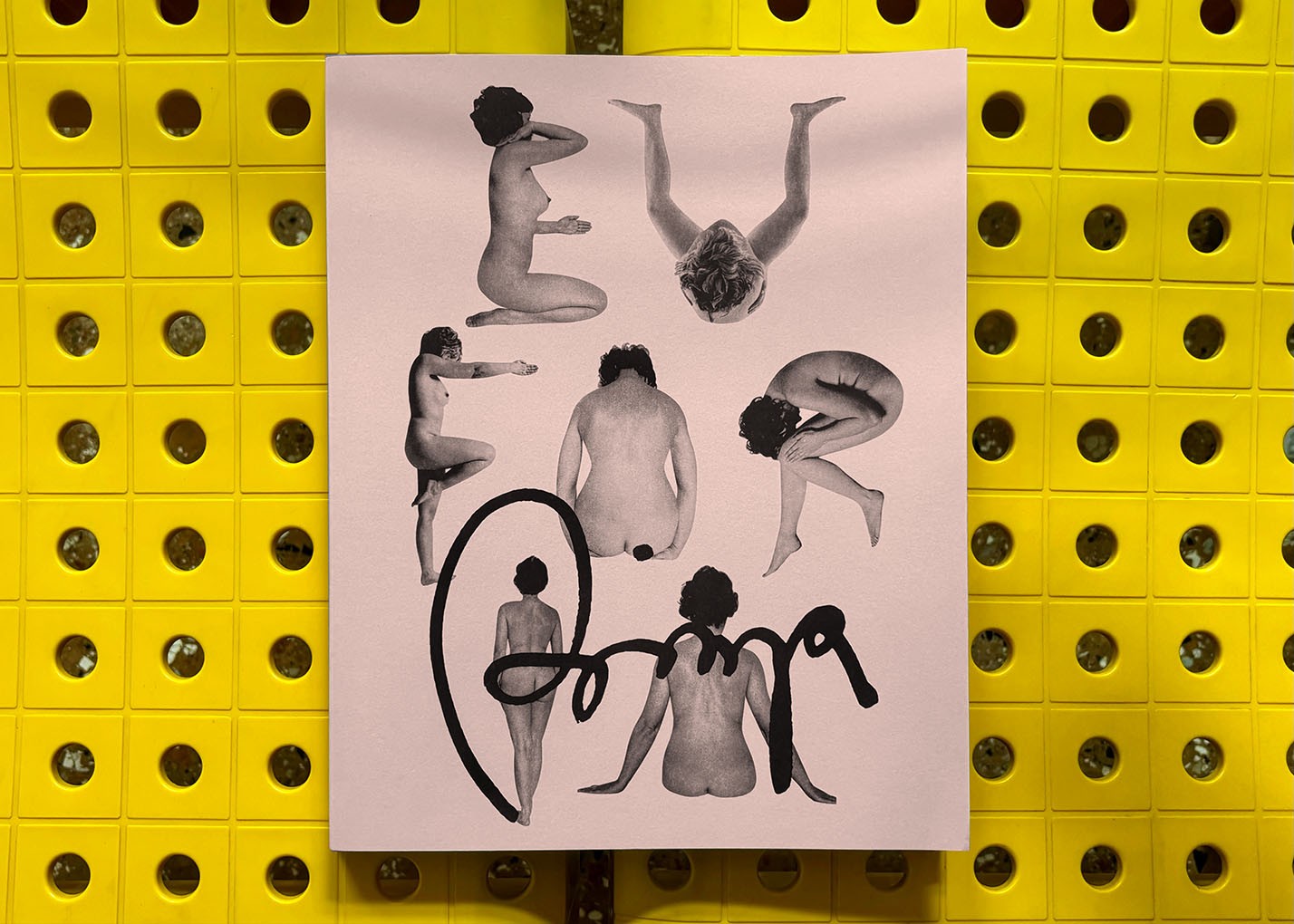
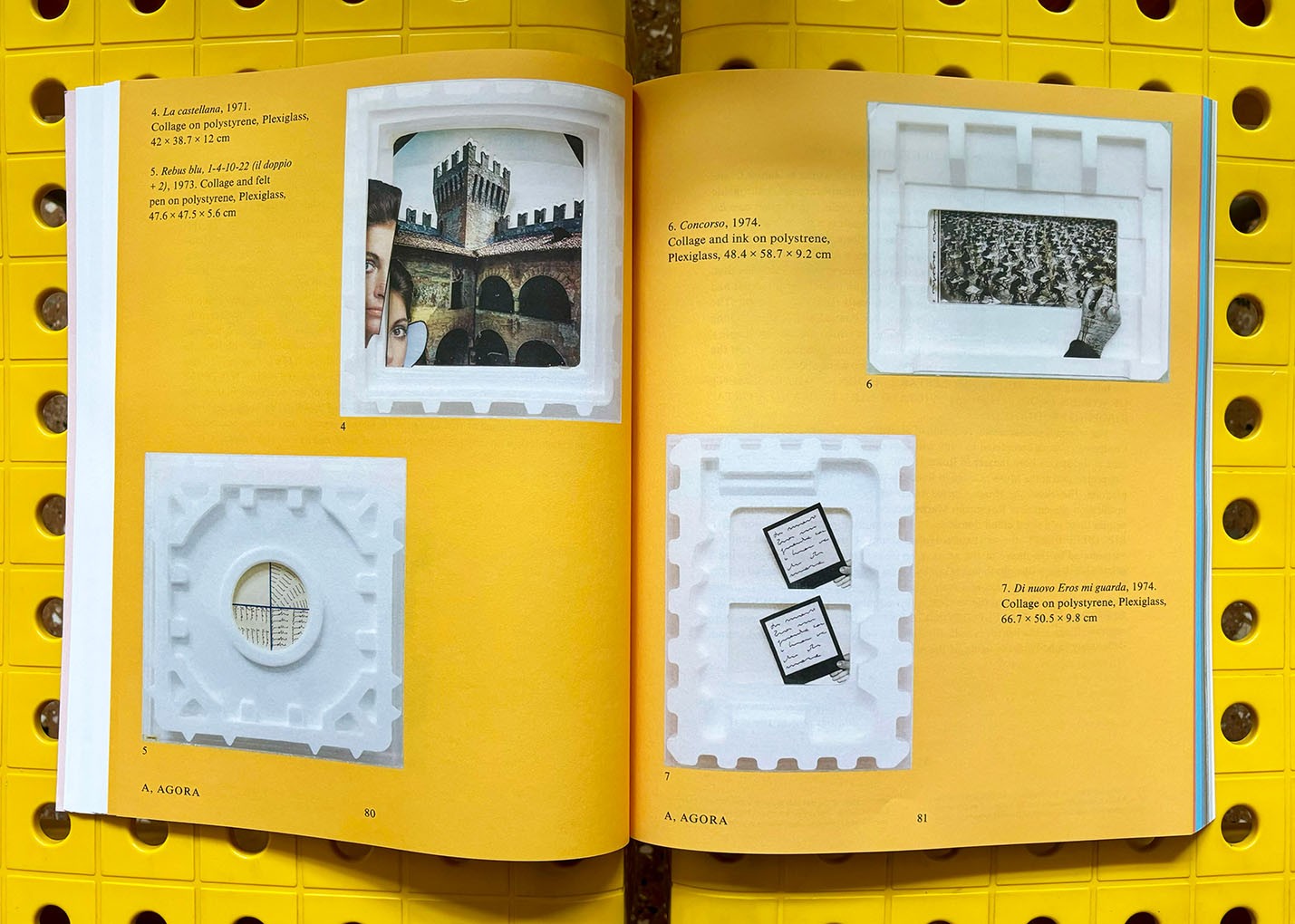
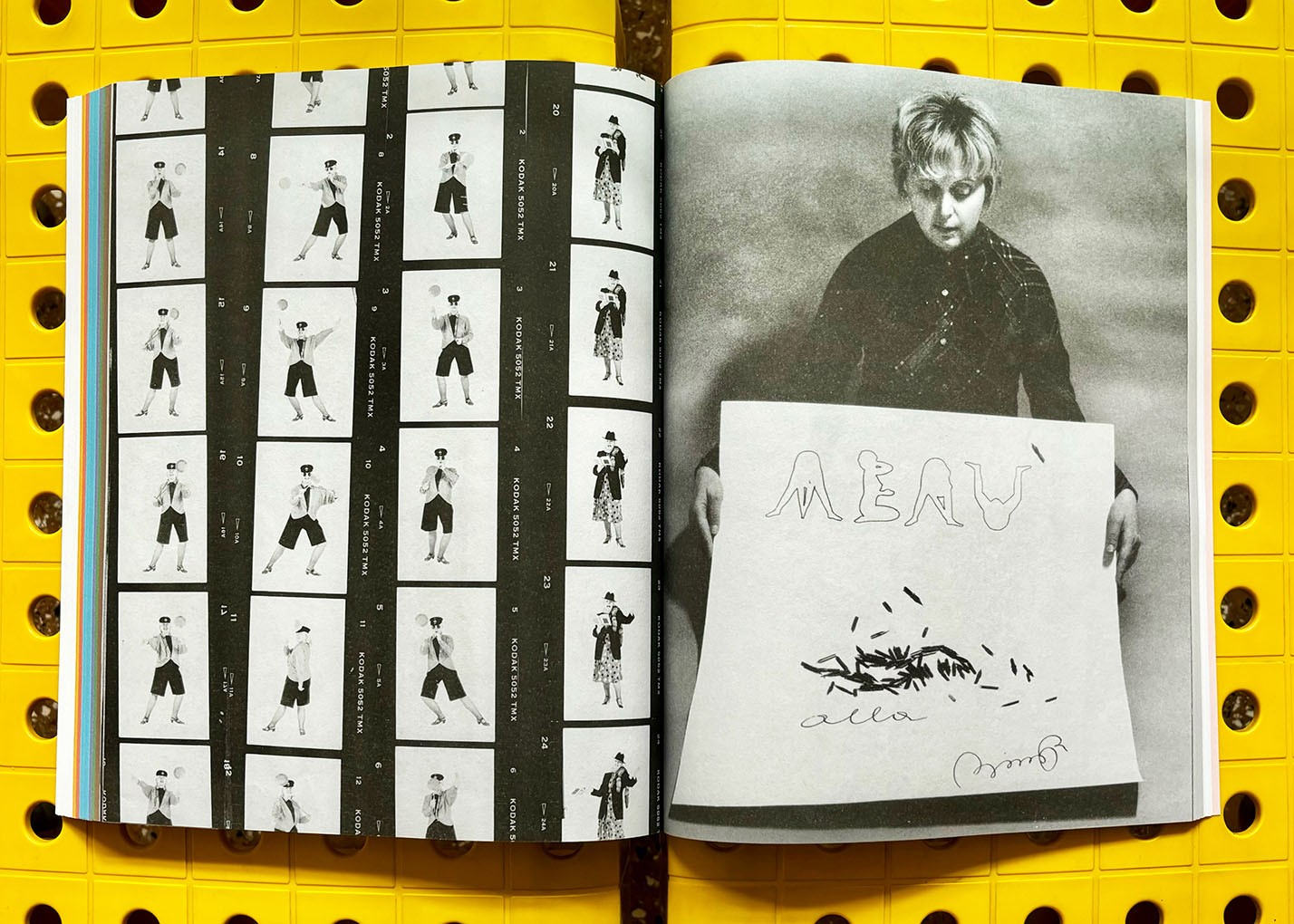
The practice of Tomaso Binga (Bianca Pucciarelli Menna, 1931) toys with the notion of gender, reconsidering women’s social roles and rights. This monograph, edited by Eva Fabbris, Lilou Vidal, and Stefania Zuliani, analyses her work through various languages and features a selection of poems, highlighting the author’s critical and artistic approach.
Edited by Eva Fabbris, Lilou Vidal, Stefania Zuliani with Anna Cuomo
Texts by Tomaso Binga, Eva Fabbris, Daria Khan, Quinn Latimer, Luca Lo Pinto, Lilou Vidal, Stefania Zuliani
Designed by Lorenzo Mason Studio
2024, English / Italian, softcover, 24 x 30 cm, 304 pages
ISBN: 979-12-80579-42-3
Embedded in the language of visual and sound poetry, the practice of Tomaso Binga (Bianca Pucciarelli Menna, born in Salerno in 1931) is based on an ironic, insightful questioning of the idea of gender. In her work, this theme is not only a generator of identity, but also a way of looking afresh at the social roles, rights and opportunities traditionally available to women. Her decision to work under a male pseudonym from 1971 onwards was intended to parody male privilege and to provoke a barbed reflection on the political dimension of what it is to be a woman. Her attitude has served as a key marker within the gender equality issues at the center of the debate raging amongst the younger generations.
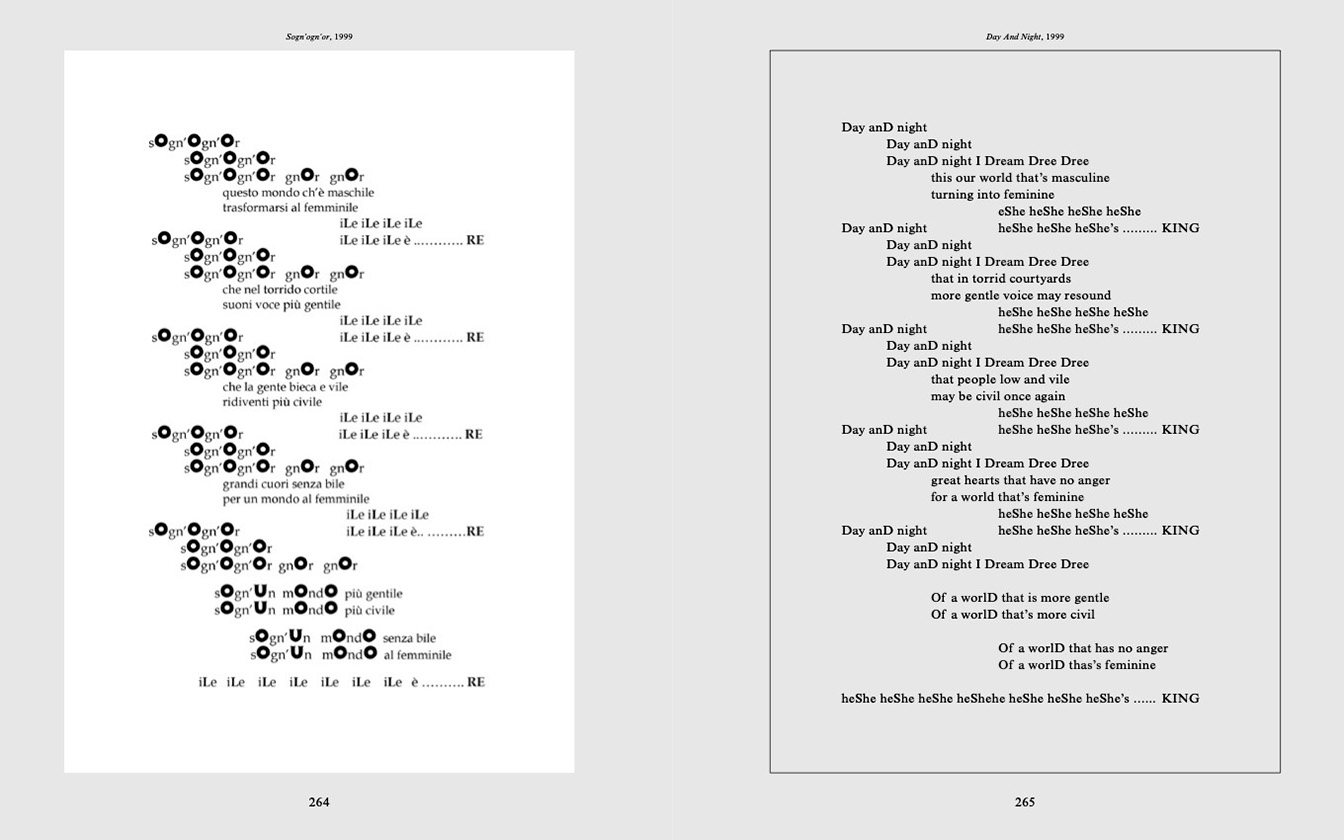
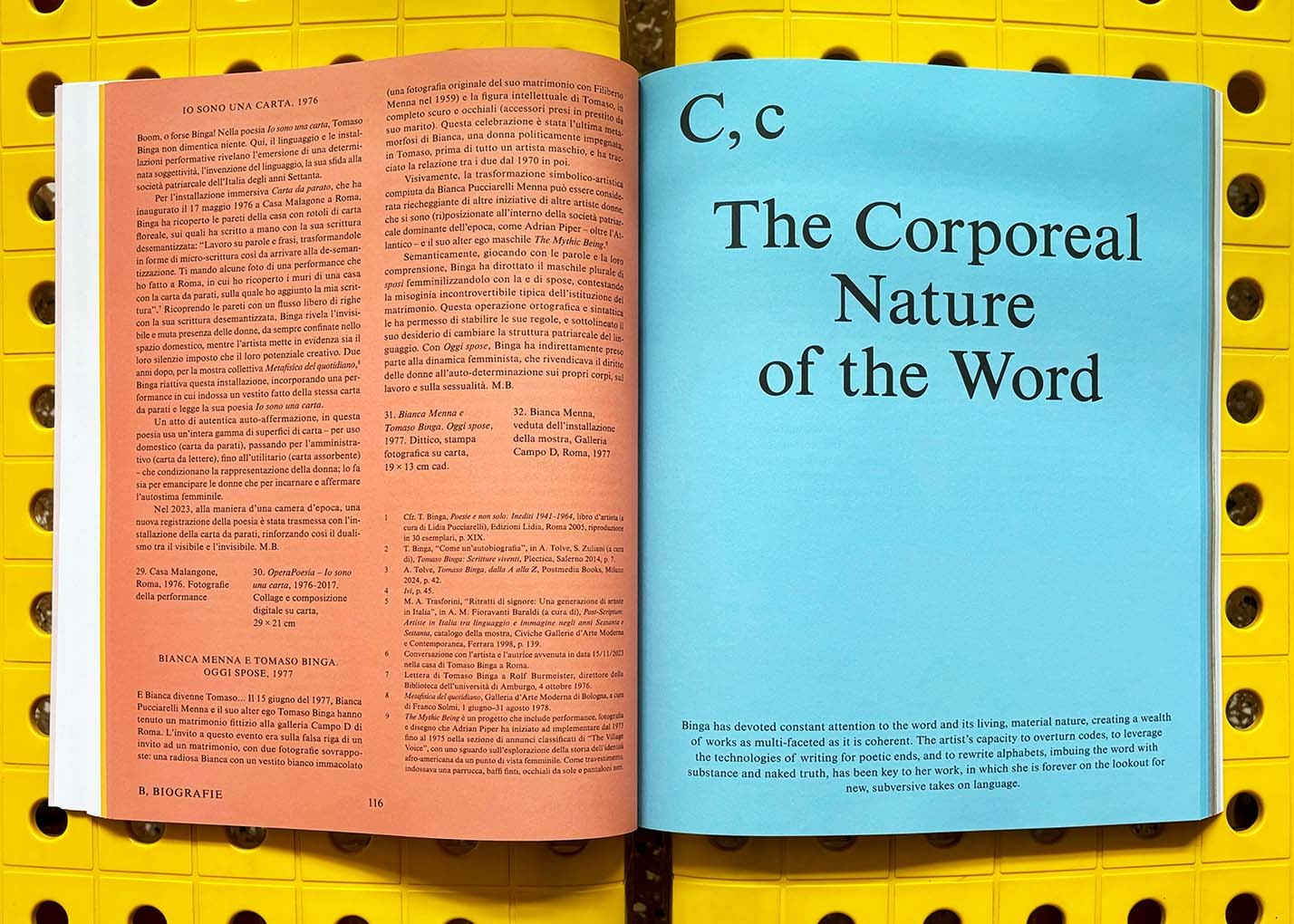
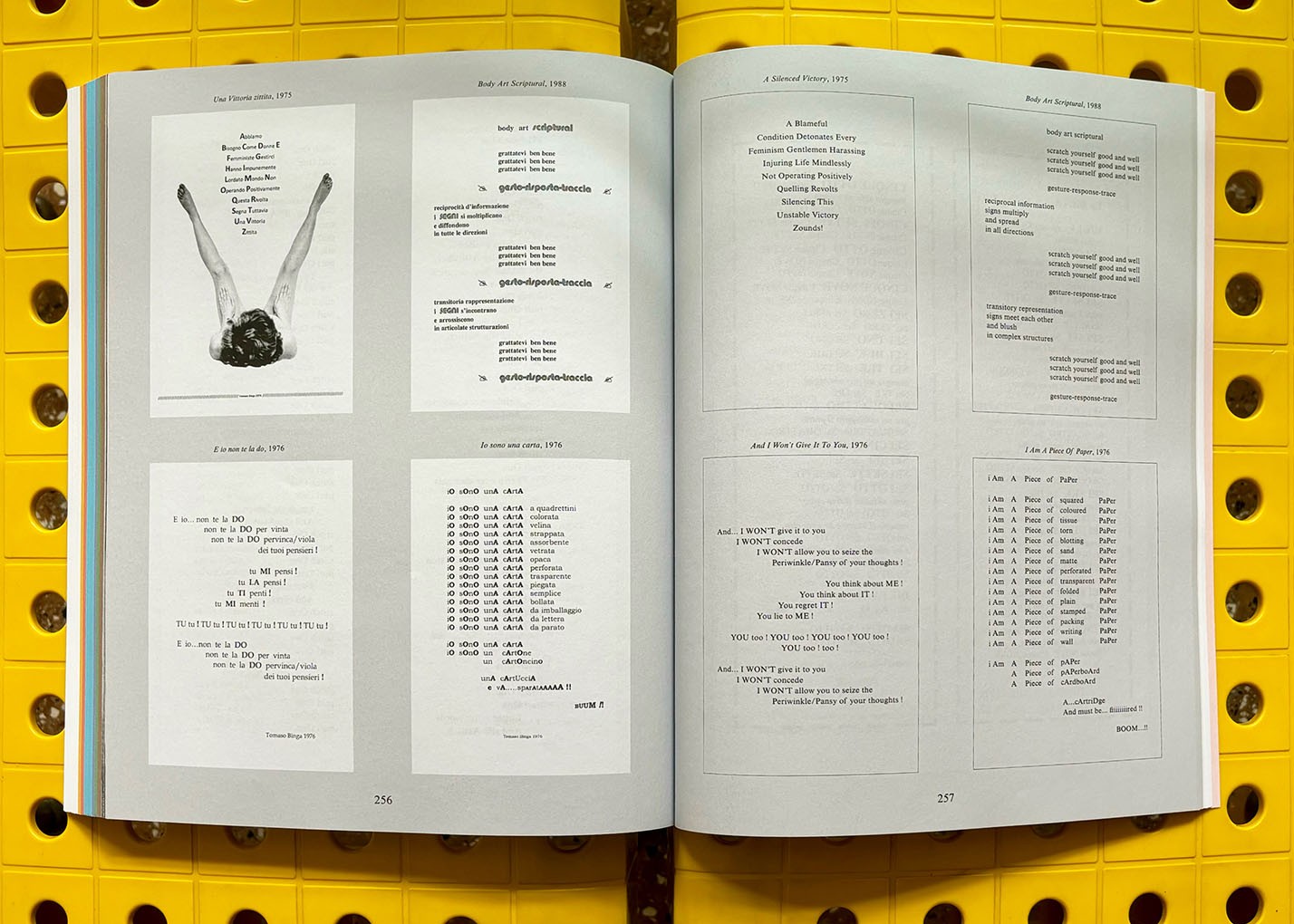
This monograph explores the work and the artistic activities of Tomaso Binga through a specific lexicon (Agora, Biographies, the Corporeal Nature of the Word, Correspondences, Geographies, Vaginal Value), and also features a selection of poems by the artist.
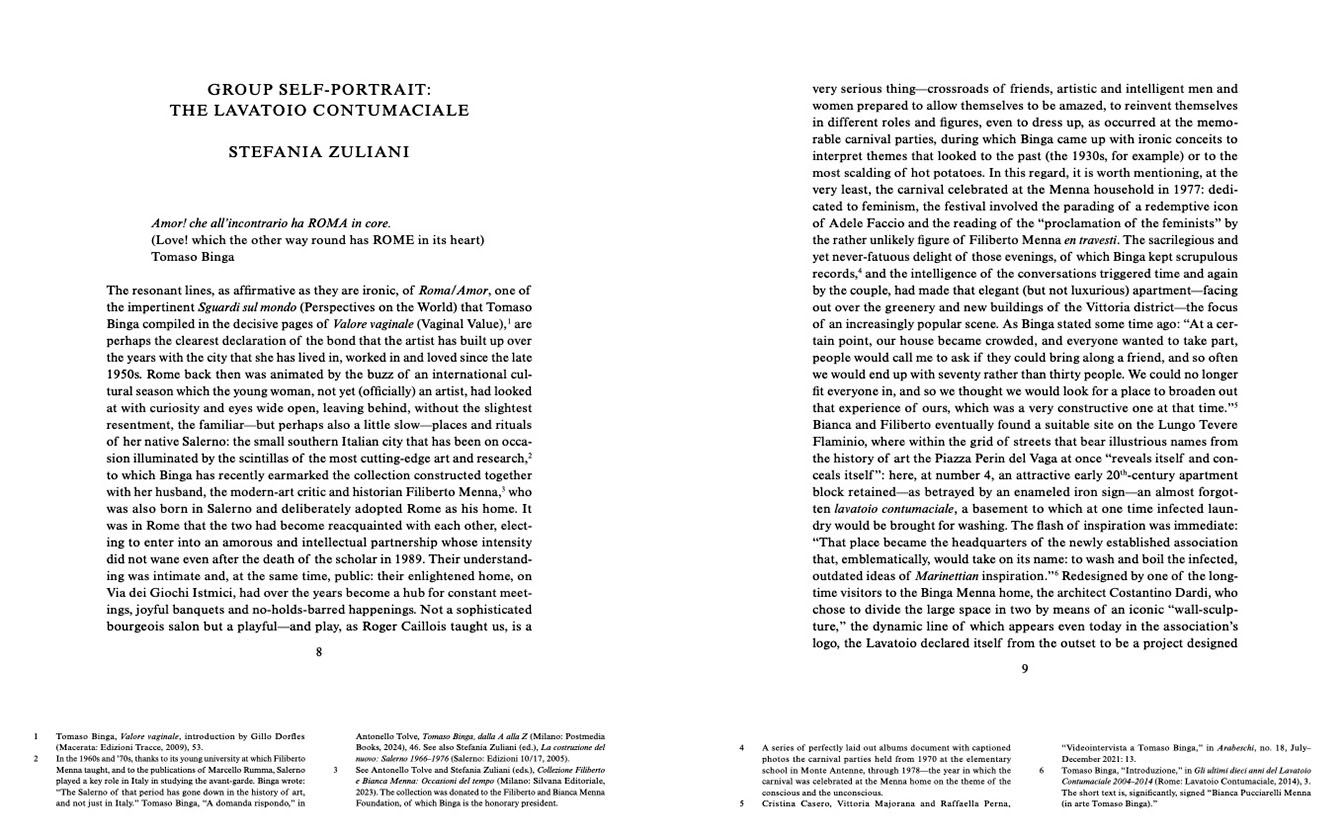
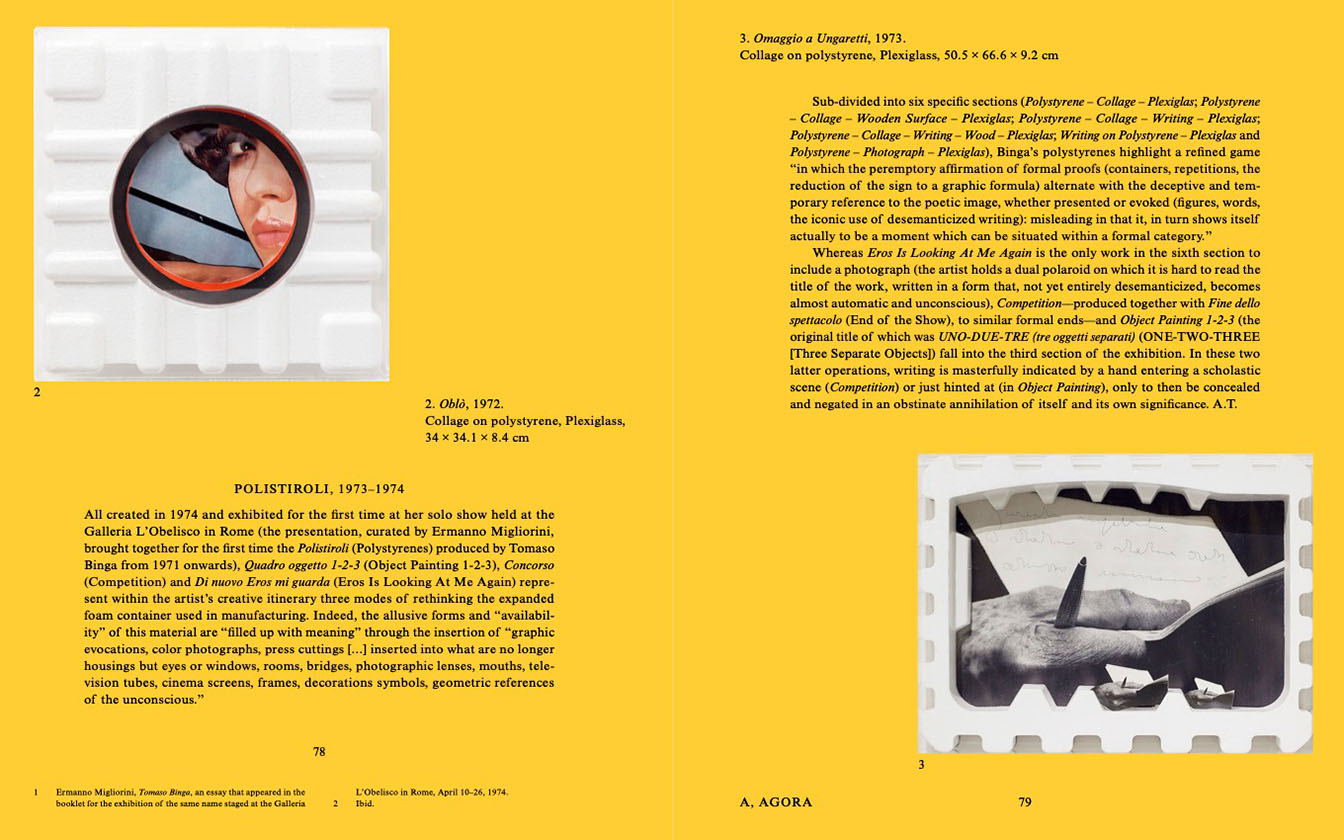
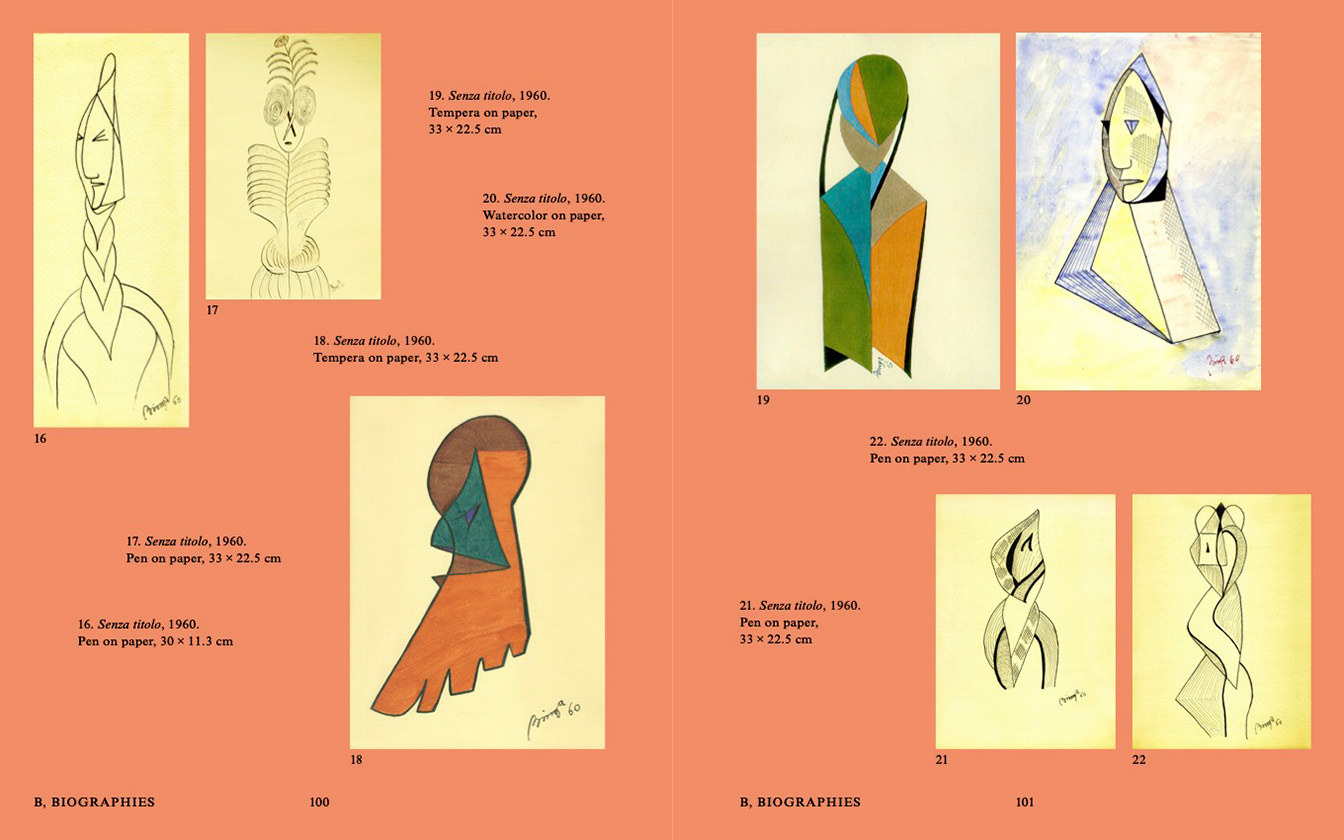
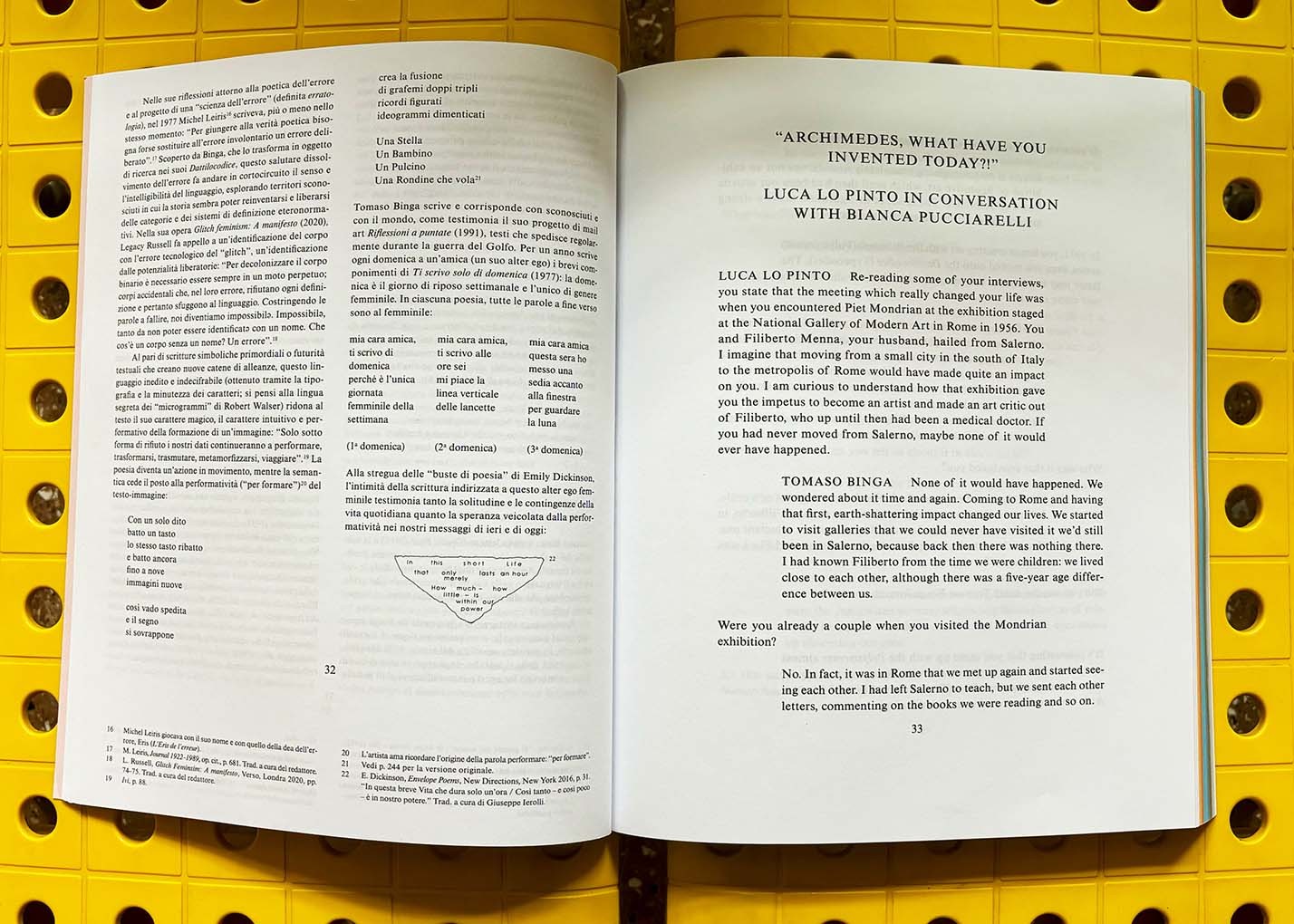
The volume explores the key passages of Tomaso Binga’s artistic practice, and as such is divided into three macro areas. The first, purely textual, following institutional introduction by the President of the Fondazione Donnaregina per le arti contemporanee Angela Tecce, features texts by Eva Fabbris, Daria Khan, Quinn Latimer, Lilou Vidal, and Stefania Zuliani, as well as a conversation between the artist herself and Luca Lo Pinto. The second part brings together a series of short critical texts that offer an in-depth analysis of single works and small bodies of work by Tomaso Binga. These contents are further subdivided into six categories (Agora, Biographies, The Body of the Word, Correspondences, Geographies, Vaginal Value) with the aim of delving into the key areas of interest in Tomaso Binga’s practice in chronological order. Critical contributions are thus provided by Marc Bembekoff, Barbara Casavecchia, Martina Cavalli, Chiara Costa, Anna Cuomo, Valérie Da Costa, Allison Grimaldi Donahue, Daria Khan, Émilie Notéris, Raffaella Perna, Antonello Tolve, and Andrea Viliani. The third and final part is dedicated to the artist’s visual poems. Each poem is accompanied by an English translation, in several cases published here for the first time.
The publishing project was the winner of the twelfth edition of Italian Council, supported by the General Directorate for Contemporary Creativity of the Ministry of Culture, promoted by the Fondazione Donnaregina per le arti contemporanee and made possible with the support of the Associazione Amici del Madre.