In her work, Cally Spooner crystallizes an absurd contemporary ecosystem in which entities run the risk of managing themselves and one another to death. Featuring newly commissioned essays alongside a lecture by Spooner, SWEAT SHAME ETC. is the first comprehsive survey of the artist’s output of the last five years.
This new anthology brings together visions, experiences and critical interdisciplinary methodologies that have been instrumental in the development of the language of moving images since 2010. New essays and conversations reflect on radical technological and poetic transformations in the works of the generation of digital native artists.
Center of the Frame is the artist’s first monograph and brings together paintings made between 1997 and 2024. The publication provides an in-depth look at Eisler’s fascination with cinema and with the transmission of images through the various formats of analog film, television broadcasts, Internet video and, of course, the painted canvas.
At 500 pages, this is the most comprehensive book yet on Norwegian artist, Ida Ekblad. Appearing three years after the artist’s show at Kunsthalle Zürich, Melted Snow took certainly a long time—all the time is takes to ponder fifteen years of the artist’s career.
On the occasion of PROVENCE’s 15th anniversary, the reader My Alphabet presents 26 texts published by PROVENCE between 2009 and 2024, either in print or digitally in the weekly newsletter. These texts are sorted alphabetically, ranging from A for Amphetamine to N for Ne travaillez jamais to Z for Gen Z.
This publication is devoted exclusively to the metal works of Sidsel Meineche Hansen. Catalogued here is every cast, forged, and fabricated metal sculpture made since 2017. Poems by the artist Diego Marcon annotate and respond to the individual pieces.
Edited by Edoardo Bonaspetti
Commissioning Editors: Maria Sica (director, IIC Tel Aviv) and Nicola Trezzi (director and curator,
CCA Tel Aviv-Yafo)
Design Lorenzo Mason Studio
2023, English, softcover, 21 x 30 cm, twenty 60 × 40 cm sheets of wrapping paper
ISBN: 979-12-80579-26-3
On March 11, 2011, the most powerful earthquake ever to hit Japan created a tsunami that laid waste to the country’s east coast, causing a catastrophic breach at the Fukushima Daiichi Nuclear Power Plant. Since then, access to the contaminated towns and surrounding countryside has been mostly limited to scientists and specialized decontamination crews. The project Don’t Follow the Wind (2015–ongoing)—organized by the Tokyo-based art collective Chim↑Pom from Smappa!Group, together with Kenji Kubota, Jason Waite, and Eva & Franco Mattes—marked a historic exception: a group of artists entered the exclusion zone to produce a series of site-specific works. Installed in several venues on loan from former residents, these interventions comprise an exhibition that will remain unreachable in person for many years to come, until it will finally be deemed safe to return.
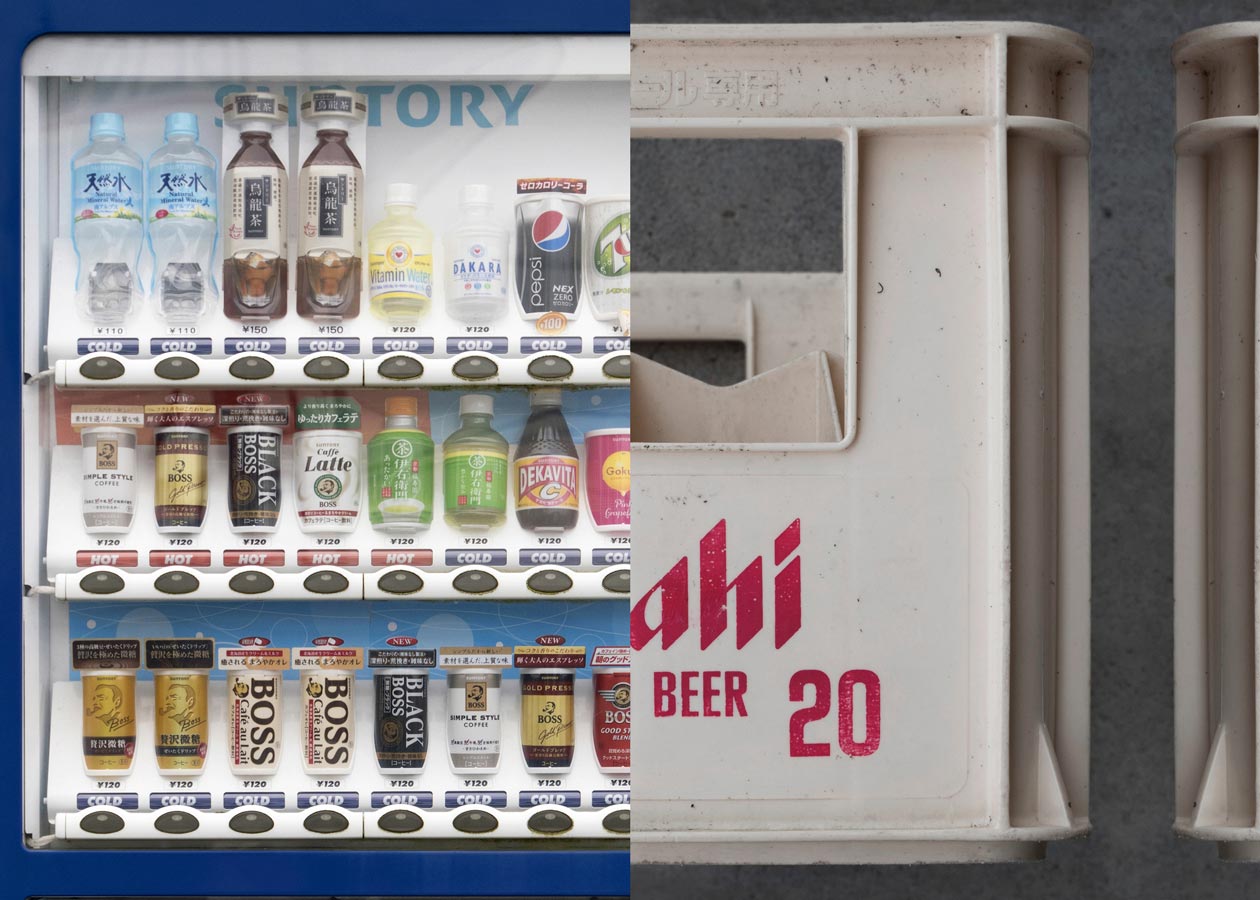
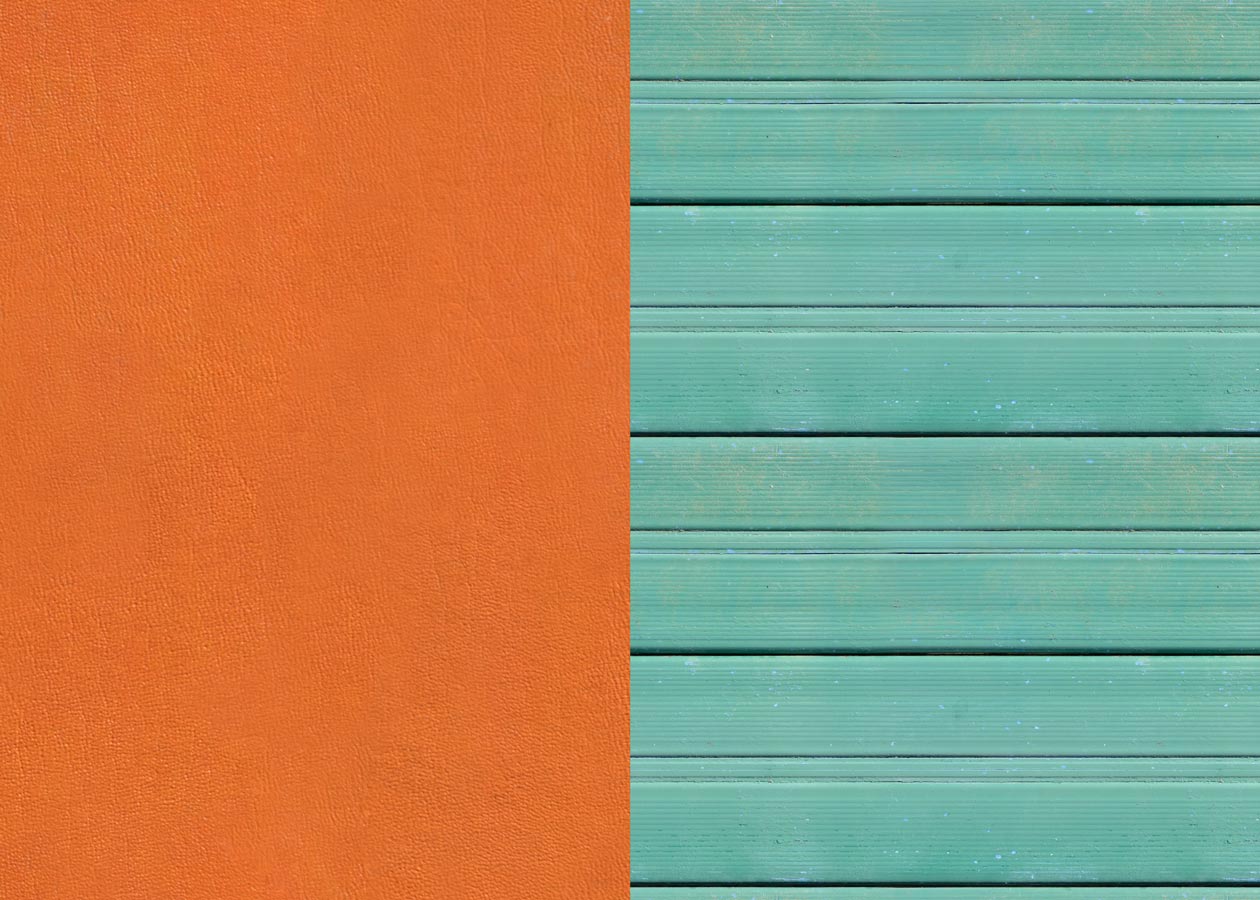
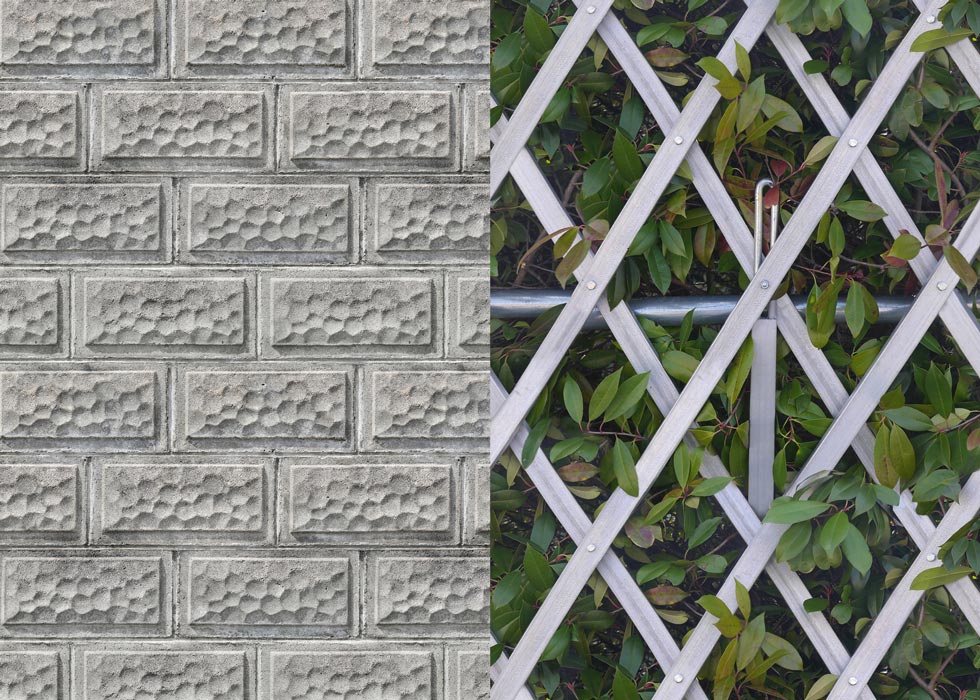
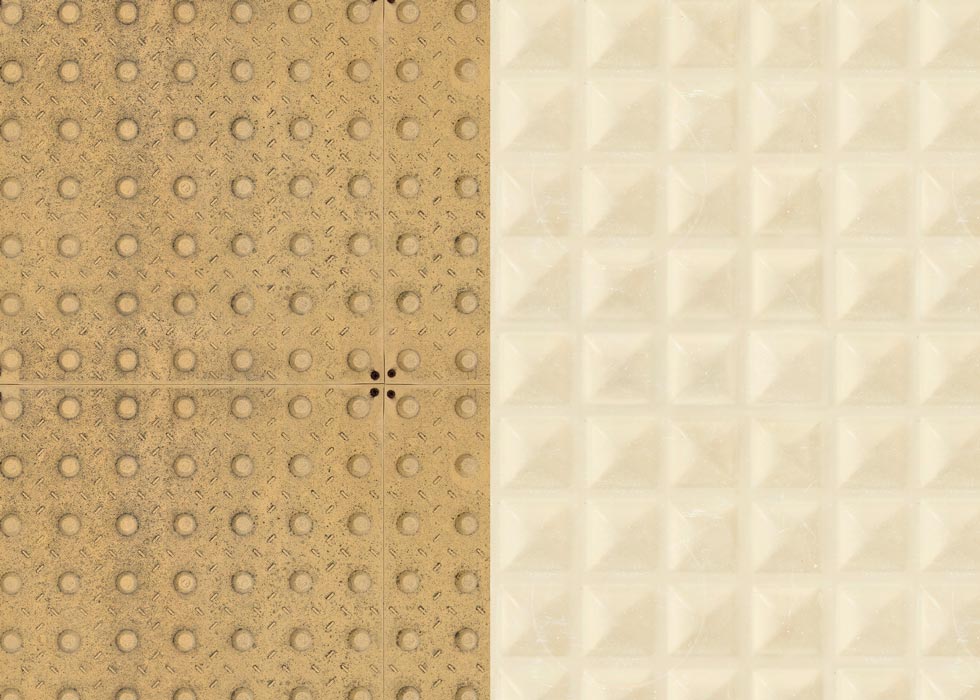
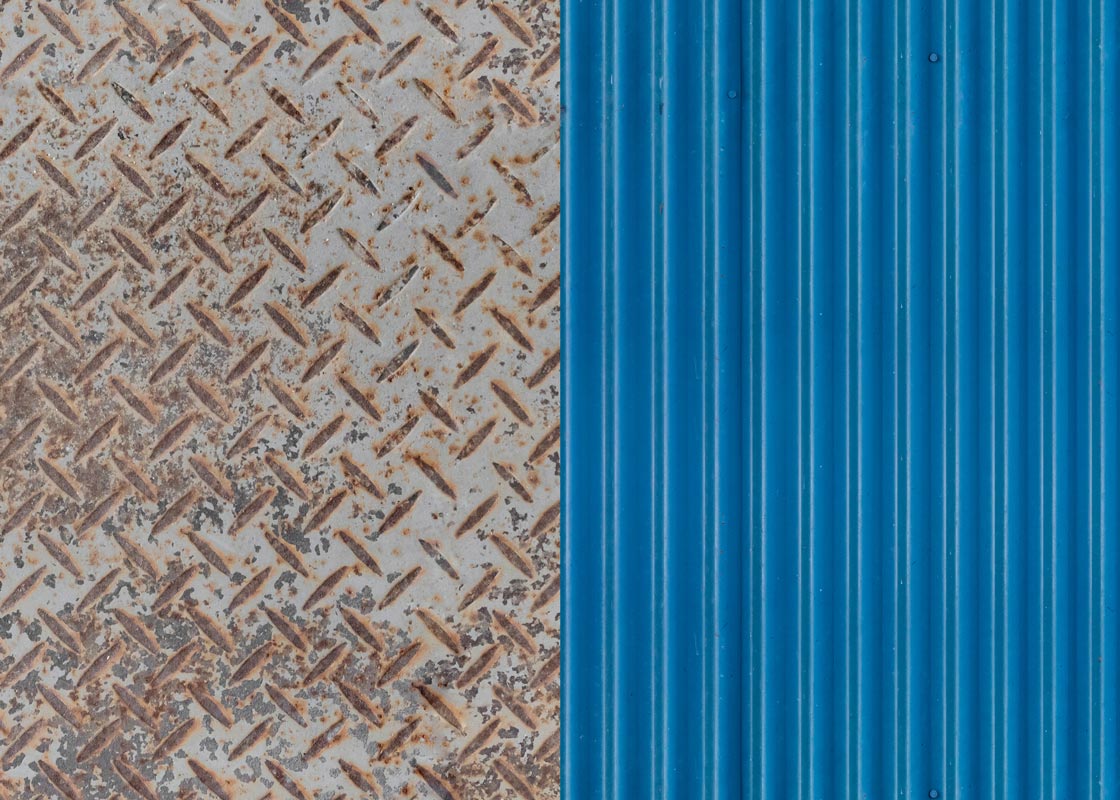
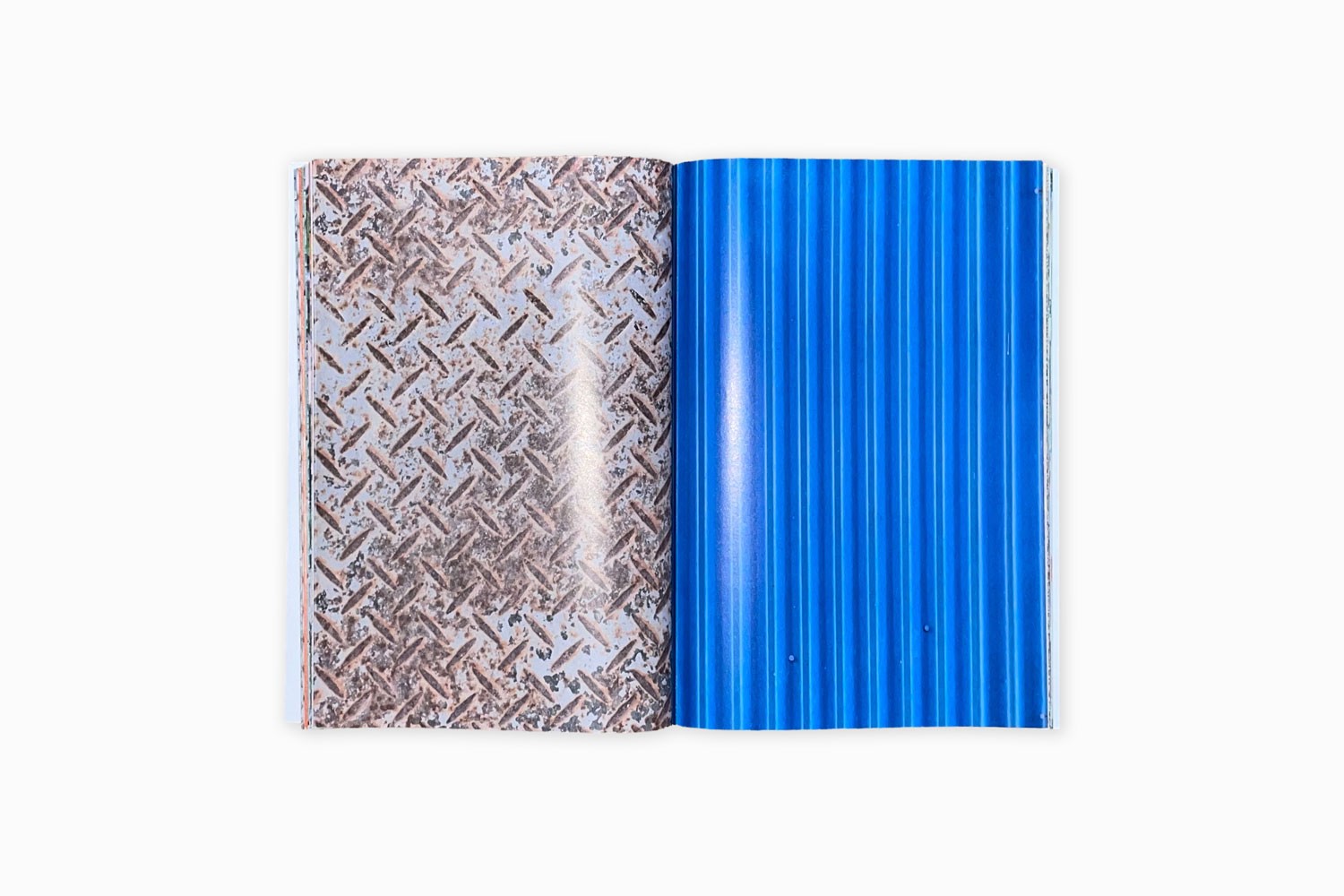
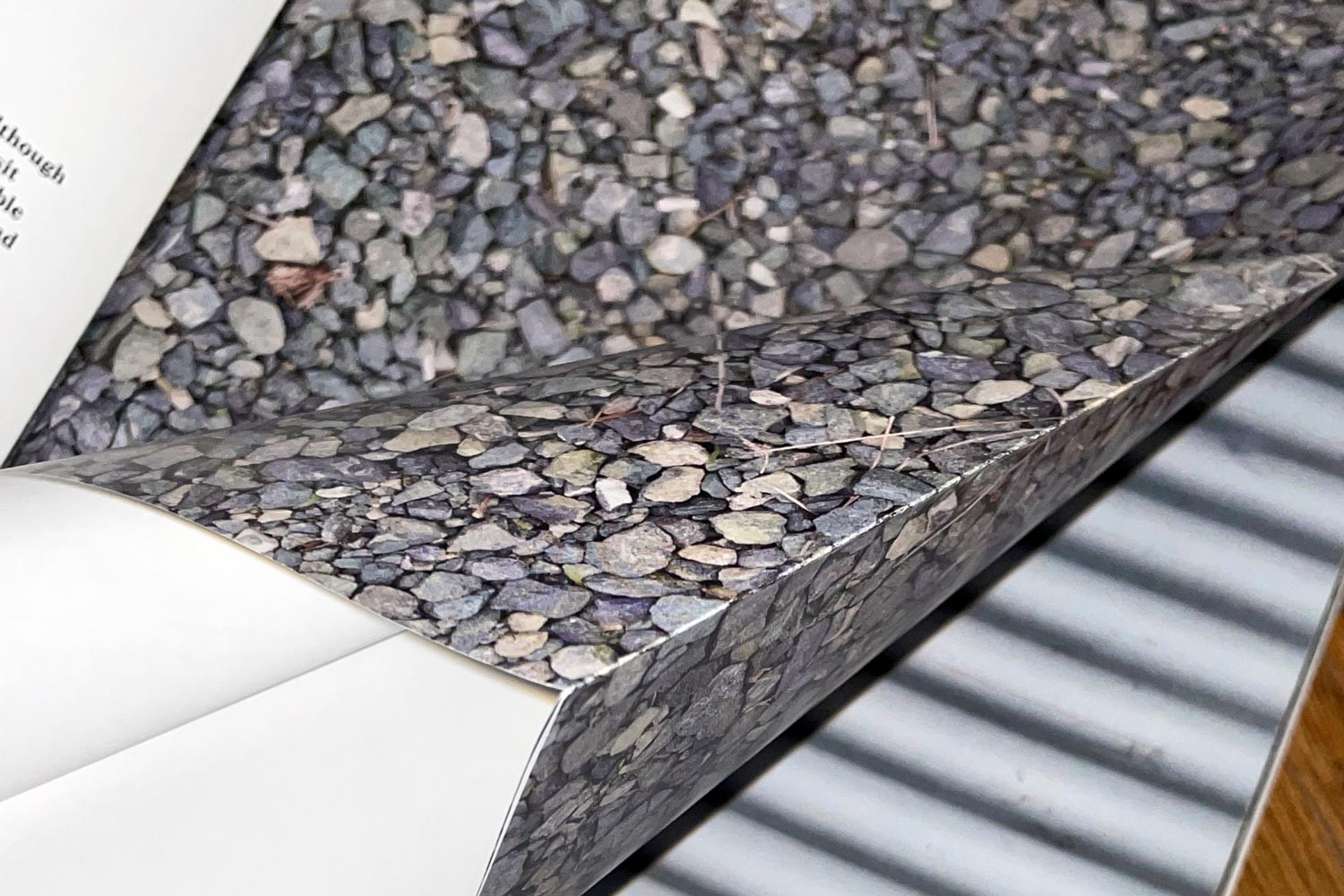
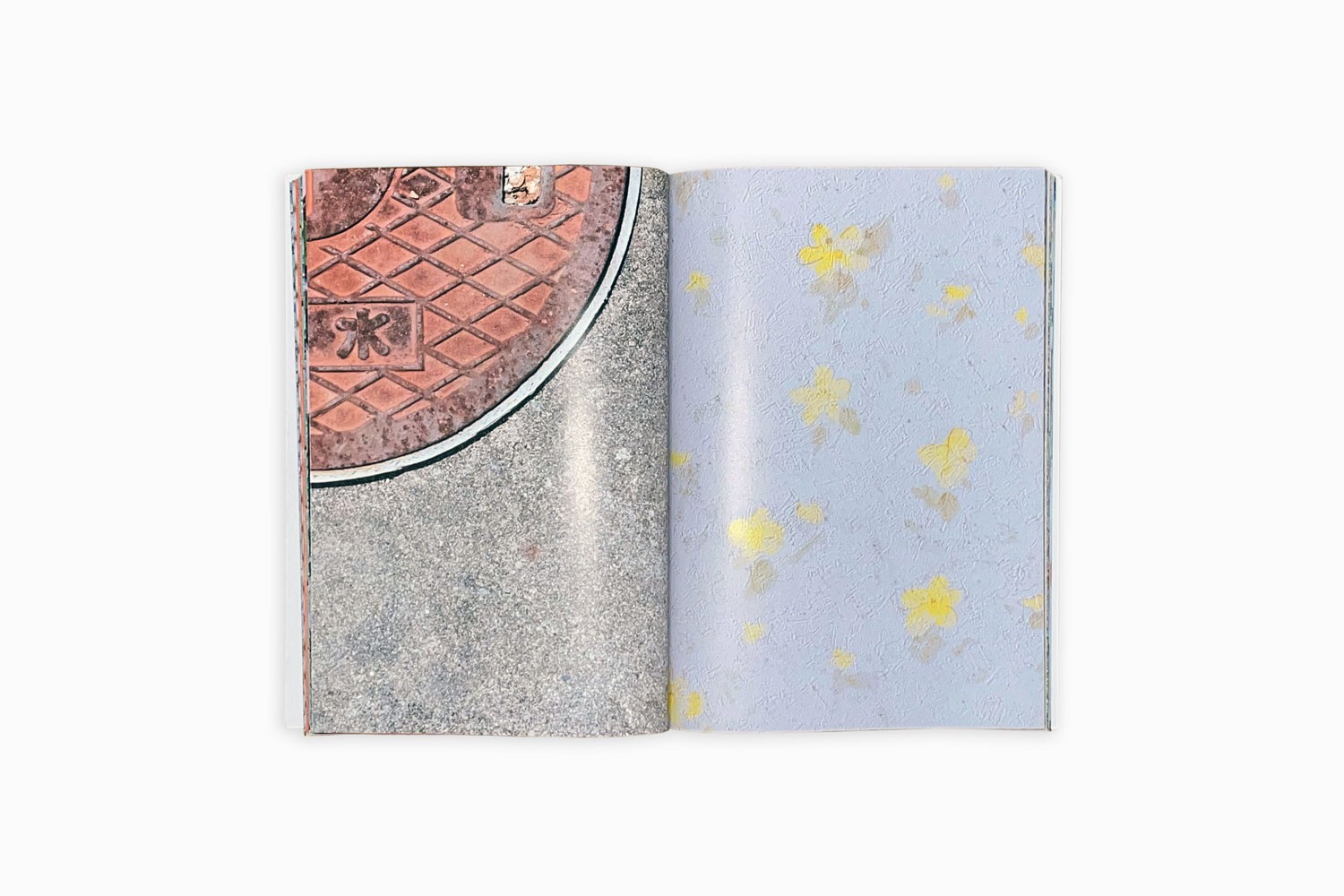
Fukushima Texture Pack is an artistic record of Eva & Franco Mattes’ engagement with this contaminated landscape. Borrowing the format of books of wrapping paper, it contains twenty large pre-perforated sheets. Each features a visual texture, a surface captured on camera amid radioactive ruins. All such patterns afford a seamless repeating motif, should they be installed in a tile formation as wallpaper. They comprise a representative sample of the 152 textures the artists first released online as freehold digital files. The pages of this book may be used freely to cover other books, decorate boxes, wrap gifts, form origami, or they may be framed as small works of art.
This artist’s book extends Eva & Franco Mattes’ interest in Fukushima’s geographical displacement. Following its radioactive ungrounding, this location is now most accessible through its representation. But images are given to obscuring the matter at hand—to wrapping it up, so to speak, in a reduced form. The tragic proportions of the Fukushima meltdown outstrip virtually all frames. With this in mind, how can one maintain awareness of this nuclear disaster? How might we live with the facts?
The textures—sampling walls and floors, rust, bricks, gravel, underbrush, tatami mats, dirt, desks, closets, and more—are unspectacular by design. Eschewing the gnarled automobiles, collapsed buildings, and other wrecks left in the wake of the tsunami, the visual banality of these posters speak to an invisible crisis. Additionally, their modular, tessellating design allows for the limitless spread of a given motif. As possible wallpaper, they evoke the new baselines of background radiation, omnipresent in and around the exclusion zone—a new surface condition.
The publication is supported by Istituto Italiano di Cultura Tel Aviv in collaboration with CCA Tel Aviv-Yafo.