Published in conjunction with a solo exhibition at Kunst Museum Winterthur, this book provides the first overview of Altmann’s work to date, characterized by a strongly socio-critical consciousness, and reveals the artist’s influences and inspirations.
The first monograph dedicated to Paloma Bosquê addresses the Brazilian artist’s ways of understanding and giving shape to that matter which can be perceived, but not rationalized.
The first book on London based artist Gili Tal, whose practice identifies how the digital has long become a reality that has subjected our habits of perception to a radical change.
Through comprehensive and interdisciplinary readings of landscape, cinema, architecture, and visual culture, this first monograph builds on the storytelling dimensions that have always informed the photographic oeuvre of the Syrian artist.
The book is the outcome of an exhibition around the theme of the sacred. The resumption of historical figures, classical art-historical iconography, and everyday images intermingle in a reconstruction of reality that is dreamlike, painful, and sometimes grotesque.
Vogliamo tutto. Cultural Practices and Labor is a publication on work within a changing socio-cultural context: from the impact of the Industrial Revolution to post-industrial decline through to the rapid evolution of the digital era.
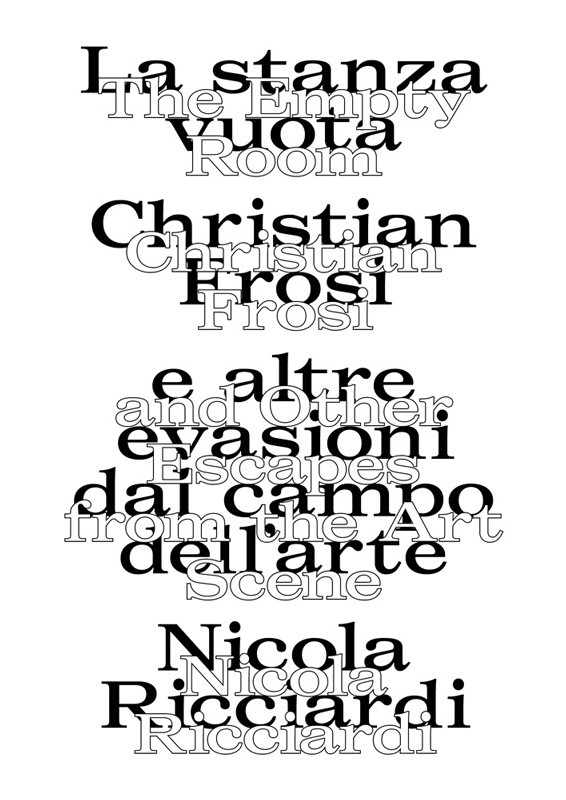
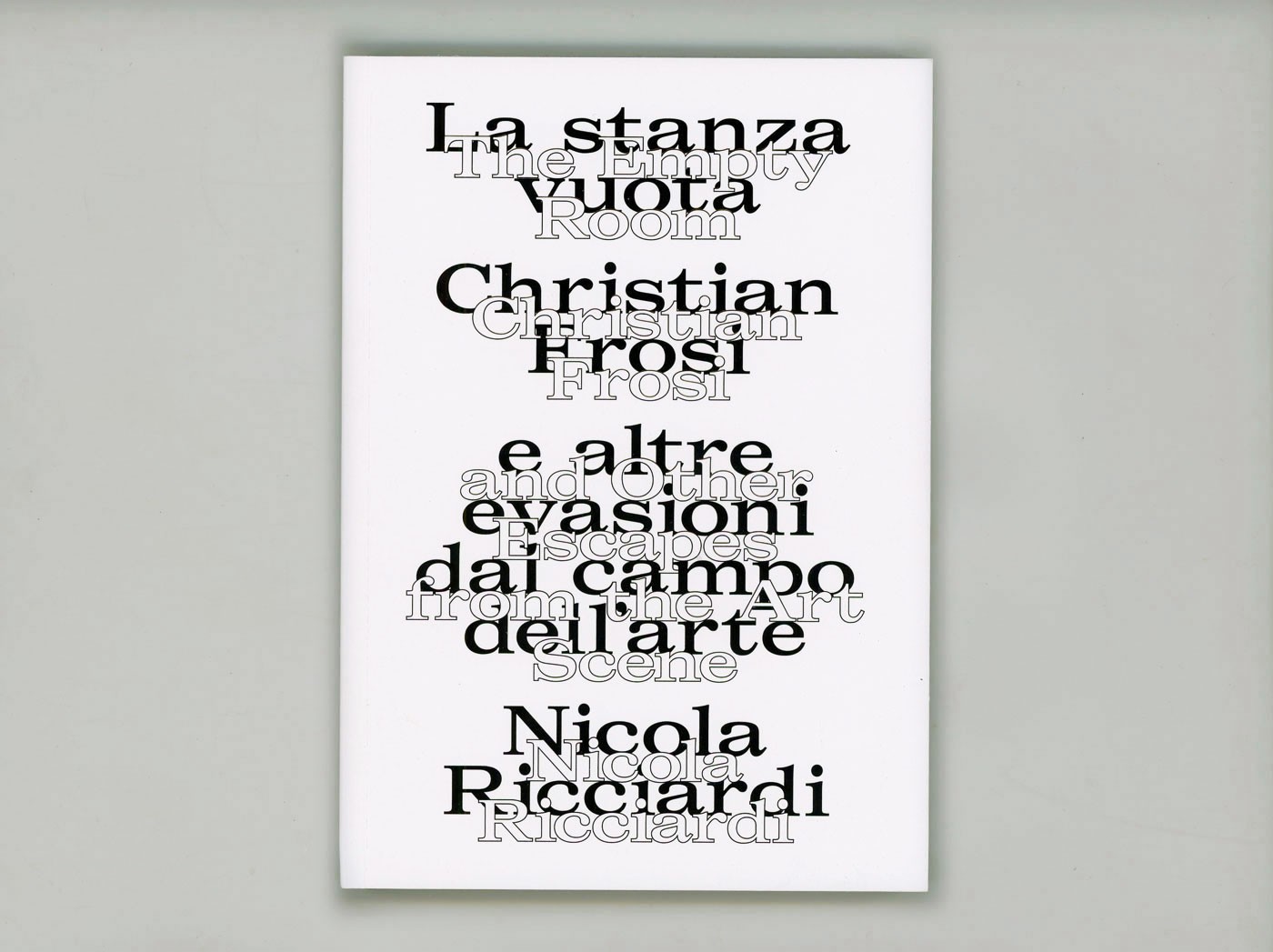
The Empty Room Christian Frosi and Other Escapes from the Art Scene
Edited by Nicola Ricciardi
Design by Lorenzo Mason Studio
2022, English / Italian, softcover, 240 pages, 17 x 24 cm
ISBN 979-12-80579-28-7
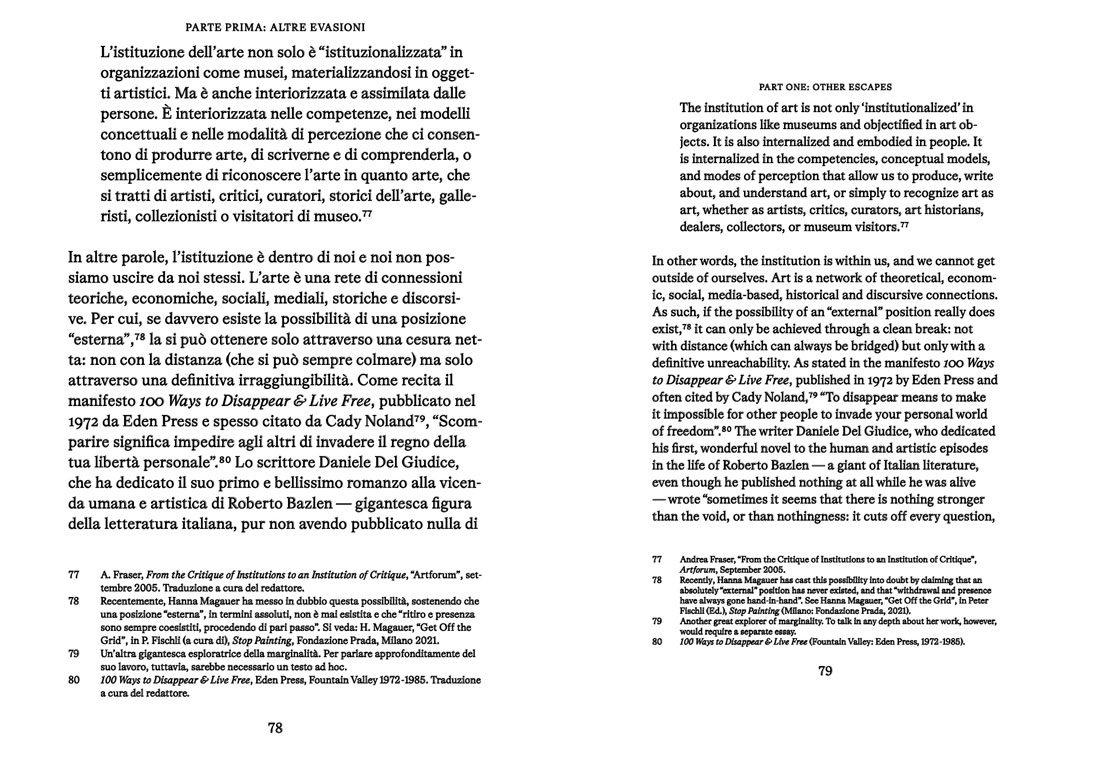
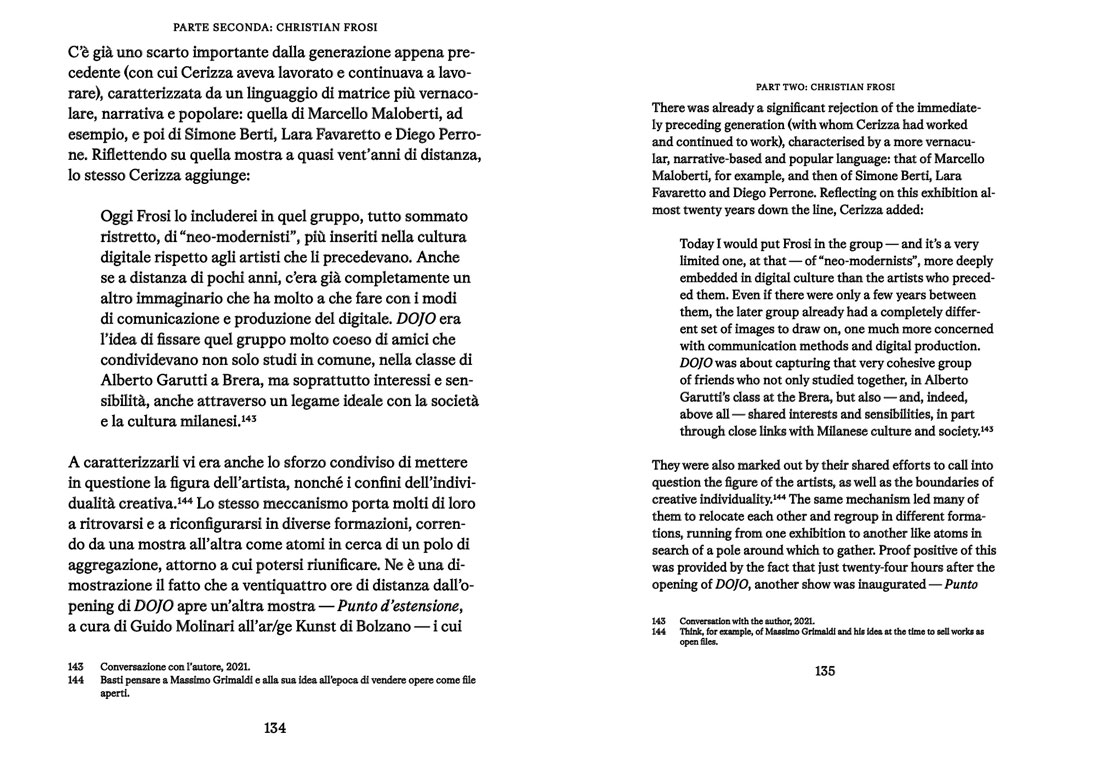
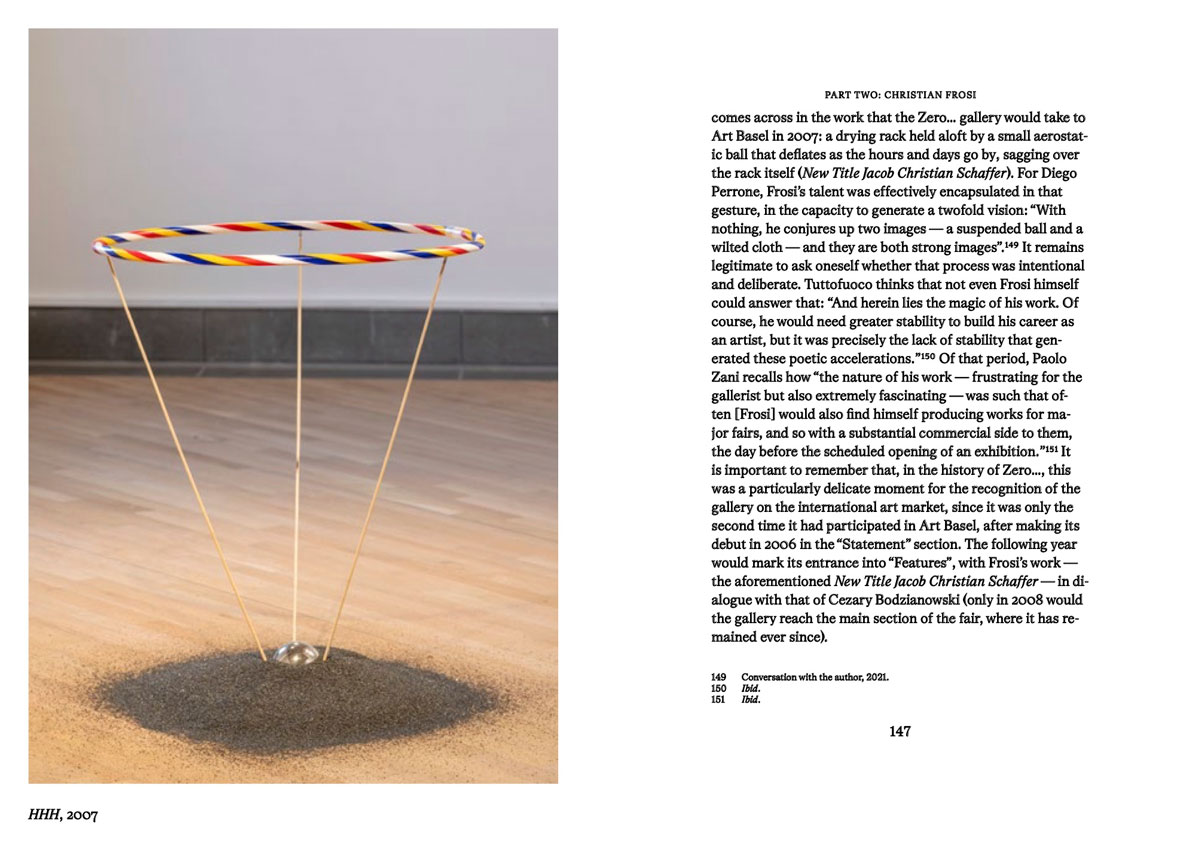
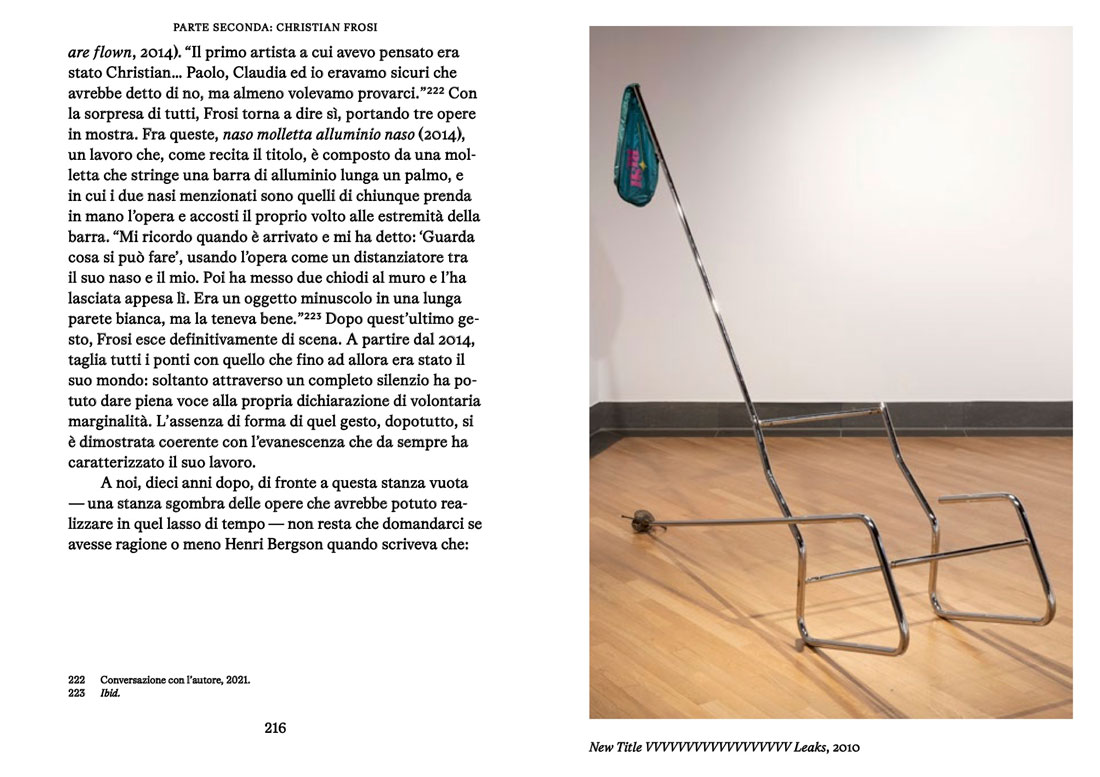
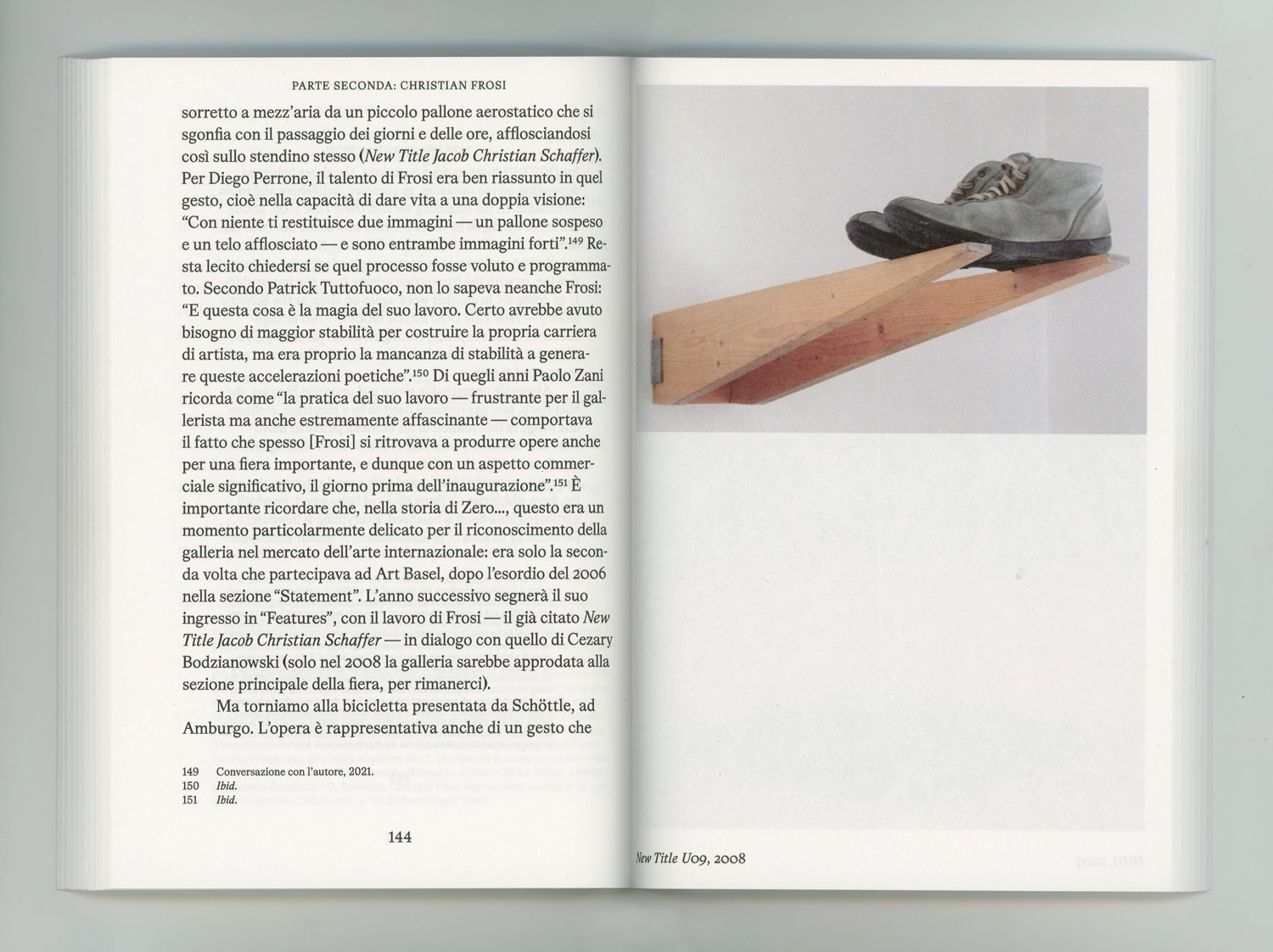
Christian Frosi (Milan, 1973) was long considered one of the most inspiring and promising Italian artists debuting in the early 2000s. That is until just over ten years into his career, when he decided to make himself unreachable and remove himself from art history, its customs and figures.
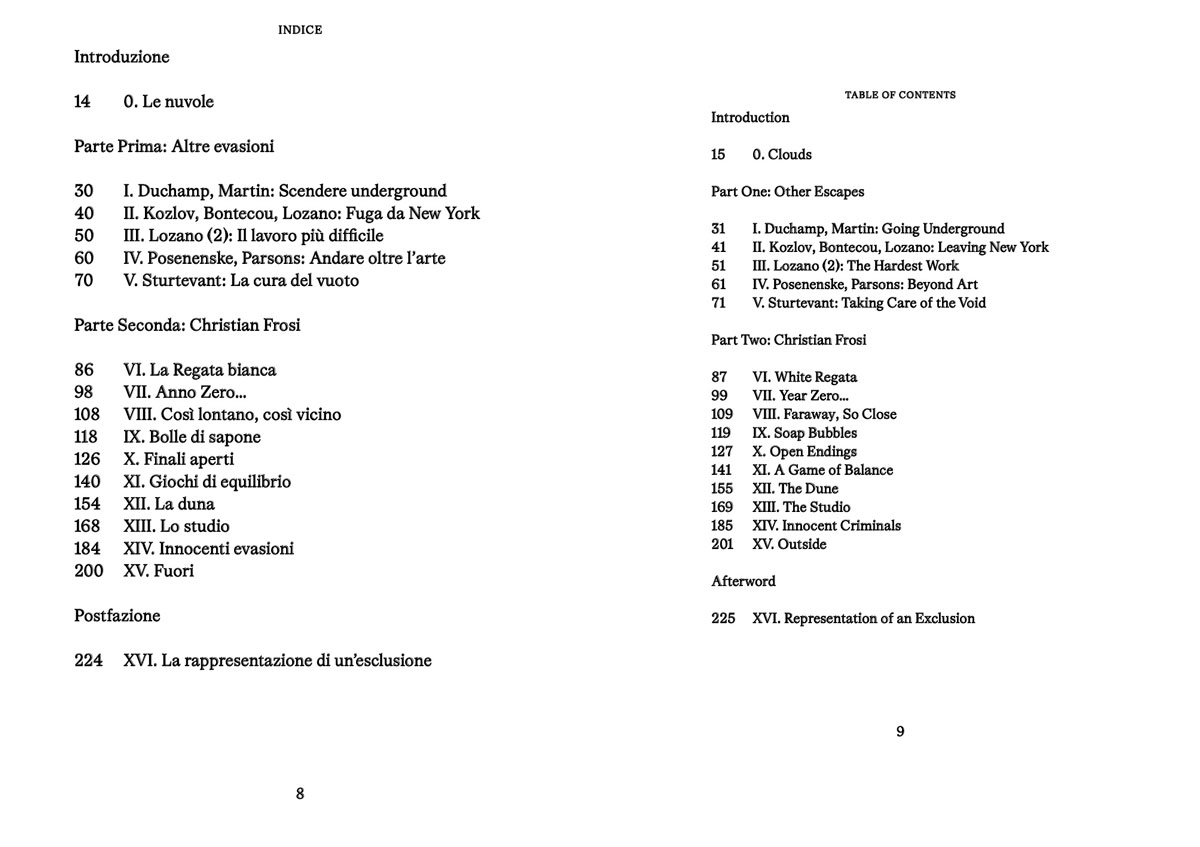
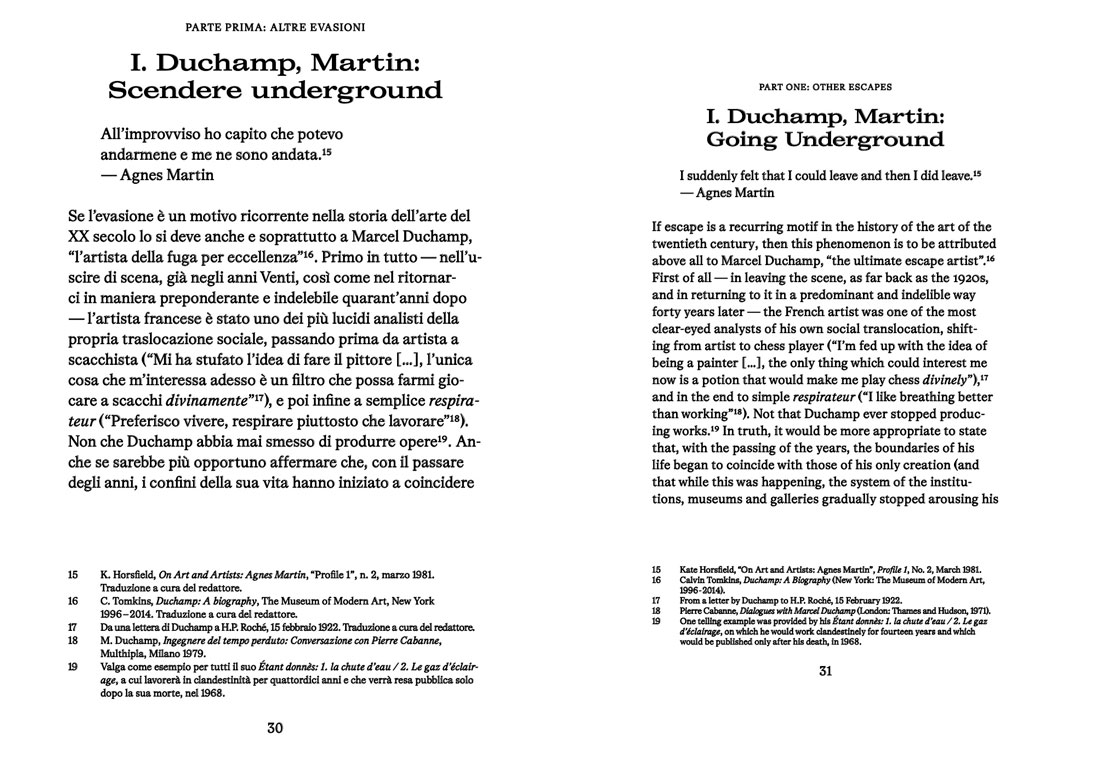
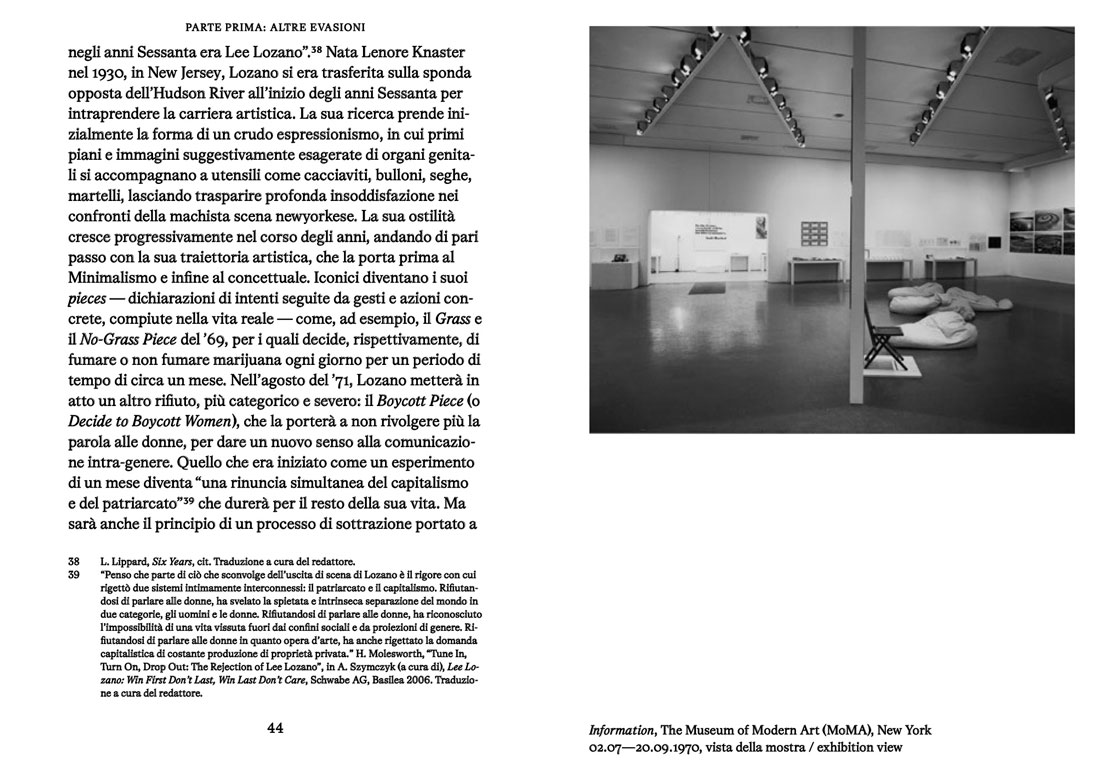
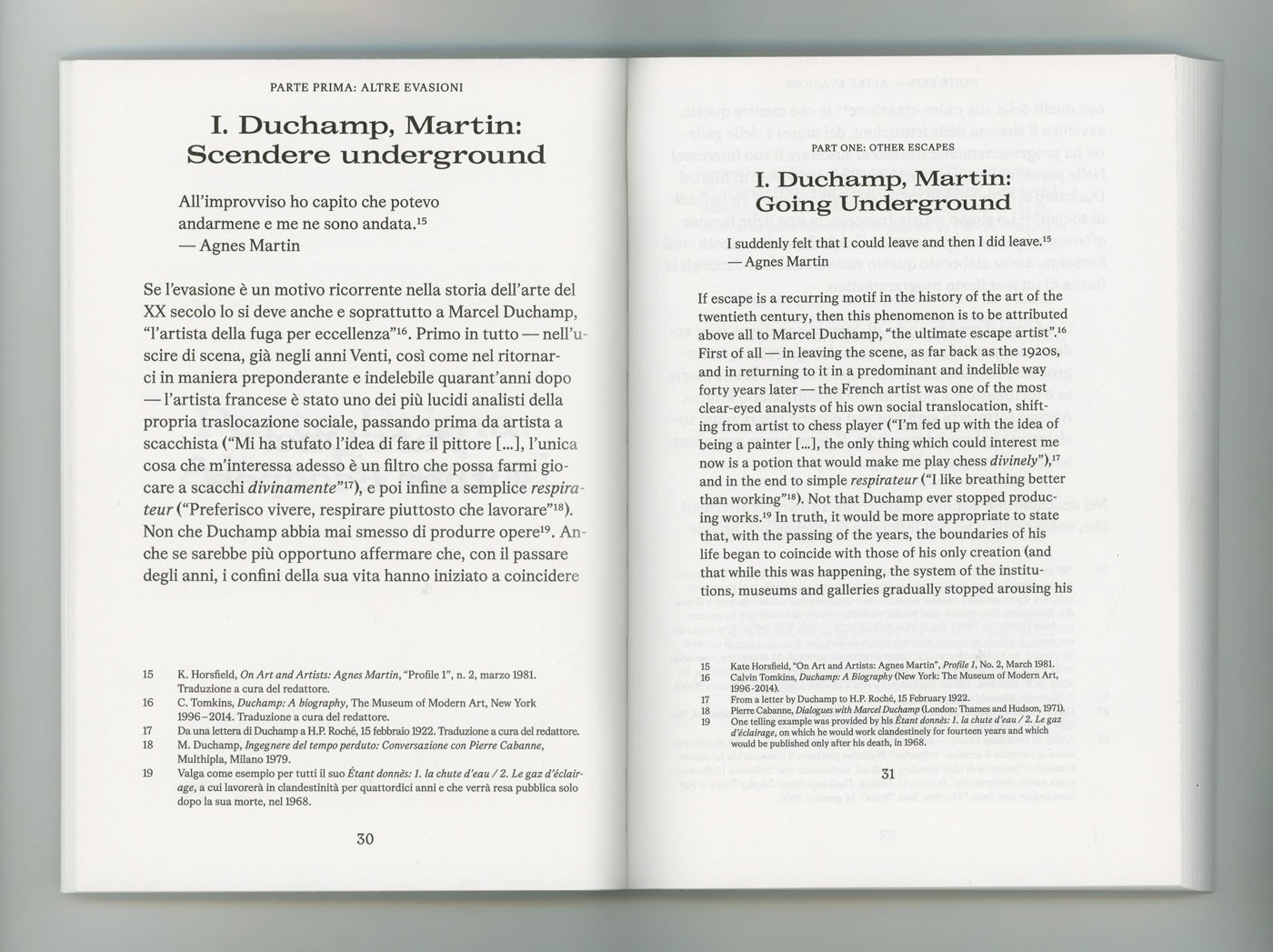
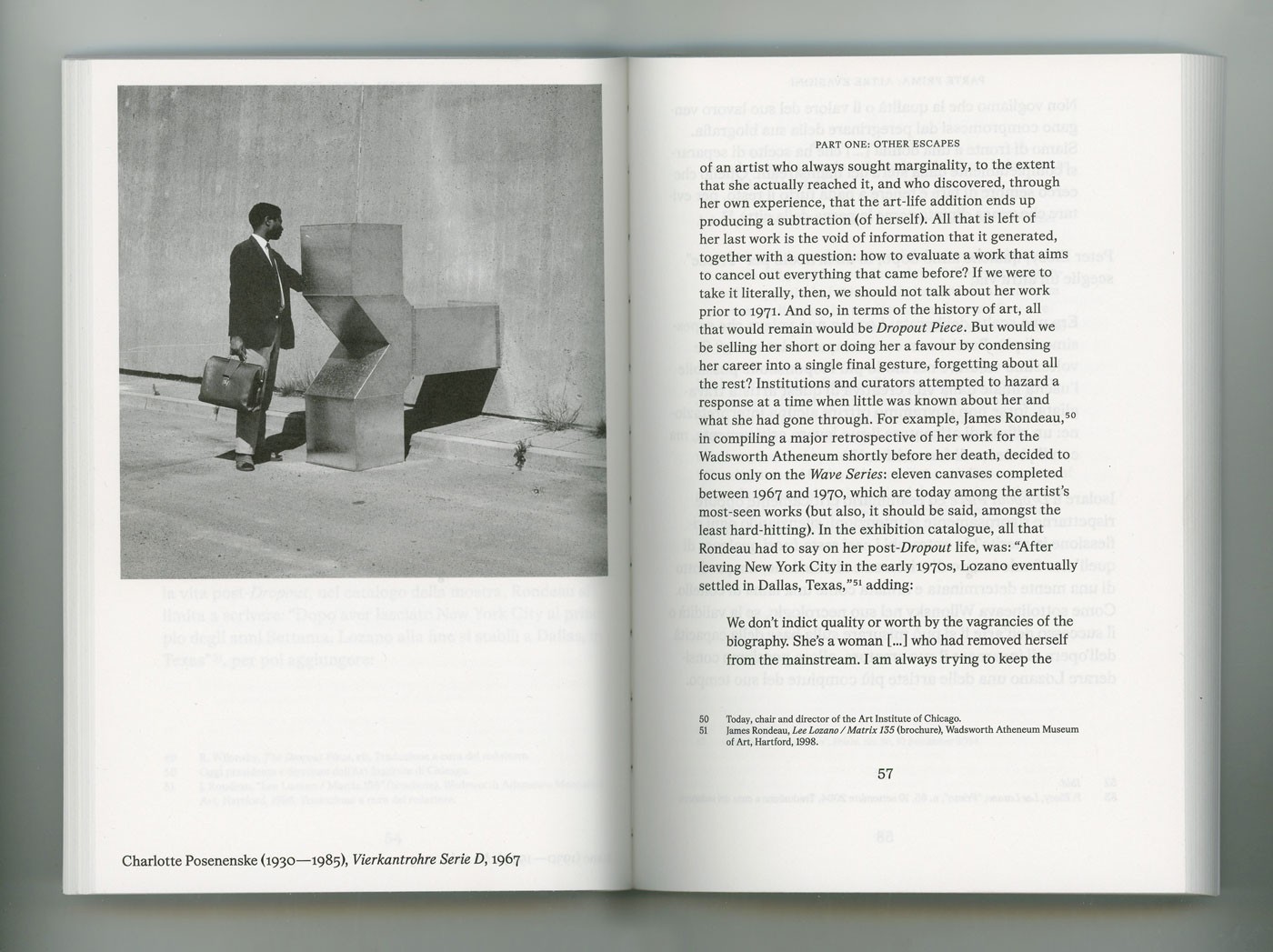
This choice brings him abstractly close to Marcel Duchamp, Agnes Martin, Lee Lozano, Charlotte Posenenske and the many other artists before him who decided of their own volition to stop producing art and participating in the art world (sometimes for a few years, sometimes forever). This publication speaks of all of them, with a twofold purpose: on one hand to write the history of Christian Frosi’s works and exhibitions — for the first time in an organized and timely manner — and on the other, to relativize the pages left blank through the stories of other “dropout artists,” each with their own particular destiny yet united by a common desire to escape.
The book is published in conjunction with the exhibition La Stanza Vuota [The Empty Room], curated by Nicola Riccardi and staged at GAMeC in Bergamo. This first-ever retrospective of Christian Frosi’s oeuvre featured more than thirty works embodying precariousness, transience and evanescence — constant elements in his enigmatic, transitory output.