The paintings and drawings by Jake Grewal draw the viewer in through stillness and ambiguity: they invite reflection on how we inhabit places—physically and emotionally—and how our inner landscapes mirror the physical world. This is the Grewal’s first book, published to accompany the artist’s exhibition at Studio Voltaire.
The transformation of the notion of monuments and the way cultural institutions choose to deal with it find in Maurizio Cattelan an interpreter capable of manipulating historical memory and shared symbols, to the point of turning them into a terrain of doubt and play. Lisa Parola and Lorenzo Giusti investigate the potential of contemporary art within the public sphere.
This is a visual archive of 12 years of developing, designing and exhibiting the House of One, a multireligious sacred space in the heart of Berlin. The architecture, conceived by Kuehn Malvezzi, has been displayed at various venues while being developed in close collaboration with three local religious communities in Berlin since 2012.
The first major monograph on artist Jill Mulleady, whose paintings thread motifs of decay, memory, history, and private myth, featuring humans and animals enacting their instinctive psychological reactions to ever-present threats of danger.
The essays in this first-ever monograph dedicated to Swiss artist Jan Vorisek, alongside image portfolios of the exhibitions they explore and an appendix that features photos and documentation of Vorisek’s performances, recordings and ephemera, grant us unprecedented access to the private fictions that the work reveals.
Since the 1990s Costa has been challenging hierarchies of art production and the fetishization of the “finished” artwork, inviting viewers to reconsider what is discarded, both materially and socially. Through over 300 artworks, accompanied by new writing, this catalogue explores Adriano Costa’s work, a meditation on transformation—of objects, meanings, and systems of value.
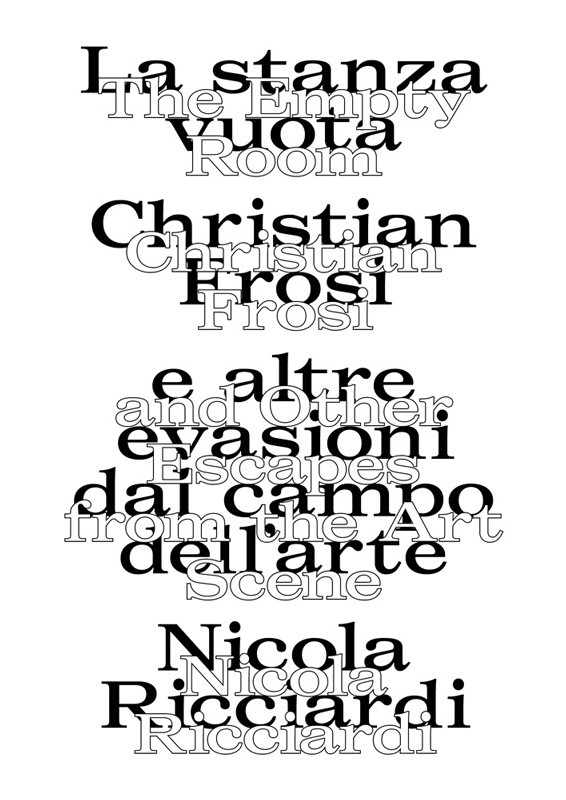
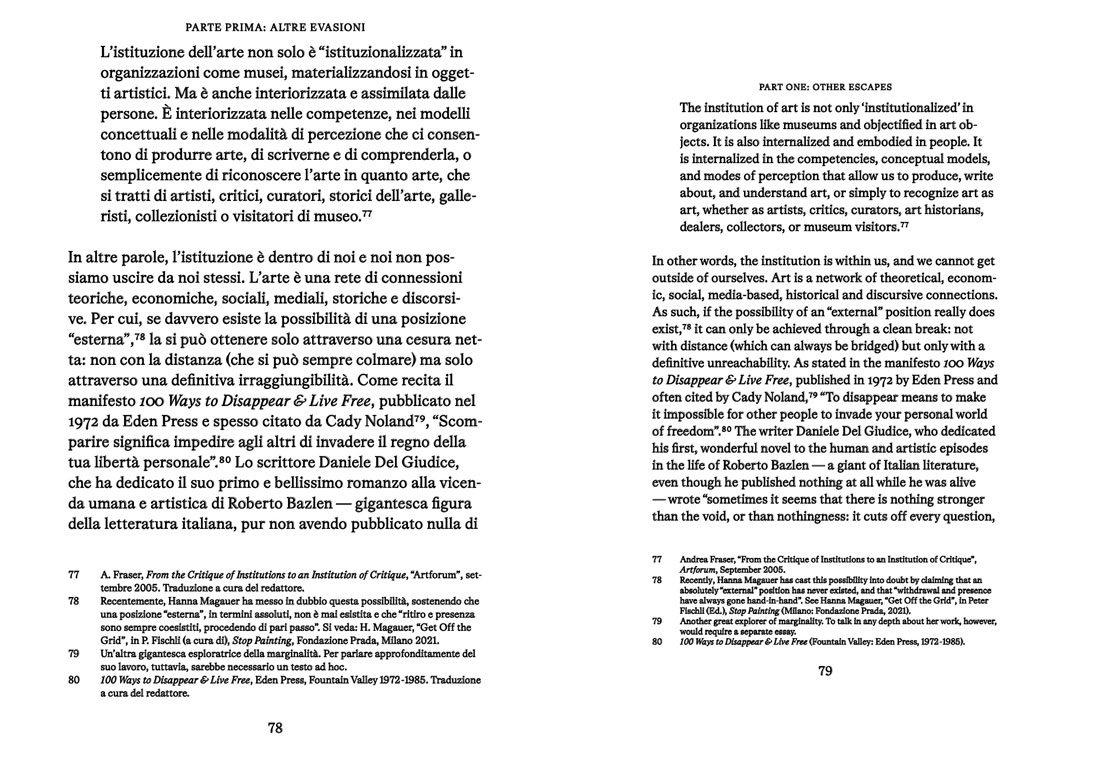
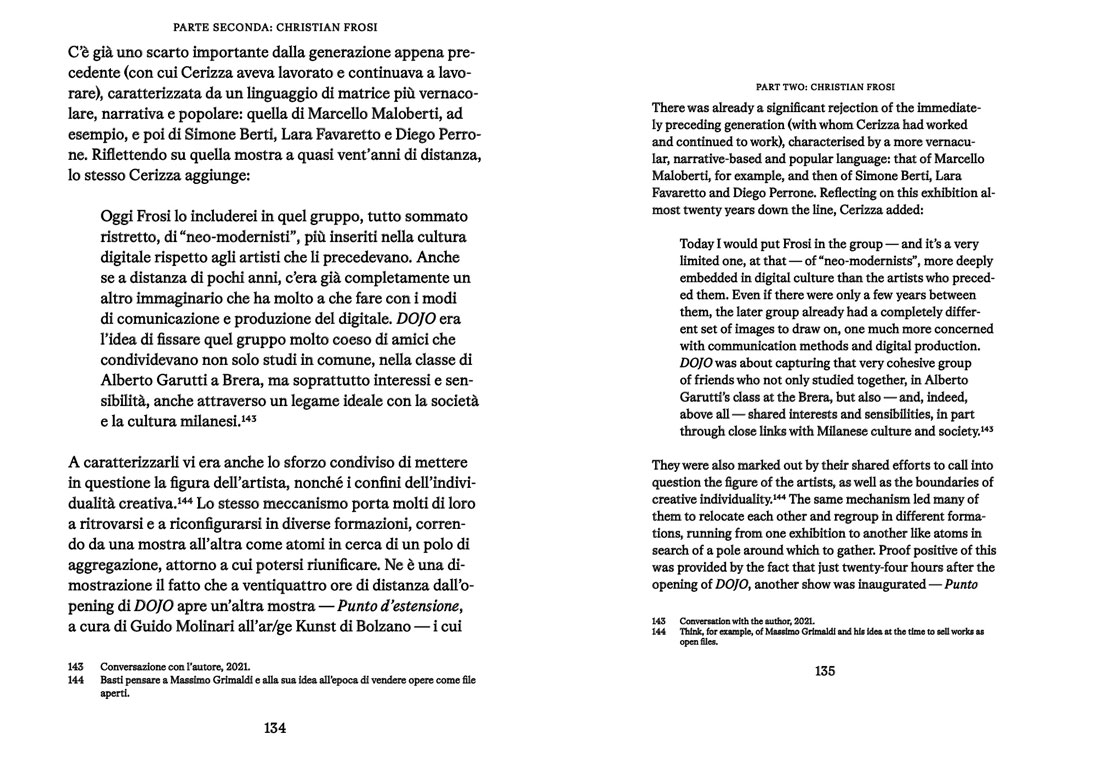
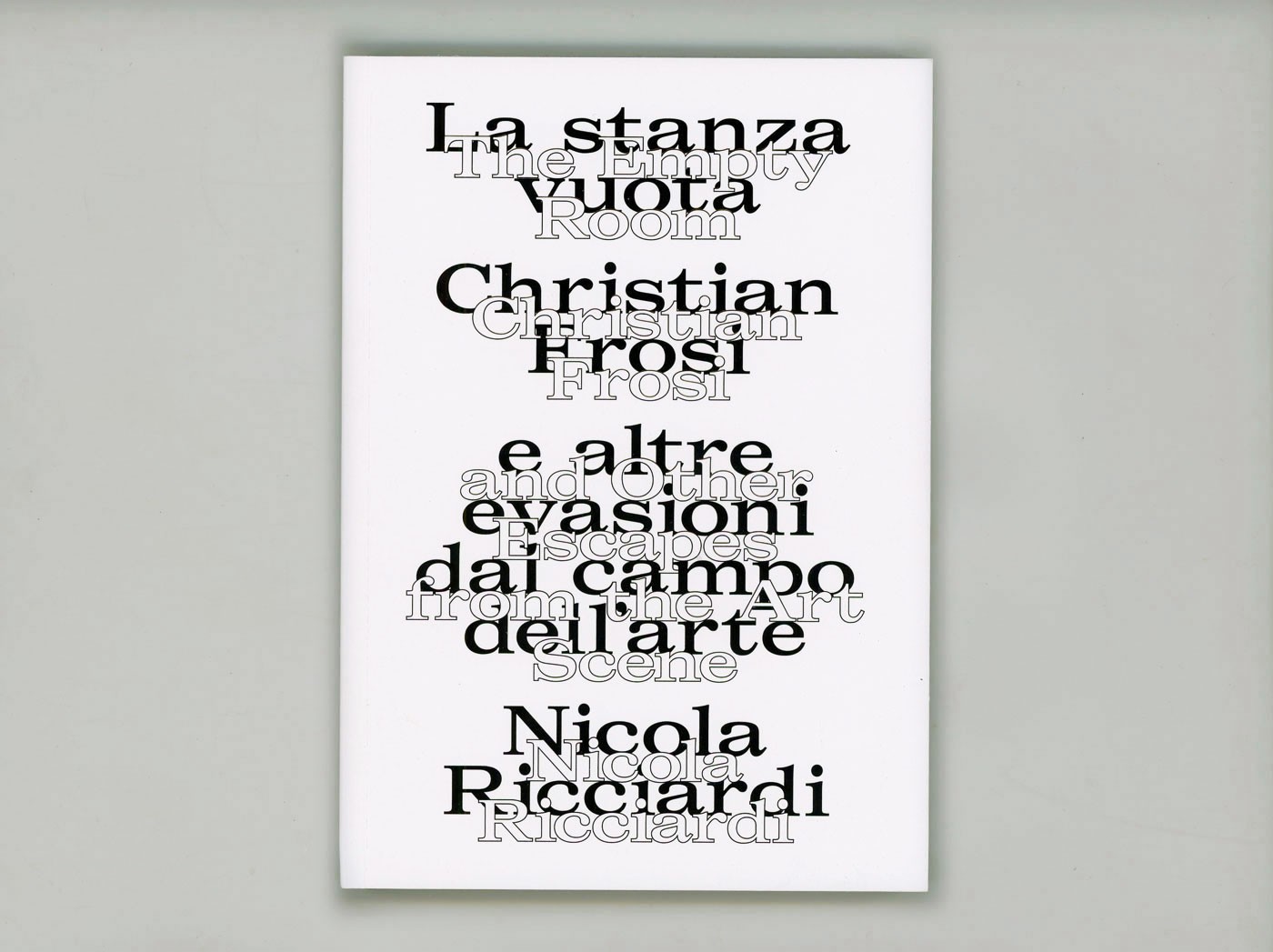
The Empty Room Christian Frosi and Other Escapes from the Art Scene
Edited by Nicola Ricciardi
Design by Lorenzo Mason Studio
2022, English / Italian, softcover, 240 pages, 17 x 24 cm
ISBN 979-12-80579-28-7
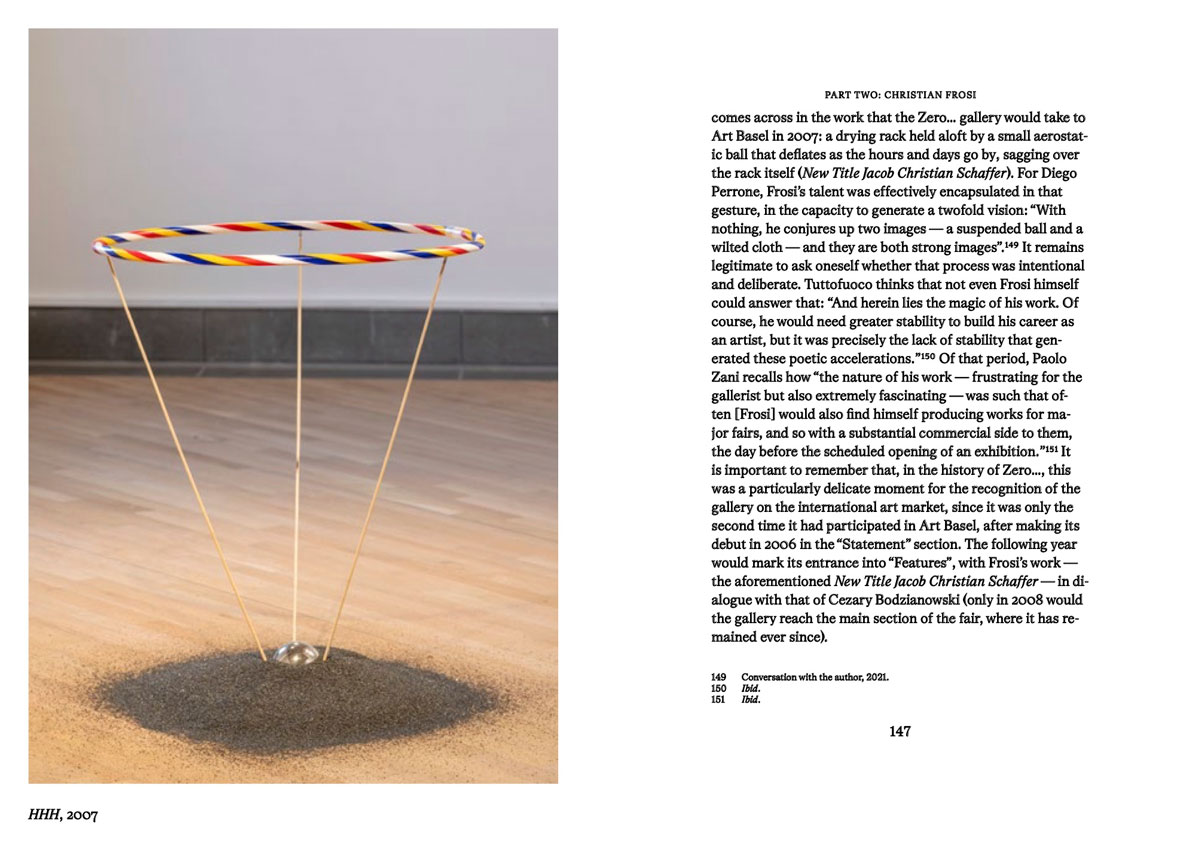
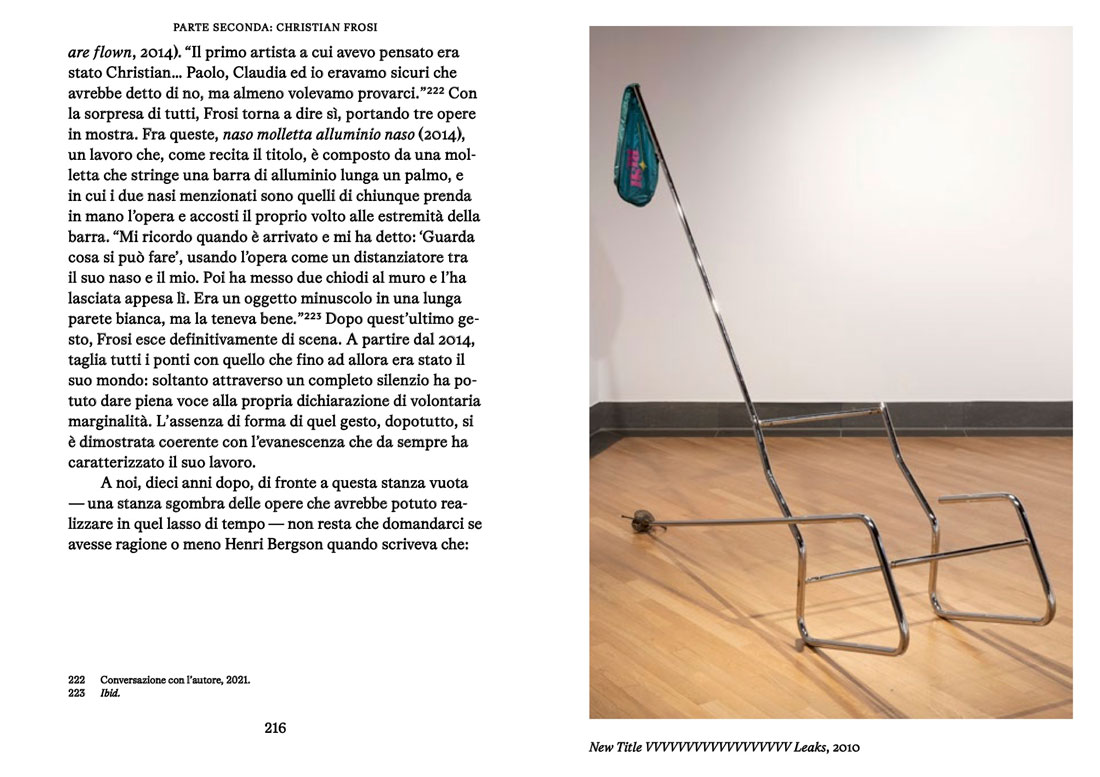
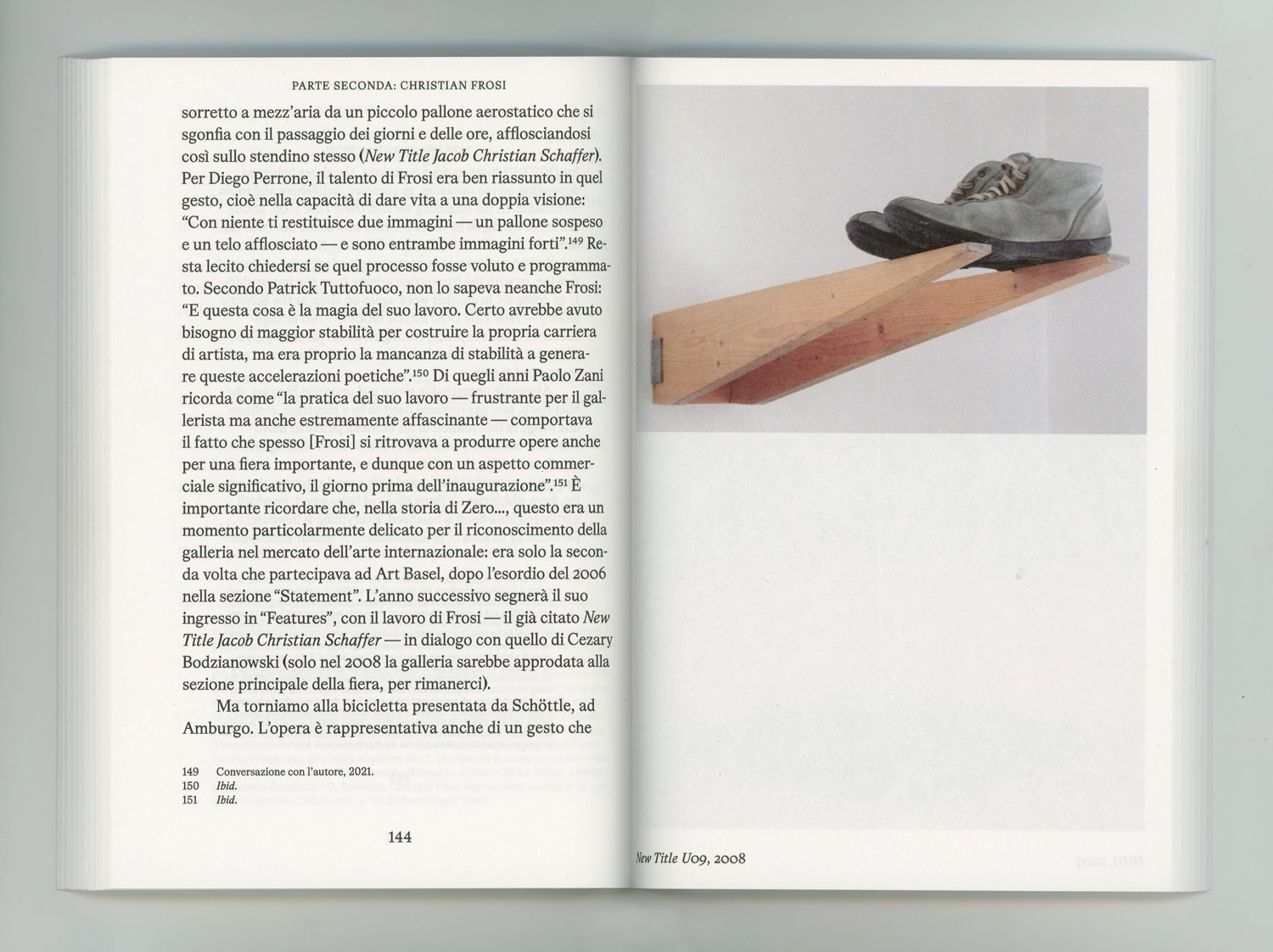
Christian Frosi (Milan, 1973) was long considered one of the most inspiring and promising Italian artists debuting in the early 2000s. That is until just over ten years into his career, when he decided to make himself unreachable and remove himself from art history, its customs and figures.
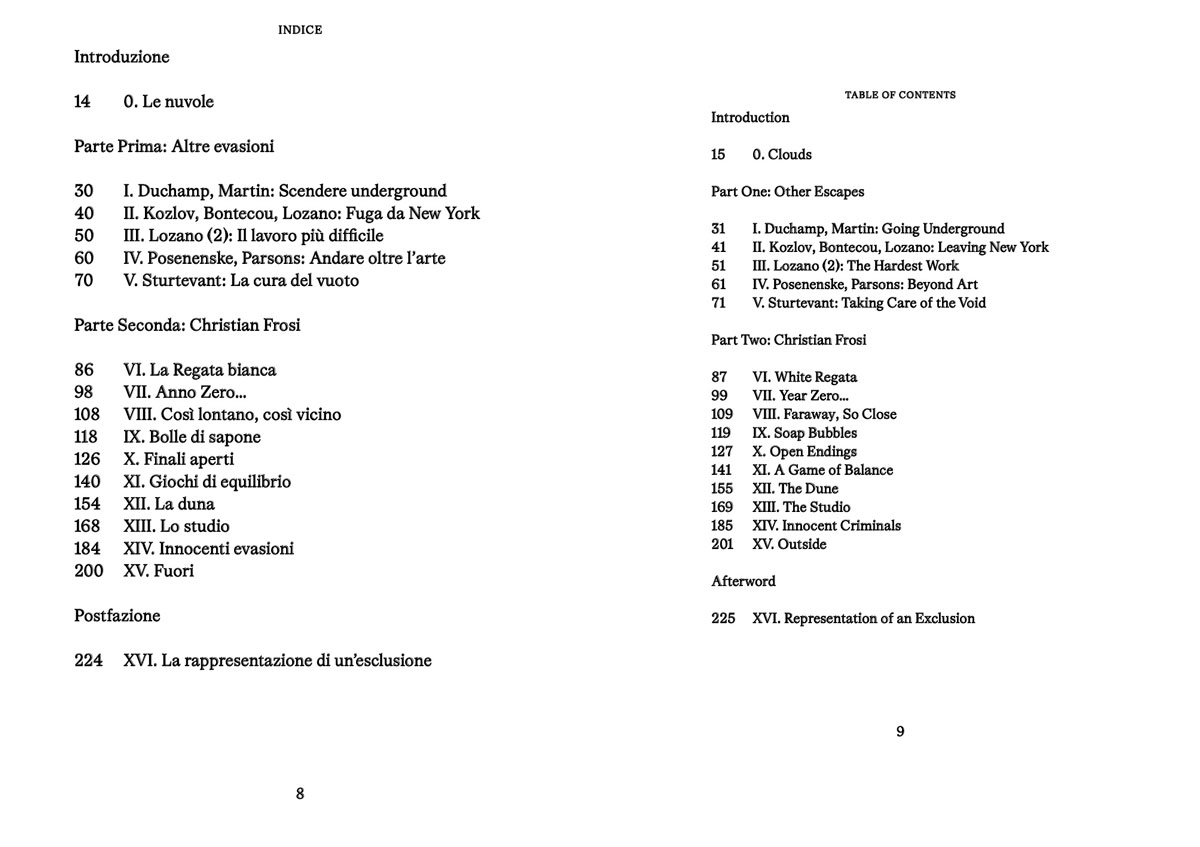
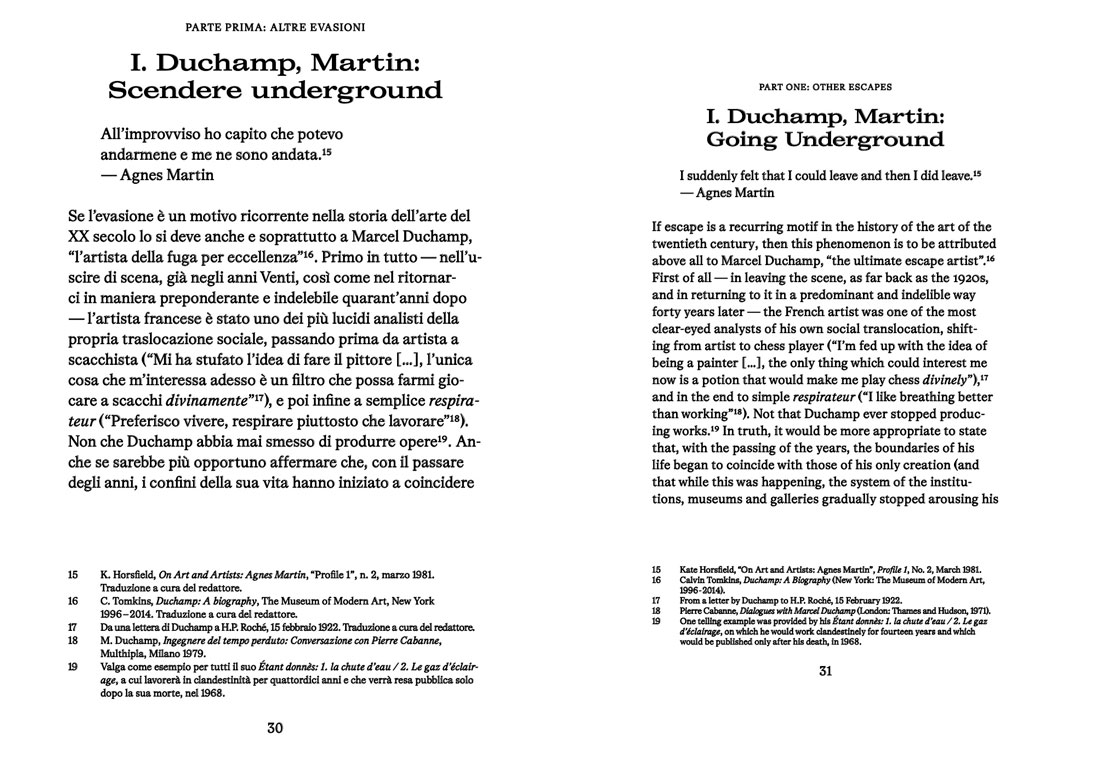
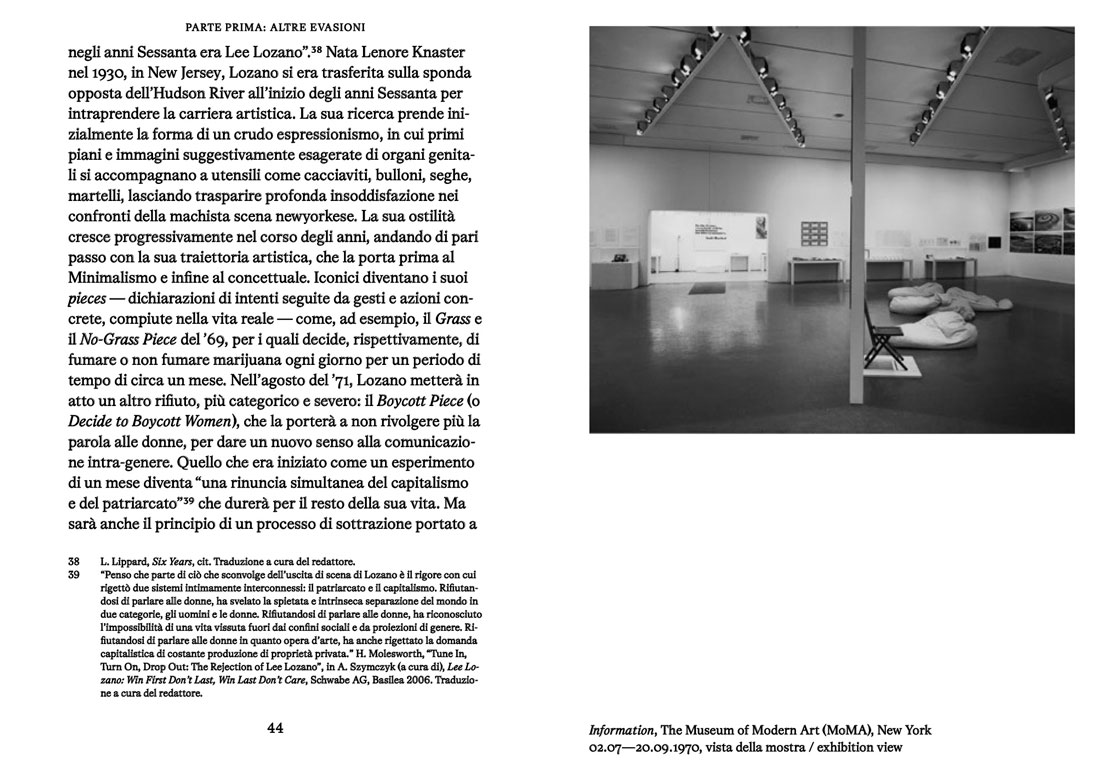
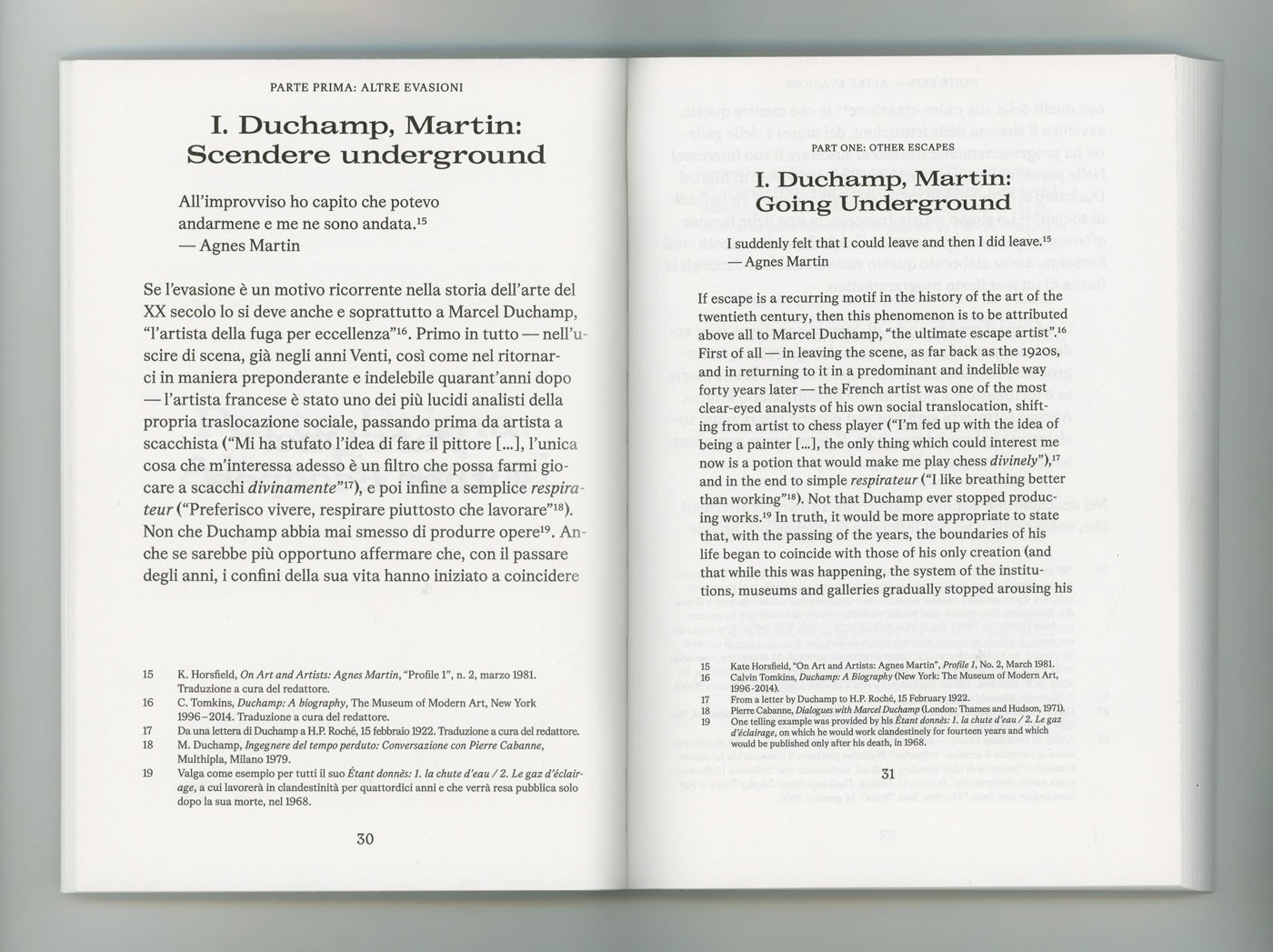
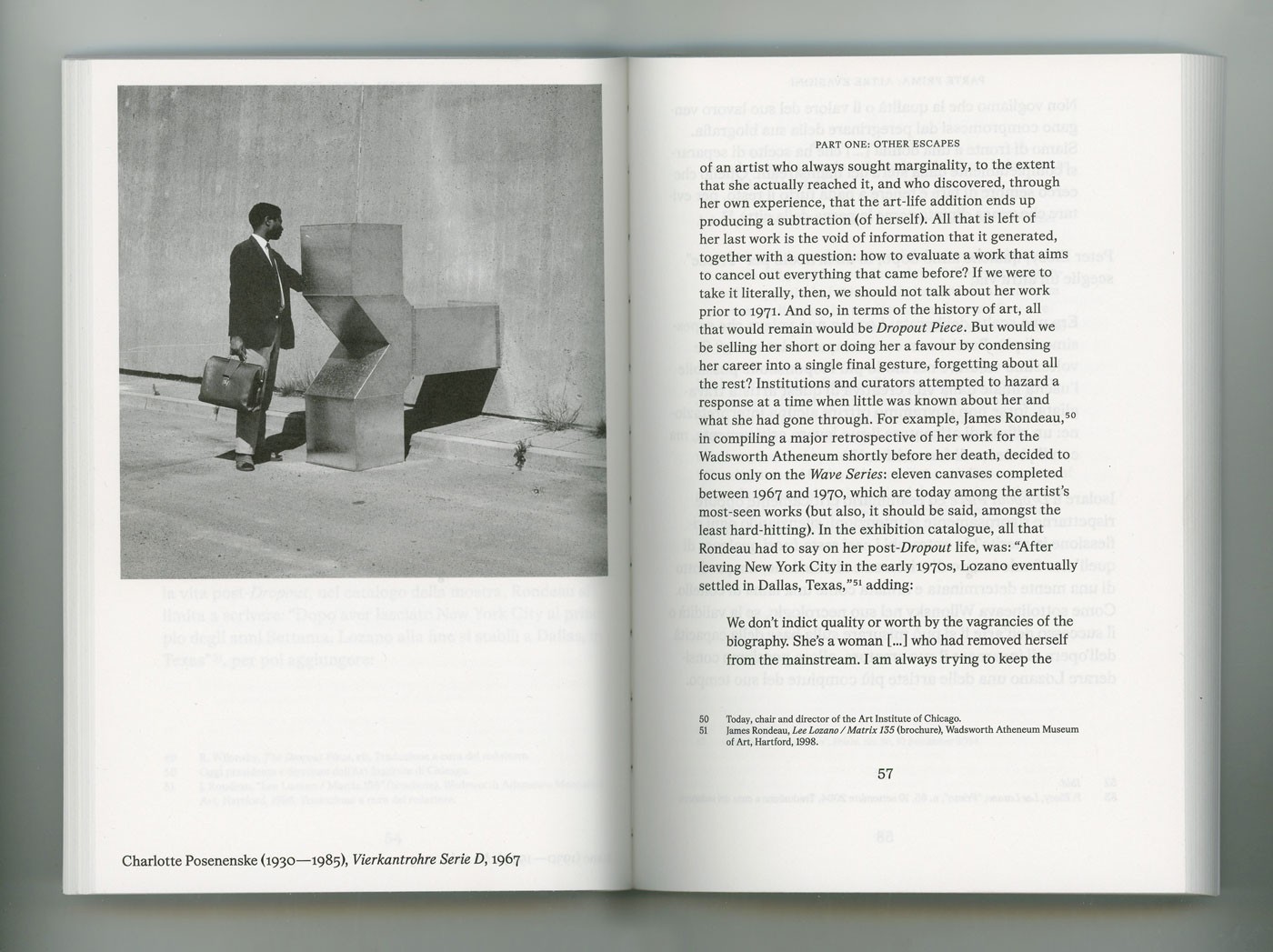
This choice brings him abstractly close to Marcel Duchamp, Agnes Martin, Lee Lozano, Charlotte Posenenske and the many other artists before him who decided of their own volition to stop producing art and participating in the art world (sometimes for a few years, sometimes forever). This publication speaks of all of them, with a twofold purpose: on one hand to write the history of Christian Frosi’s works and exhibitions — for the first time in an organized and timely manner — and on the other, to relativize the pages left blank through the stories of other “dropout artists,” each with their own particular destiny yet united by a common desire to escape.
The book is published in conjunction with the exhibition La Stanza Vuota [The Empty Room], curated by Nicola Riccardi and staged at GAMeC in Bergamo. This first-ever retrospective of Christian Frosi’s oeuvre featured more than thirty works embodying precariousness, transience and evanescence — constant elements in his enigmatic, transitory output.