This richly illustrated book considers the dazzling oeuvre of choreographer and dancer Marlene Monteiro Freitas. In line with her creative methodology, Alexandra Balona unfolds an “atlas of affects” through five emblematic dance pieces that reveal the intensity, humor, and humanity of one of today’s most radical choreographic voices.
Invited to present an exhibition at the Galleria Borghese in Rome, Kenyan-American artist Wangechi Mutu has developed an innovative approach to museum space, challenging hierarchy, permanence, and fixed meanings. With in-depth essays and a rich selection of illustrations, this catalog retraces that exhibition and explores the themes and concerns that have long characterized the artist’s practice.
Invitata a concepire una mostra alla Galleria Borghese, l’artista keniota-americana Wangechi Mutu ha sviluppato un approccio innovativo allo spazio museale, confrontandosi con le gerarchie, la permanenze e le sedimentazioni del contesto. Attraverso saggi approfonditi e una ricca selezione di illustrazioni, questo catalogo ripercorre la mostra ed esplora i temi e le preoccupazioni che da tempo caratterizzano la pratica dell’artista.
A visual notebook of the screenshots taken by Yngve Holen over the past five years or so, 6G—the anticipated next phase of network technology—is a peculiarly sized artist’s book, a glossy non-linear agglomeration that reflects the intersections of production, life, and digital debris.
Conceived as a visual résumé, the book provides a comprehensive overview of Posenenske’s solo exhibitions and a record of her numerous group shows. Featuring an essay by curator Erlend Hammer on the role of documentary photographs in the circulation of works of art, it was published in conjunction with the eponymous show at the Haugar Art Museum in Tønsberg.
Edited by Edoardo Bonaspetti, Erlend Hammer and Fredrik Værslev
Texts by Erlend Hammer and Martha Kirszenbaum
Design Lorenzo Mason Studio
2023, English, softcover, 23.5 x 33.5 cm, 184 pages
ISBN 979-12-80579-34-8
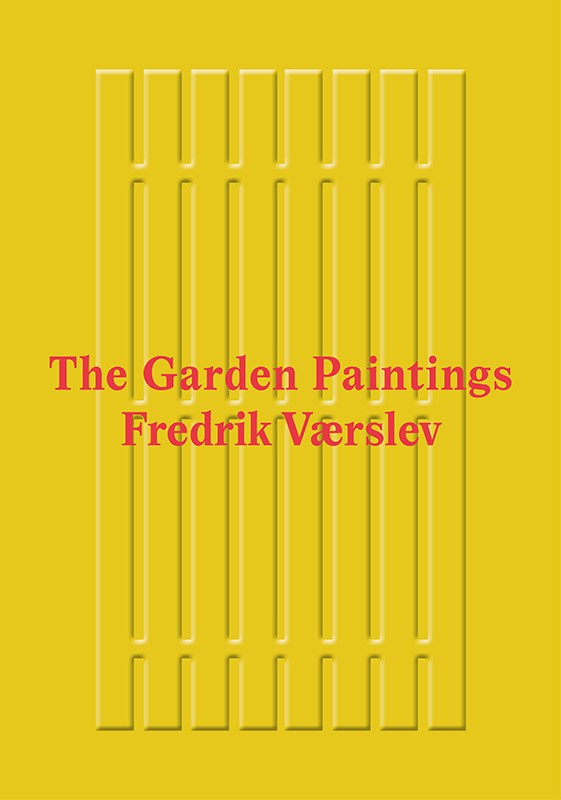
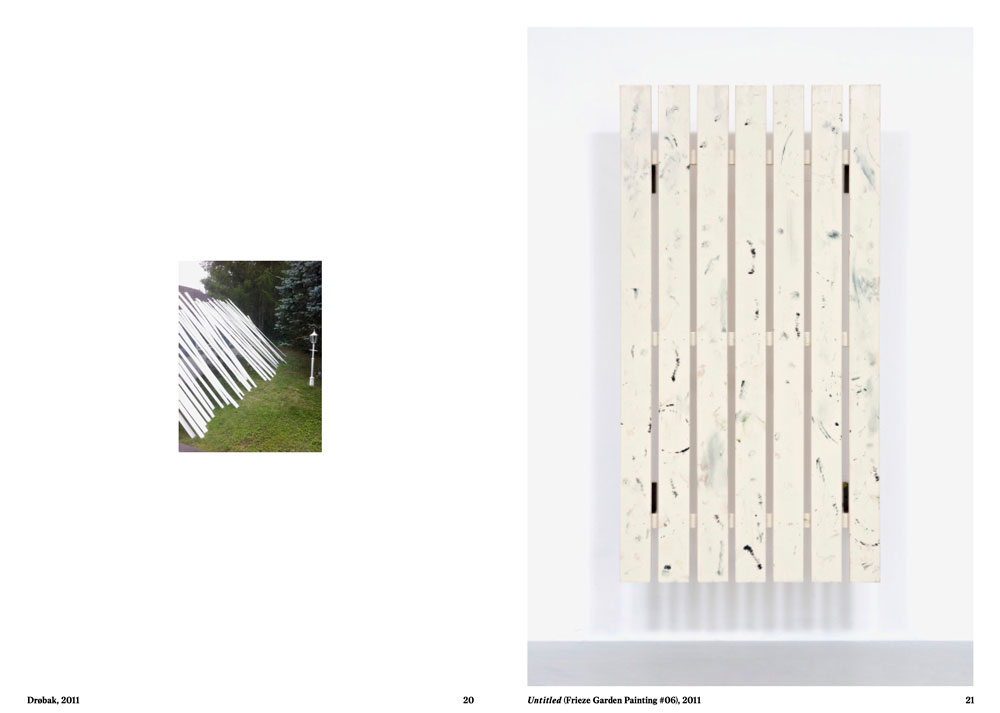
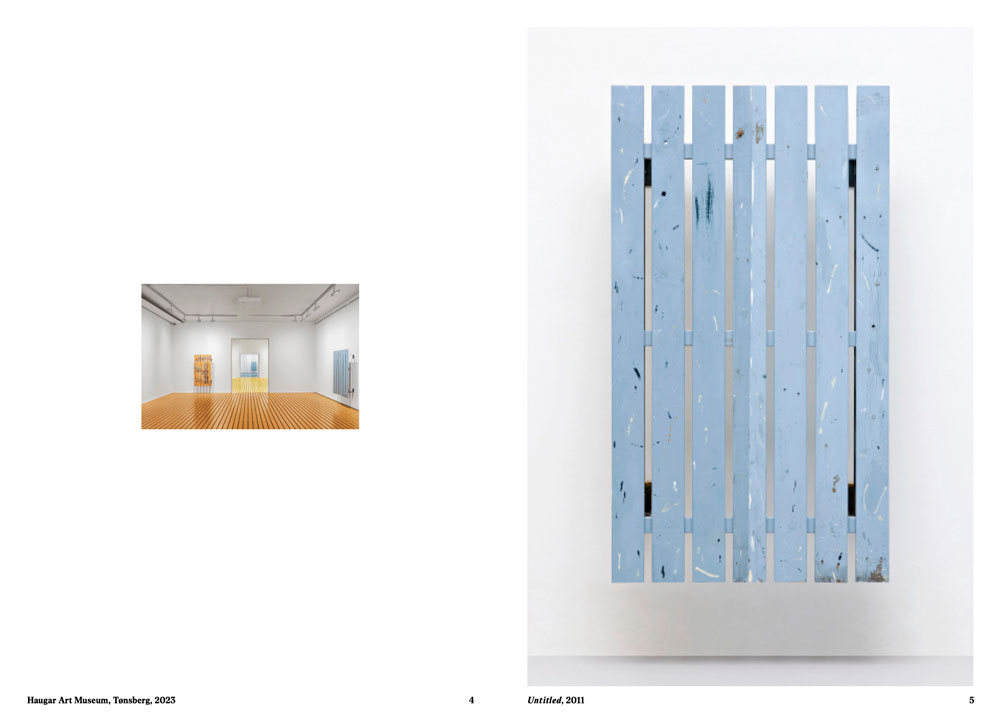
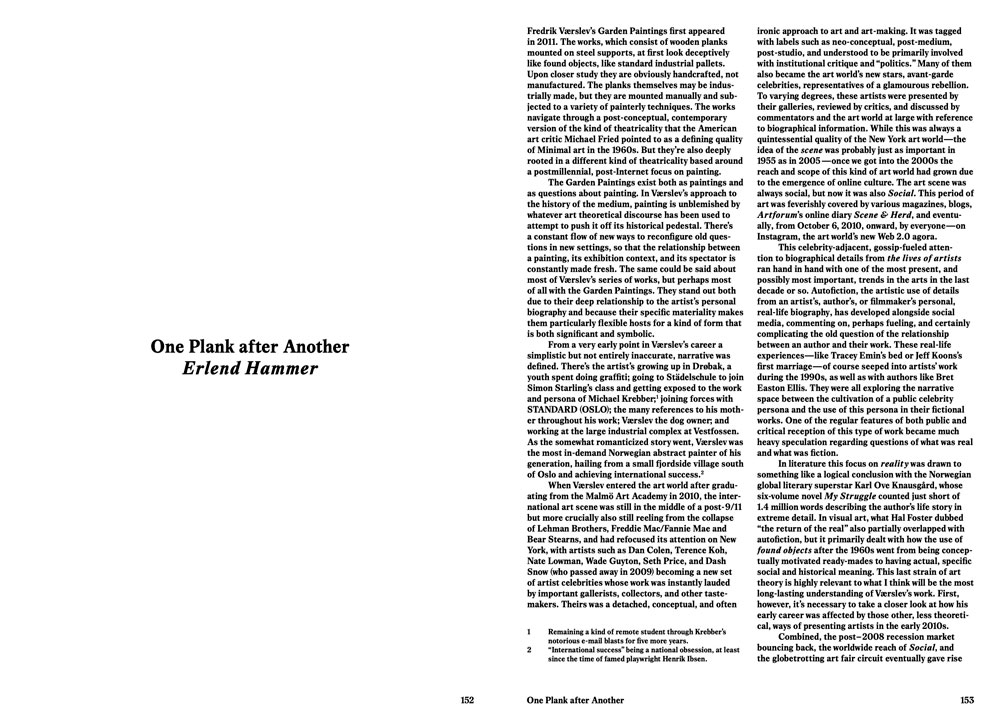
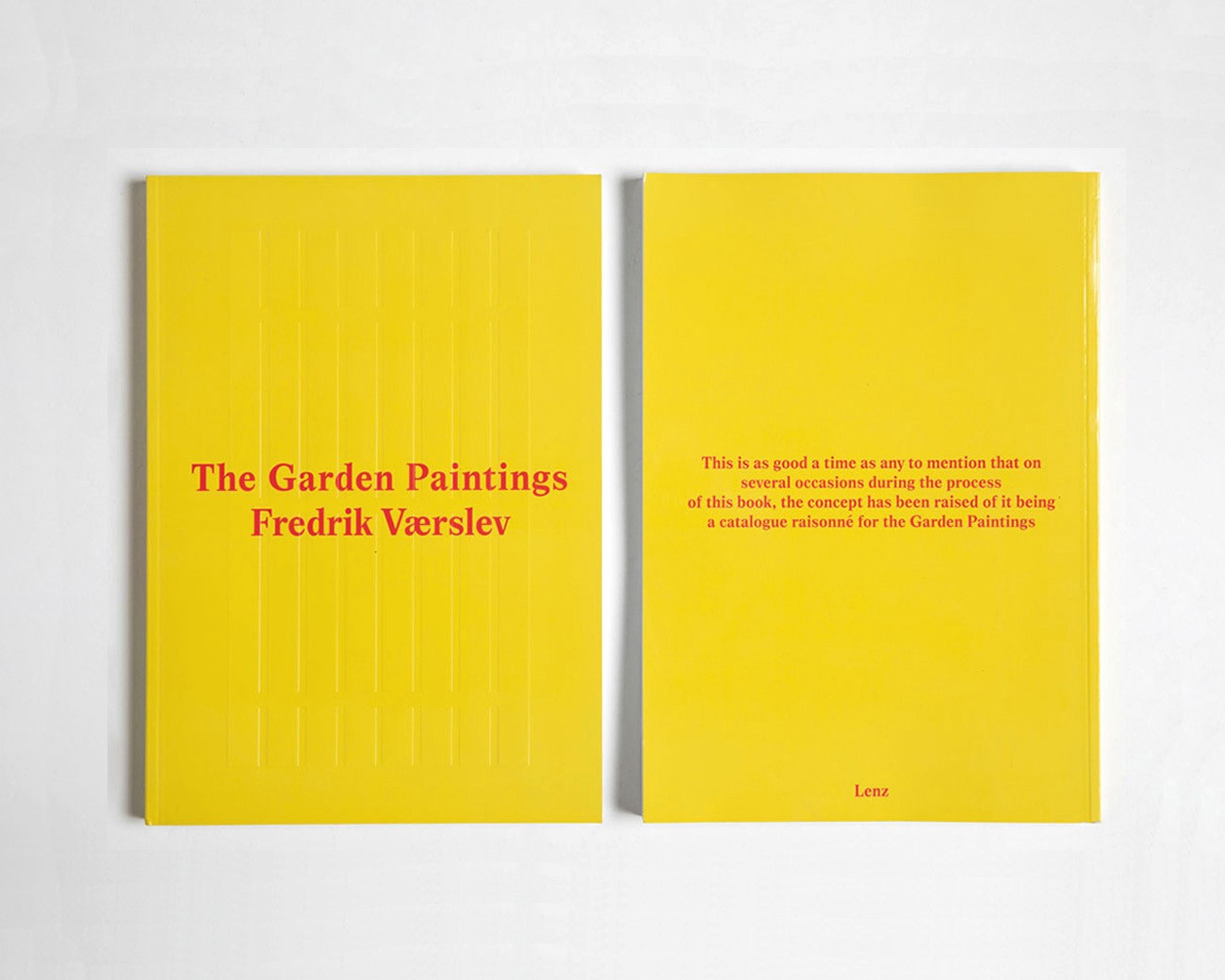
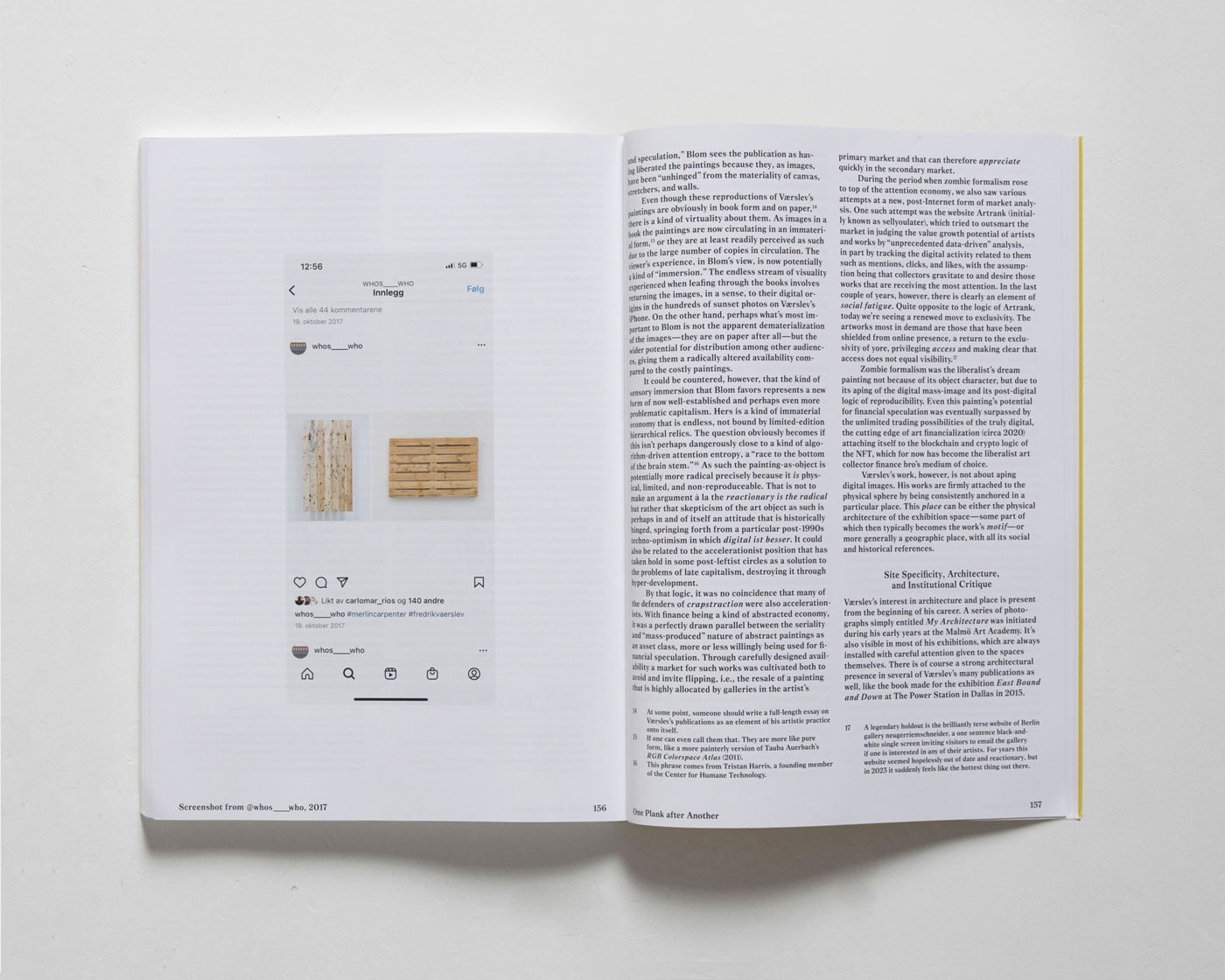
Fredrik Værslev: The Garden Paintings is the first publication dedicated to a single body of work by the artist. As Erlend Hammer writes in his essay: “The Garden Paintings are works that exist within a complex network of references that include everything from Abstract Expressionism to suburban garden furniture as one might find in an event organized as a platform for relational aesthetics. They similarly engage, art-historically speaking, with everything from the anthropological site specificity of Robert Smithson’s relics, the theatricality of Minimal sculpture, architecturally loaded carriers of institutional critique, and post-conceptual painting objects. At the same time, they’re also just paintings.”
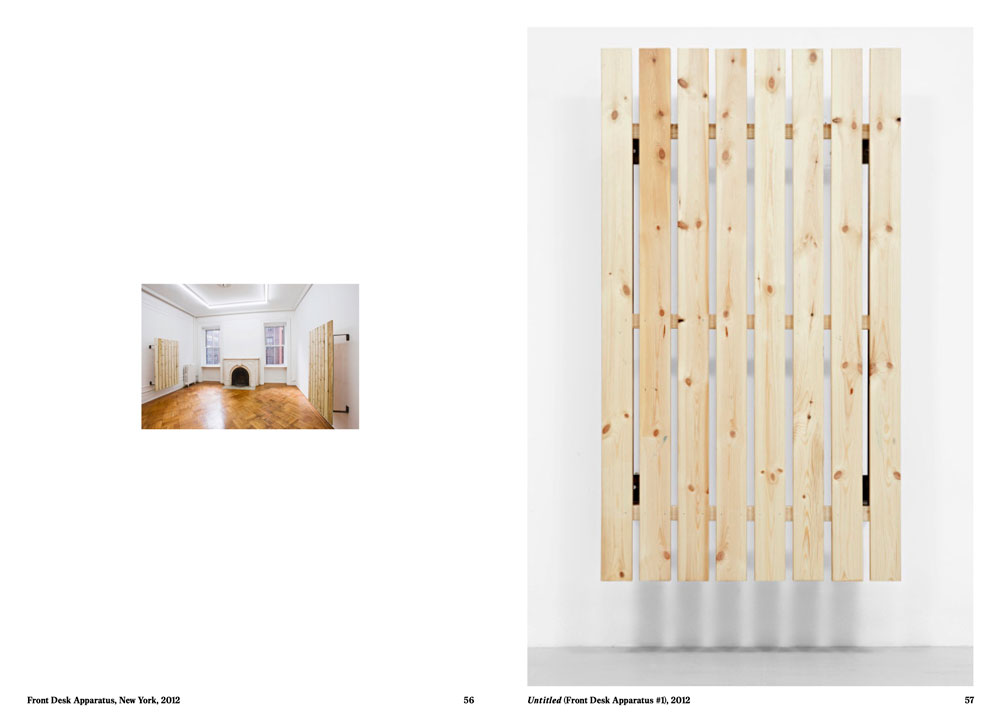
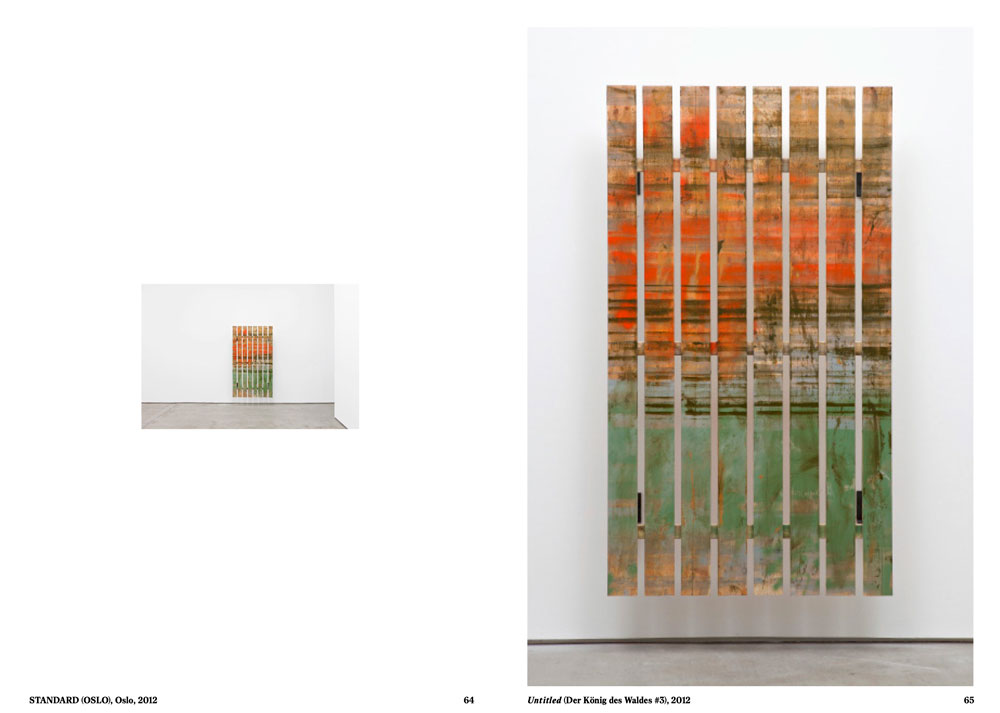
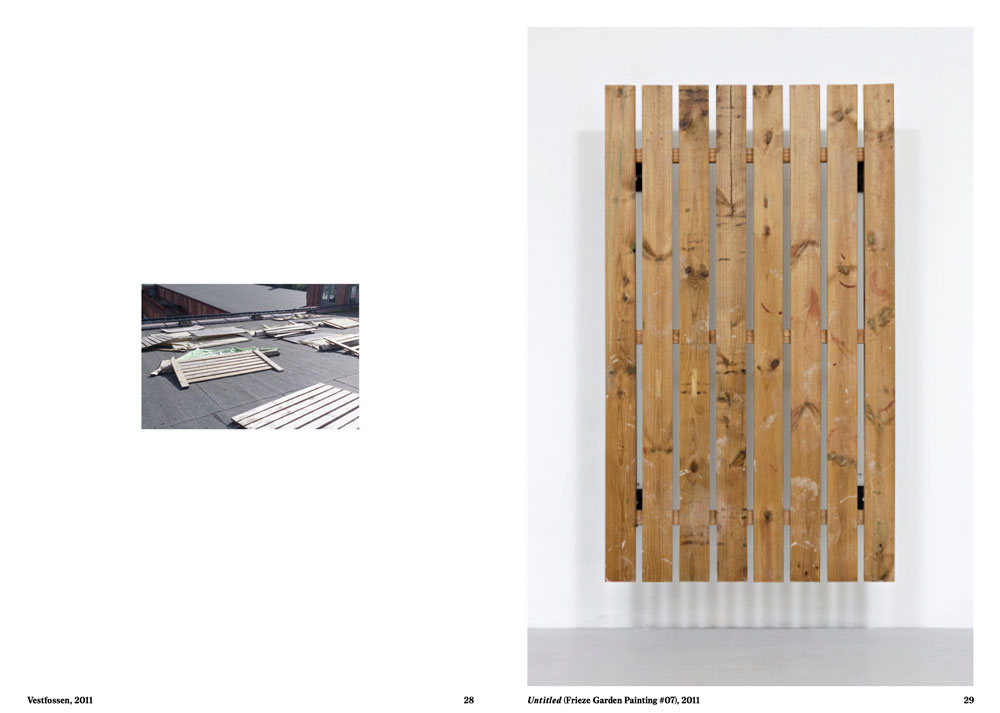
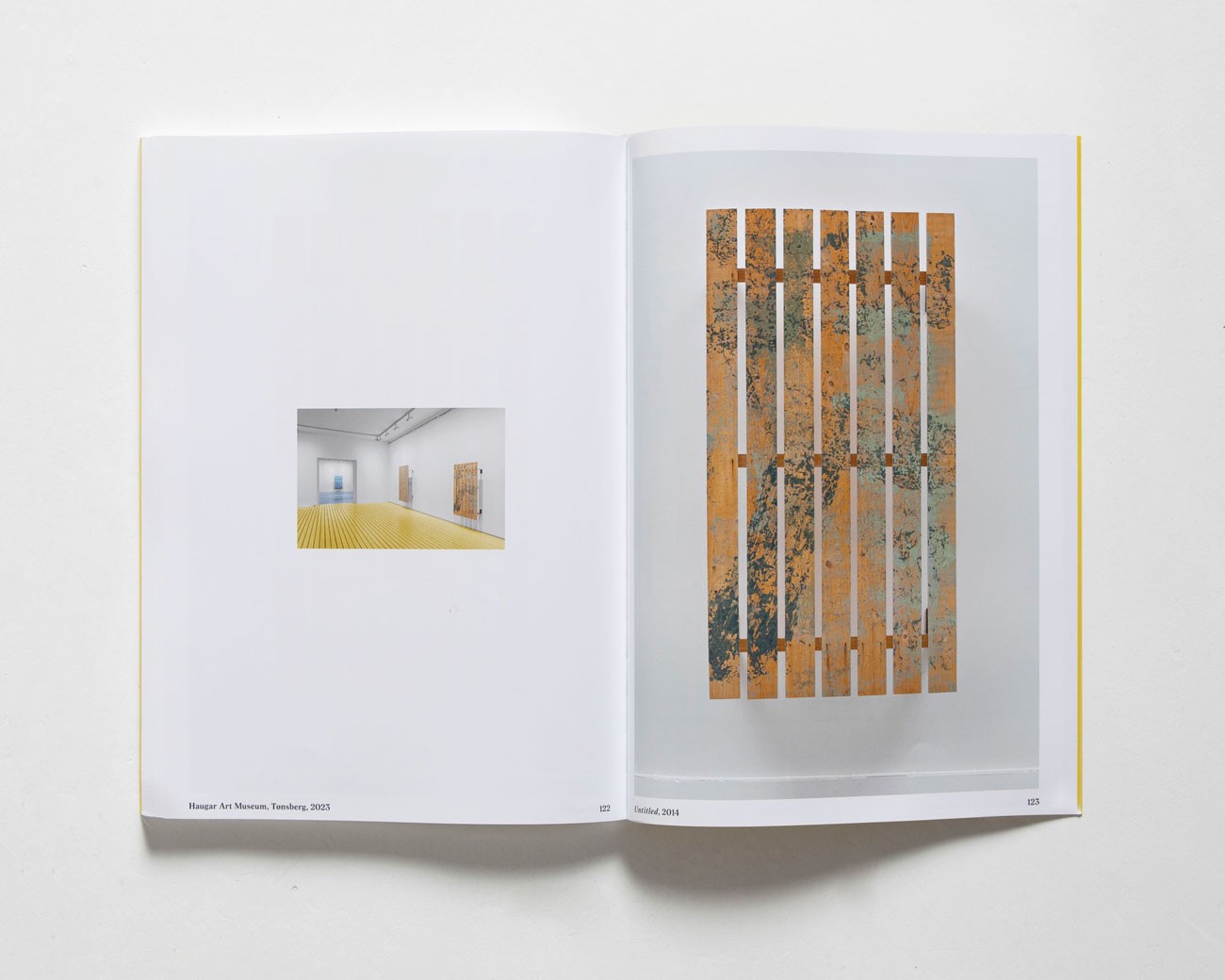
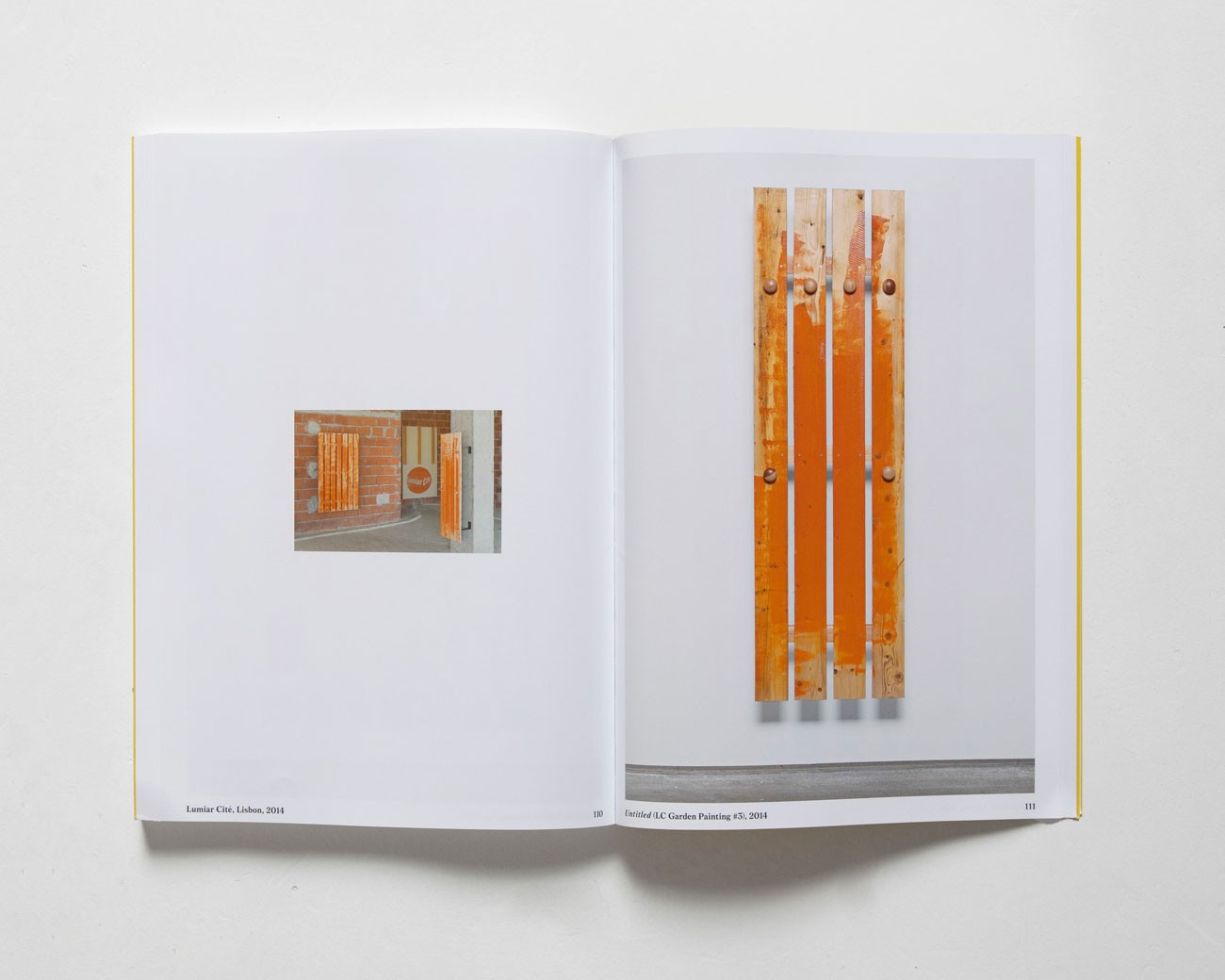
In her essay, Martha Kirszenbaum points to the origin of the work in the suburban architecture of Norway in the 1980s: “His Garden Paintings are as much a homage as a misuse and a detournement of the wooden decks that formed the environment of his upbringing. Each work is based on an appropriation of wooden pallets, always seemingly the same size and comprised of seven or eight slats. The repetition of structure and material seems to echo the monotony of suburban life, while the various color palettes he uses refer to Norwegian housepaint.”
The publication gives a comprehensive and chronological account of the Garden Paintings as well as their exhibition history. It thereby shows both the stylistic development of the individual works and the various ways Værslev has presented them since he first began the series in 2011.
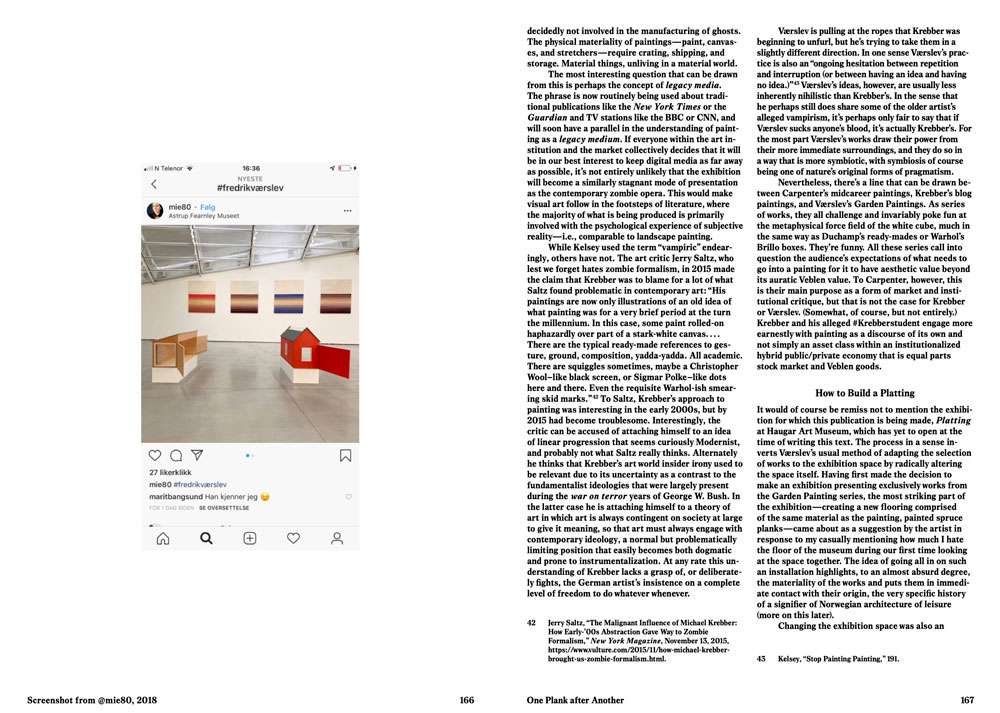
The book is published in conjunction with the exhibition Platting held at Haugar Art Museum (2023) and curated by Erlend Hammer. The works from the series have been also exhibited in institutions such as the Astrup Fearnley Museet in Oslo, Moderna Museet in Stockholm, The Power Station in Dallas, Kunst Halle Sankt Gallen and Bonner Kunstverein in Bonn.