This richly illustrated book considers the dazzling oeuvre of choreographer and dancer Marlene Monteiro Freitas. In line with her creative methodology, Alexandra Balona unfolds an “atlas of affects” through five emblematic dance pieces that reveal the intensity, humor, and humanity of one of today’s most radical choreographic voices.
Invited to present an exhibition at the Galleria Borghese in Rome, Kenyan-American artist Wangechi Mutu has developed an innovative approach to museum space, challenging hierarchy, permanence, and fixed meanings. With in-depth essays and a rich selection of illustrations, this catalog retraces that exhibition and explores the themes and concerns that have long characterized the artist’s practice.
Invitata a concepire una mostra alla Galleria Borghese, l’artista keniota-americana Wangechi Mutu ha sviluppato un approccio innovativo allo spazio museale, confrontandosi con le gerarchie, la permanenze e le sedimentazioni del contesto. Attraverso saggi approfonditi e una ricca selezione di illustrazioni, questo catalogo ripercorre la mostra ed esplora i temi e le preoccupazioni che da tempo caratterizzano la pratica dell’artista.
A visual notebook of the screenshots taken by Yngve Holen over the past five years or so, 6G—the anticipated next phase of network technology—is a peculiarly sized artist’s book, a glossy non-linear agglomeration that reflects the intersections of production, life, and digital debris.
Conceived as a visual résumé, the book provides a comprehensive overview of Posenenske’s solo exhibitions and a record of her numerous group shows. Featuring an essay by curator Erlend Hammer on the role of documentary photographs in the circulation of works of art, it was published in conjunction with the eponymous show at the Haugar Art Museum in Tønsberg.
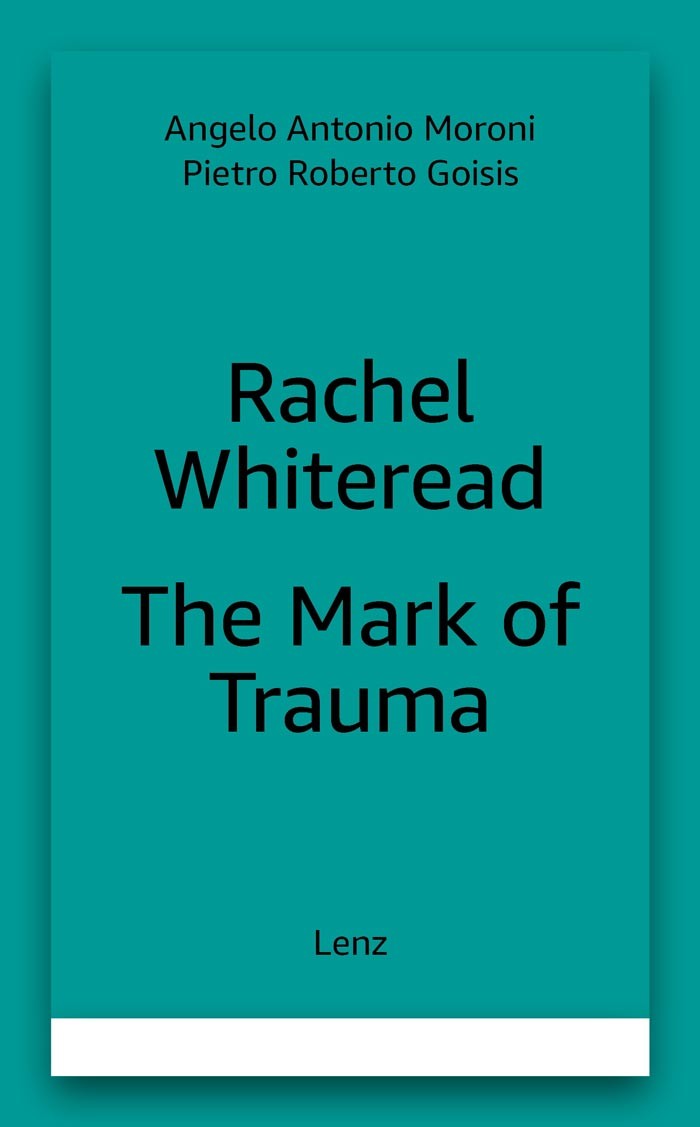
Edited by Lorenzo Giusti and Valentina Gervasoni
Texts by Pietro Roberto Goisis, Antonio Moroni, and Rachel Whiteread
Designed by Lorenzo Mason Studio
2024, English / Italian, softcover, 11 x 17.7 cm, 96 pages
ISBN 979-12-80579-38-6
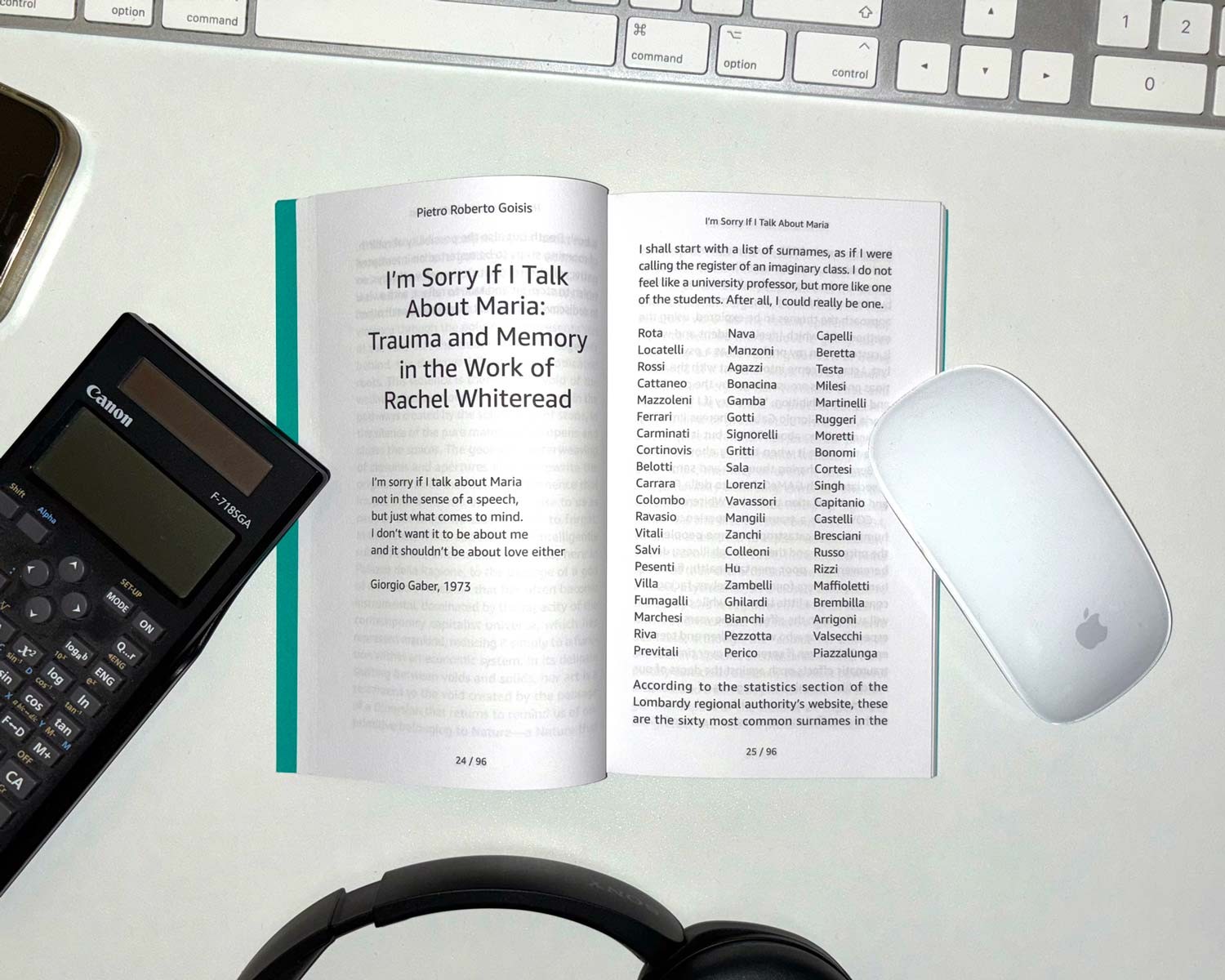
The Mark of Trauma is the first book in a series of short essay collections inspired by the site-specific art projects specially conceived for GAMeC at Palazzo della Ragione, a symbolic, time-honored location within the city of Bergamo that embodies the values of community life and participation. Rachel Whiteread was asked to name an author who interests her—be it a researcher, a philosopher or a scholar—and whose thinking could be said to underpin the project, with a view to finding a path through the complexities of the present day, starting from the work produced but without necessarily lingering on it. Through the words of psychoanalysts Angelo Antonio Moroni and Pietro Roberto Goisis, the book highlights the main characteristics of the collective trauma that gave rise to Rachel Whiteread’s project …And the Animals Were Sold.
For the artist, the exhibition afforded the first opportunity to express herself artistically on the dramatic and alienating experience of the Covid-19 pandemic. Whiteread was so struck by her first visit to Bergamo—one of the first cities to experience a return to pre-pandemic life—that she began thinking about her work as being bound up with the tragic, uncontrolled spread of the pandemic there. As such, the artist wanted to create a close relationship with the Bergamo area and its history, as well as with the architecture of the exhibition venue. Similarly, by adopting the perspective of the city that was the first in the West to experience the sense of vulnerability and collective loss associated with the pandemic, Goisis and Moroni alternate between personal recollection and analytical reflection, building up a composite picture, awash with explorations and memories, which unveils the psyche of an entire geographical region, the substance of this place, of the society here and of its influences.