First Meeting is the first monograph on Argentinian artist Santiago de Paoli. From his early, experimental projects to his most recent explorations, the book delves into his innovative approach of painting on unconventional materials. The book features commissioned essays by Fernanda Brenner and Mariano Mayer, as well as a conversation between Christian Rattemeyer and the artist.
Infinite Memory is Caroline Poggi and Jonathan Vinel’s first monograph, co-published with Fondation Cartier pour l’art contemporain and Lenz. Like a memory card, the book stores information about a selection of films from the initial decade of the artists’ practice. Considered as an object, much like a piece of hardware that stores digital memory, the book offers the possibility to scroll infinitely, with no beginning or end.
Through the words of the sound artist and theorist Brandon LaBelle, the book explores the social and relational component of sound that gave rise to Benevolence, the site-specific project by Sonia Boyce. The Joy of Cacophony is the second book in a series of essay collections inspired by the site-specific projects conceived for GAMeC at Palazzo della Ragione.
Consisting of a richly illustrated booklet and a record vinyl, this special release accompanies the performative sound-based project A Comparative Dialogue Act by artists Andrea Mancini and the collective Every Island, hosted in the Luxembourg Pavilion at the 60th Venice Biennale.
Conceived as a catalogue and an artist’s book, the publication offers a deeper insight into the eponymous 2022 exhibition staged at Indipendenza Roma, and explores tensions that can be generated between artworks and their surrounding architectural context, raising questions of taste, value, function and decoration.
The practice of Tomaso Binga (Bianca Pucciarelli Menna, 1931) toys with the notion of gender, reconsidering women’s social roles and rights. This monograph, edited by Eva Fabbris, Lilou Vidal, and Stefania Zuliani, analyses her work through various languages and features a selection of poems, highlighting the author’s critical and artistic approach.
Edited by Leonardo Bigazzi
Texts by Antonia Alampi, Erika Balsom, Andrea Bellini, Leonardo Bigazzi, Federica Bueti, Beatrice Bulgari, Barbara Casavecchia, Sophie Cavoulacos, Manuel Cirauqui, Ilaria Gianni, Hassan Khan, Oliver Laric, Maria Lind, Andrea Lissoni, Philippe-Alain Michaud, Han Nefkens, Emily Pethick, Julian Ross, Aura Satz, Hito Steyerl, Bianca Stoppani, Robert Trafford, Valentine Umansky, Francesco Urbano Ragazzi
Designed by Lorenzo Mason Studio
2024, English, softcover, 17 x 24 cm, 368 pages
ISBN 979-12-80579-57-7
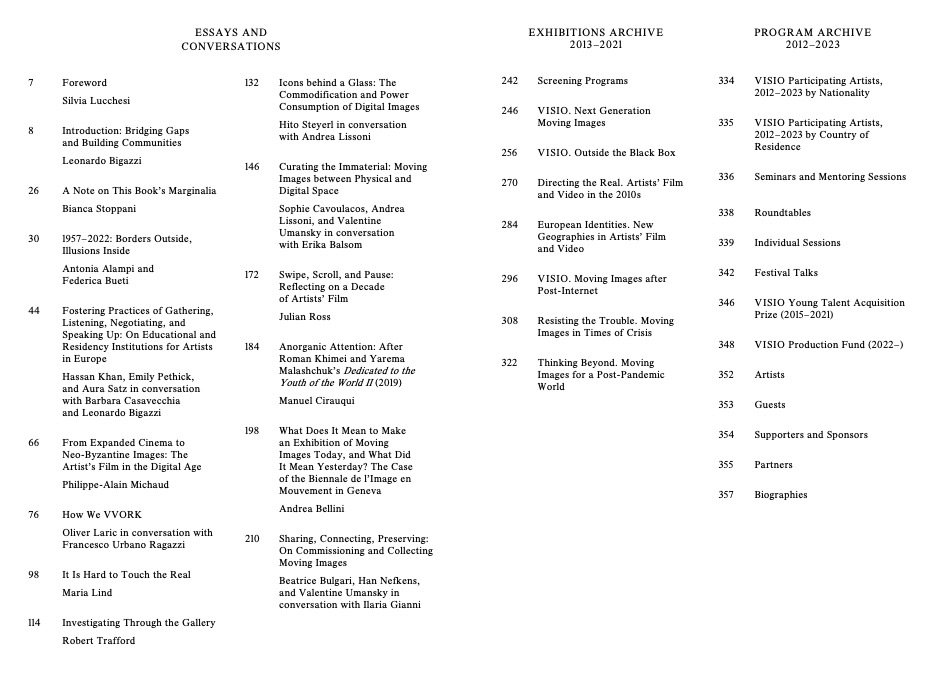
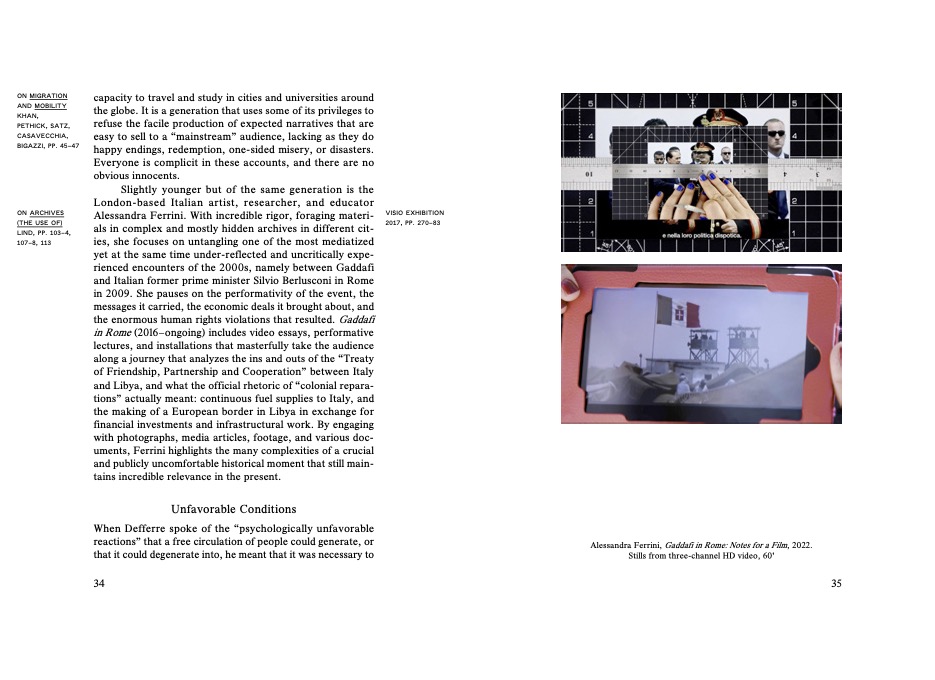
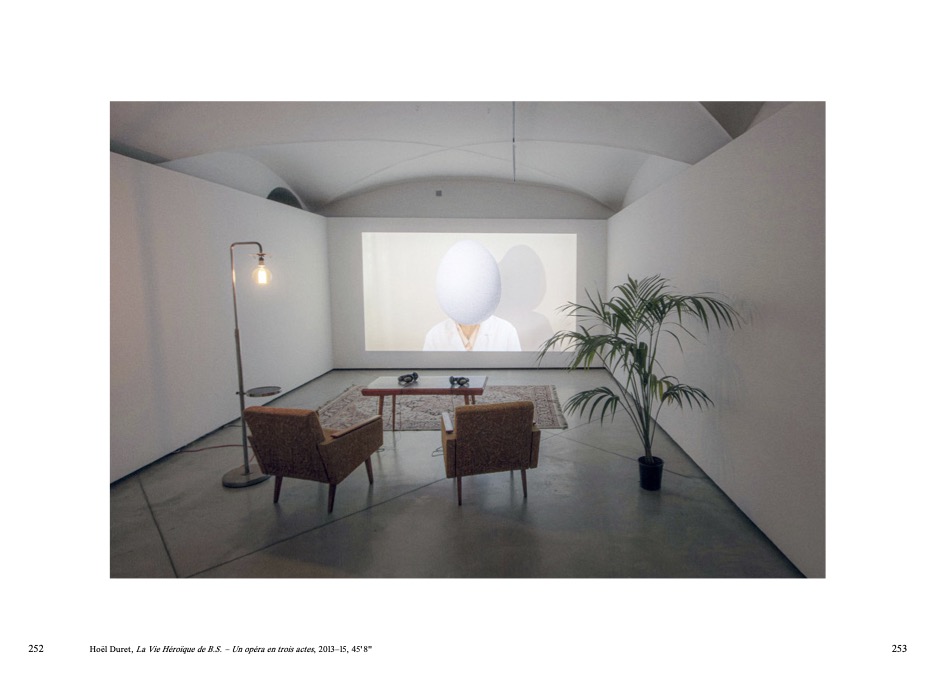
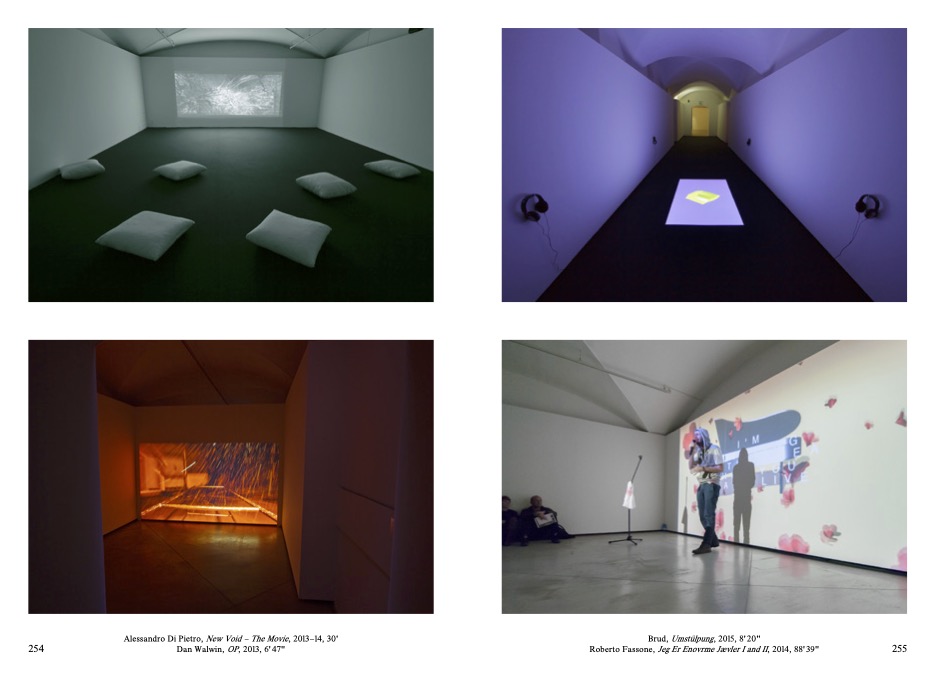
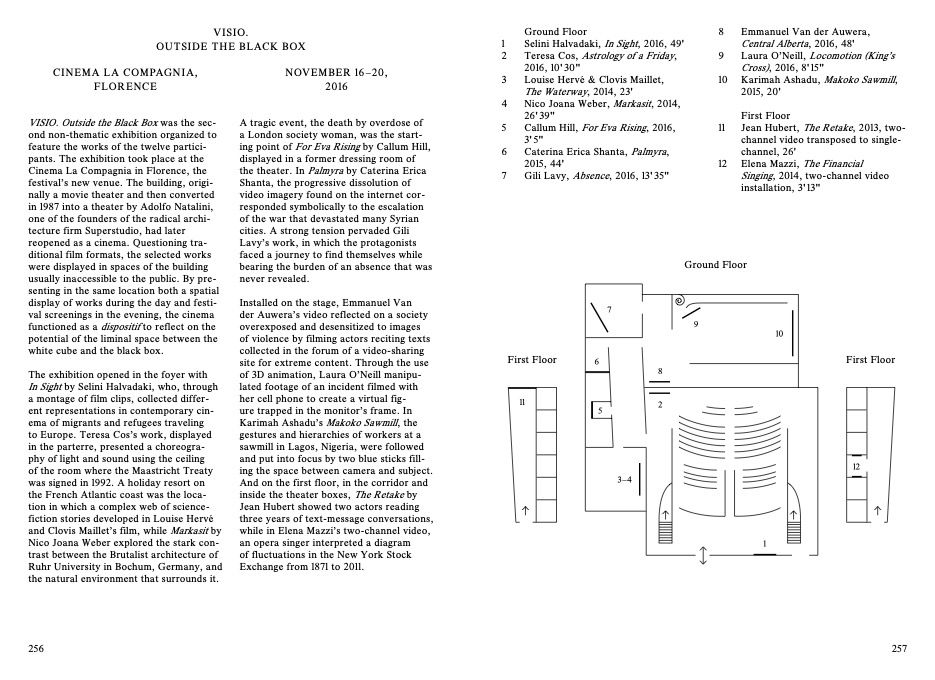
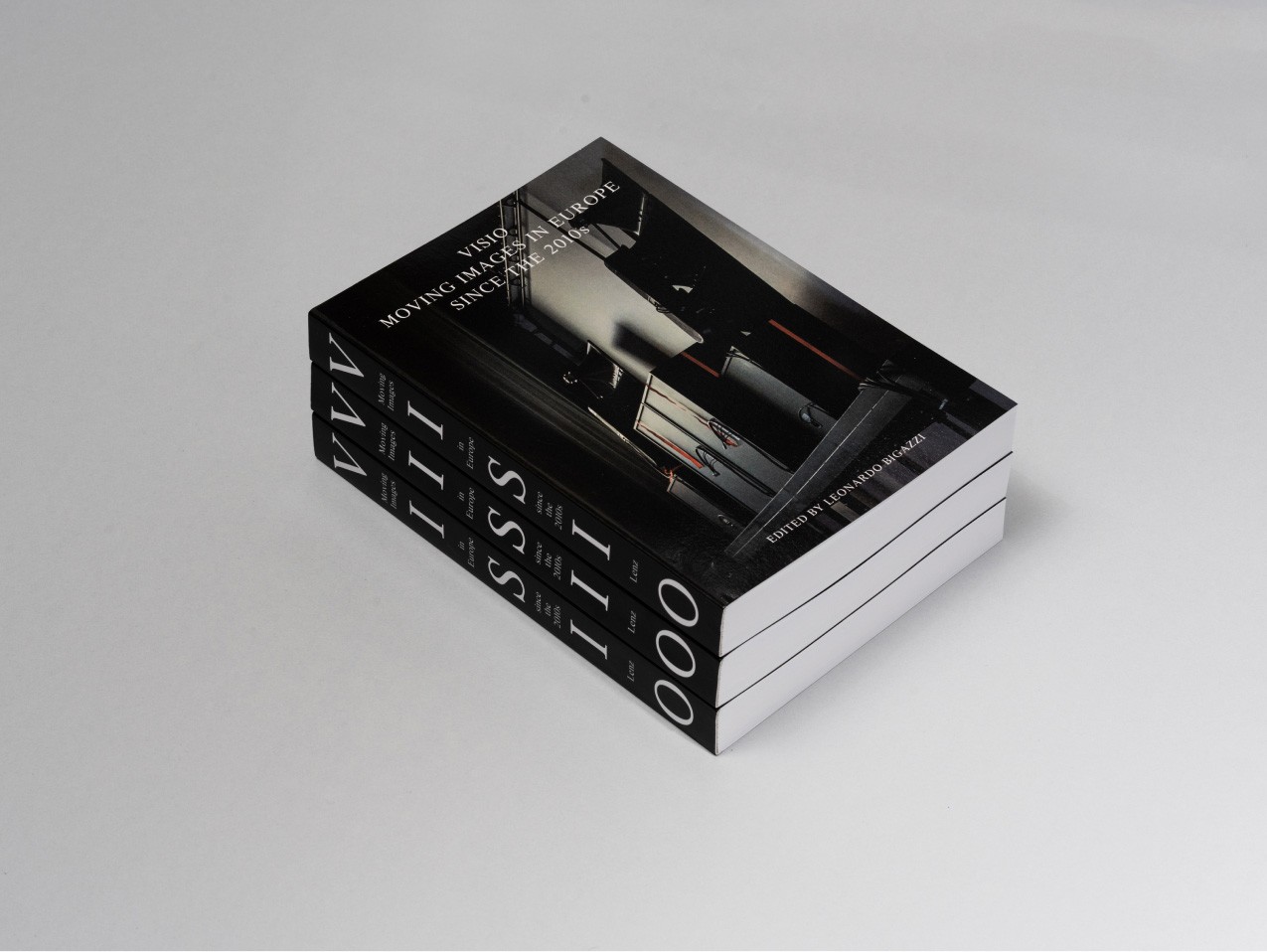
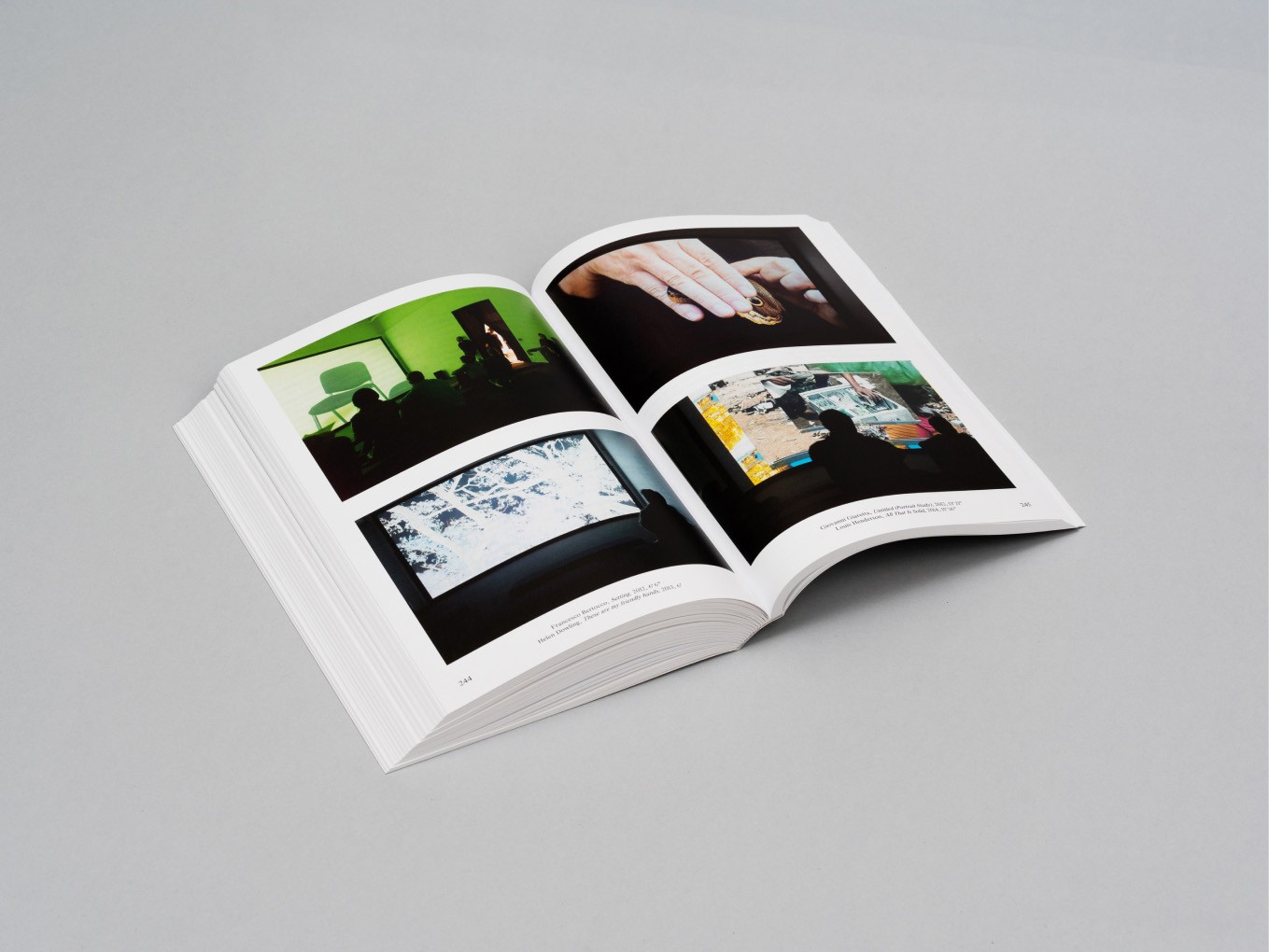
This volume brings together visions, experiences and critical interdisciplinary methodologies that have been instrumental in the development of the language of moving images since 2010. New essays and conversations reflect on radical technological and poetic transformations in the works of the generation of digital native artists, adhering to the shared processes developed during the first twelve editions of VISIO – European Programme on Artists’ Moving Images, a research, production and residency project promoted and organized by Lo schermo dell’arte in Florence.
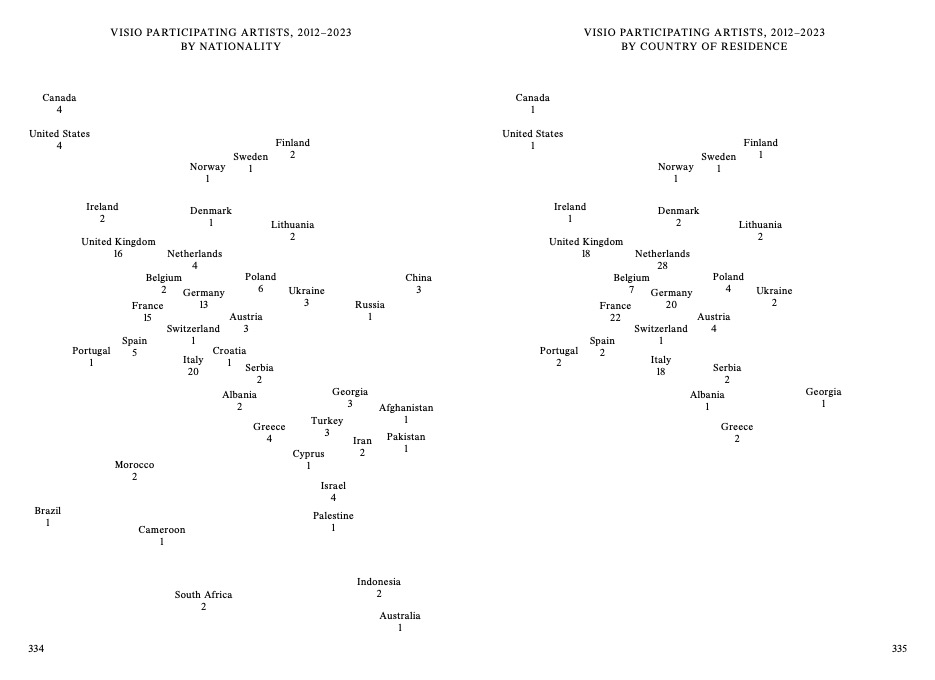
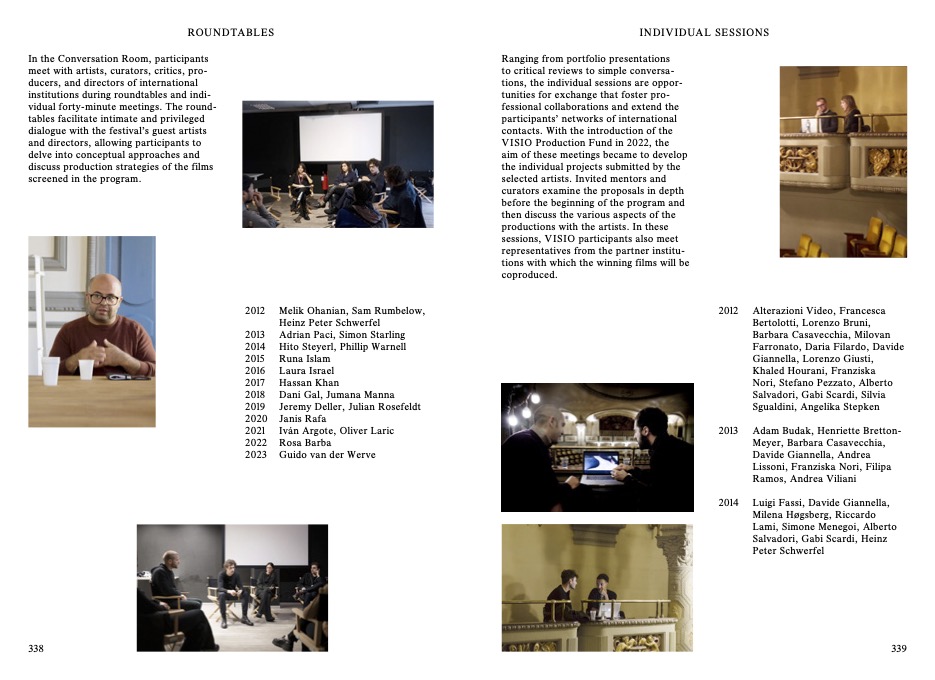
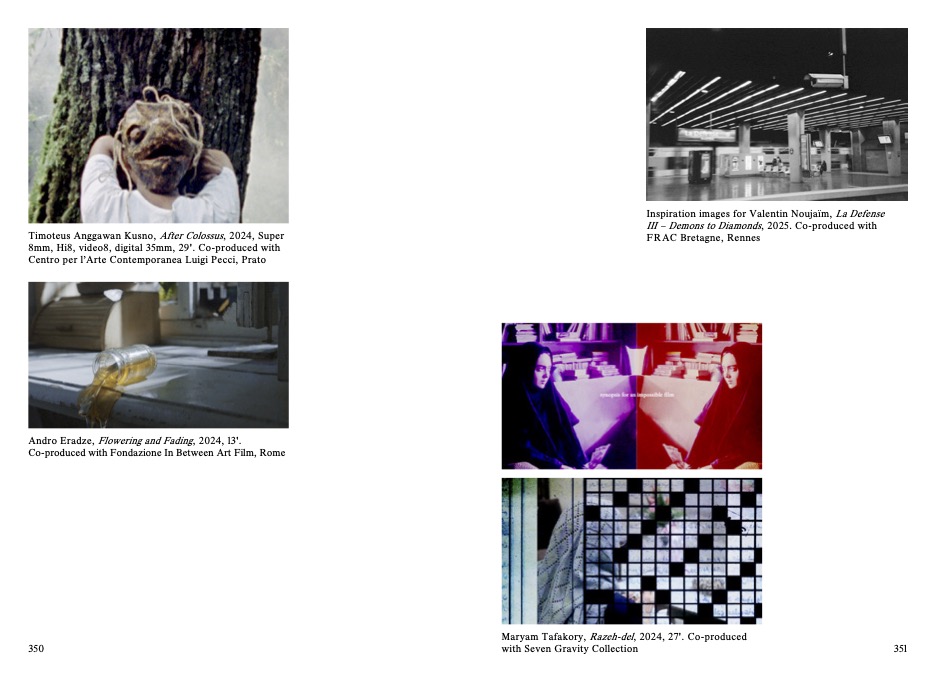
The book features original contributions from twenty-three authors who have participated in the program over the years and is divided into two main sections: the first reflects the theoretical and discursive approach of VISIO by alternating essays and conversations; the second compiles a large archive of the first twelve editions of VISIO.
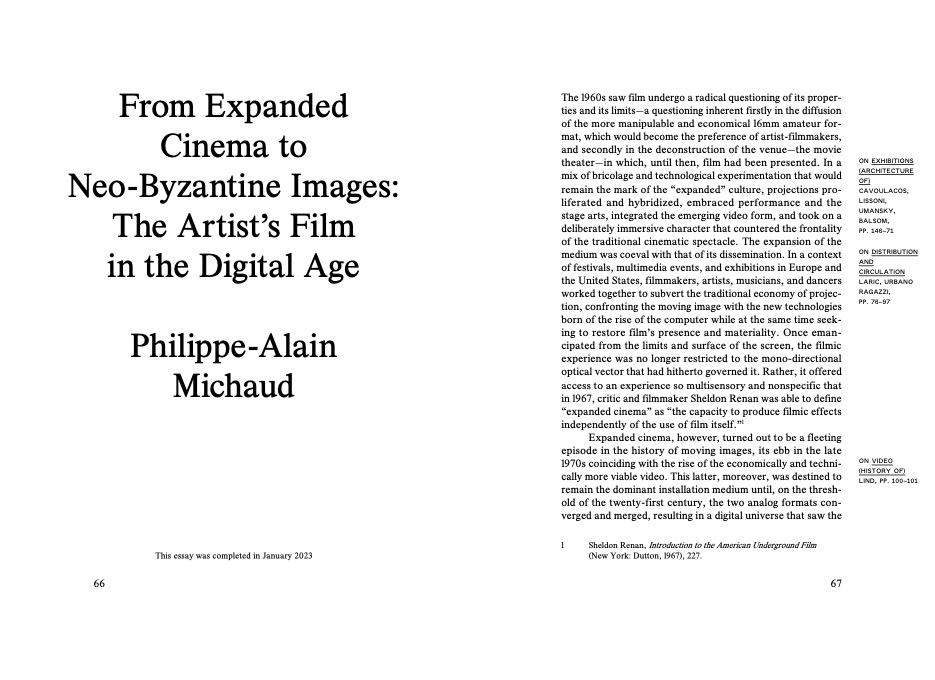
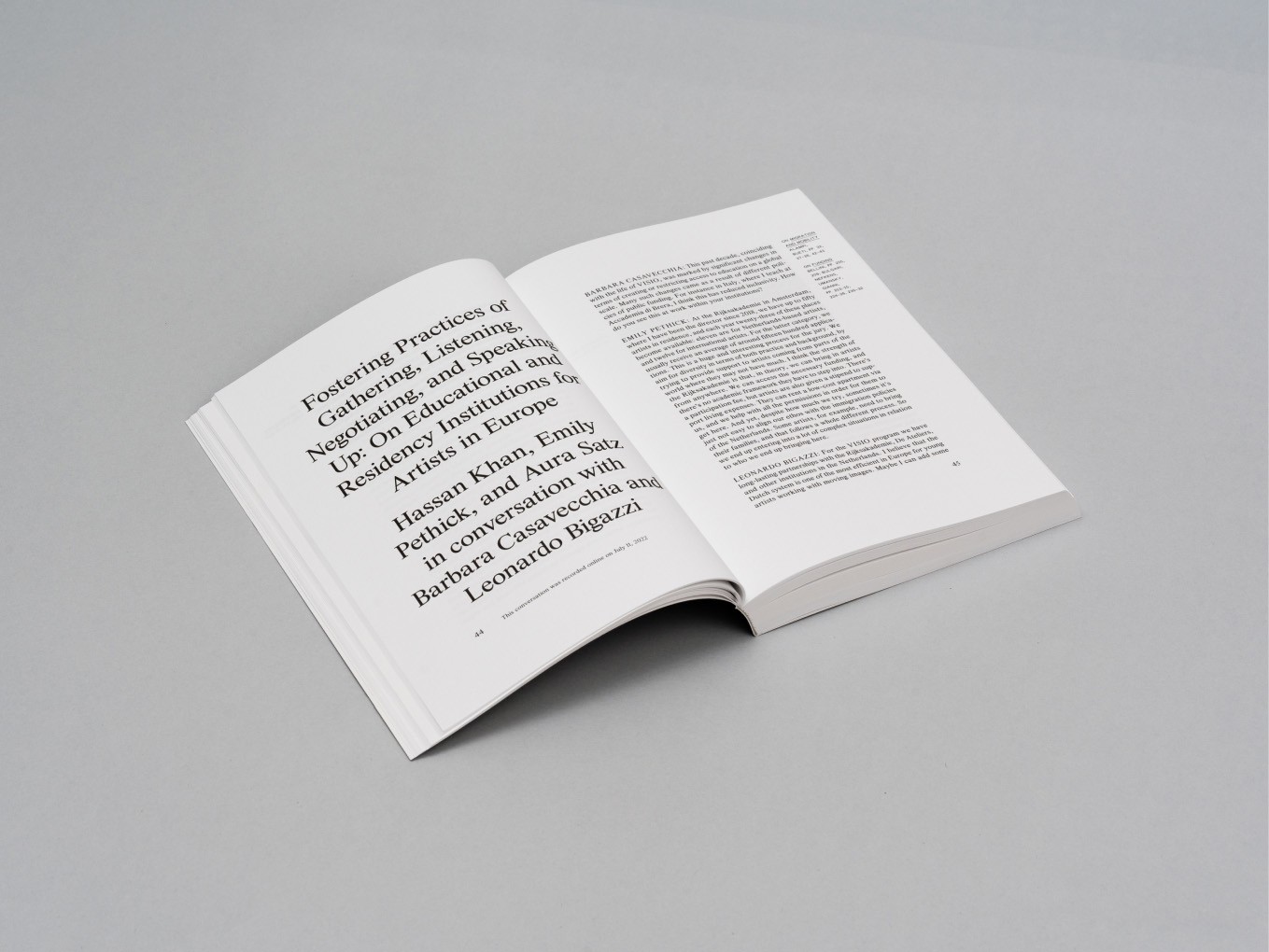
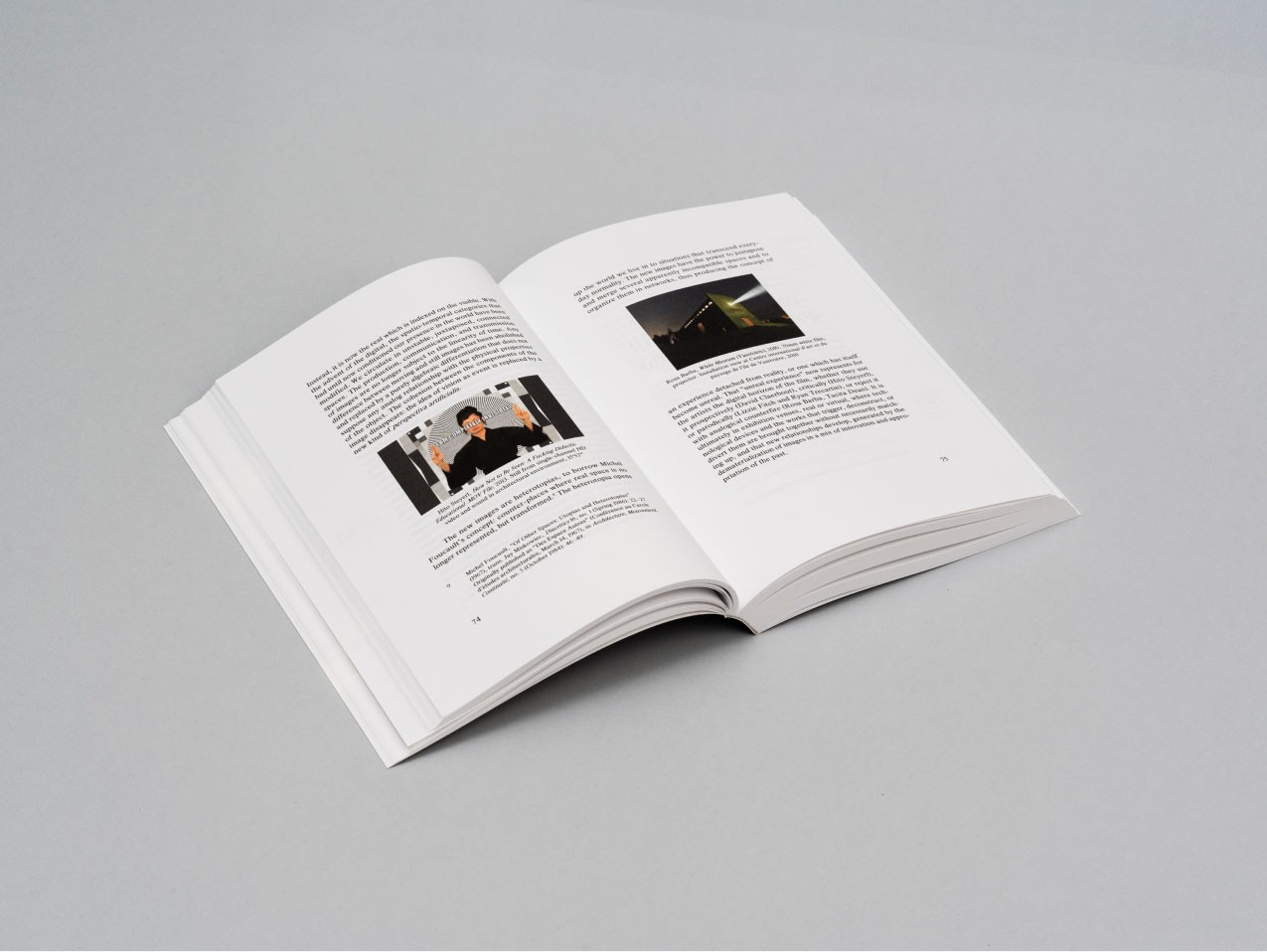
The texts investigate various topics: the questioning of a European identity; the accessibility and role of academic institutions and residences; the evolving significance of images in the digital age; the virtual realm as an exhibition and research space; the impact of documentary practices on contemporary production; the rise of investigative aesthetics and exhibitions as a medium to renegotiate truth; the commodification of digital images and their influence on power consumption; the shifts in curatorial approach to physical and digital spaces; a focus on the practices of VISIO generation artists; and how public and private institutions commission and collect moving image today.