This small anthology reviews some of the central themes of Diego Marcon’s research: from the role of the display in exhibitions to his relationship with cinema, from the use of special effects and animatronics to the sense of community established through his work. Glassa accompanies the exhibition of the same name designed by the artist for the spaces of the Centro per l’arte contemporanea Luigi Pecci in Prato.
Strata raccoglie 37 conversazioni con artisti il cui lavoro ha dato un contributo significativo alla scena artistica italiana e internazionale a partire dal 2000. Questo libro è il resoconto personale di una serie di incontri, amicizie e relazioni professionali che Vincenzo de Bellis e Alessandro Rabottini hanno coltivato negli ultimi vent’anni.
Strata compiles 37 conversations with artists whose work has made a significant contribution to the Italian and international art scene since 2000. This book is the personal account of a number of encounters, friendships, and professional relationships that Vincenzo de Bellis and Alessandro Rabottini have nurtured over the past twenty years.
Pardon Façade documents the artistic output of Luca Monterastelli, showcasing almost all of the sculptures and installations that he produced between 2011 and 2022. Across four chapters—corresponding to four solo shows that he staged in Milan, Otegem, Antwerp, and Naples—the publication provides the first overview of the artist’s work.
More than half a century after its premiere, Yvonne Rainer, in collaboration with choreographer and dancer Emily Coates, directed the 2019 revival of her 1965 performance Parts of Some Sextets. This book poses questions about the trajectories of artworks, performers, and audiences, all while tracing the life—and afterlife—of a dance.
How does technology organize life? This book documents and reflects on the exhibition Proof of Stake: Technological Claims at Kunstverein in Hamburg, curated by Simon Denny and Bettina Steinbrügge. It brings together a unique group of artists and scholars who investigate the technological apparatuses and power relations of organized life.
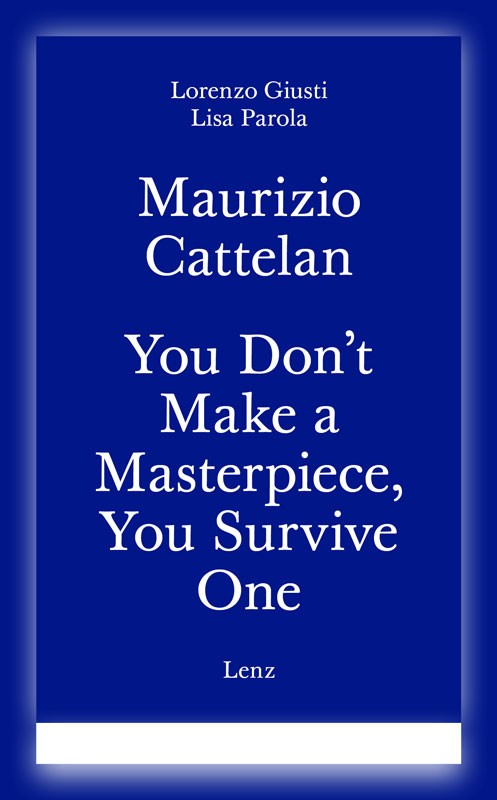
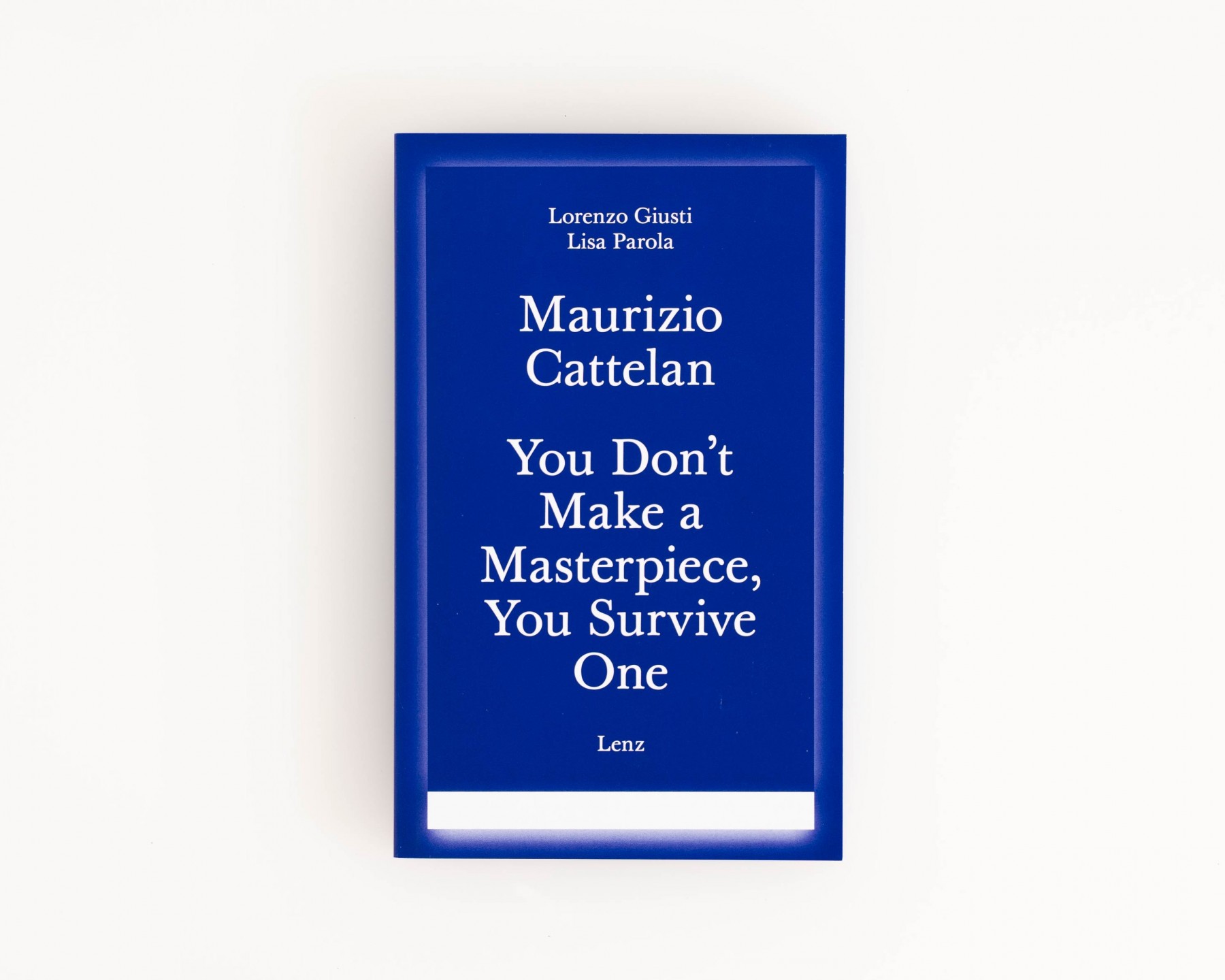
Maurizio CattelanYou Don’t Make a Masterpiece, You Survive One
Edited by Lorenzo Giusti and Valentina Gervasoni
Texts by Lorenzo Giusti and Lisa Parola
Designed by Lorenzo Mason Studio
2025, English / Italian, softcover, 11 x 17.7 cm, 96 pages
ISBN 979-12-80579-96-6
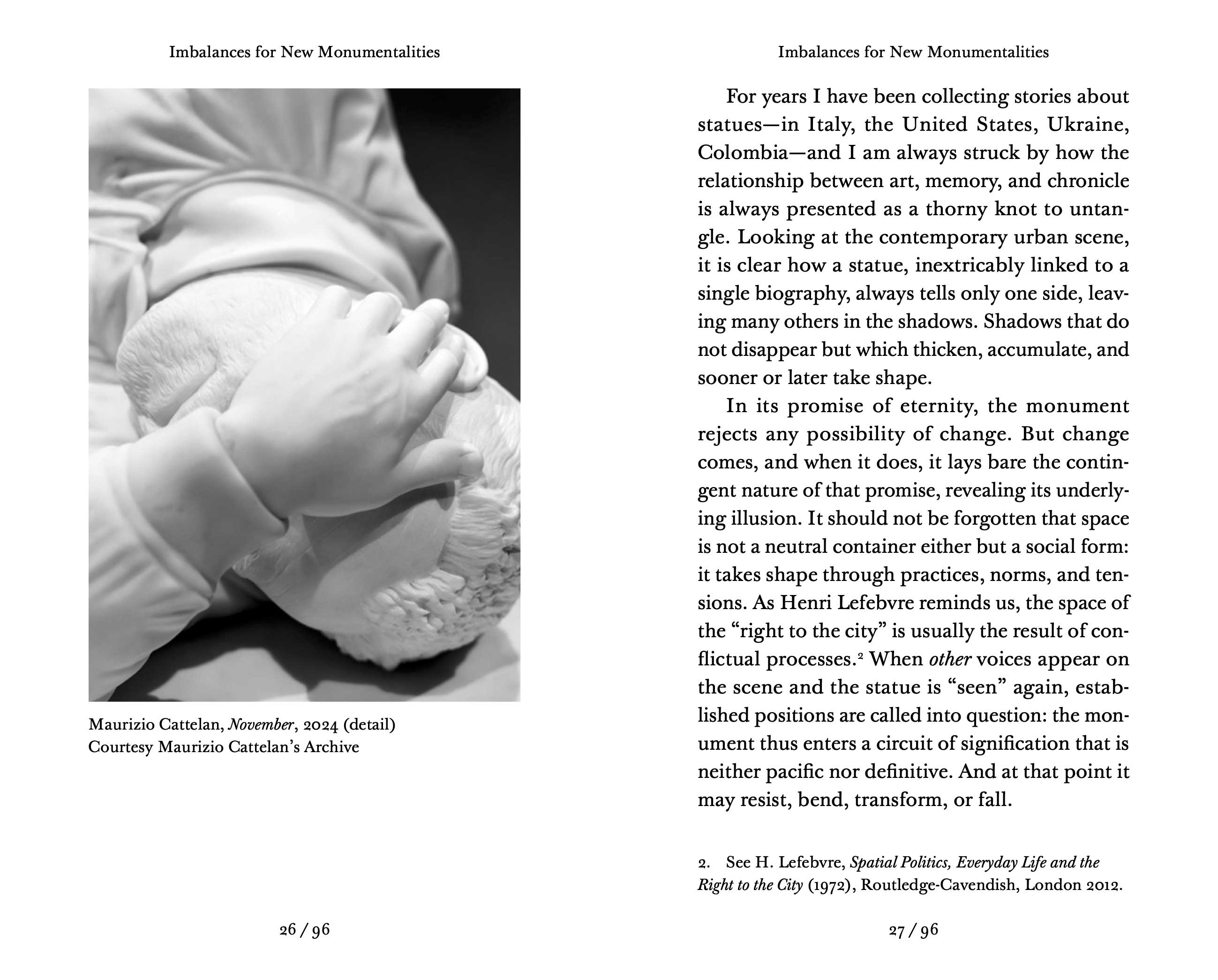
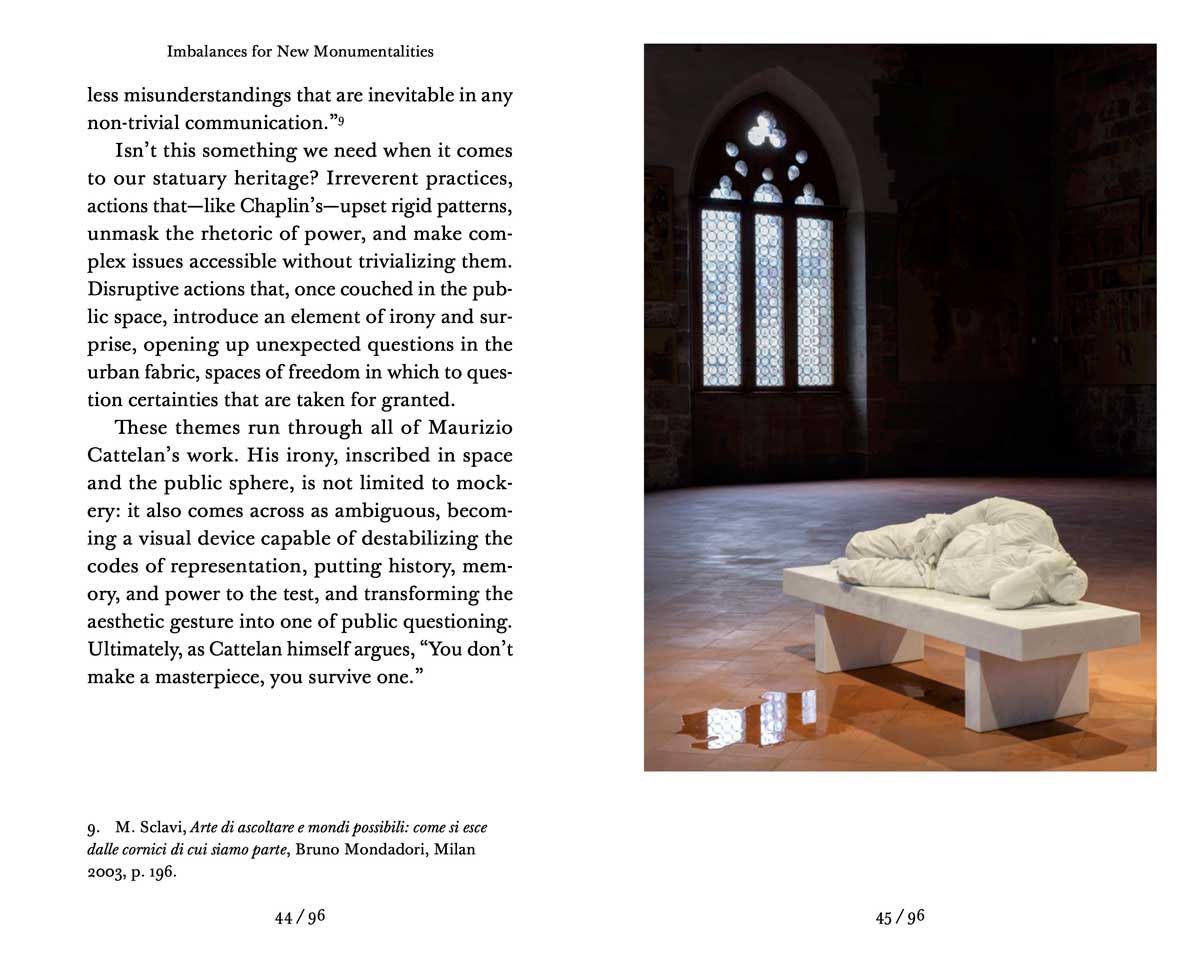
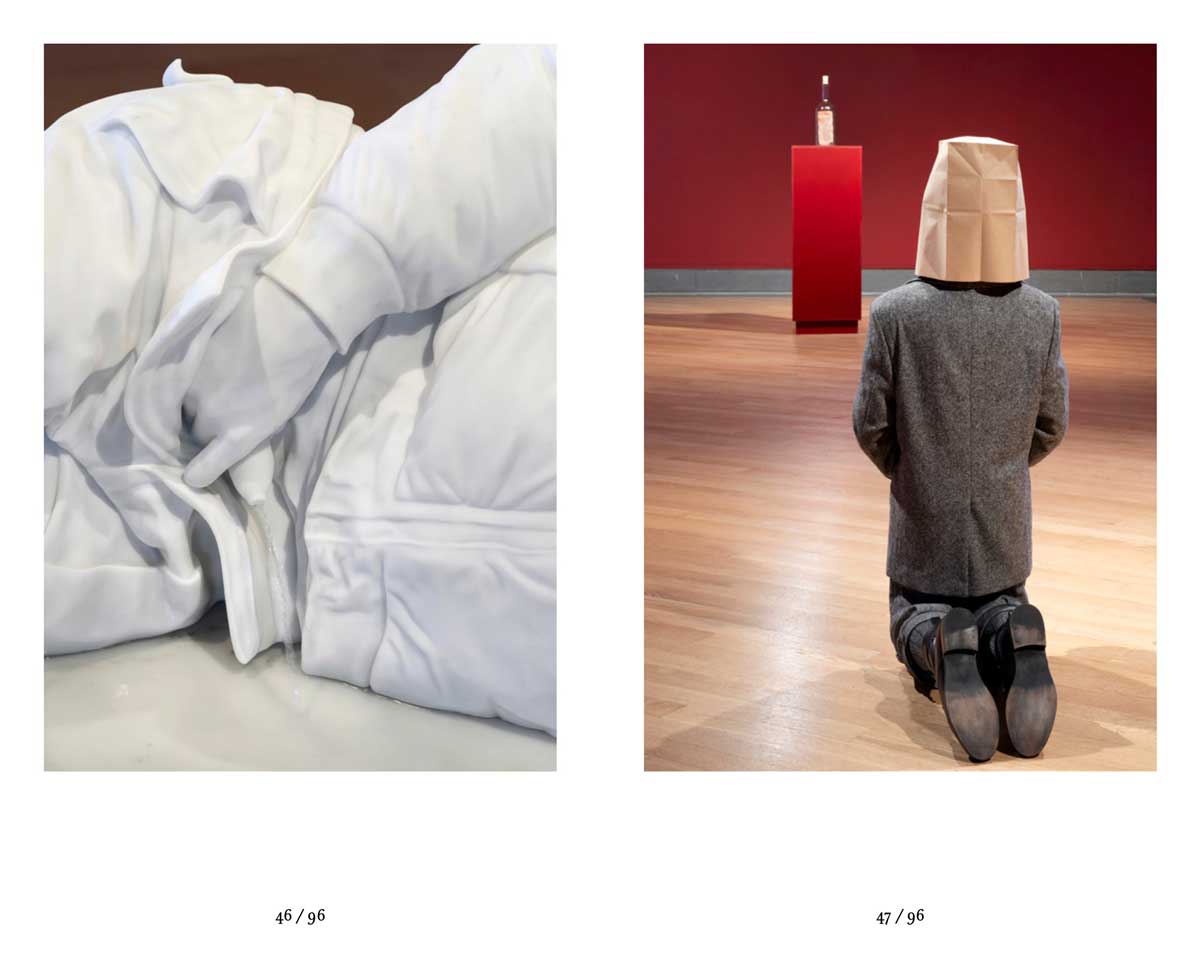
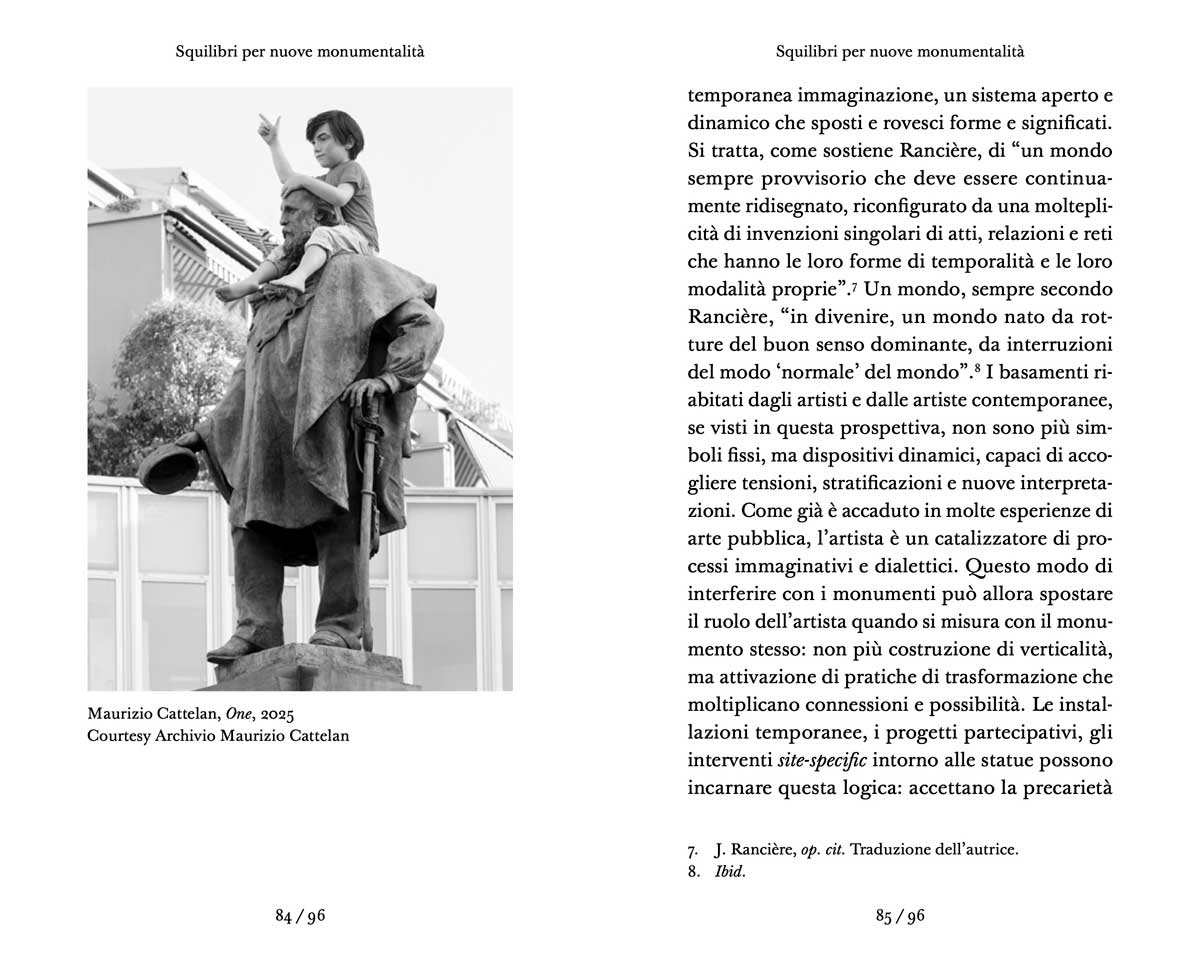
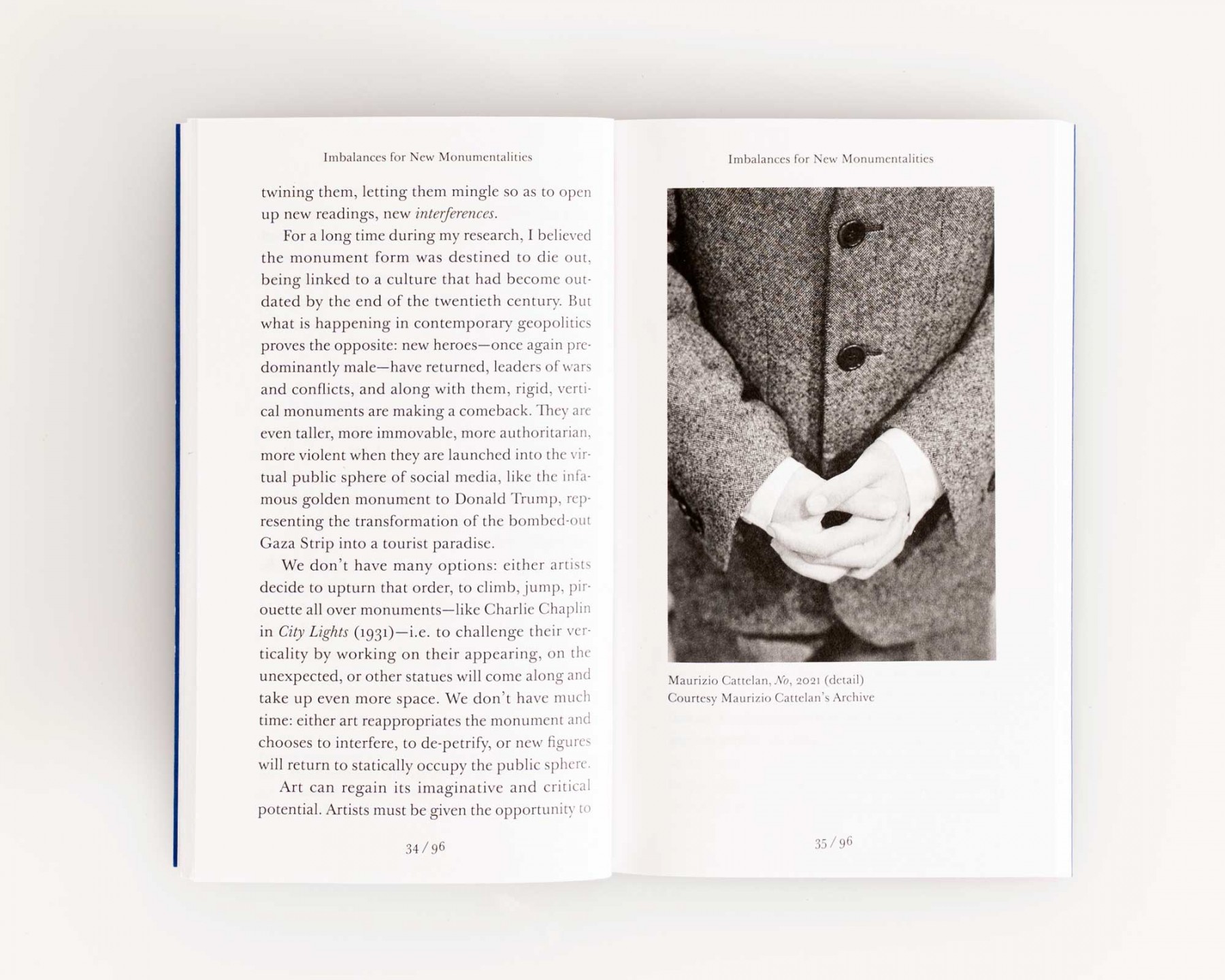
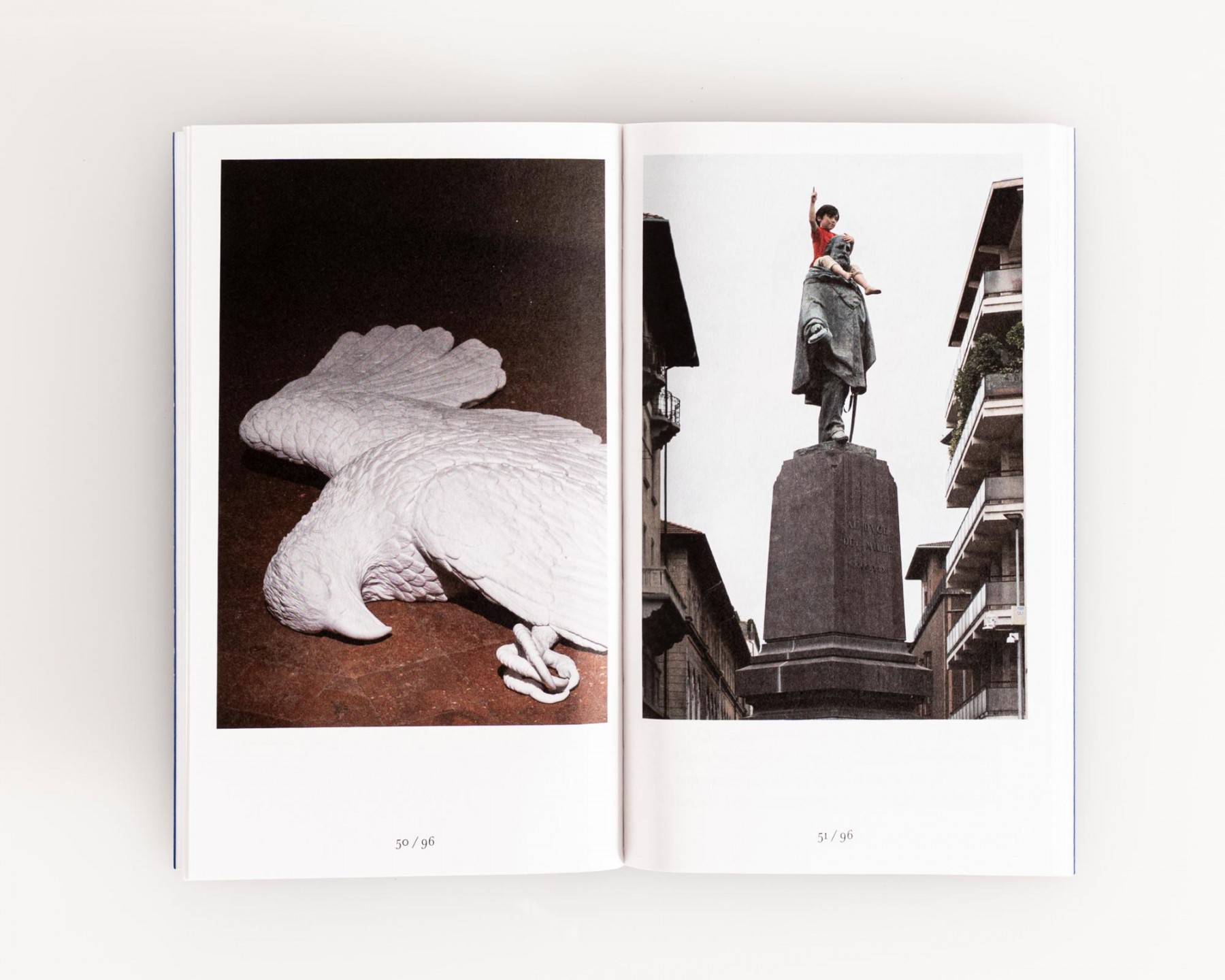
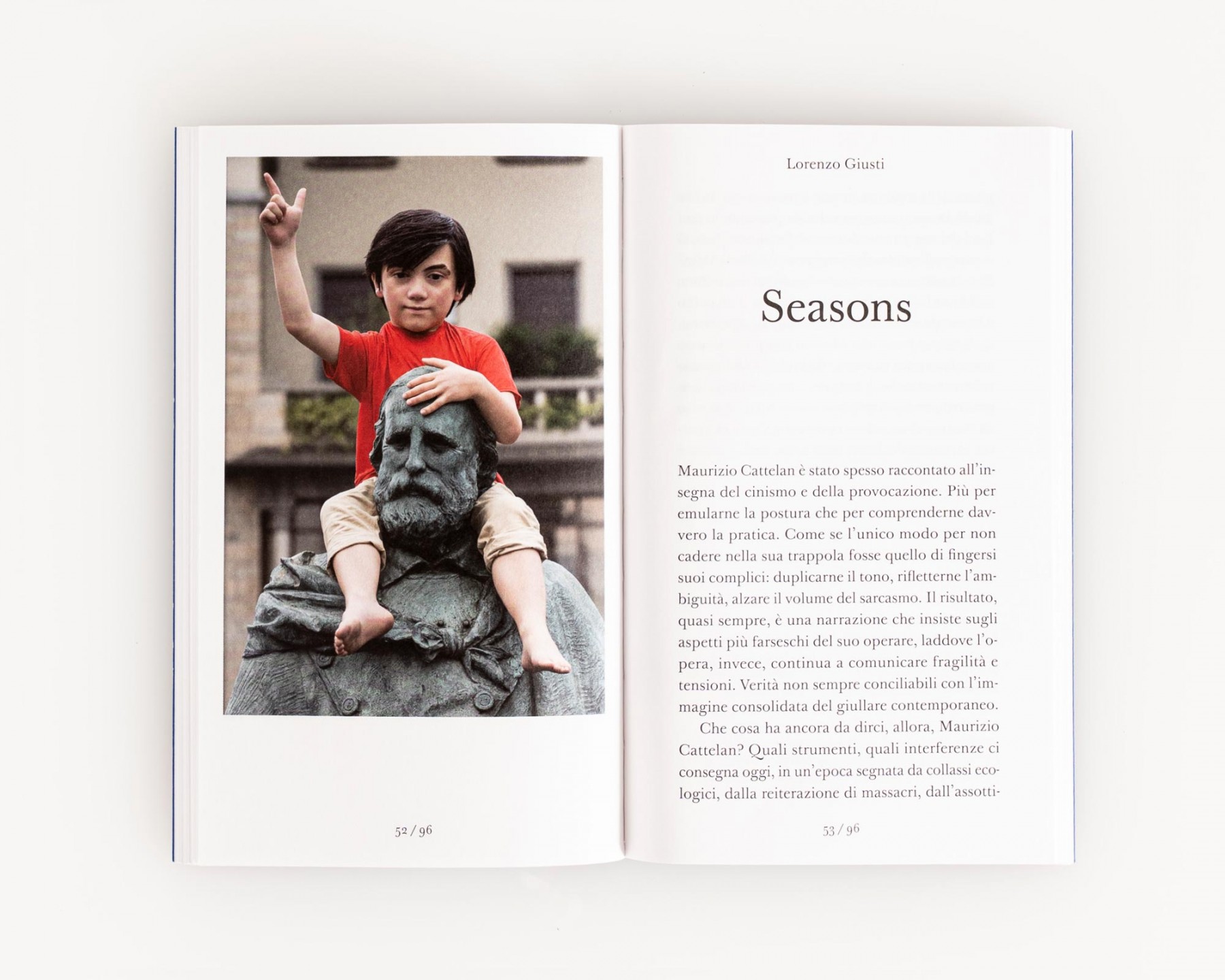
On the occasion of Seasons, Maurizio Cattelan’s exhibition at GAMeC, art historian Lisa Parola, investigates how contemporary art can redefine the idea of the monument: no longer an immobile place of celebration, but a critical space of removal and transformation, promoting new relationships with both history and the present. Parola reflects on the changing concept of the monument and how cultural institutions choose to deal with layered and sometimes contradictory symbols. Lorenzo Giusti, curator of the exhibition, accompanies the essay with an insight on the works presented in order to show how, in Cattelan’s work, symbols stratify, shift, and contradict each other. How the imperial eagle becomes a vulnerable body; how the nineteenth-century statue dedicated to Garibaldi is turned into a pedestal for something else. Who? A grandson on his grandfather’s shoulders? A new Garibaldian? Or a little vandal mocking ancient values? By so doing, he notes how between history and nature, cracks, fractures, and new possibilities may be opened up.
You Don’t Make a Masterpiece, You Survive One is the fourth book in a series of short essay collections inspired by the site-specific art projects specially conceived for GAMeC at Palazzo della Ragione: a symbolic, time-honored location in the city of Bergamo that embodies all the values of community life and participation. The artists were asked to name an author who interests them—be it a researcher, a philosopher or a scholar—and whose thinking could be said to underpin their project, with a view to finding a path through the complexities of the present day, starting from the work produced but without necessarily lingering on it.