Since the 1980s, Belgian artist Sigefride Bruna Hauman has created a highly original body of work in different media. Her installations, reliefs and videos are the subject of a much-overdue retrospective organized by M Leuven—and of this first monograph.
Rituals of Care is an extensive monograph devoted to the work of Antonio Obá, published in conjunction with his eponymous exhibition presented at the Centre d’Art Contemporain Genève, curated by Andrea Bellini. Extensively illustrated, the book immerses the reader in Obá’s multifaceted oeuvre and in the magical iconographic universe of his paintings.
Claiming that the museum is not enough means asking what a museum should be and do, eventually questioning the role of cultural institutions in society. Through conversations, stills of documentaries, responses, and reprints of archival documents that explore ideas of architecture on the ground, this volume reflects on the tools deployed by the institution to redefine its relationship to others.
Affirmer que le musée ne suffit pas, c’est interroger ce qu’un musée devrait être et faire, et réfléchir de manière critique sur le rôle des institutions culturelles dans nos sociétés. À travers des conversations, des photogrammes de documentaires, des interventions et des reproductions d’archives questionnant les conceptions de l’architecture sur le terrain, ce volume réfléchit aux outils mis en œuvre par l’institution pour redéfinir sa relation aux autres.
Semi-Nomadic Debt-Ridden Bedouins is the first monograph on the work of the Palestinian artist and filmmaker Basma al-Sharif. Spanning nearly two decades of moving-image and installation work, it combines visual documentation with texts that reflect on the charged political landscapes through which al-Sharif navigates.
This monograph marks the occasion of the first European survey of Nicola L. (1932–2018). Often discussed in the context of Pop Art, activism, feminism, and design, this is the first in-depth exploration of the multi-layered and expansive nature of her extraordinary practice, which also encompassed cosmology, environmental concerns, spirituality, political protest, and sexuality.
Edited by Adriana Varejão, Helena de Freitas, and Victor Gorgulho
Authors: Elena Crippa, Raphael Fonseca, Helena de Freitas, Victor Gorgulho and Adriana Varejão
Designed by Lorenzo Mason Studio
2025, English, softcover, 24 x 32 cm, 152 pages
ISBN 979-12-80579-58-4
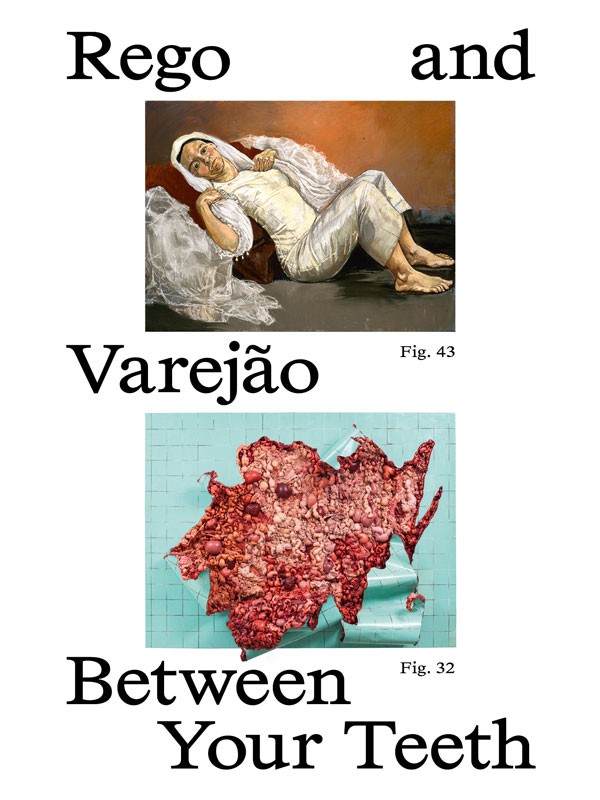
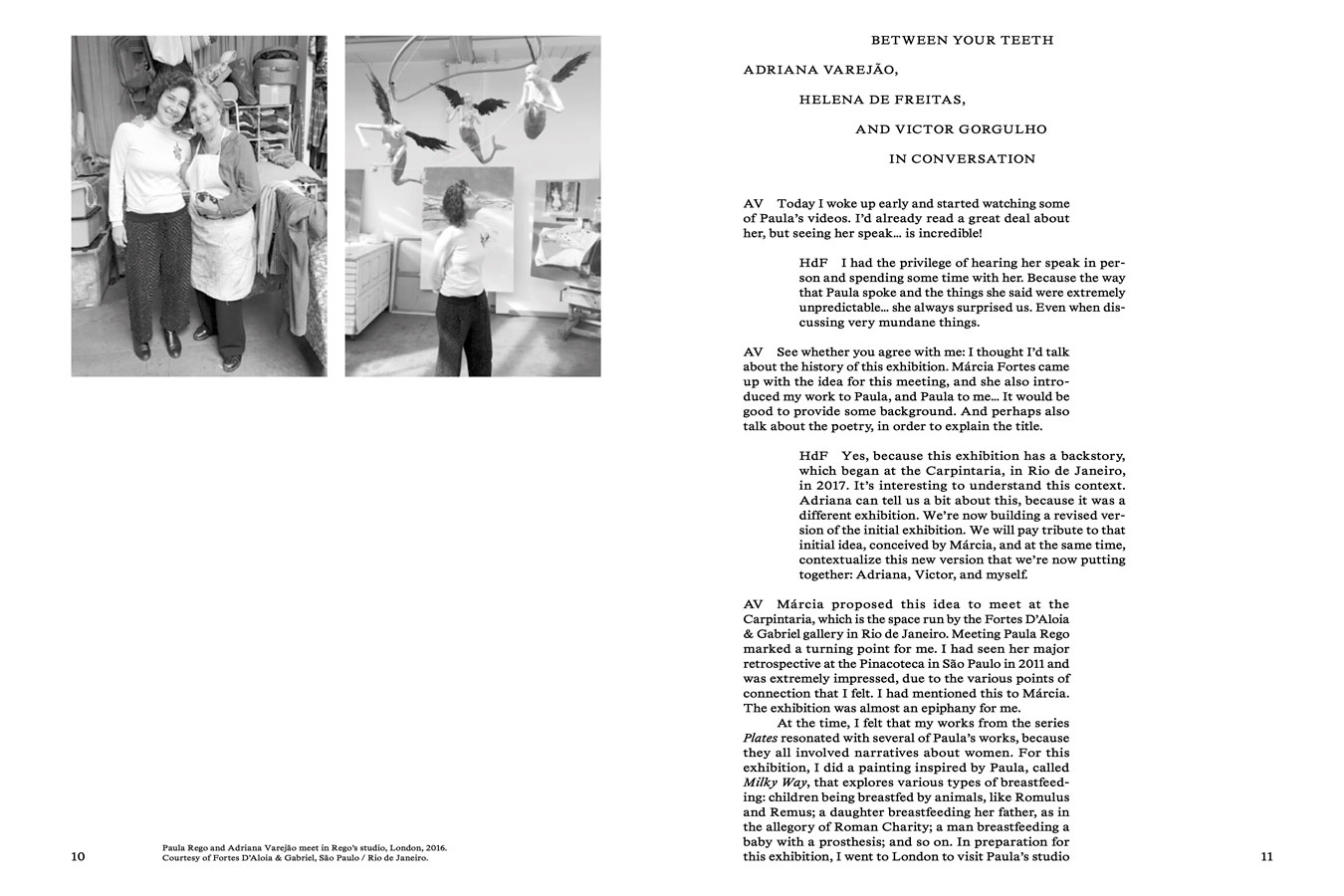
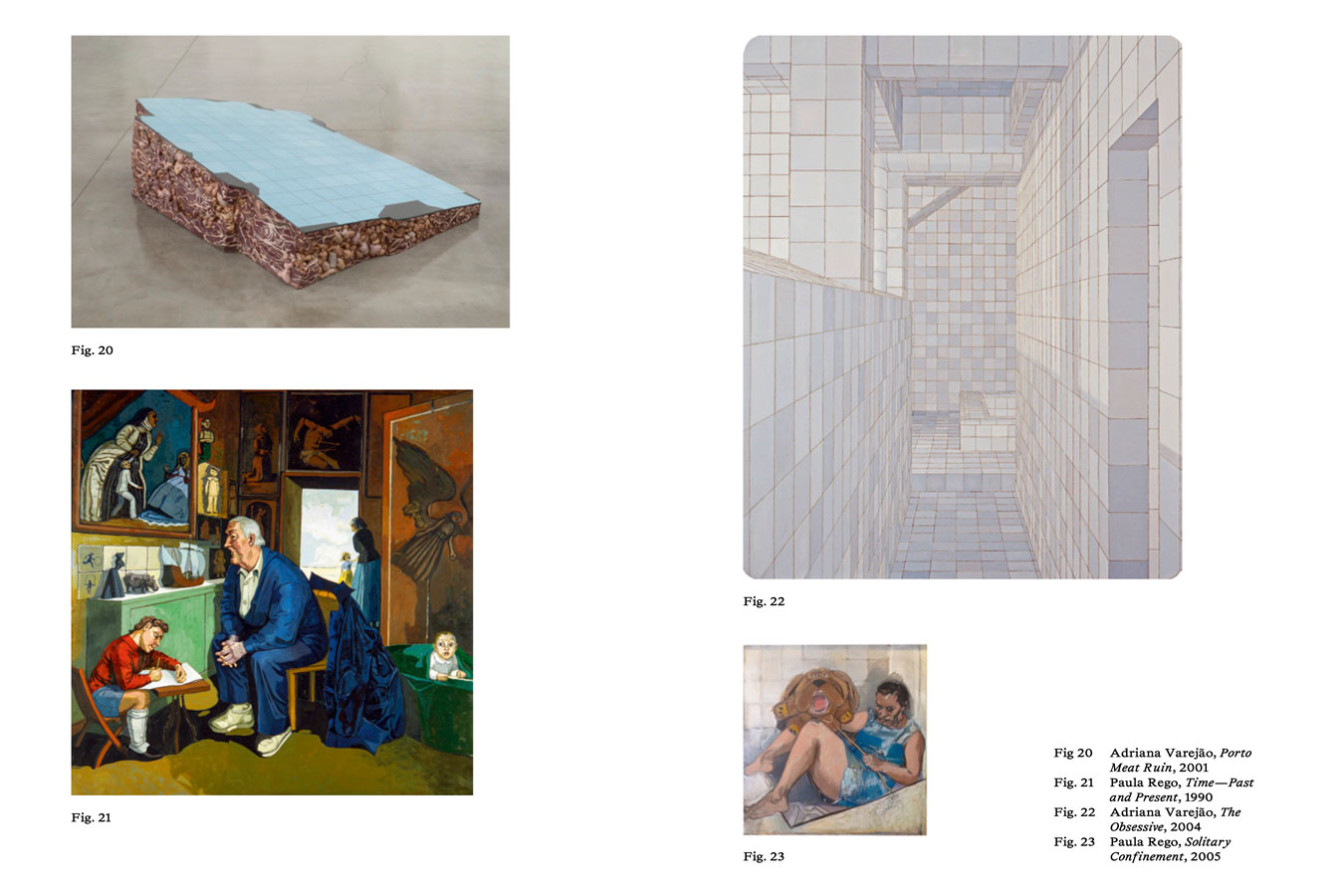
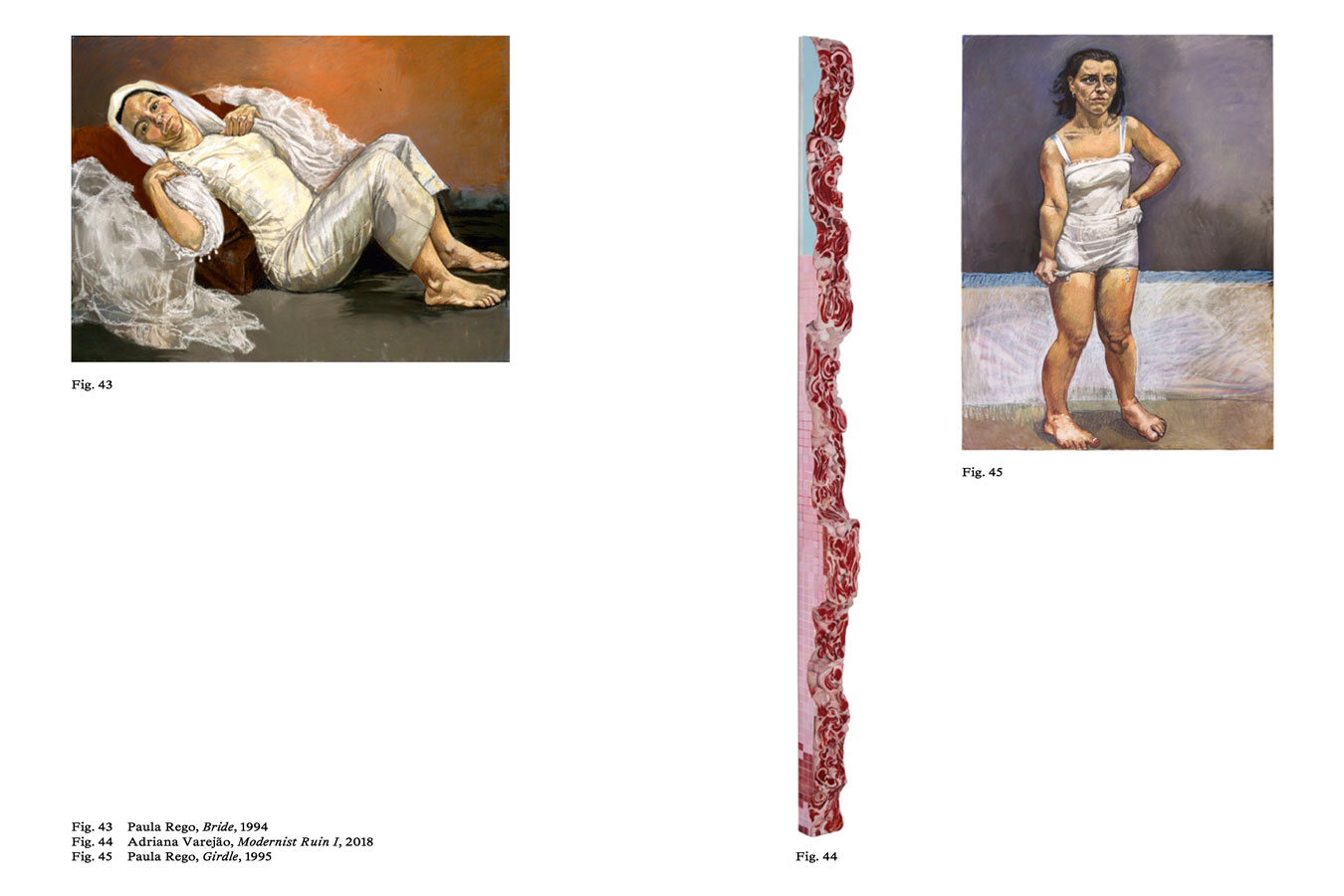
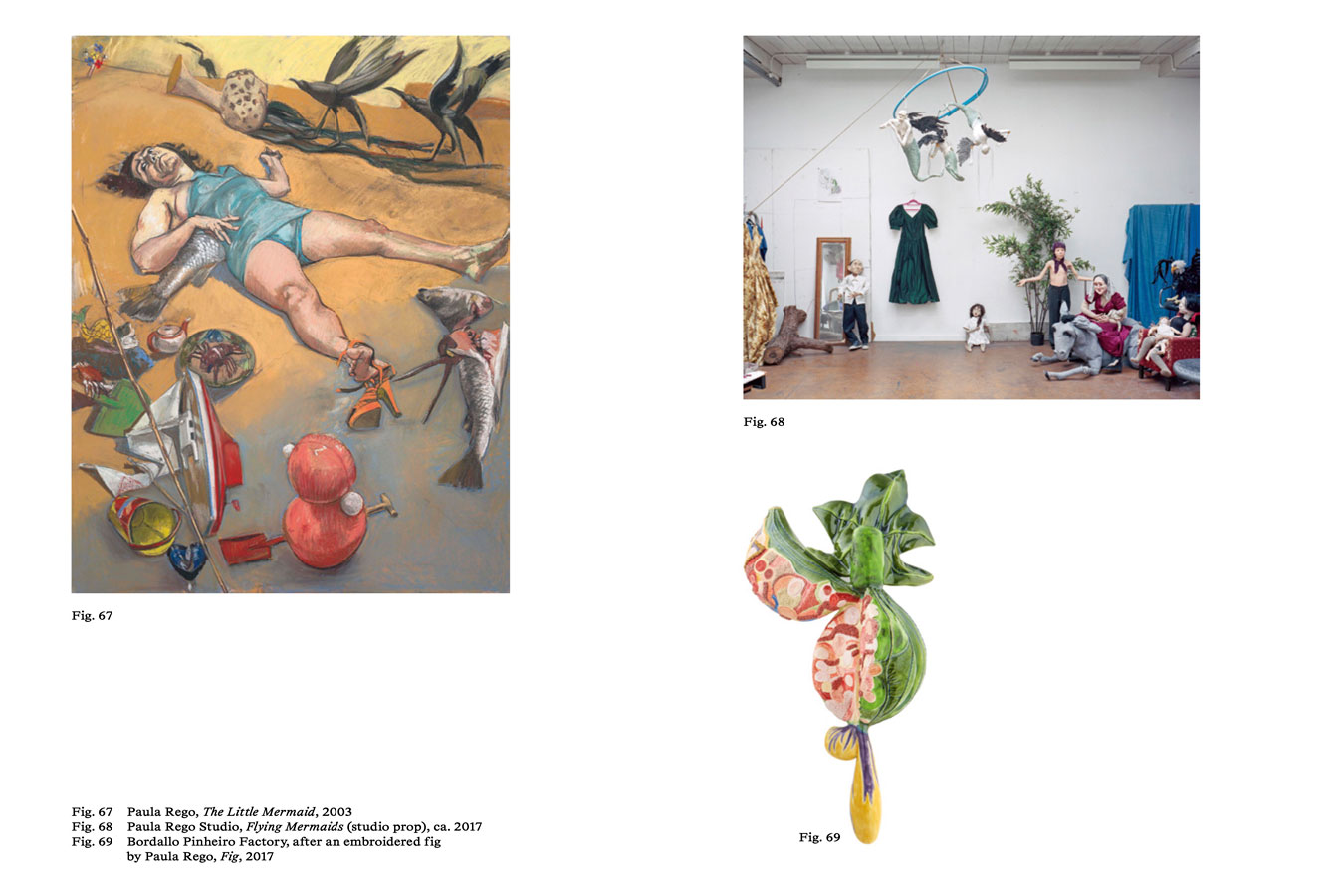
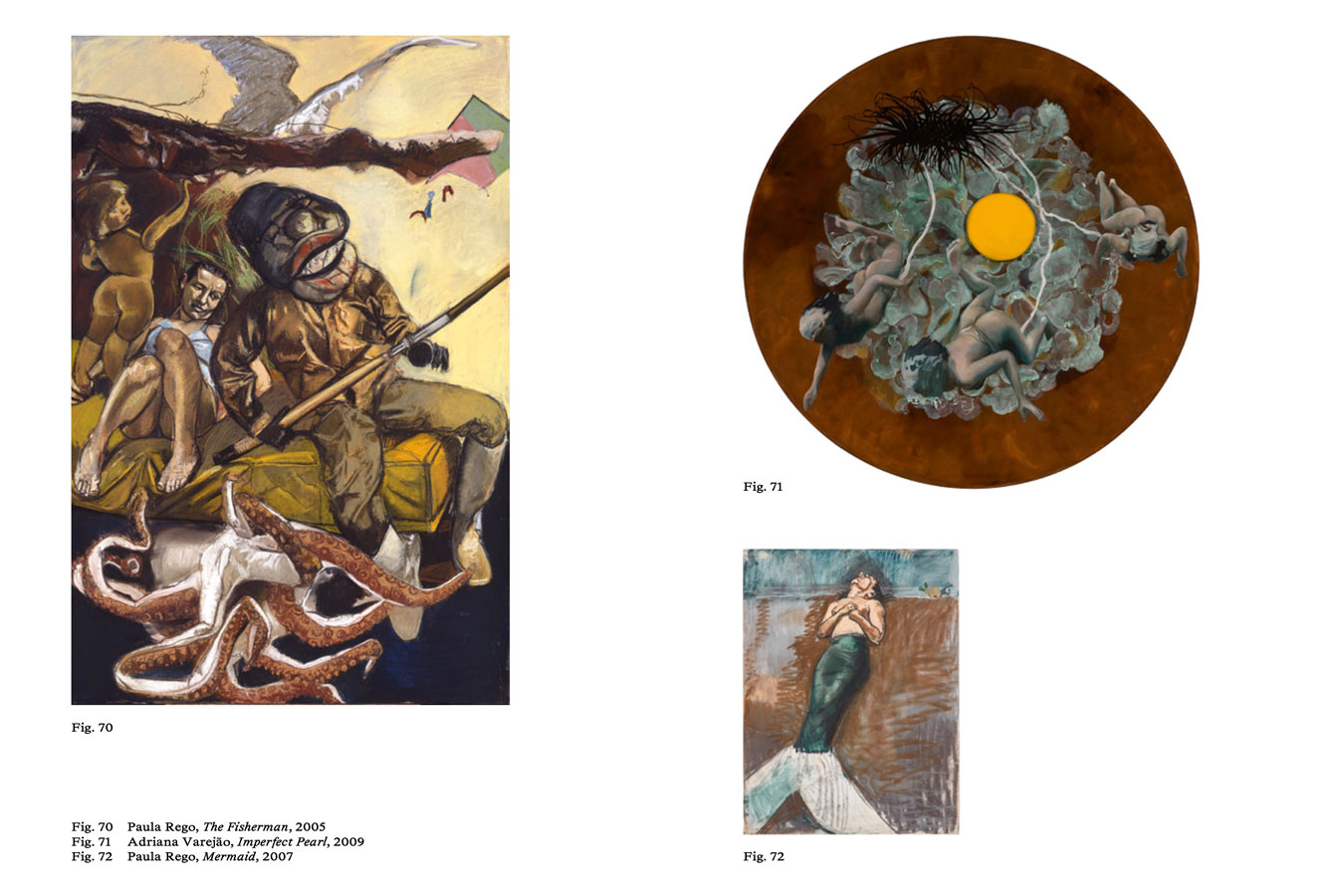
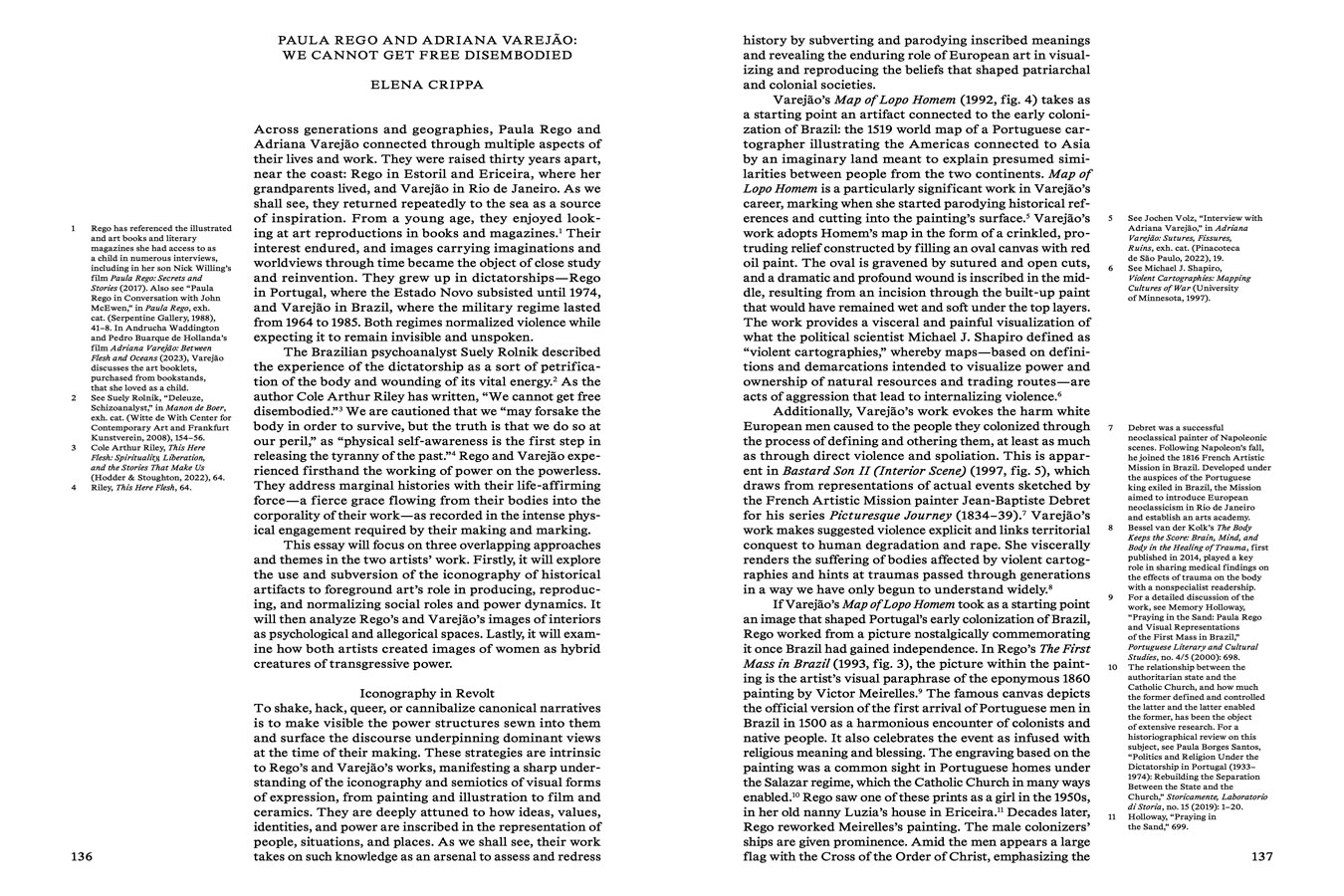
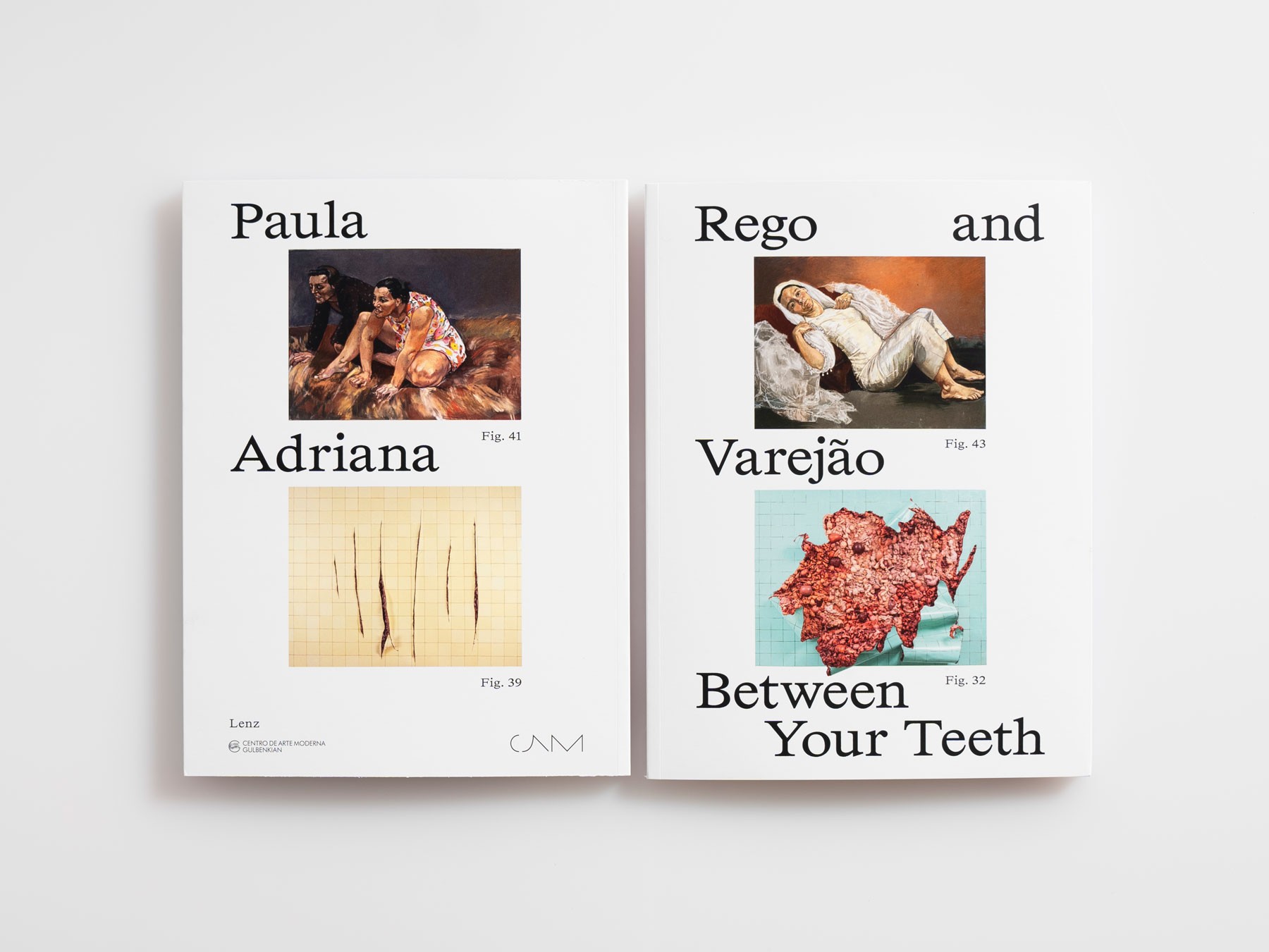
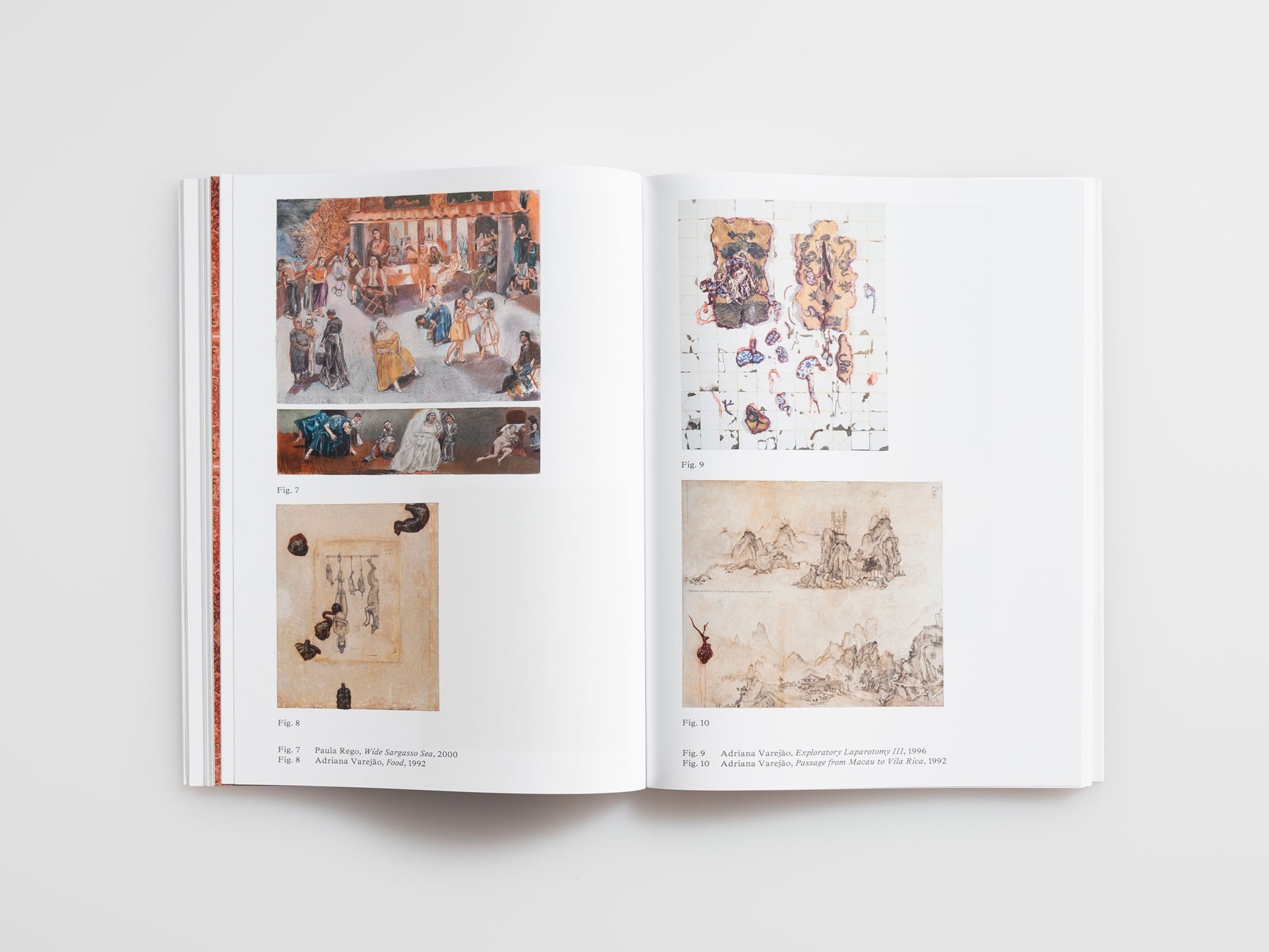
Paula Rego and Adriana Varejão. Between Your Teeth, published on the occasion of the eponymous exhibition held at CAM – Gulbenkian in Lisbon, explores convergences in the work of Paula Rego (Lisbon, 1935 – London, 2022) and Adriana Varejão (Rio de Janeiro, 1964), although they belong to different generations and come from different backgrounds.
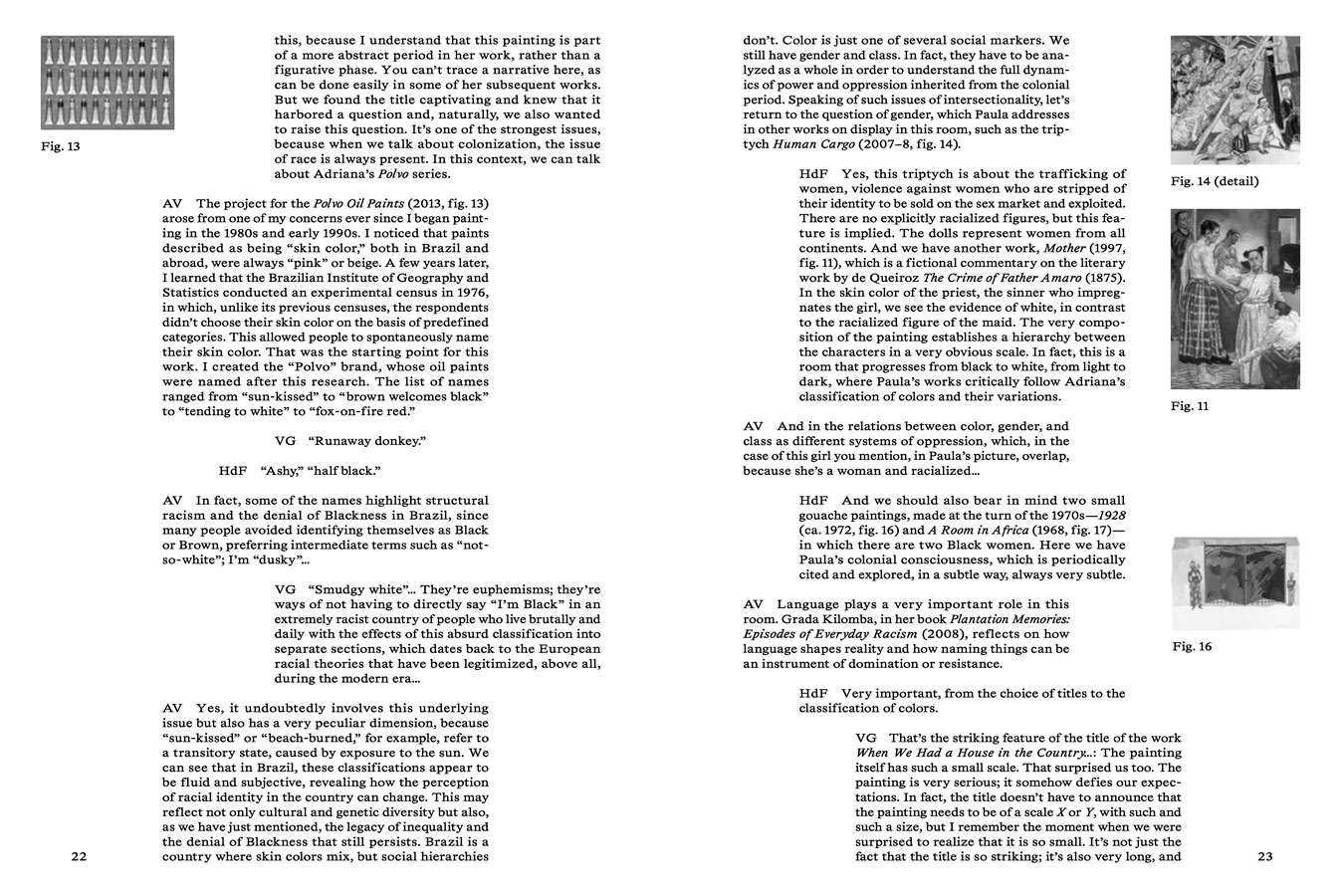
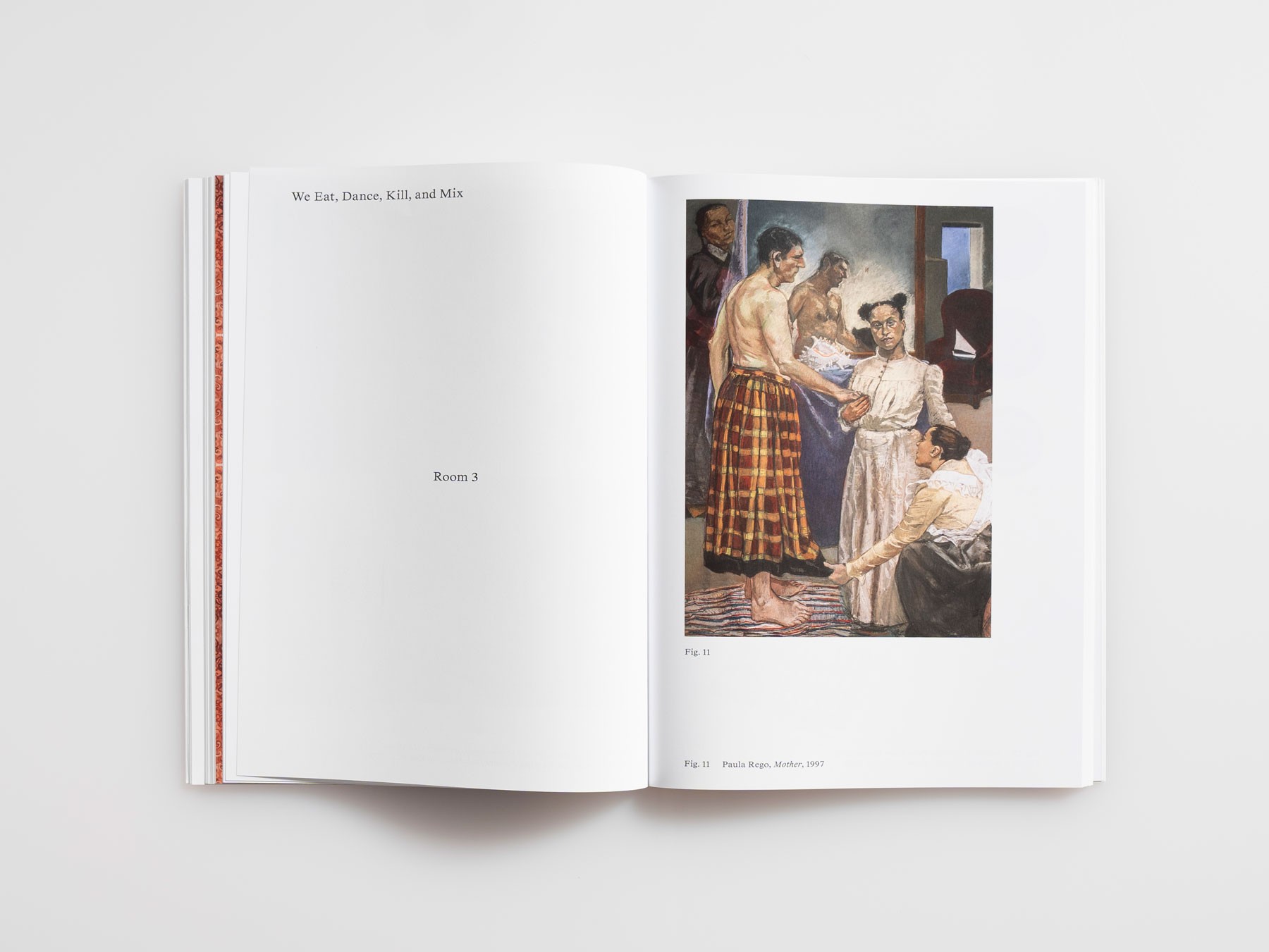
Curated by Adriana Varejão, Helena de Freitas, and Victor Gorgulho, the exhibition, which presents nearly 80 works—including paintings, engravings, sculptures, and installations—is divided into thirteen thematic rooms. The long conversation between the three curators, which forms the main text of the catalogue, reflects the structure of the exhibition, addressing the different thematic nodes and revealing the conceptual and methodological process that guided the selection of works.
The two essays by Raphael Fonseca and Elena Crippa, which complete the catalogue, offer further insights, by highlighting several similarities in the practice of the two artists from a critical perspective.
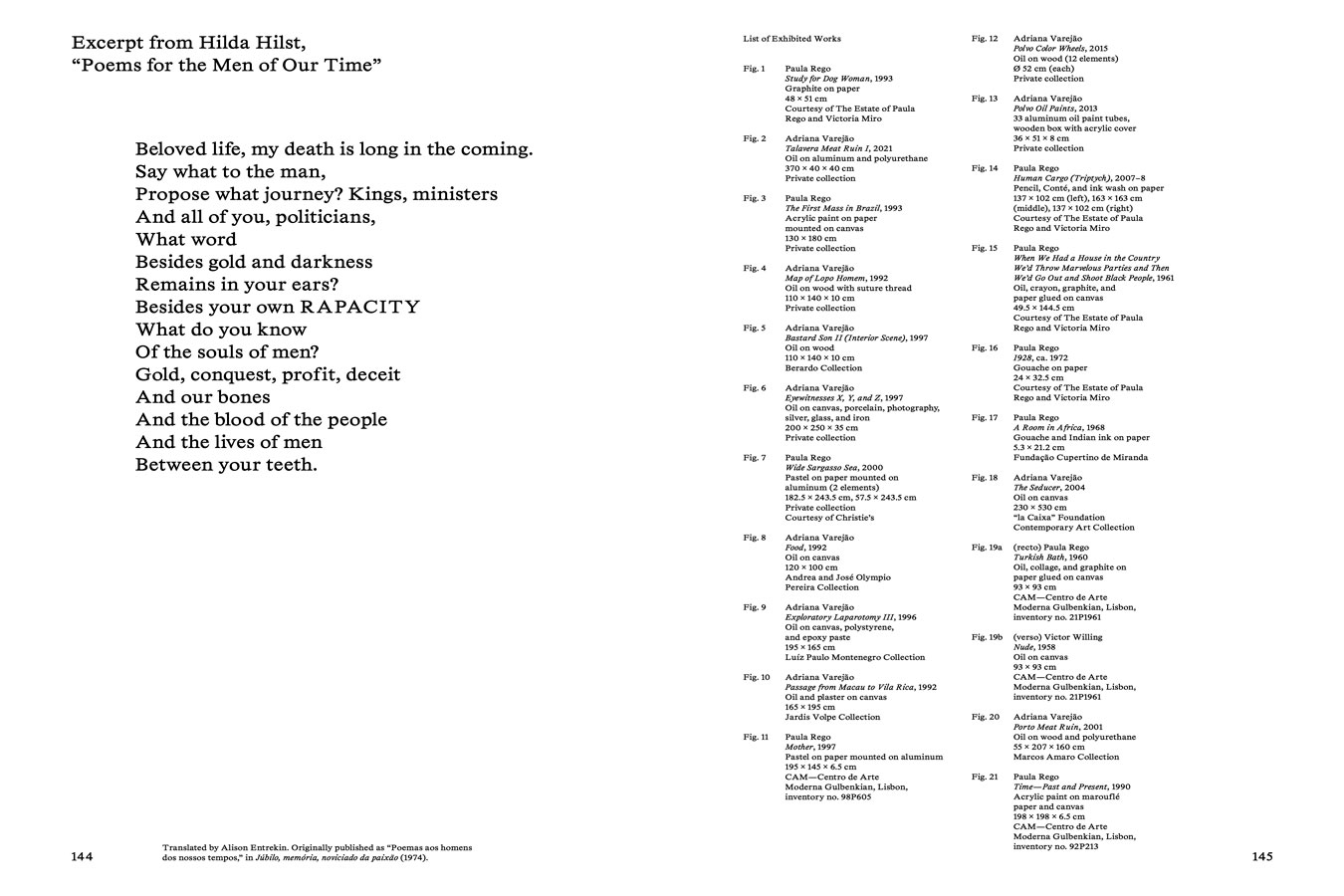
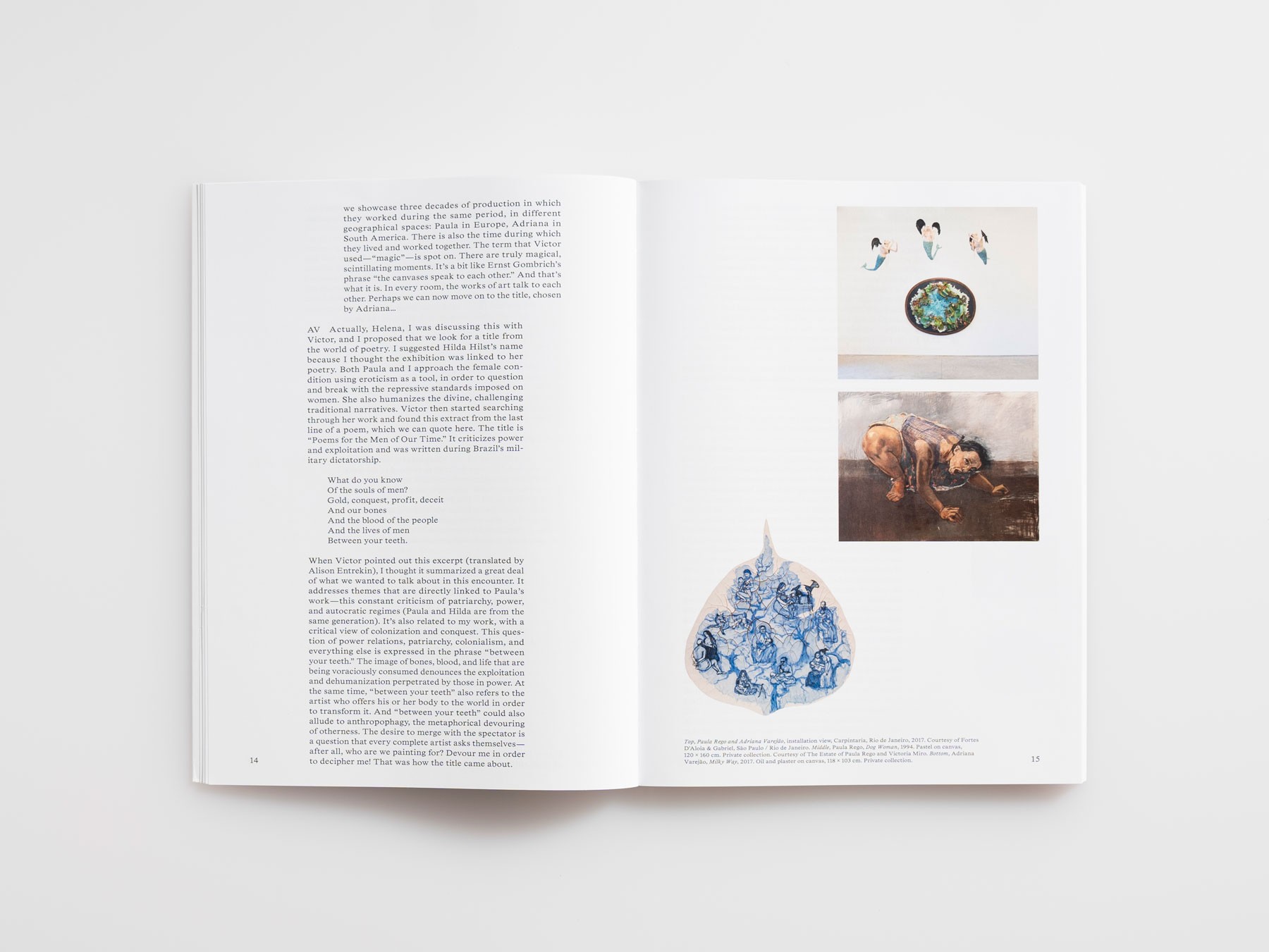
The title—Between Your Teeth—is a line taken from the 1974 Poemas aos homens do nosso tempo (Poems to the men of our time) by the Brazilian poet and novelist, Hilda Hilst, in a clear allusion to the dictatorial regime that had begun in Brazil in the previous decade. Hilst describes and criticises the power associated to greed, conquest, profit and exploitation. In their representations of literal and metaphorical bodies, Paula Rego and Adriana Varejão reflect on how patriarchy, colonialism and all forms of oppression mutually interact, “chewing up” people and their stories.
This is the artists’ first joint exhibition in Portugal, having already exhibited together in Rio de Janeiro (Carpintaria, 2017), when Paula Rego was still alive.
The catalogue fosters the encounter between Adriana Varejão, who has developed pioneering work in the field of postcolonial thought, and the work of Paula Rego, whose political force is developed by a productive tension between a private register and its public dimension, expanding the interpretive universe of the two artists.