This book accompanies 5 Works, Lydia Ourahmane’s first institutional solo show in Italy, staged at the Nicoletta Fiorucci Foundation in Venice and curated by Polly Staple, during the 61st Venice Biennale, and includes newly commissioned texts and images that further contextualize the artist’s practice and work.
Museums of Tears extends Francesco Vezzoli’s 2024 exhibition at Museo Correr, Venice, combining historical works and new commissions to explore antiquity, emotion and illusion. Conceived as an artist’s book rather than a catalogue, it transforms the museum guide into a hybrid archive and portable museum of memory, beauty and mourning.
A project by Fondazione In Between Art Film, edited by Carla Subrizi, Paola Ugolini, and Maria Alicata, this illustrated volume investigates the cinematic, documentary, and video output of women artists and filmmakers operating in Italy in the 1960s and 1970s, situating their research at the intersection of artistic experimentation, politics, society, and technology.
A multifaceted perspective on contemporary sculpture that explores the practices and concepts of the medium through different approaches. The publication interweaves works by Yu Ji, Bronwyn Katz, Dan Lie, Trương Công Tùng, and Luana Vitra, with essays by Federico Giani, Sohrab Mohebbi, Julia Morandeira Arrizabalaga, Chiara Nuzzi, and Anne Reeve.
Suffused with specially conceived collages of the artist’s research materials, notes, and sketches, this is the first monograph on Castelli’s painting and sculpture, with essays by Sarah Crowe and Lillian Davies, and an artist interview by Francesco Manacorda. Published with Castello di Rivoli Museo d’Arte Contemporanea and Kunsthalle Wien.
What if the shadow moved first? From March through May 2026, the exhibition The Second Shadow. Dozie Kanu Mirroring Marc Camille Chaimowicz, with Shared Echoes and Kindred Spirits at Fondazione ICA Milano unfolds online through a series of voices and crossings that shift its gravity. Not an extension. A displacement.
Edited by Erlend Hammer
Essay by Erlend Hammer
Designed by Lorenzo Mason Studio
2025, English, softcover, 21 x 29.7 cm, 264 pages
ISBN 979-12-80579-79-9
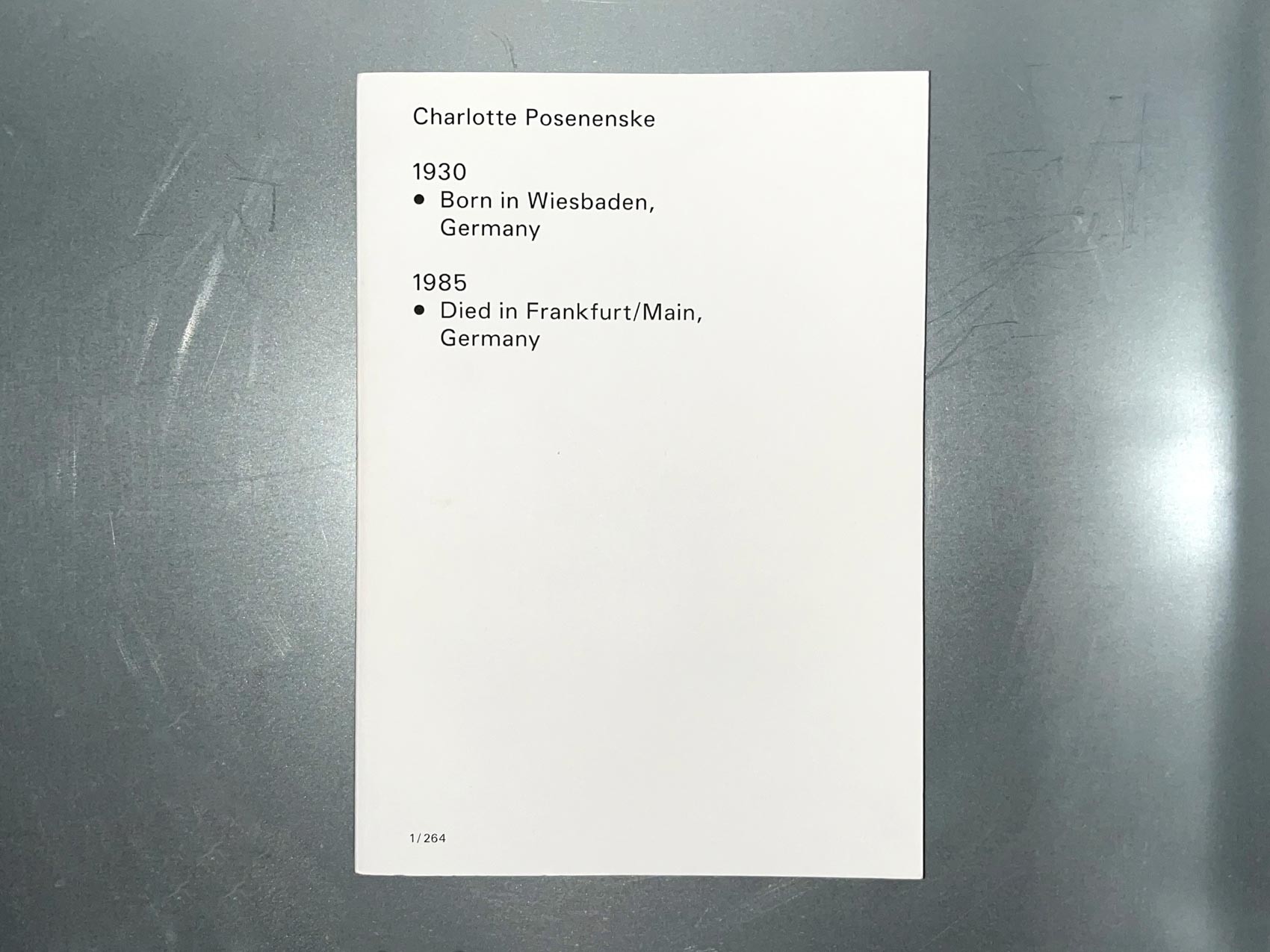
In her Manifesto, Charlotte Posenenske (1930-1985) stated: “I find it difficult to come to terms with the fact that art can contribute nothing to the solution of pressing social problems.”
Developing her artistic practice throughout the 1960s, Posenenske produced a body of work that uniquely combined several strands of the art of the period: conceptualism, minimalism, and socially engaged participatory art. Her Manifesto, published in Art International in May 1968, lays out the social demands on art as well as the impossibility of fulfilling those demands. Shortly after its publication, Posenenske left the art world behind to pursue her studies in sociology, undertaking a new career in that field.
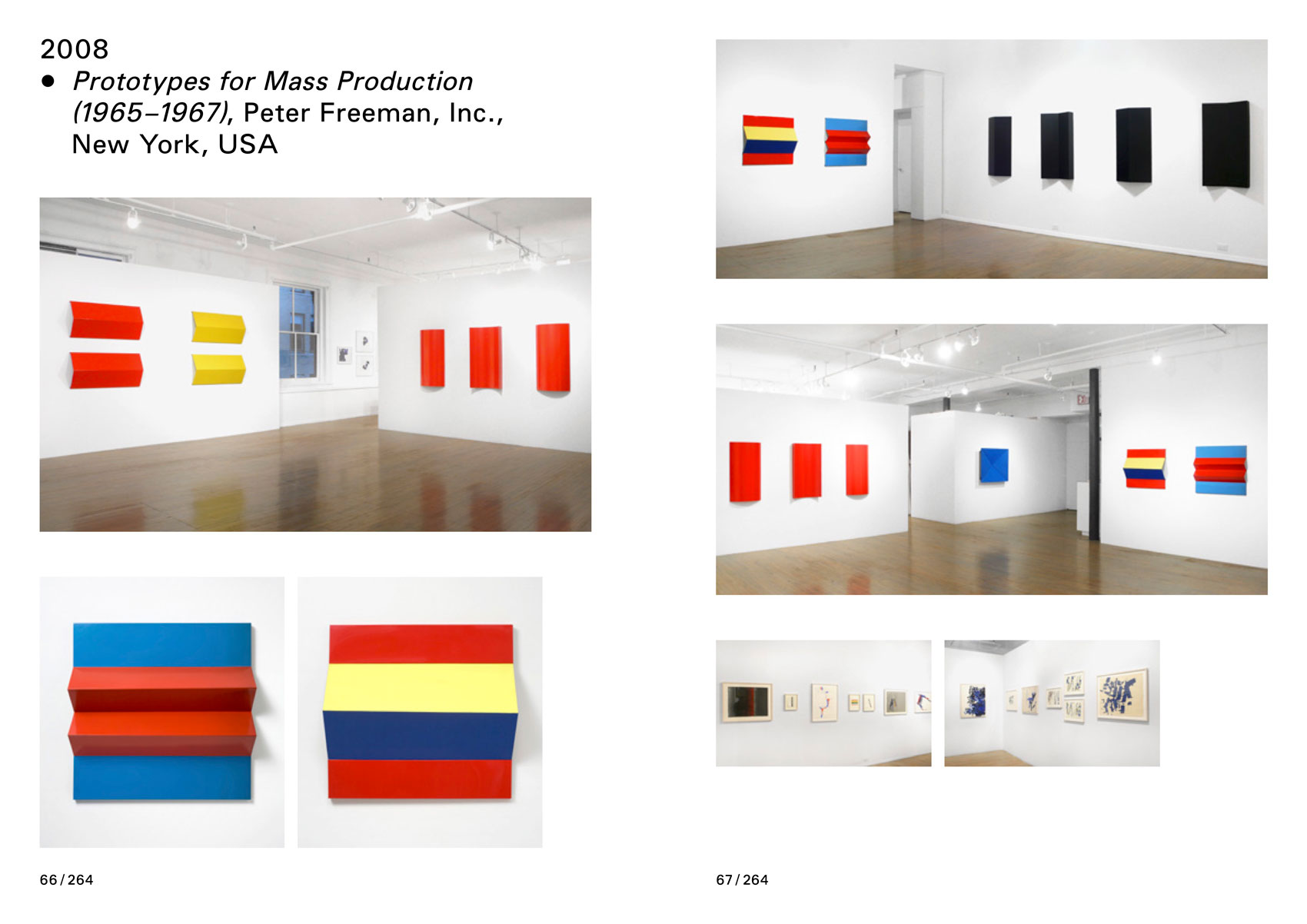
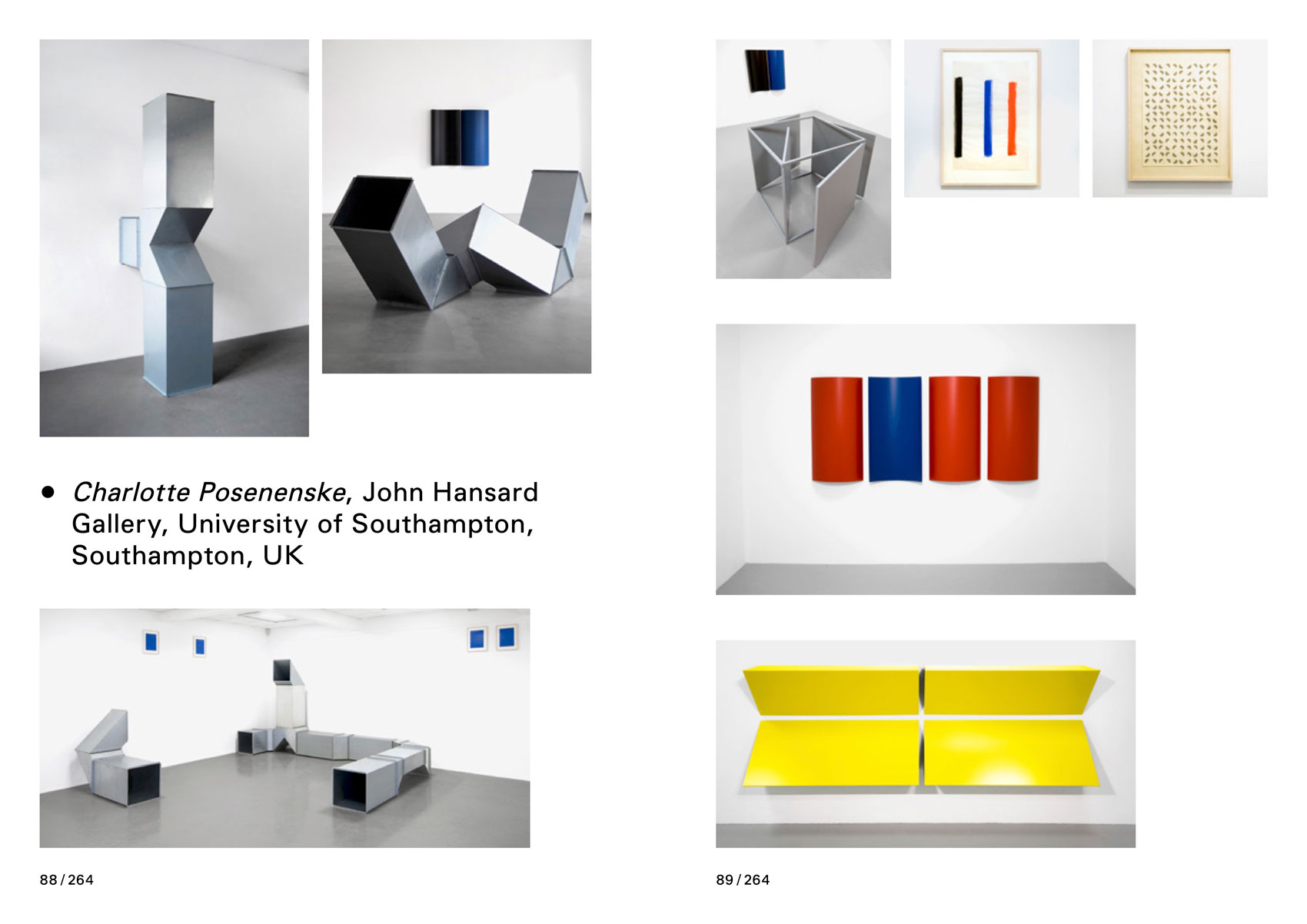
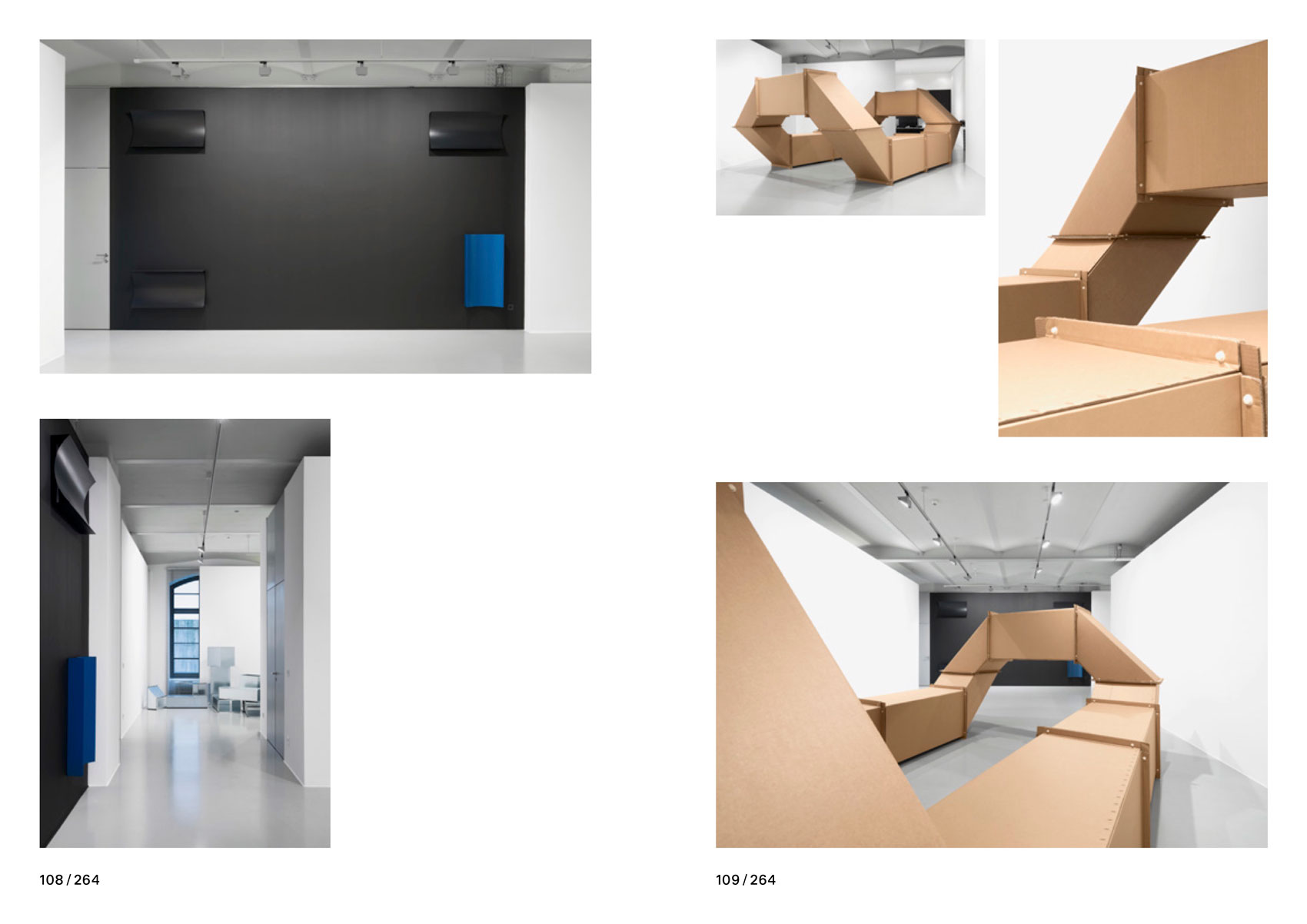
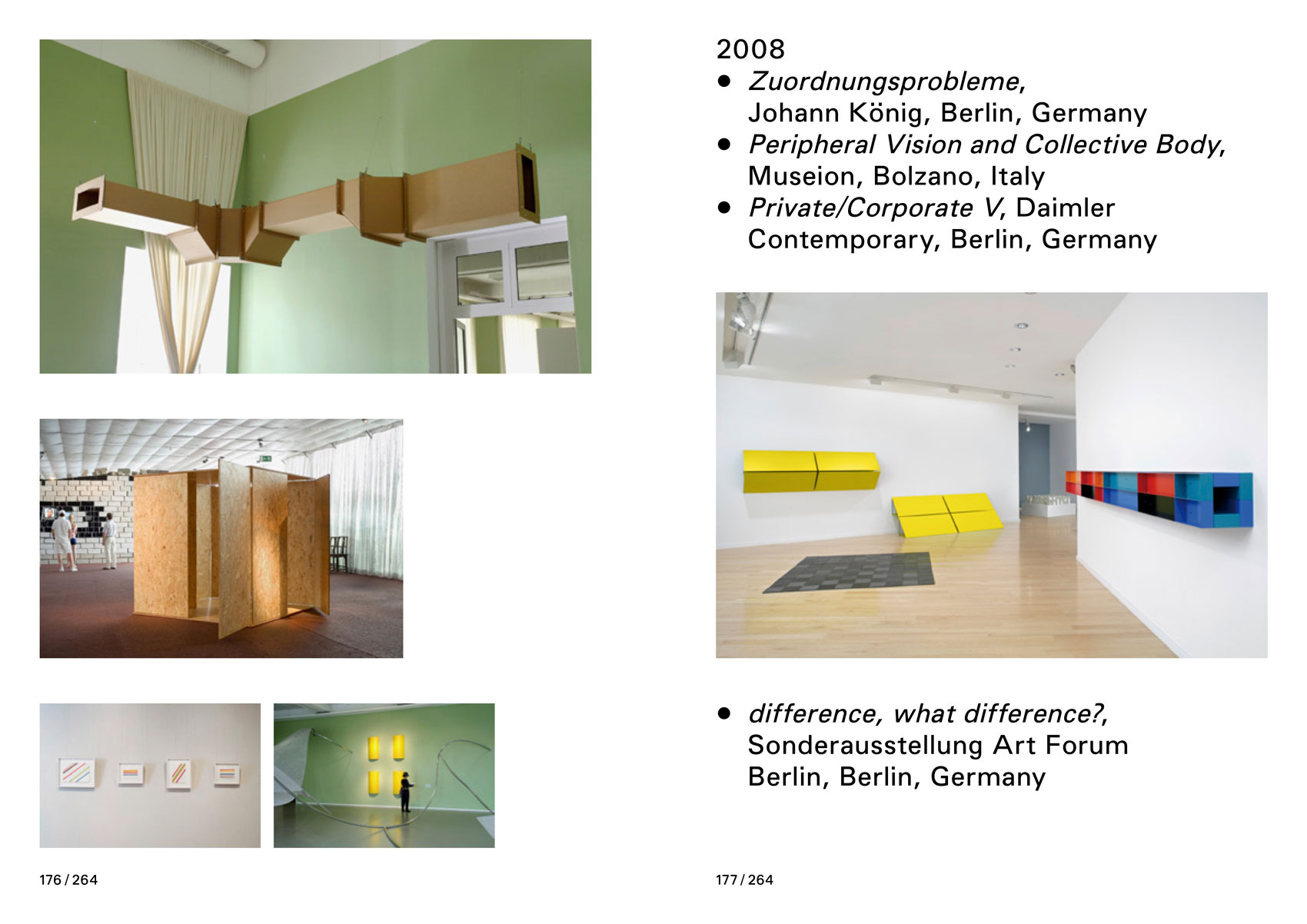
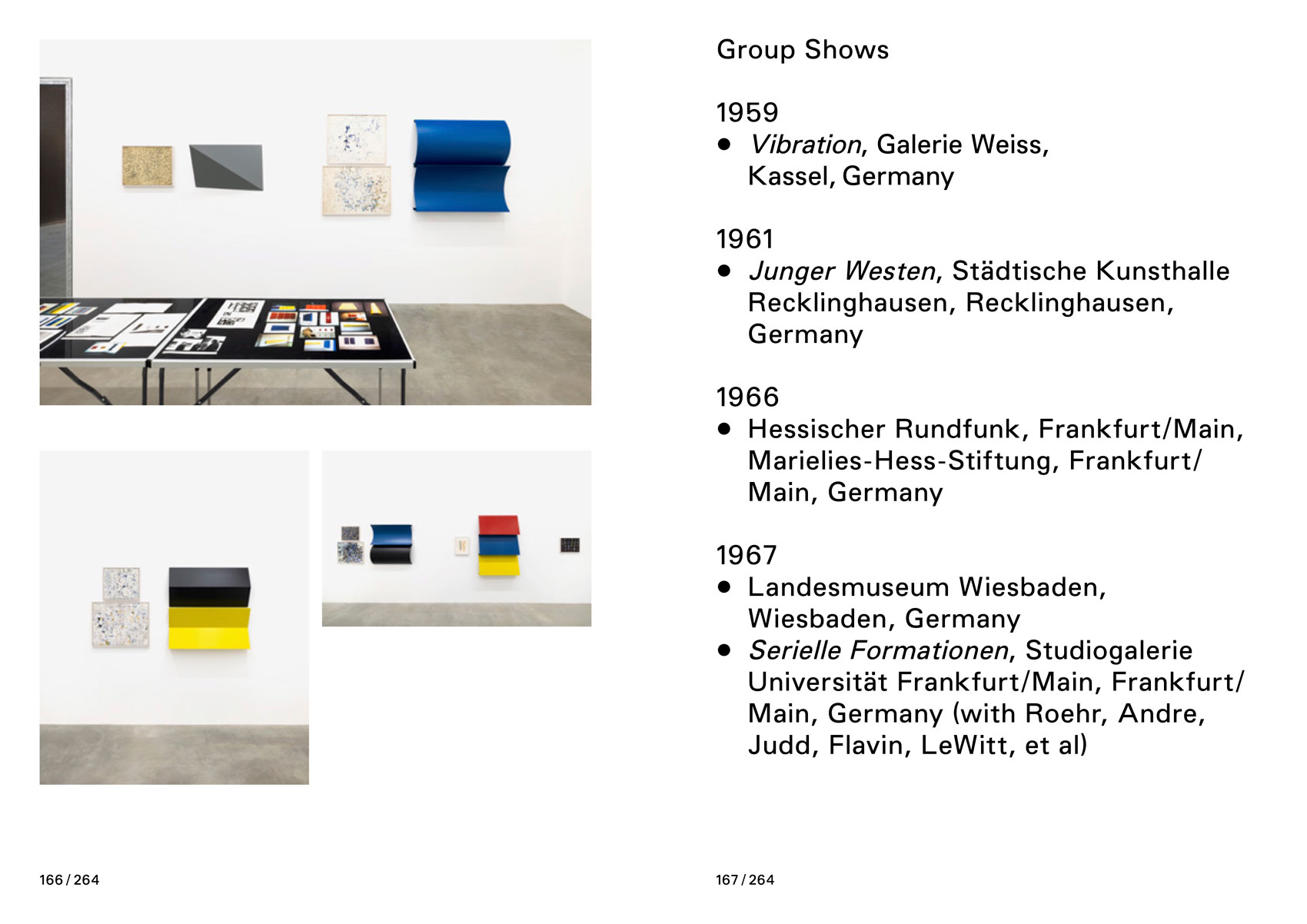
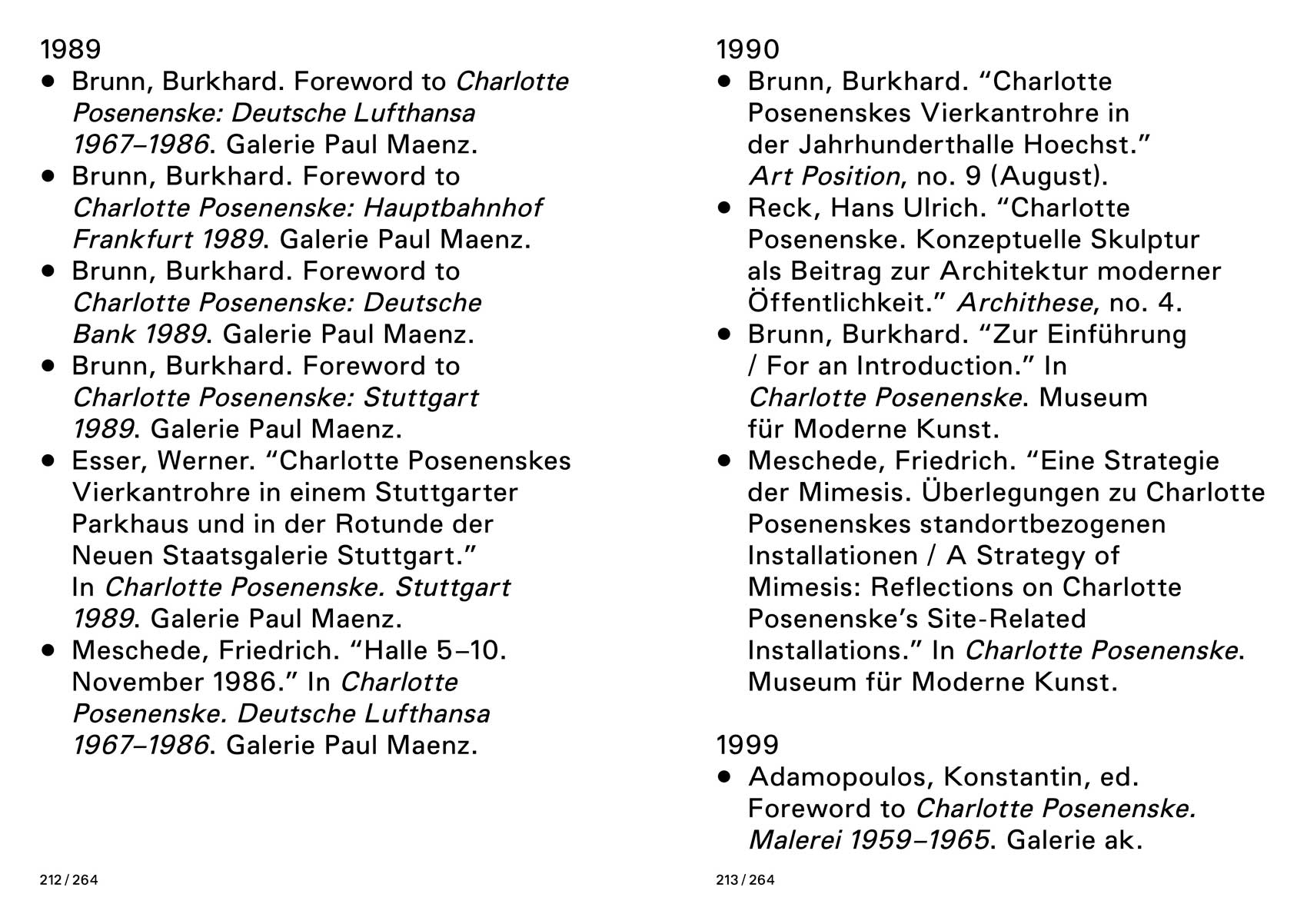
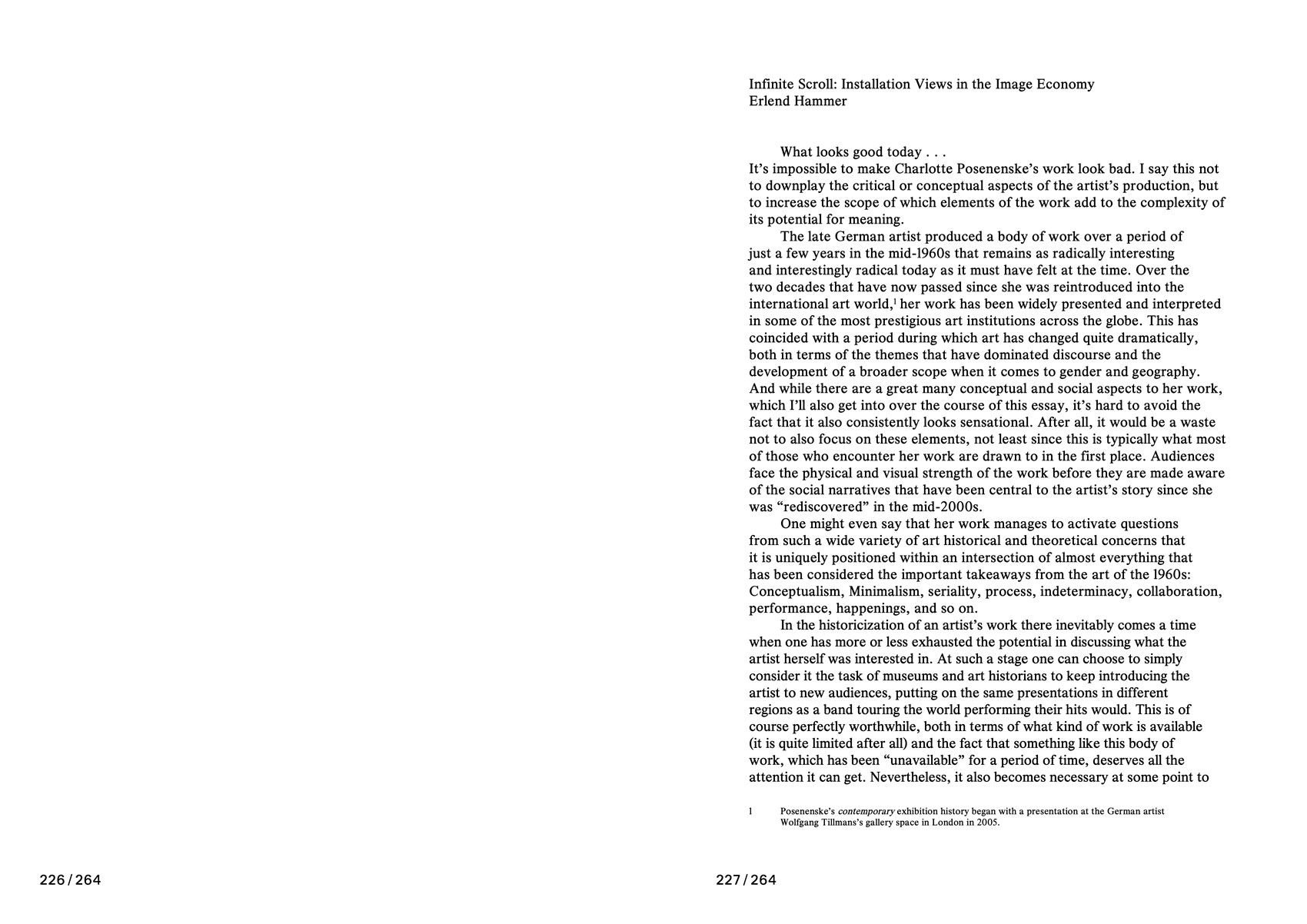
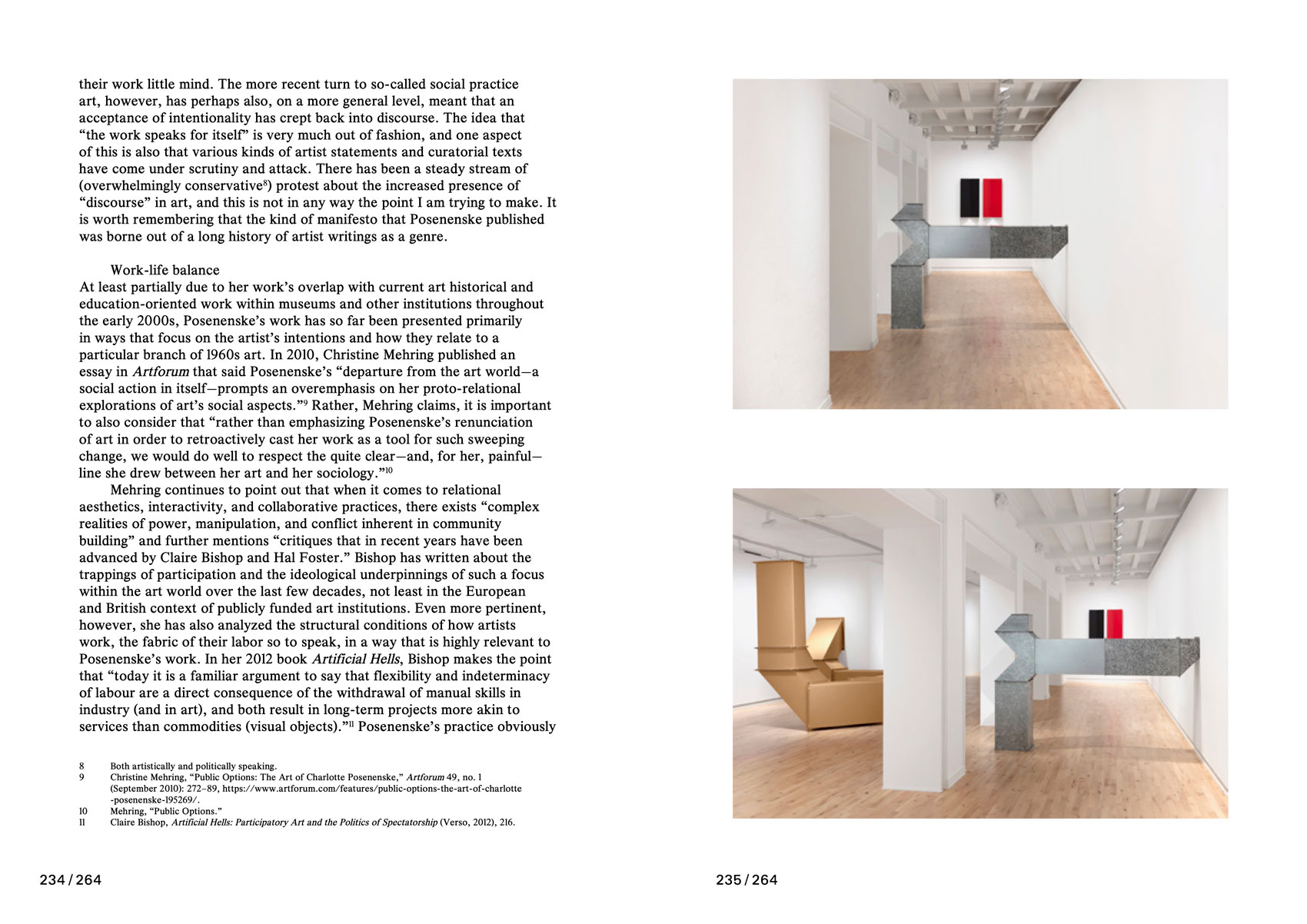
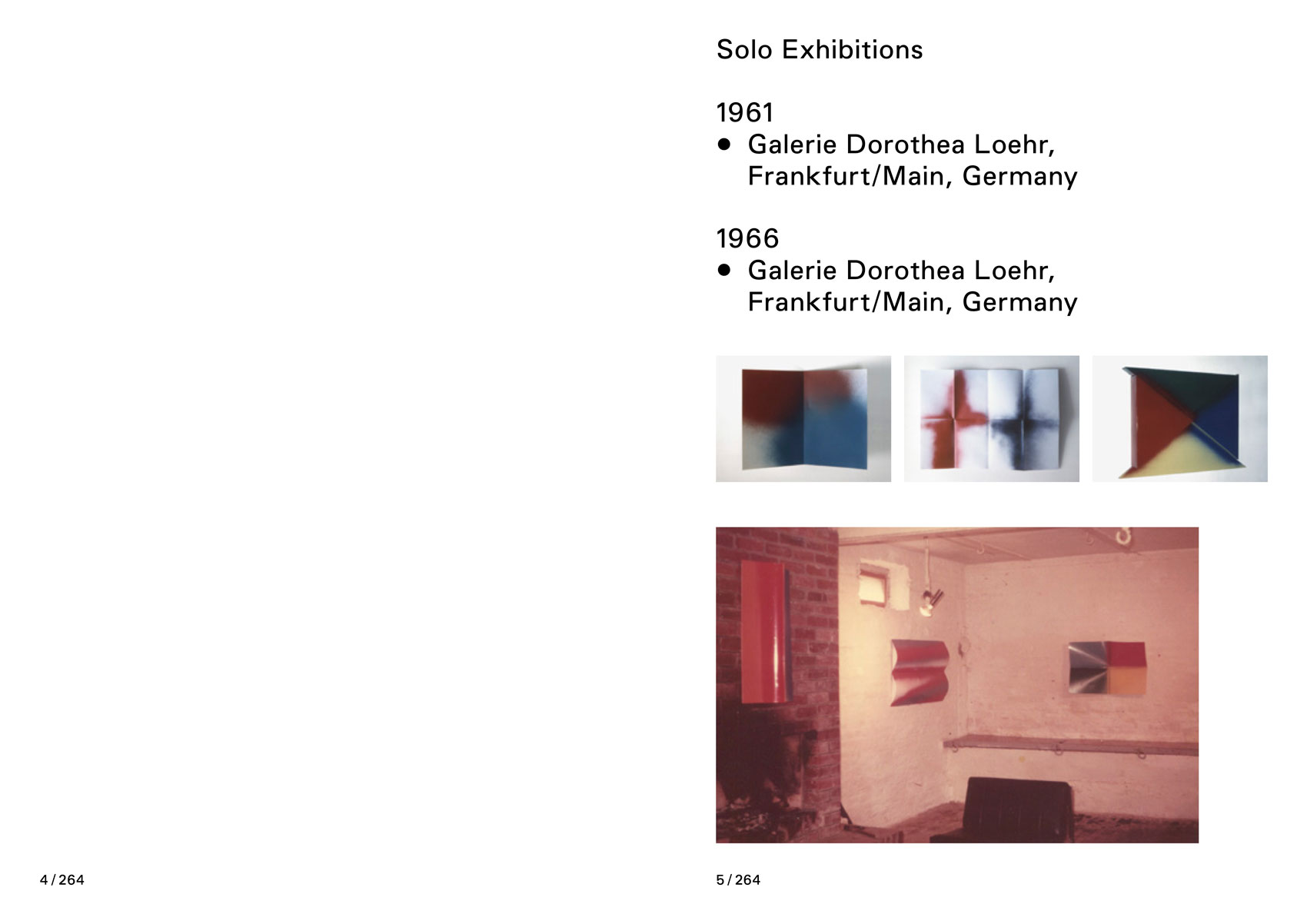
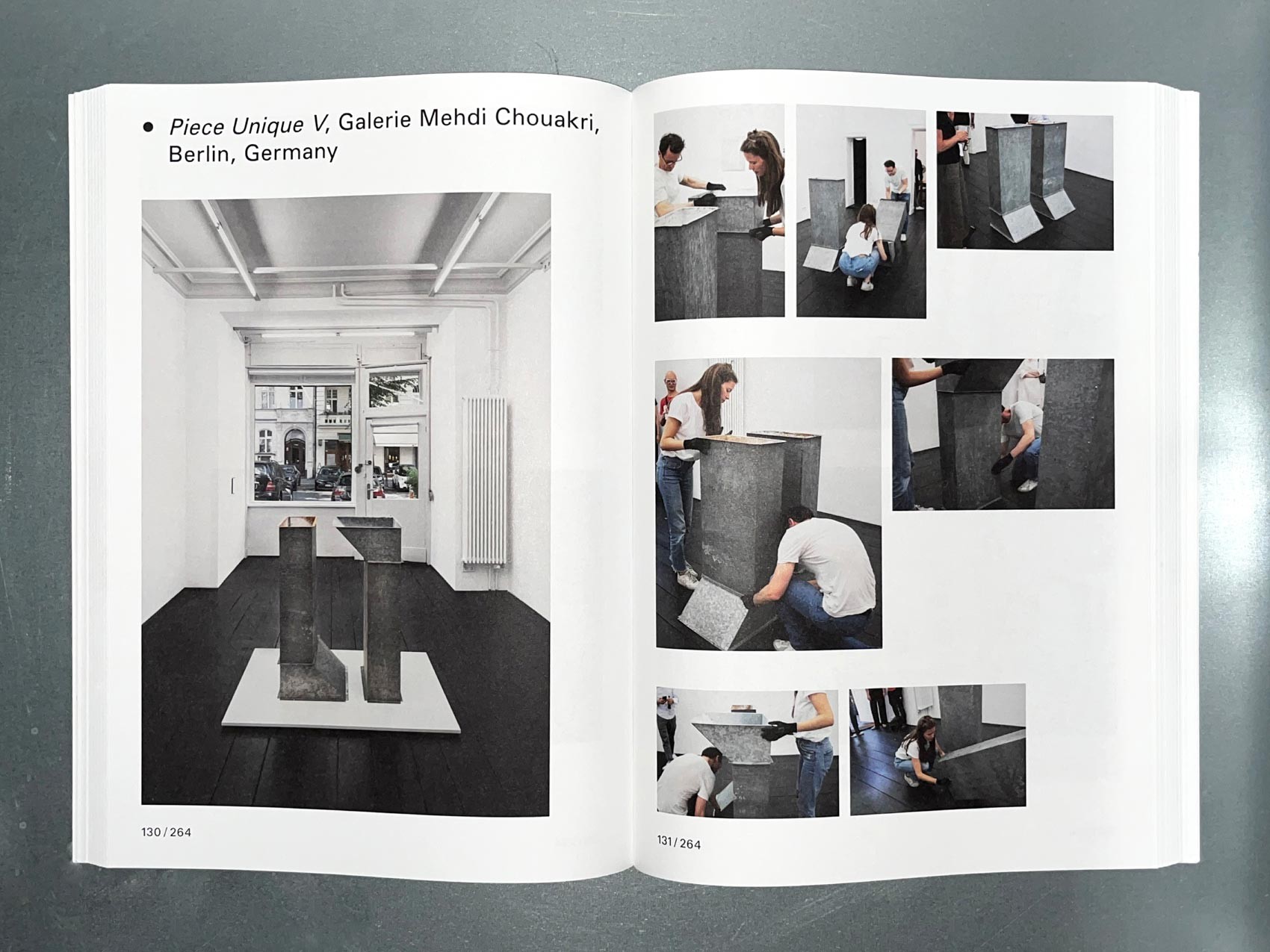
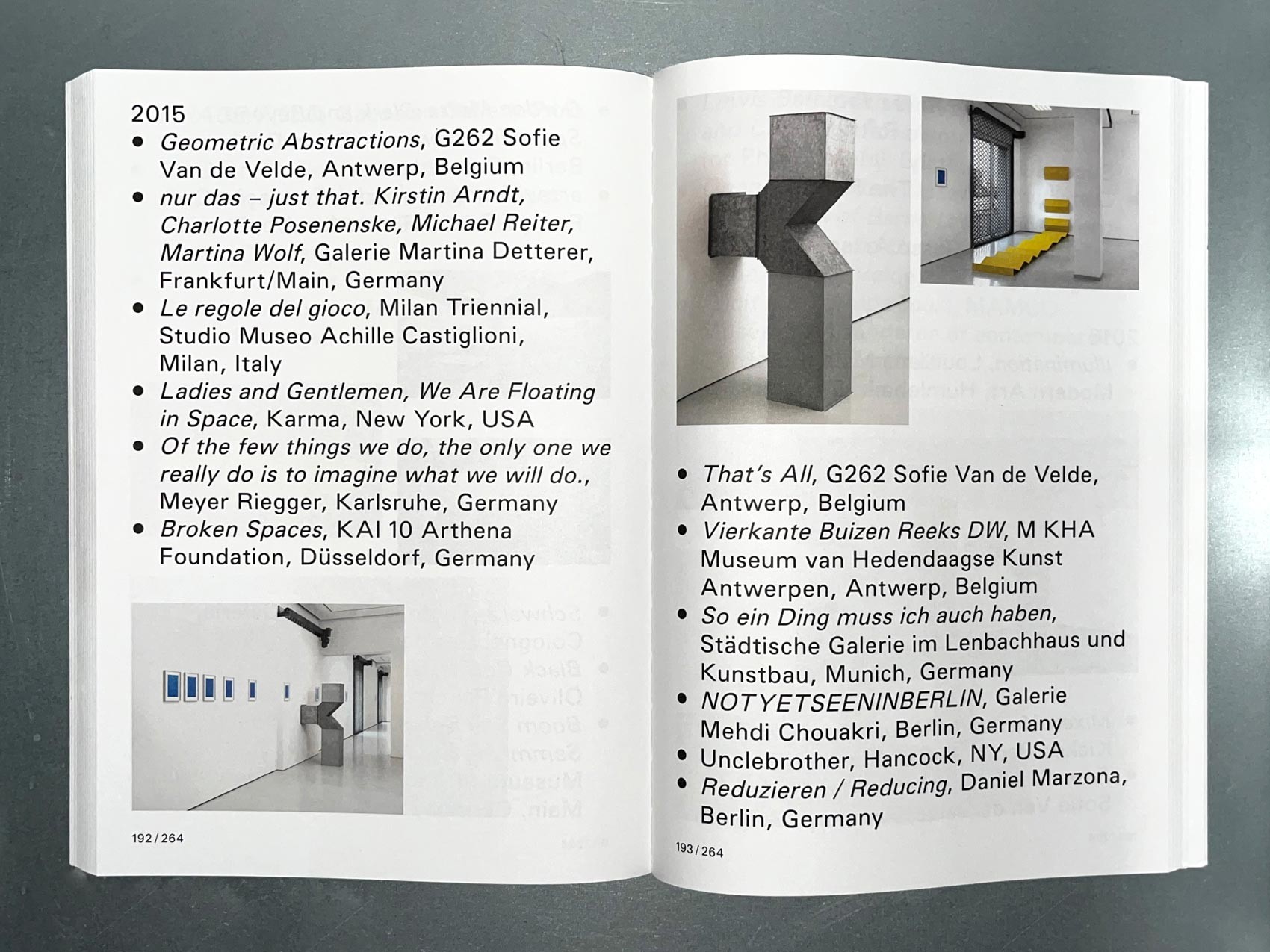
Conceived as a visual résumé, Installation Views provides both a comprehensive overview of Charlotte Posenenske’s solo exhibitions and a record of her numerous group shows. The book features an essay written by curator Erlend Hammer on the role of documentary photographs in the circulation of works of art.
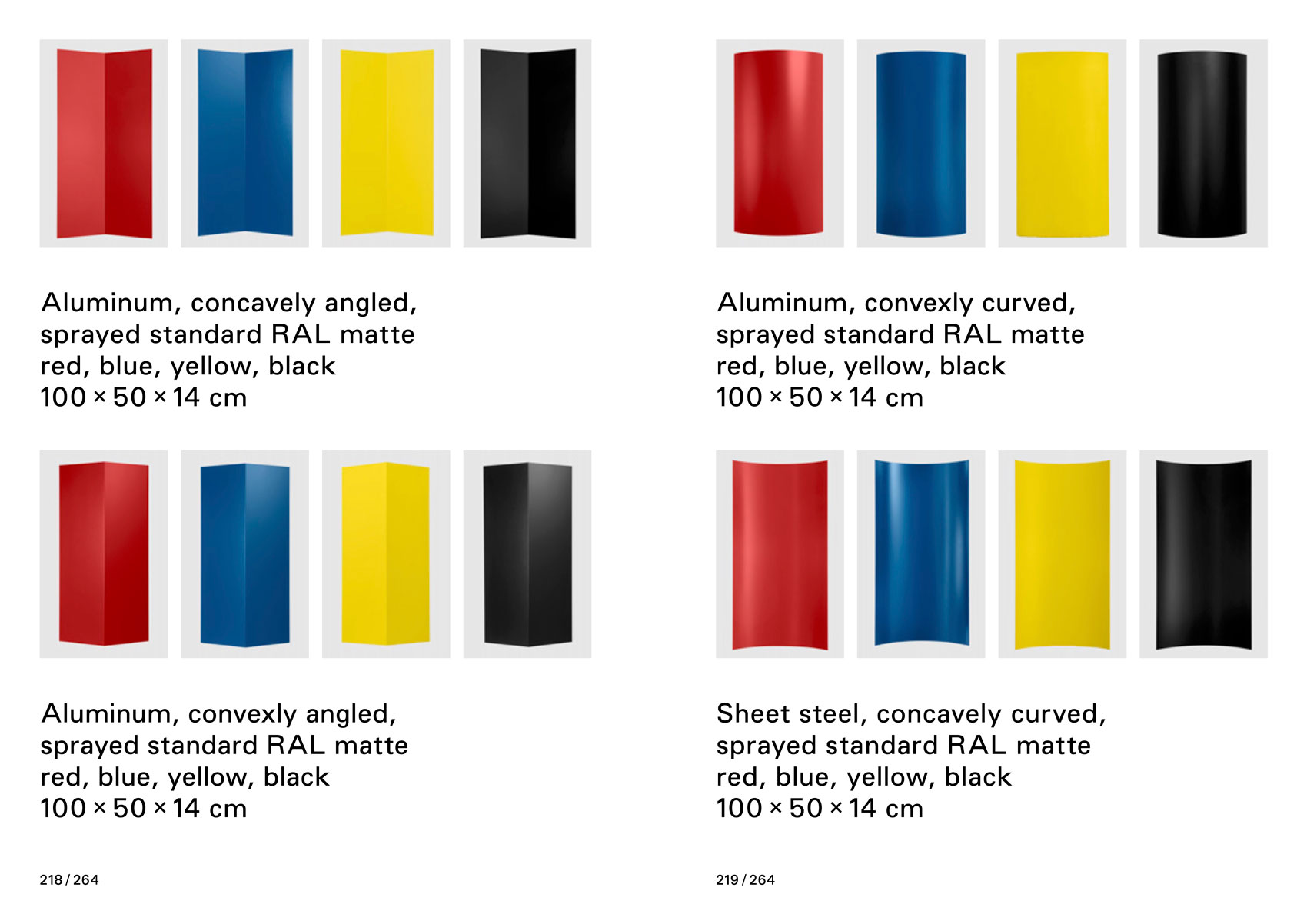
The book was published in conjunction with the eponymous show at the Haugar Art Museum in Tønsberg, Norway—the first full-scale presentation of the artist’s oeuvre in Scandinavia. The exhibition showcased works from all the artist’s major series of modular sculpture. Consisting of works made over the course of less than 12 months, between 1967 and 1968, preceding the abrupt end to Posenenske’s career as an artist, the exhibition had the character of a snapshot. We are left wondering whether her withdrawal from the art world was a logical or necessary consequence of the development of the series. What are we to do with Posenenske’s assertion that art is powerless to effectively change society for the better?