This monograph, published on the occasion of Samson Young’s exhibition at SFMOMA, focuses on his latest project, Intentness and Songs, a multimedia installation that poetically traces the idiosyncratic rhythms of love, memory, experiences of time, and AI. Essays and a rich set of unpublished materials offer new keys to understanding the artist’s work.
The book, published on the occasion of the eponymous exhibition held at CAM – Gulbenkian in Lisbon, explores convergences in the work of Paula Rego (Lisbon, 1935 – London, 2022) and Adriana Varejão (Rio de Janeiro, 1964), although they belong to different generations and come from different backgrounds.
O livro, lançado por ocasião da exposição homónima no CAM – Centro de Arte Moderna Gulbenkian, em Lisboa, explora as convergências nas obras de Paula Rego (Lisboa, 1935 – Londres, 2022) e Adriana Varejão (Rio de Janeiro, 1964), apesar de pertencerem a gerações e contextos distintos.
The future of architecture lies in the curatorial approach. This is the thesis put forward by architect Wilfried Kuehn and theorist Dubravka Sekulić in their book, which brings together contributions from more than 30 authors working in the fields of architecture, art, and curatorial knowledge and practice.
Emanuele Coccia describes the radical creative freedom inscribed in Ernesto Neto’s practice, analyzing the workings of the Brazilian artist’s pieces of living architecture. Art on Earth is the third book in a series of short essay collections inspired by the site-specific projects conceived for GAMeC at Palazzo della Ragione.
First Meeting is the first monograph on Argentinian artist Santiago de Paoli. From his early, experimental projects to his most recent explorations, the book delves into his innovative approach of painting on unconventional materials. The book features commissioned essays by Fernanda Brenner and Mariano Mayer, as well as a conversation between Christian Rattemeyer and the artist.
Edited by Fabian Schöneich
Texts by Lawrence Abu Hamdan, Natasha Ginwala, Ruba Katrib, Andrea Lissoni, Ramona Naddaff,
Fabian Schöneich, Yasmine Seale, Theodor Ringborg, Eyal Weizman
Designed by David Bennewith
Co-published with Bonnier Konsthall
2022, English, hardcover, 19 x 25 cm, 256 pages
ISBN 979-12-80579-08-9
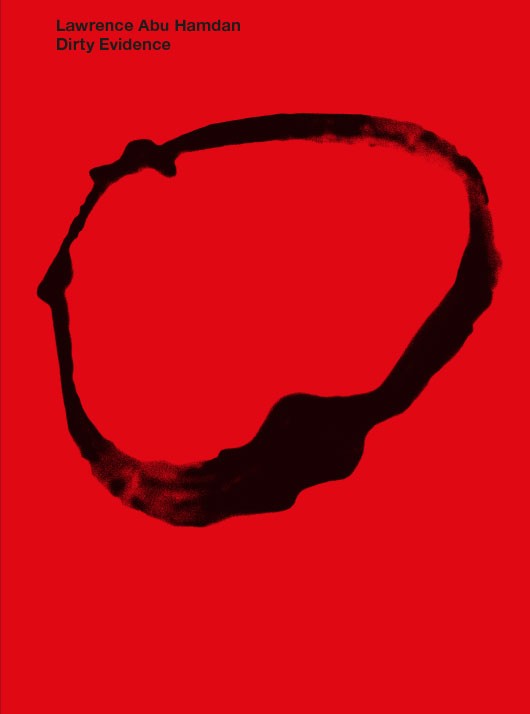
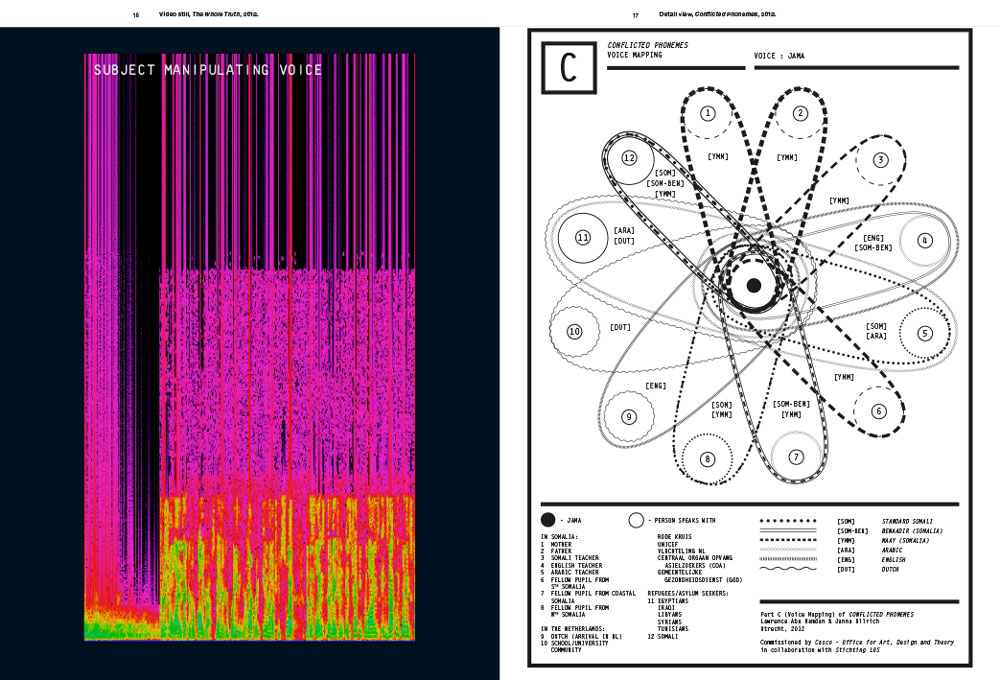
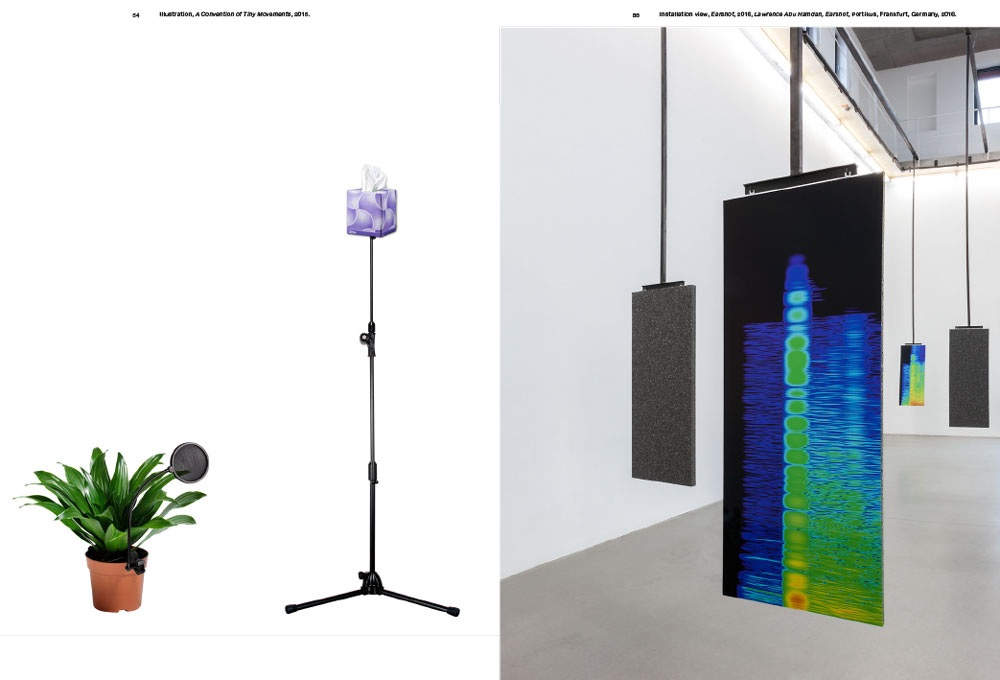
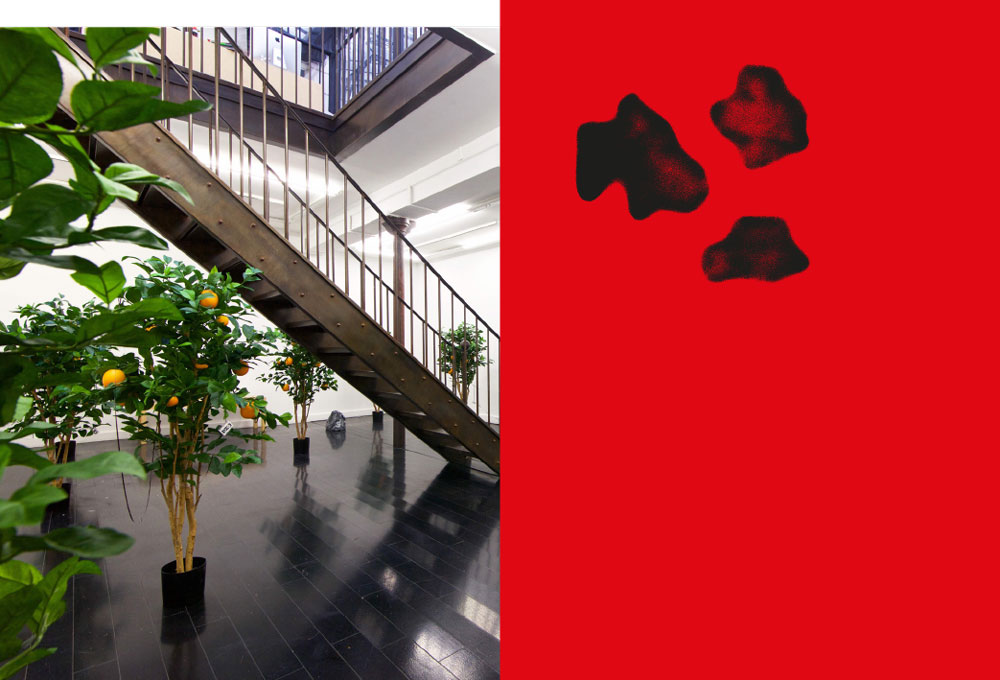
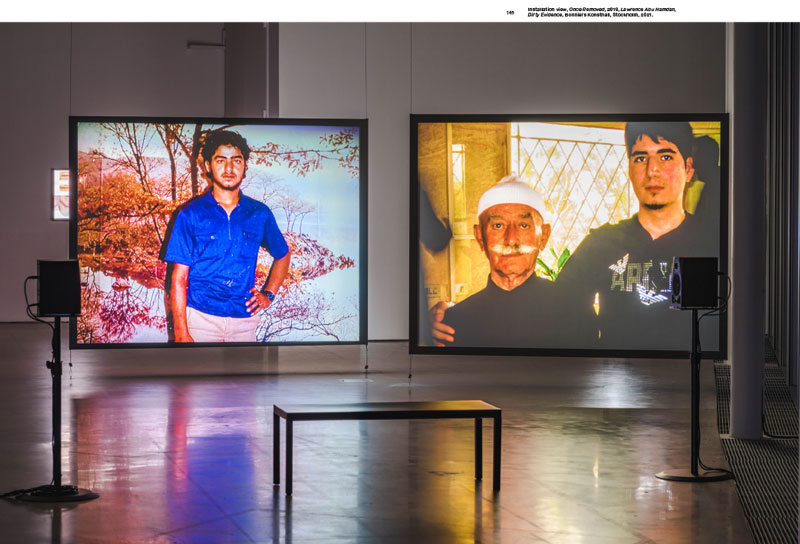
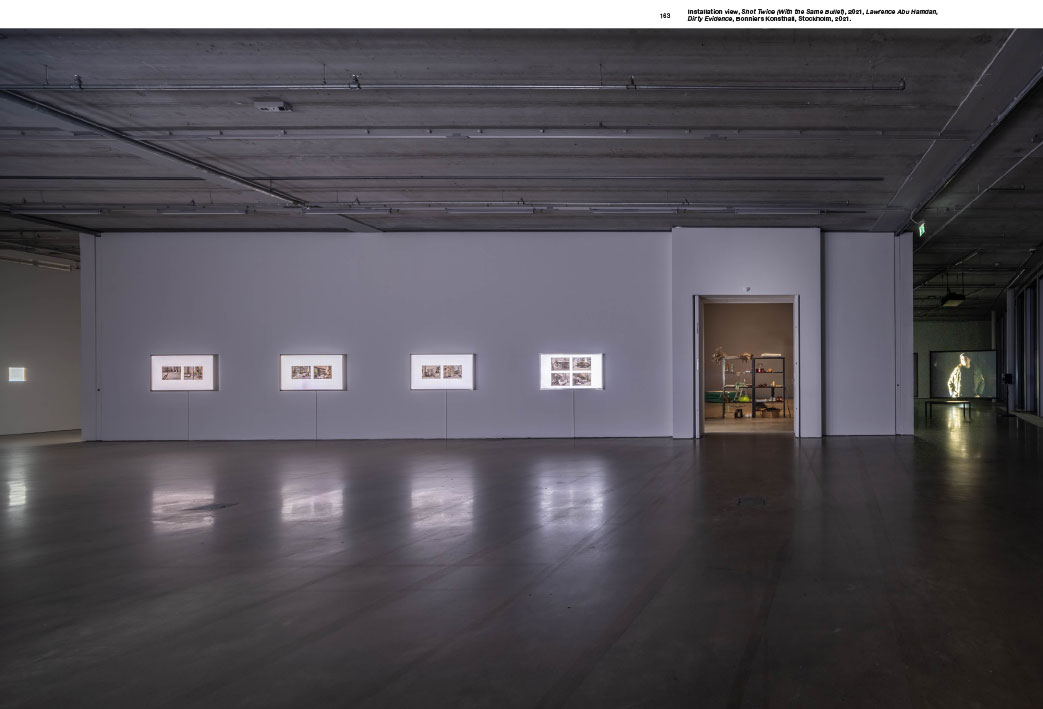
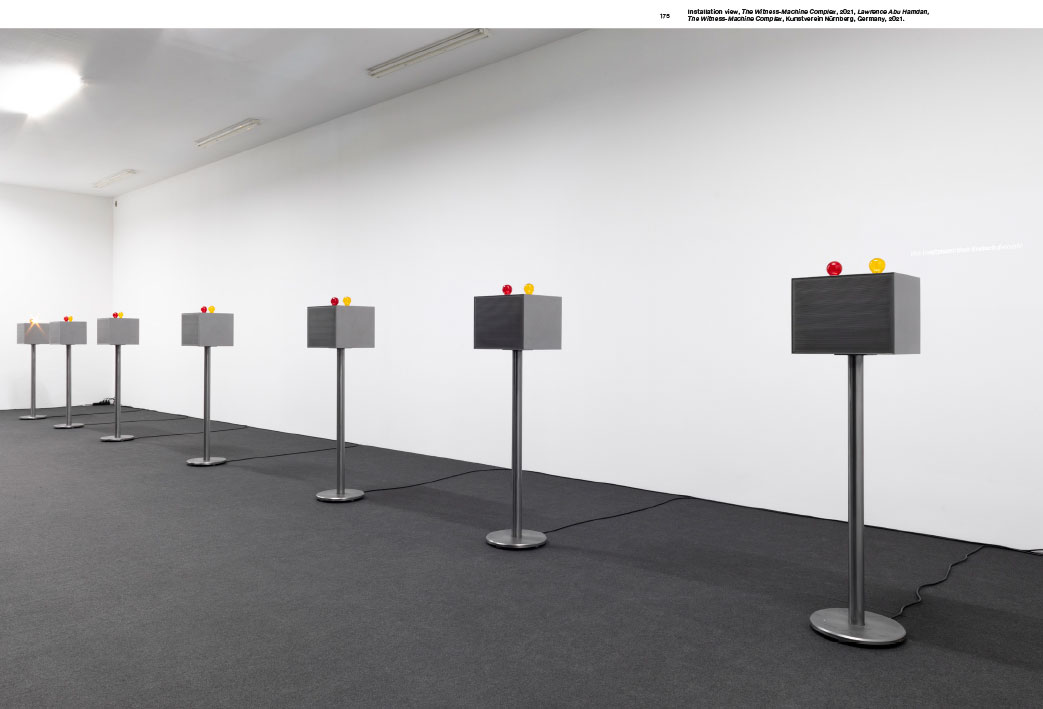
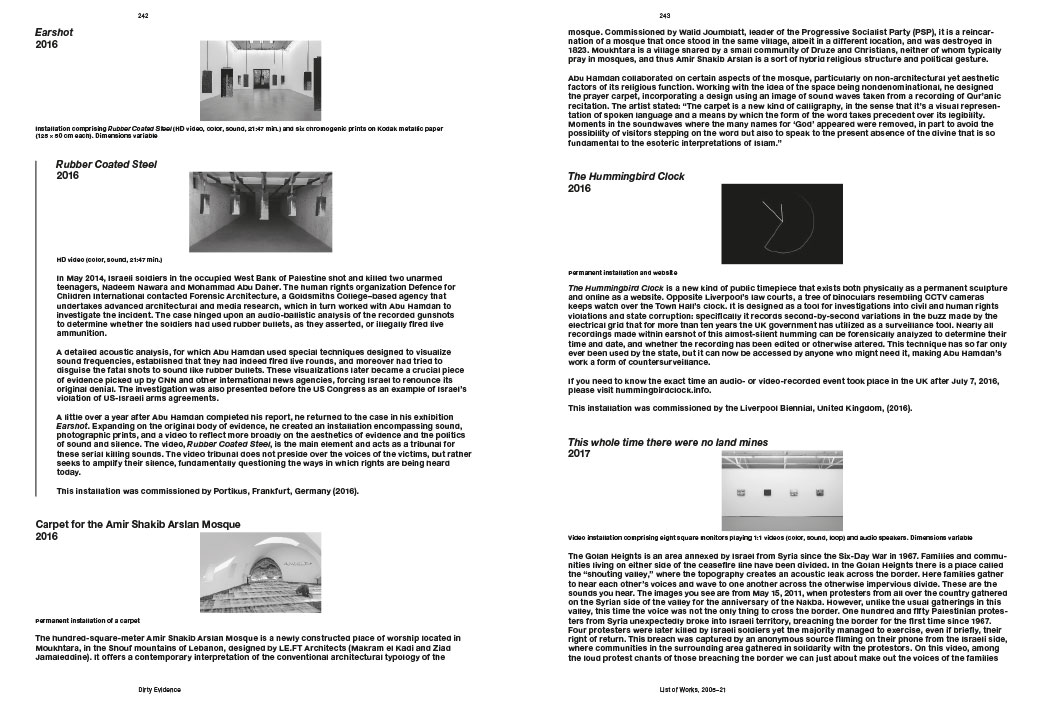
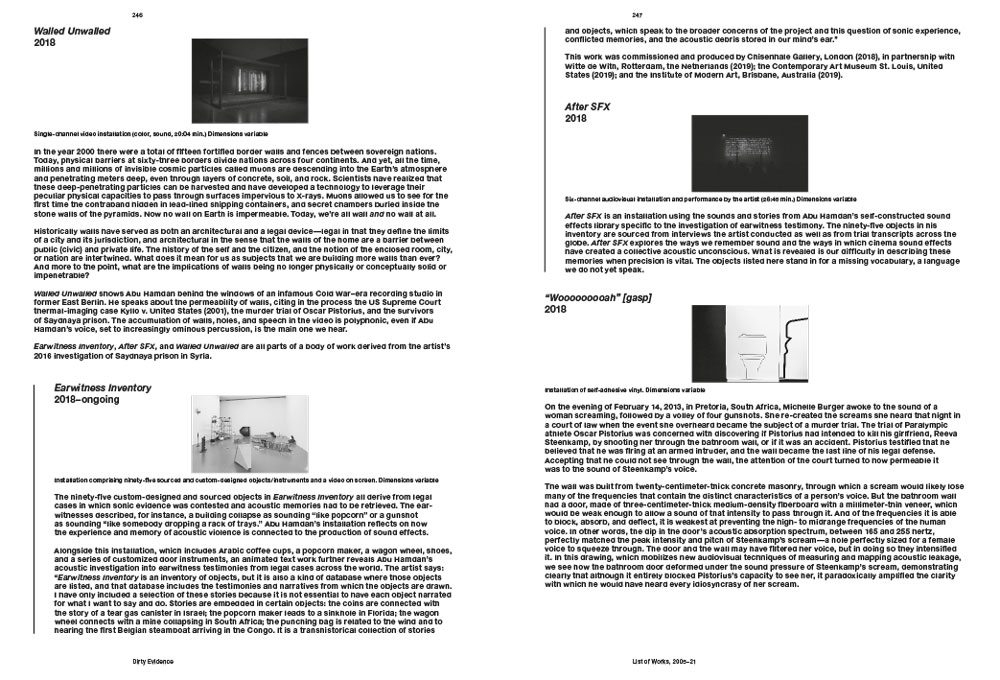
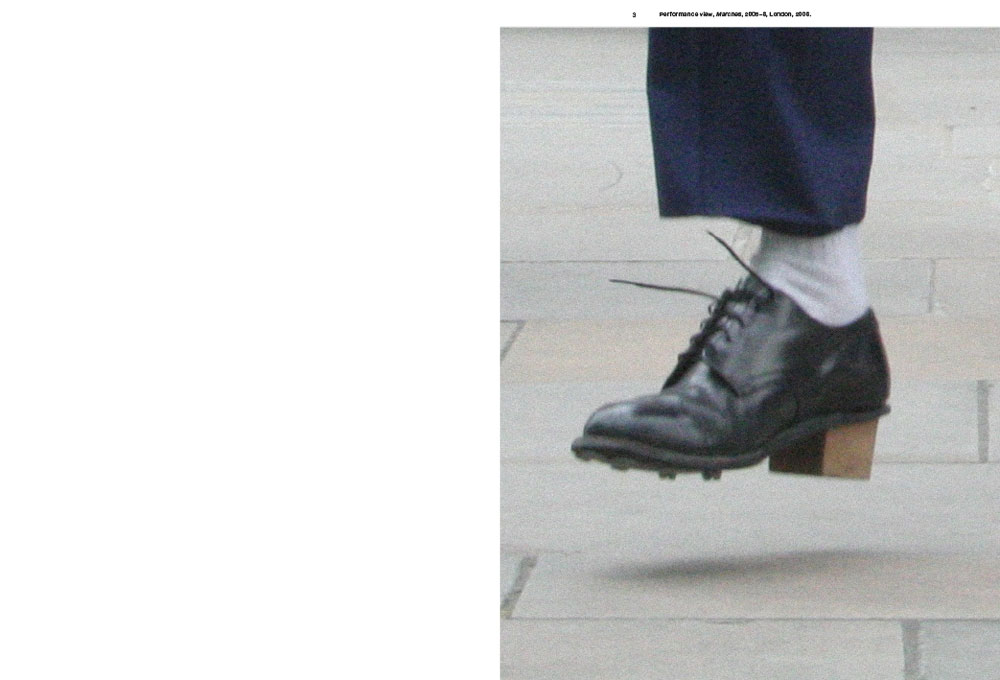
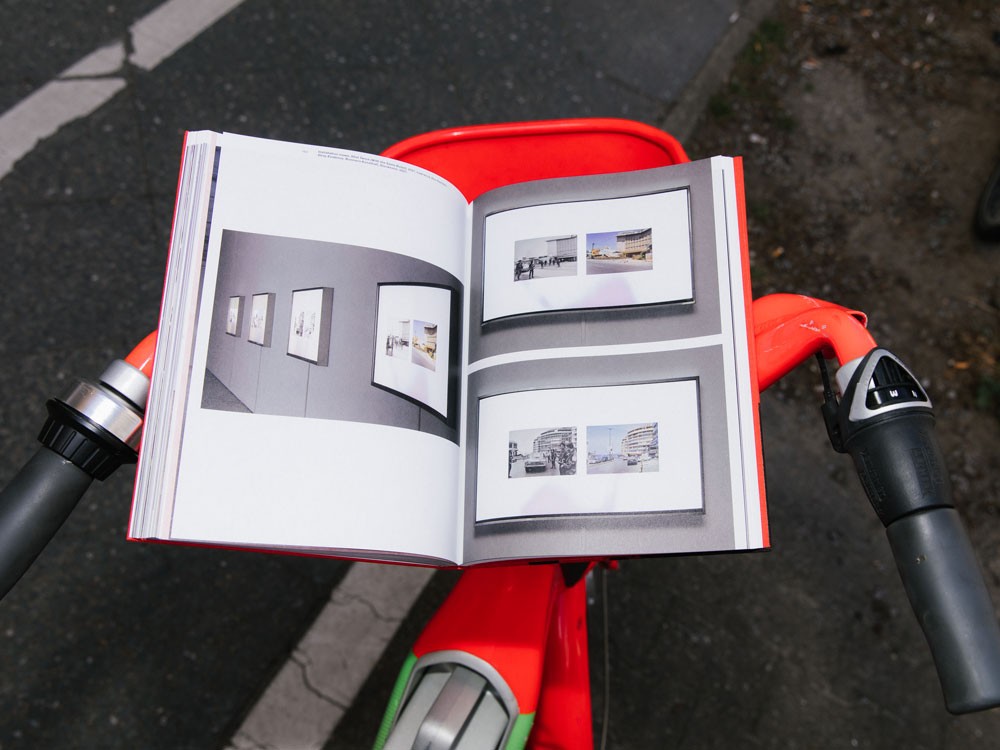
Richly illustrated, this book provides for the first time a visual overview of Lawrence Abu Hamdan’s works of more than a decade, and elaborates on a formal vocabulary characterized by the aesthetics of sound and language. Published on the occasion of his exhibition at Bonniers Konsthall in Stockholm, a group of authors have been invited to engage with individual works and their underlying concepts. Abu Hamdan recognizes the space for art as a site where attention can be drawn to real socio-political conditions in order to challenge the structures behind them. The artist can therefore push at the boundaries of what constitutes testimony. The title “Dirty Evidence” comes from Abu Hamdan’s definition of evidence in which a truth value is derived from its very inadmissibility before the law. It is precisely the evidence’s figurative dirt and dirtiness that works toward the production of truth.