This book accompanies 5 Works, Lydia Ourahmane’s first institutional solo show in Italy, staged at the Nicoletta Fiorucci Foundation in Venice and curated by Polly Staple, during the 61st Venice Biennale, and includes newly commissioned texts and images that further contextualize the artist’s practice and work.
Museums of Tears extends Francesco Vezzoli’s 2024 exhibition at Museo Correr, Venice, combining historical works and new commissions to explore antiquity, emotion and illusion. Conceived as an artist’s book rather than a catalogue, it transforms the museum guide into a hybrid archive and portable museum of memory, beauty and mourning.
A project by Fondazione In Between Art Film, edited by Carla Subrizi, Paola Ugolini, and Maria Alicata, this illustrated volume investigates the cinematic, documentary, and video output of women artists and filmmakers operating in Italy in the 1960s and 1970s, situating their research at the intersection of artistic experimentation, politics, society, and technology.
A multifaceted perspective on contemporary sculpture that explores the practices and concepts of the medium through different approaches. The publication interweaves works by Yu Ji, Bronwyn Katz, Dan Lie, Trương Công Tùng, and Luana Vitra, with essays by Federico Giani, Sohrab Mohebbi, Julia Morandeira Arrizabalaga, Chiara Nuzzi, and Anne Reeve.
Suffused with specially conceived collages of the artist’s research materials, notes, and sketches, this is the first monograph on Castelli’s painting and sculpture, with essays by Sarah Crowe and Lillian Davies, and an artist interview by Francesco Manacorda. Published with Castello di Rivoli Museo d’Arte Contemporanea and Kunsthalle Wien.
What if the shadow moved first? From March through May 2026, the exhibition The Second Shadow. Dozie Kanu Mirroring Marc Camille Chaimowicz, with Shared Echoes and Kindred Spirits at Fondazione ICA Milano unfolds online through a series of voices and crossings that shift its gravity. Not an extension. A displacement.
Edited by Eva Fabbris, Lilou Vidal, Stefania Zuliani with Anna Cuomo
Texts by Tomaso Binga, Eva Fabbris, Daria Khan, Quinn Latimer, Luca Lo Pinto, Lilou Vidal, Stefania Zuliani
Designed by Lorenzo Mason Studio
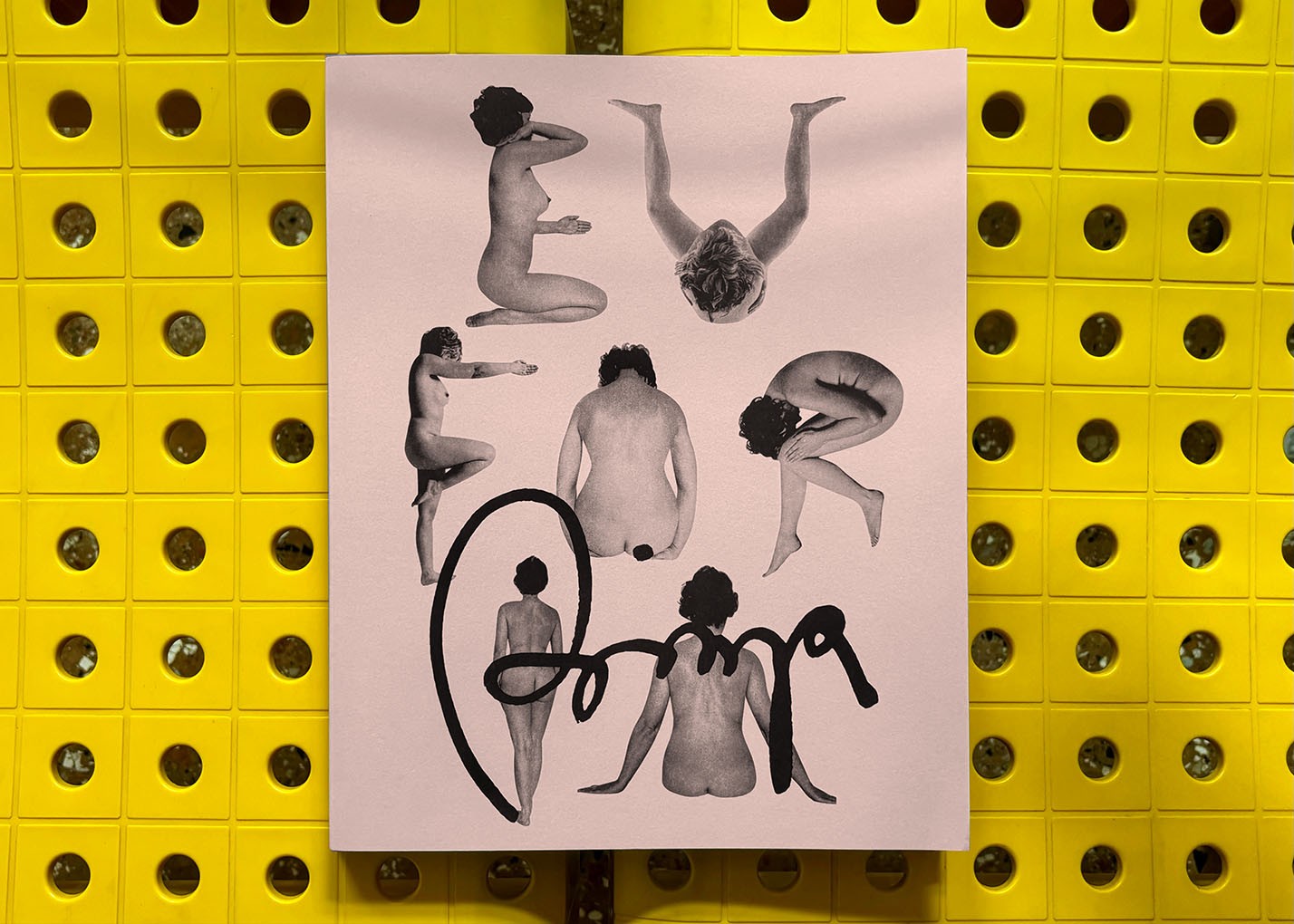
2024, English / Italian, softcover, 24 x 30 cm, 304 pages
ISBN: 979-12-80579-42-3
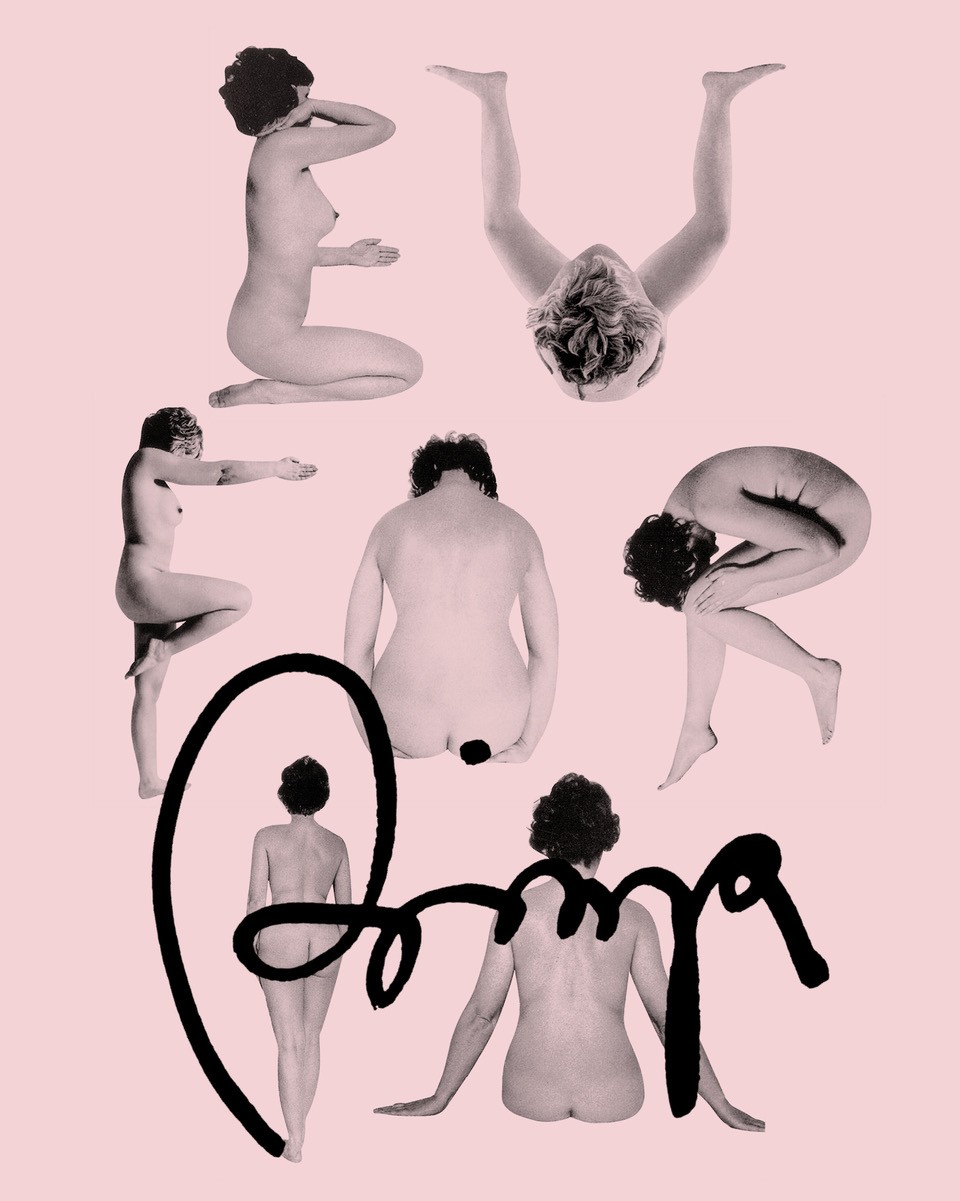
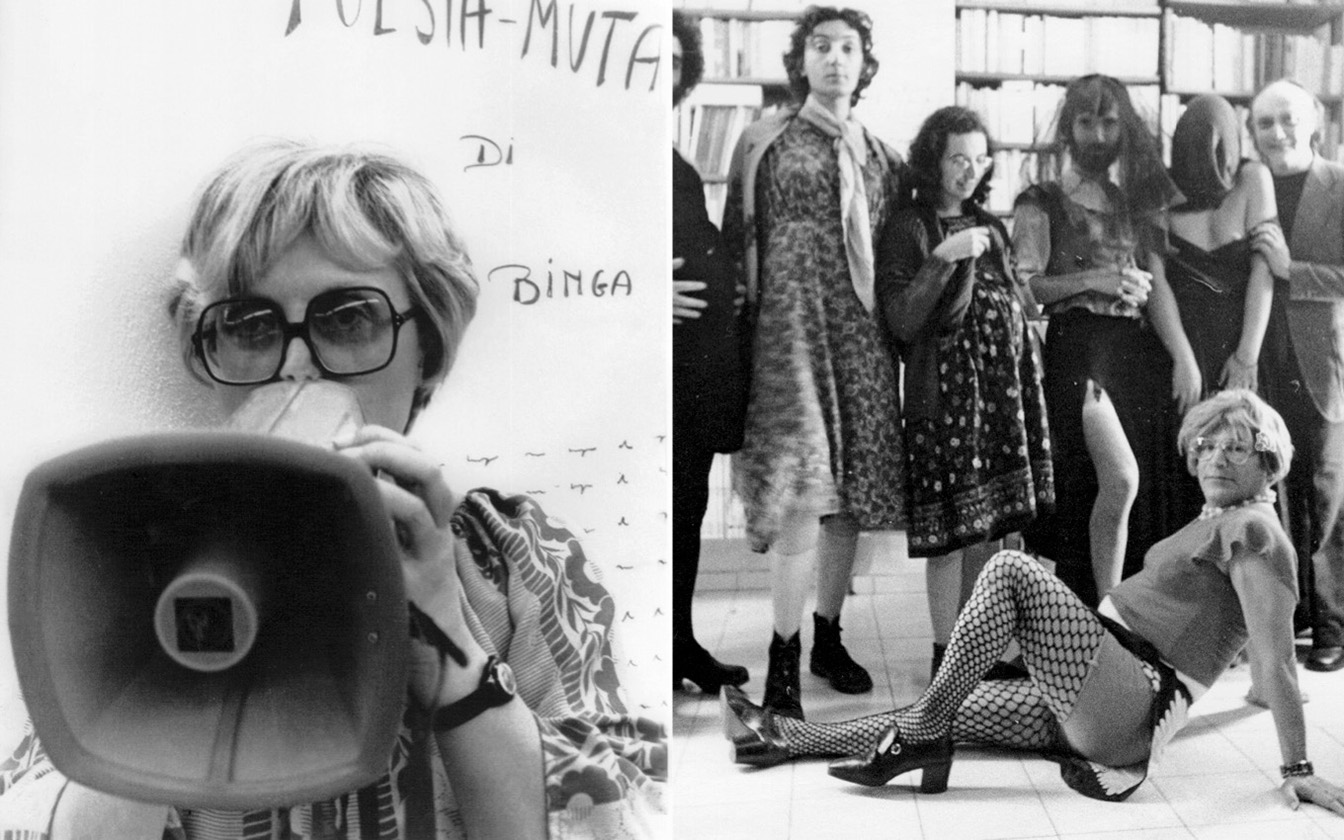
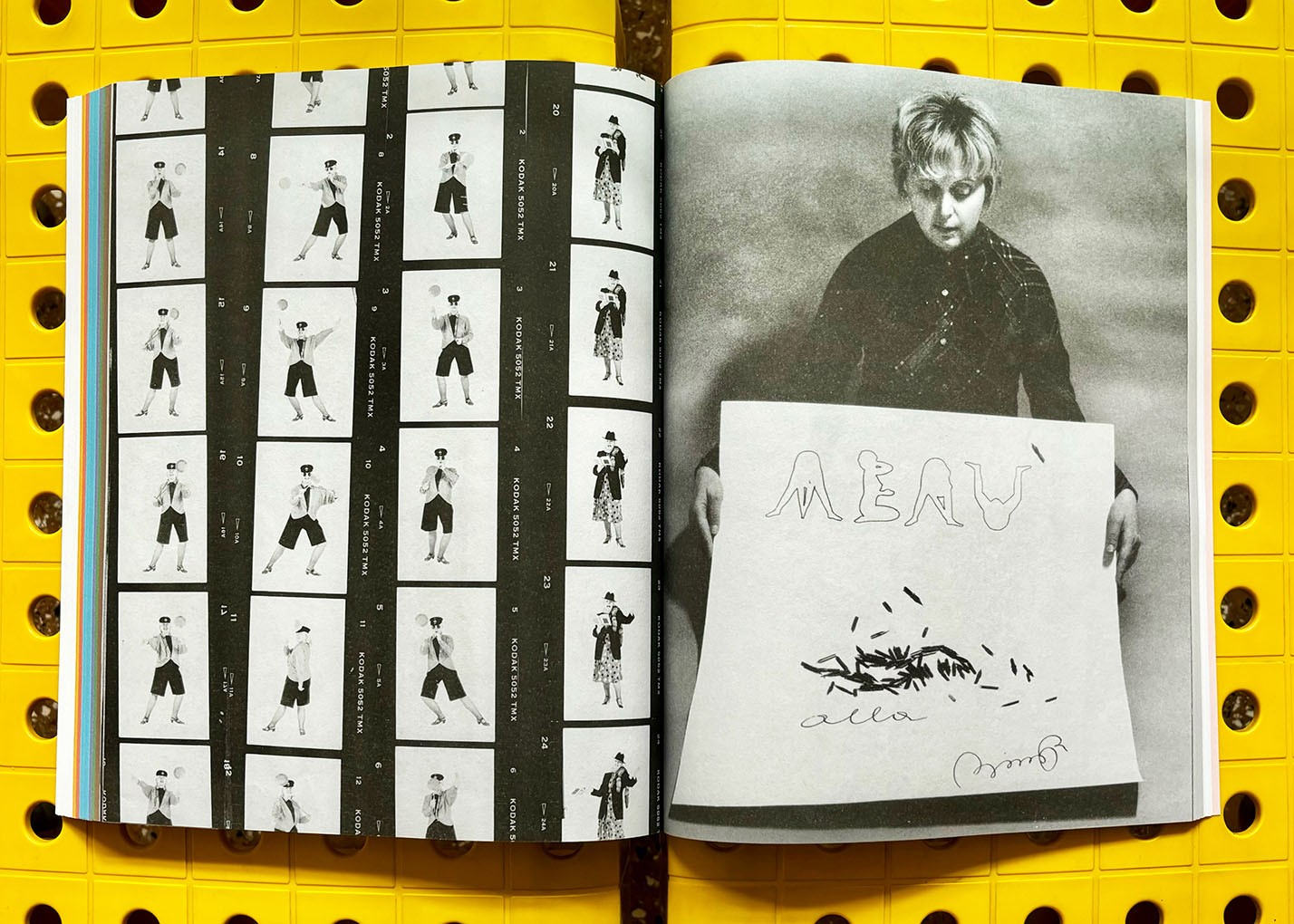
Embedded in the language of visual and sound poetry, the practice of Tomaso Binga (Bianca Pucciarelli Menna, born in Salerno in 1931) is based on an ironic, insightful questioning of the idea of gender. In her work, this theme is not only a generator of identity, but also a way of looking afresh at the social roles, rights and opportunities traditionally available to women. Her decision to work under a male pseudonym from 1971 onwards was intended to parody male privilege and to provoke a barbed reflection on the political dimension of what it is to be a woman. Her attitude has served as a key marker within the gender equality issues at the center of the debate raging amongst the younger generations.
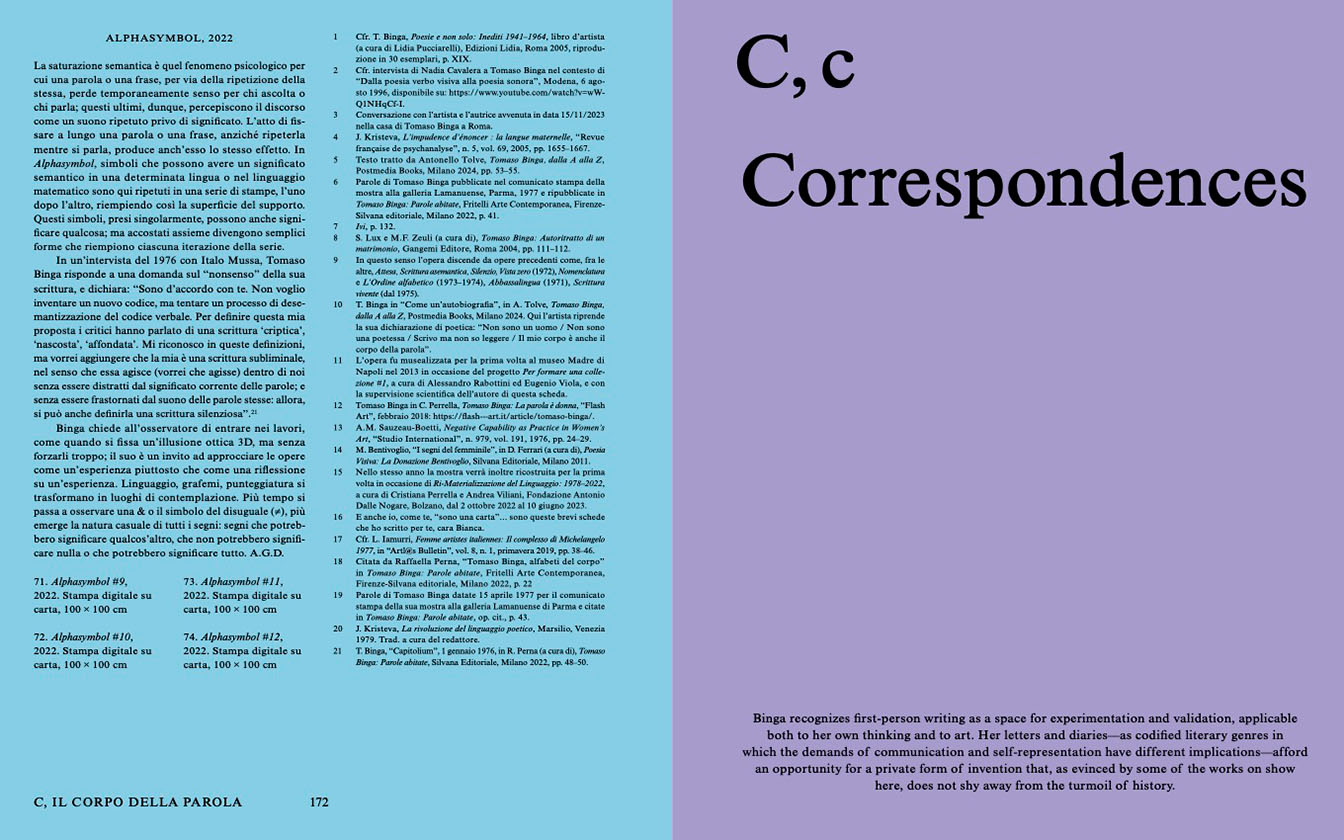
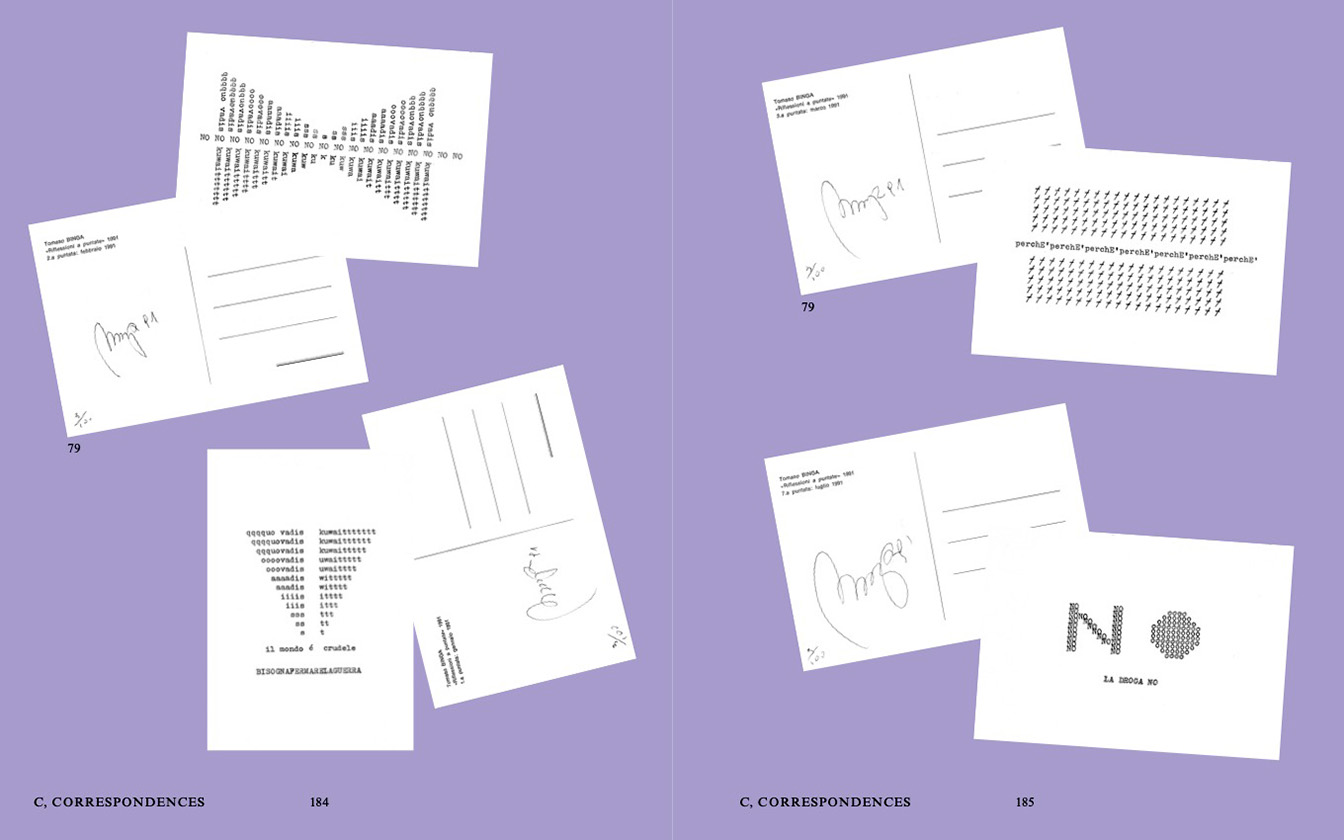
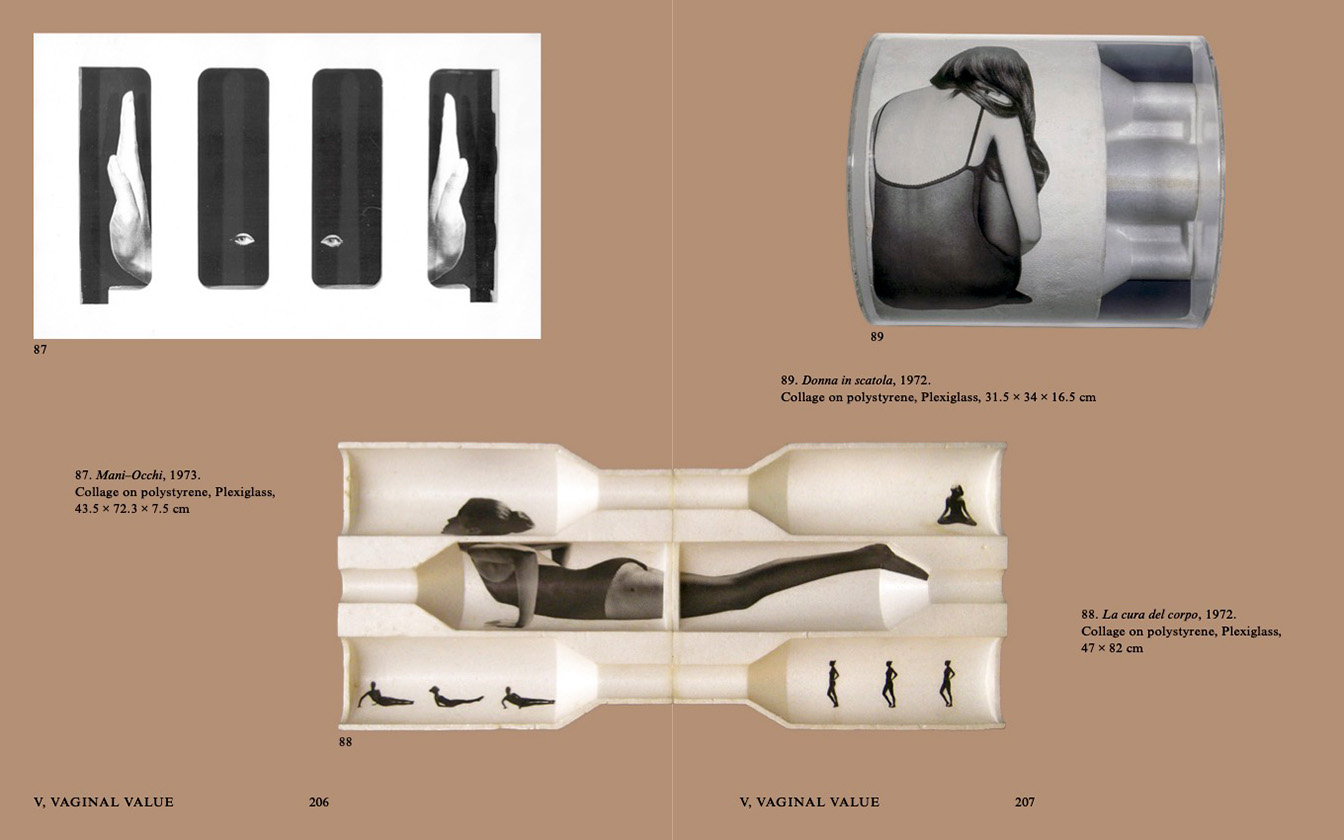
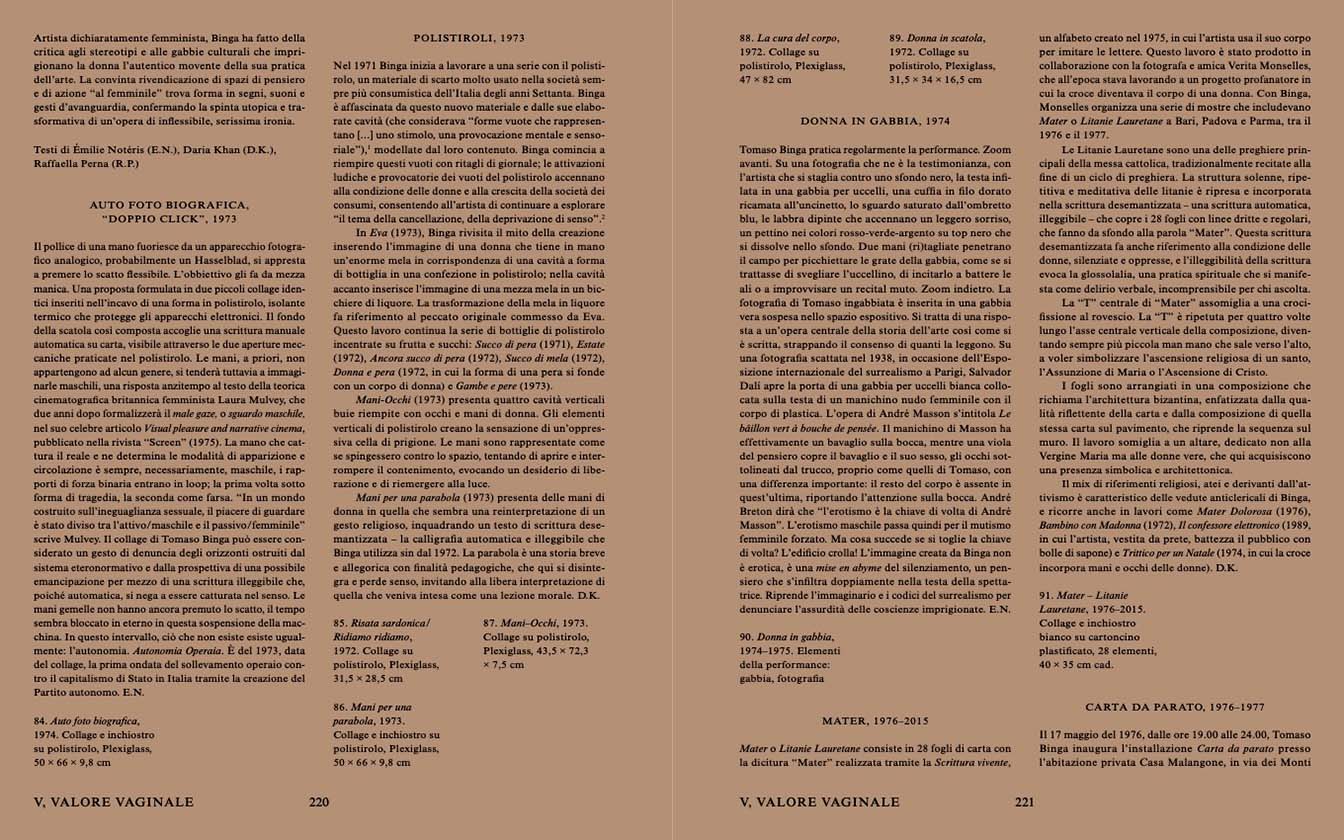
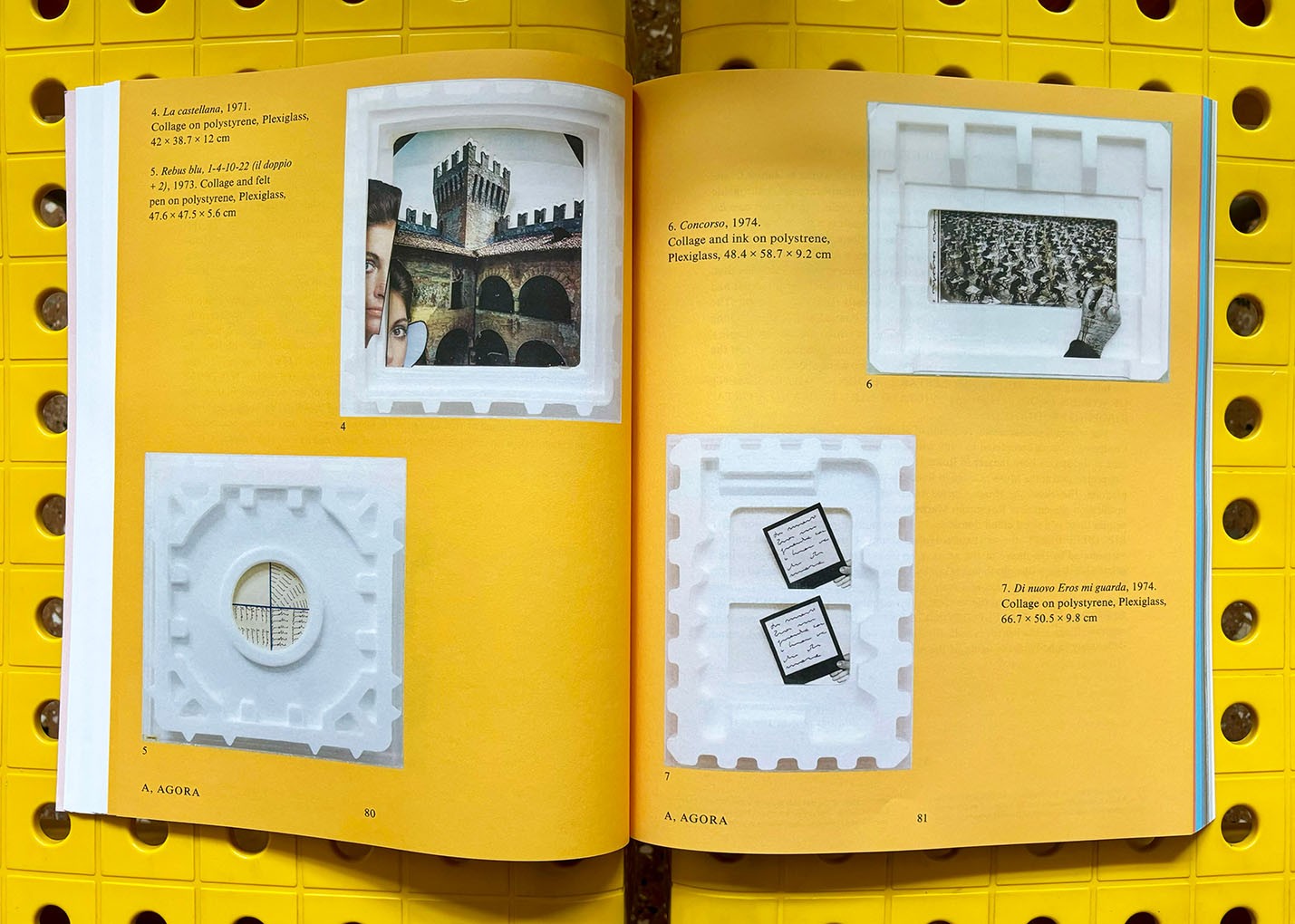
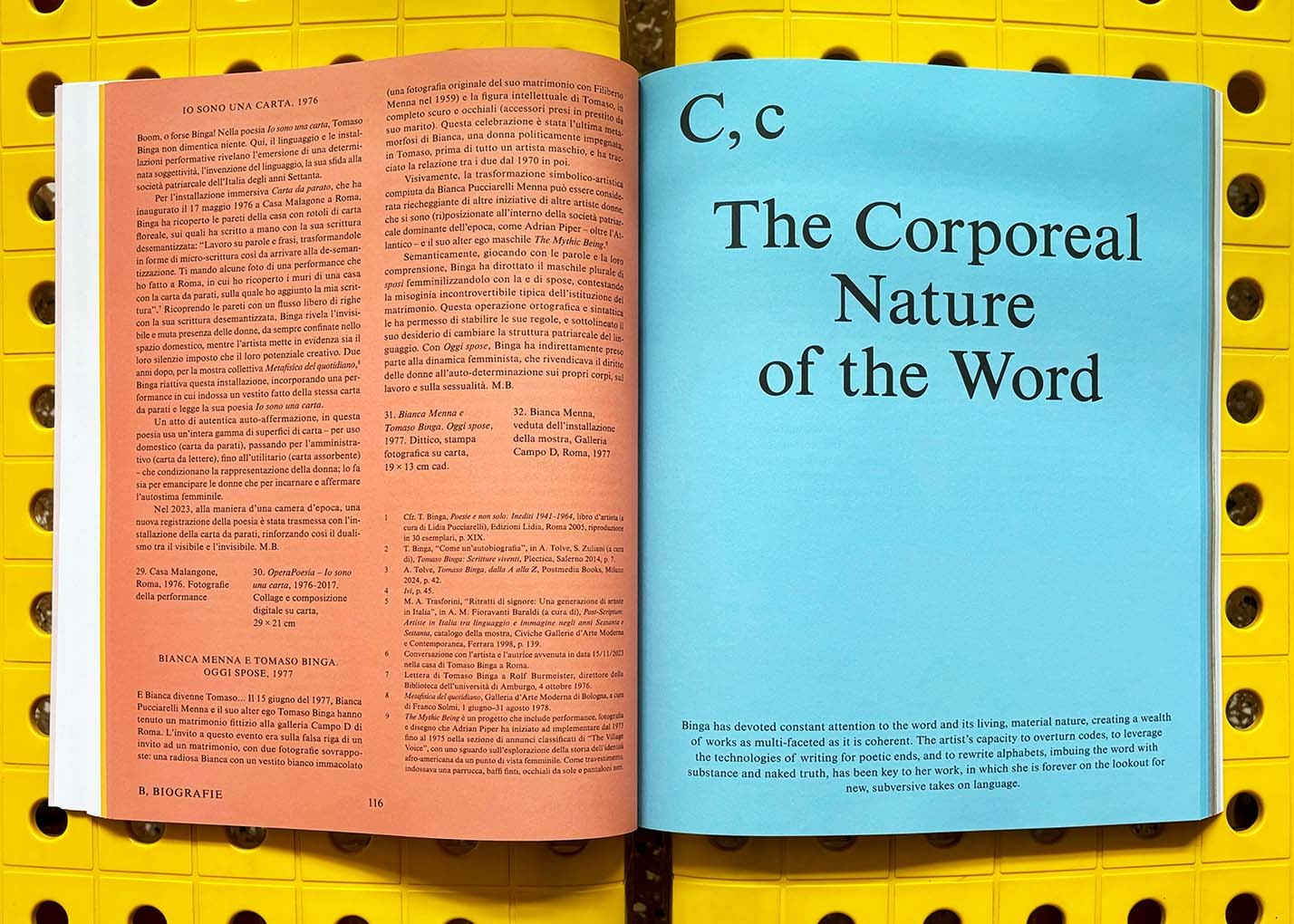
This monograph explores the work and the artistic activities of Tomaso Binga through a specific lexicon (Agora, Biographies, the Corporeal Nature of the Word, Correspondences, Geographies, Vaginal Value), and also features a selection of poems by the artist.
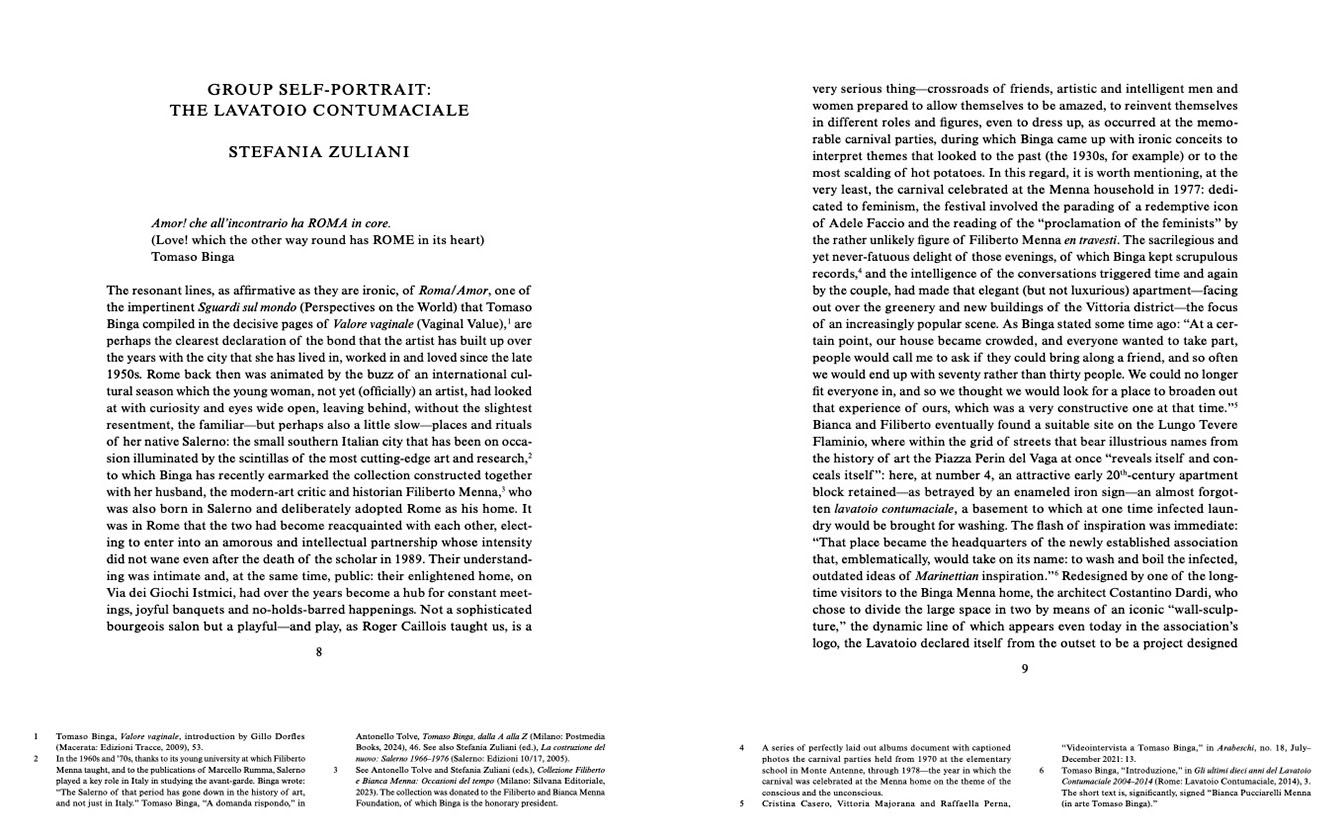
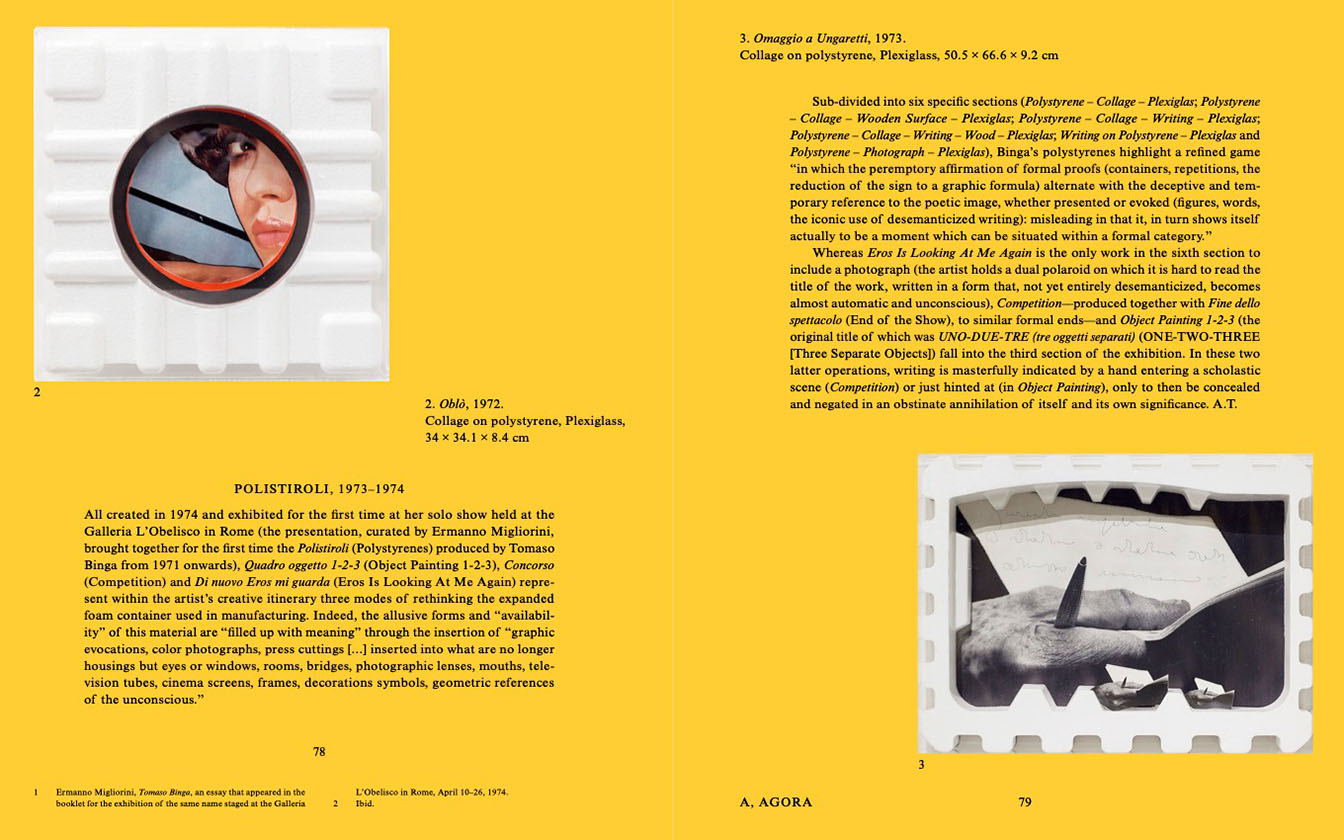
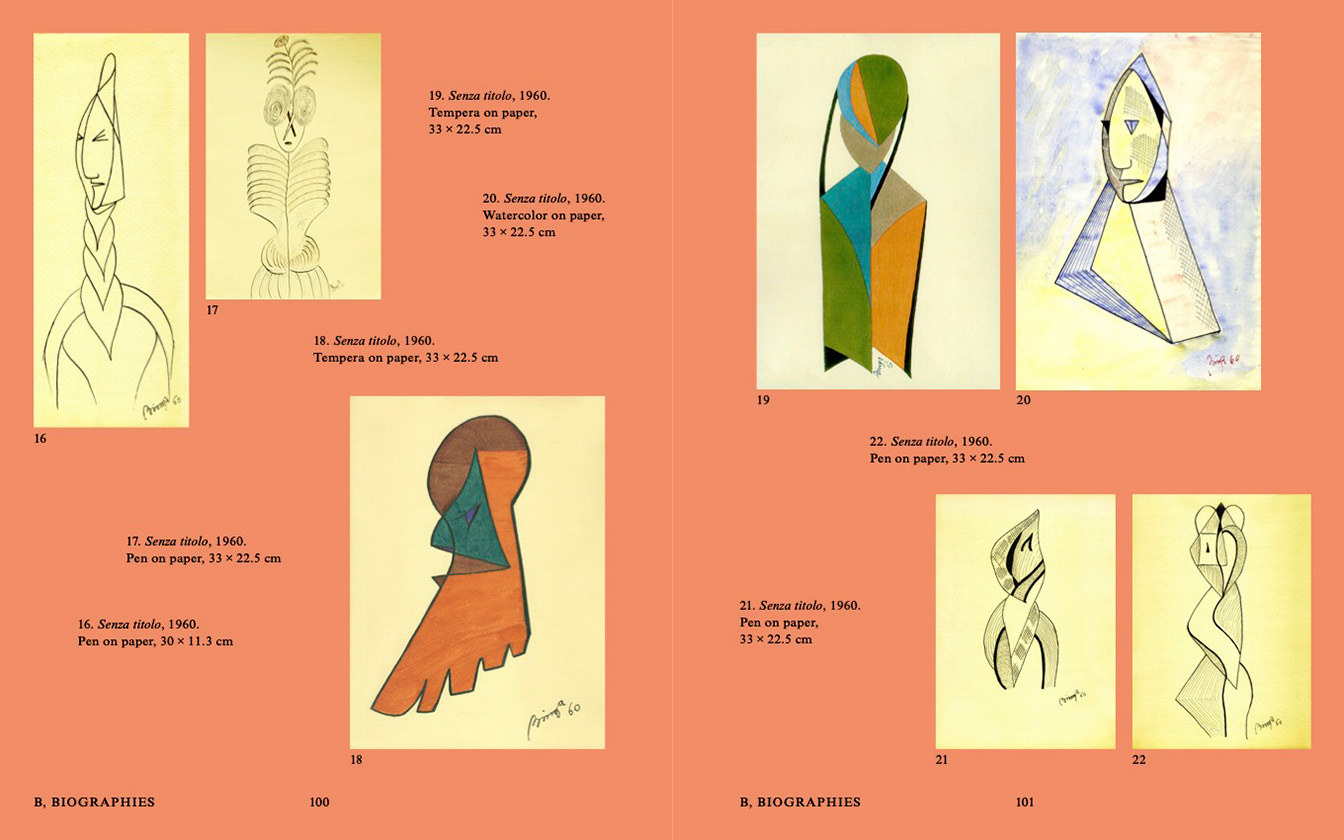
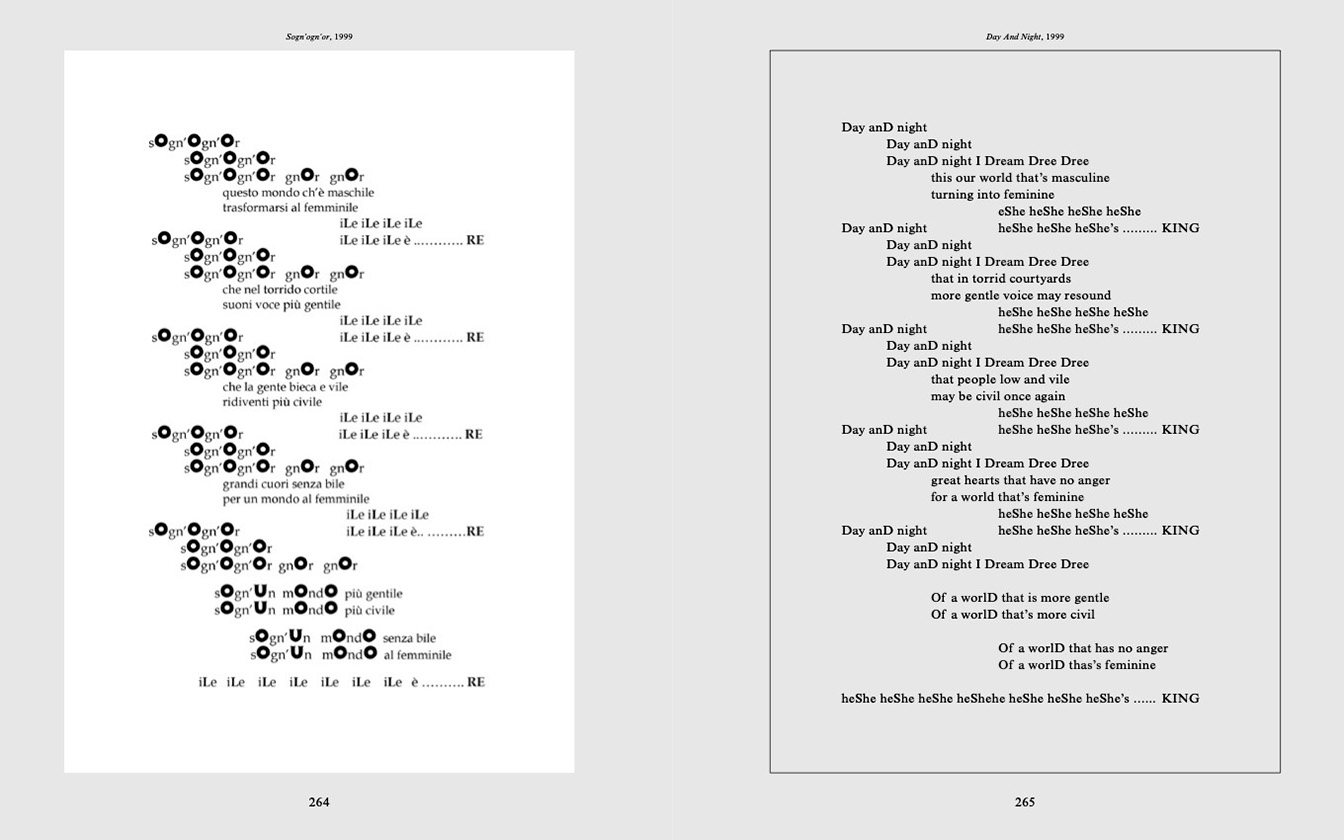
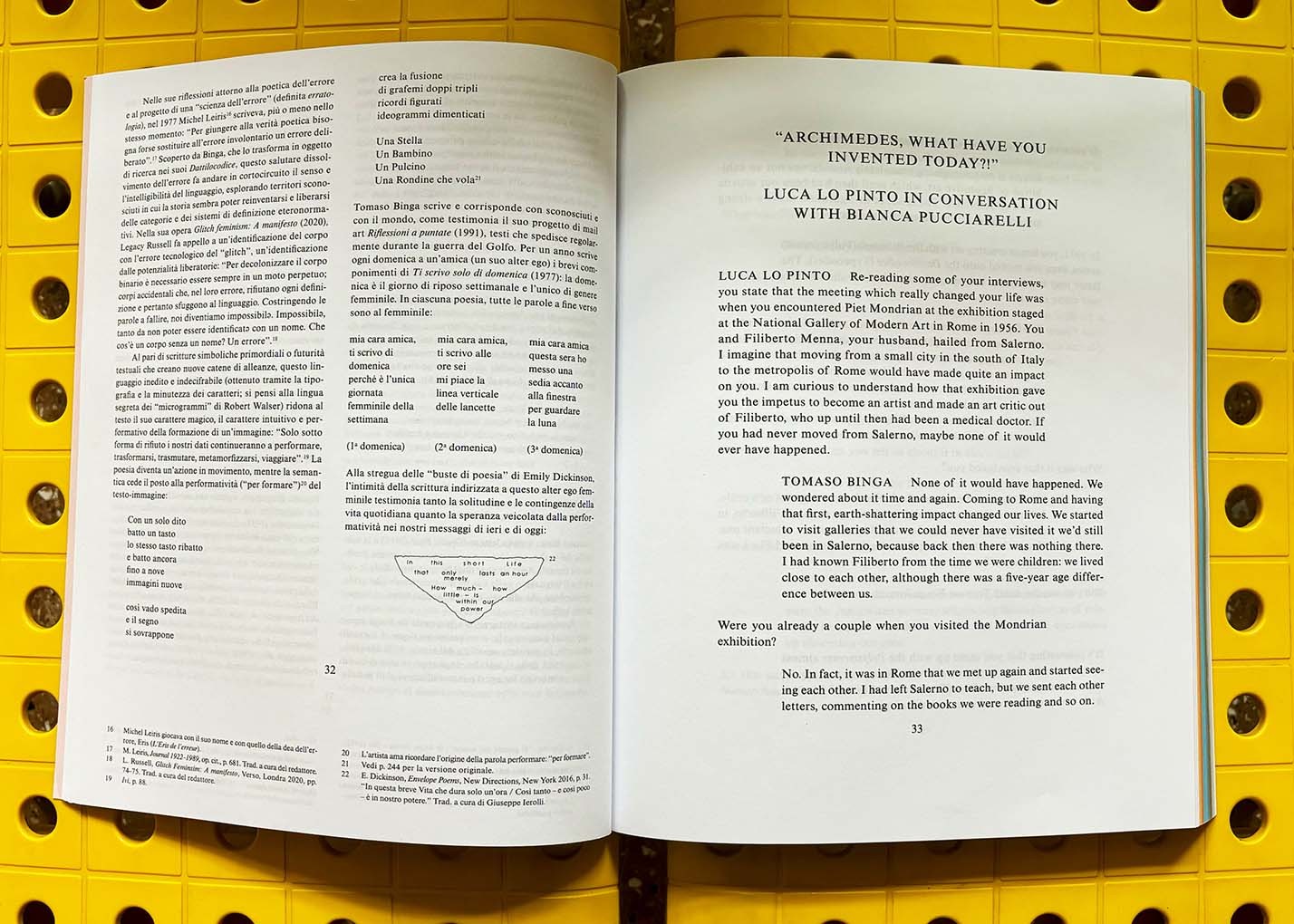
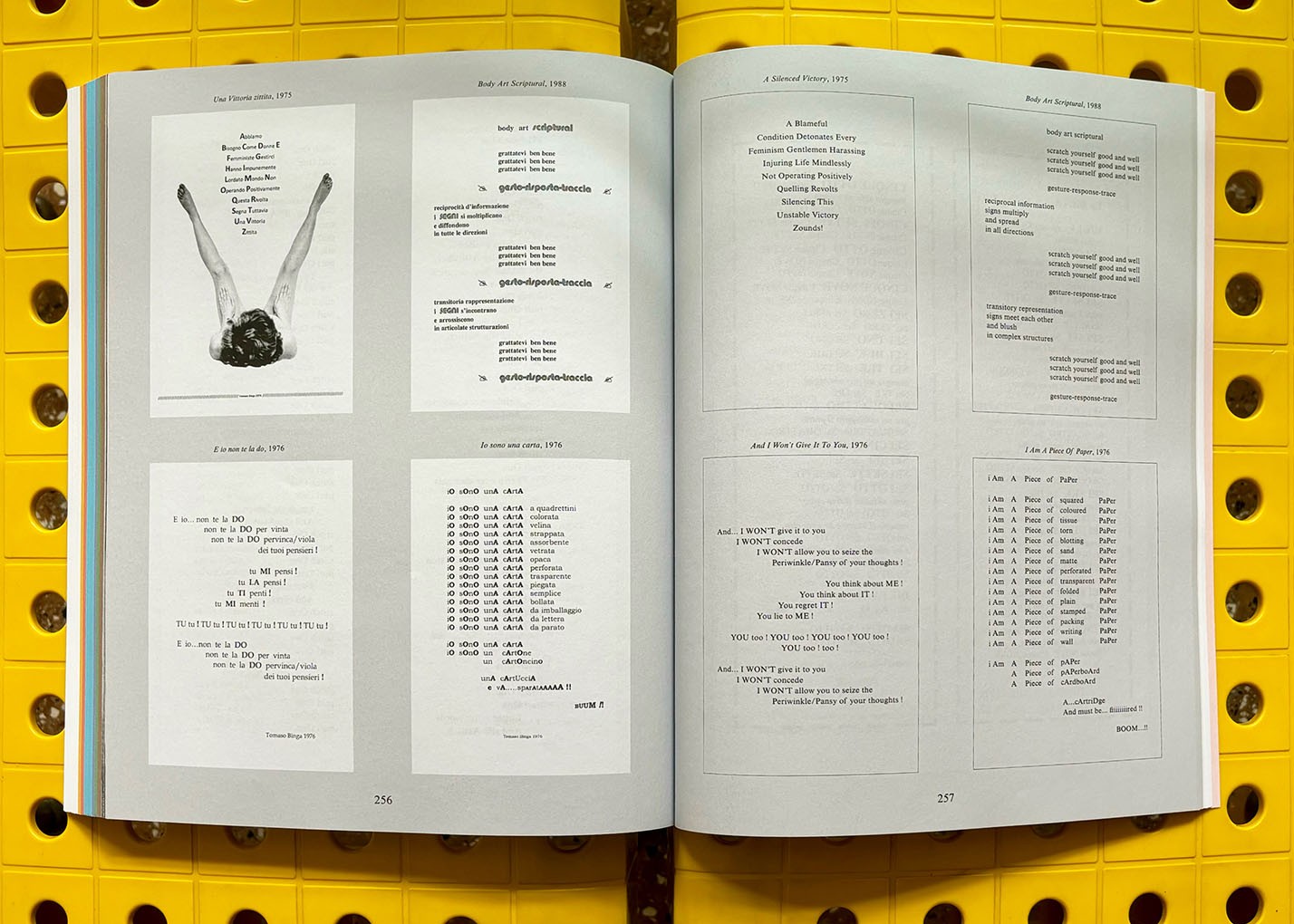
The volume explores the key passages of Tomaso Binga’s artistic practice, and as such is divided into three macro areas. The first, purely textual, following institutional introduction by the President of the Fondazione Donnaregina per le arti contemporanee Angela Tecce, features texts by Eva Fabbris, Daria Khan, Quinn Latimer, Lilou Vidal, and Stefania Zuliani, as well as a conversation between the artist herself and Luca Lo Pinto. The second part brings together a series of short critical texts that offer an in-depth analysis of single works and small bodies of work by Tomaso Binga. These contents are further subdivided into six categories (Agora, Biographies, The Body of the Word, Correspondences, Geographies, Vaginal Value) with the aim of delving into the key areas of interest in Tomaso Binga’s practice in chronological order. Critical contributions are thus provided by Marc Bembekoff, Barbara Casavecchia, Martina Cavalli, Chiara Costa, Anna Cuomo, Valérie Da Costa, Allison Grimaldi Donahue, Daria Khan, Émilie Notéris, Raffaella Perna, Antonello Tolve, and Andrea Viliani. The third and final part is dedicated to the artist’s visual poems. Each poem is accompanied by an English translation, in several cases published here for the first time.
The publishing project was the winner of the twelfth edition of Italian Council, supported by the General Directorate for Contemporary Creativity of the Ministry of Culture, promoted by the Fondazione Donnaregina per le arti contemporanee and made possible with the support of the Associazione Amici del Madre.