This artist’s first monograph brings together sketches, documentation and installation shots, as well as an in-depth analysis of her practice. It highlights her process of making art, from the conception of an idea to the finished work, and from the deconstruction and re-assembling of her characters’ identities to the relentless creation of new worlds.
Published on the occasion of the first exhibition in Italy by Jenna Gribbon, staged at the Collezione Maramotti, Mirages showcases a wealth of images that highlight the fluid, sensual output of this artist who, in repeatedly portraying her wife, the musician Mackenzie Scott (aka TORRES), explores the implications inherent in seeing and being seen.
The catalogue of this ambitious project, held at the Centre d’Art Contemporain Genève in 2017, reflects on the centrality of writing in contemporary visual art practices. Documenting its slippages from printed matters to the digital realm, from voice modulations to its sculptural presence, this book celebrates the word in all its forms.
A book emerged from the need to try to tell the story of architecture in a way quite unlike how it’s usually told, in a continuous dialogue between the anthropological gaze of Armin Linke’s photos compared with the ideation process of two public works by the Carlana Mezzalira Pentimalli architecture office.
The book documents and brings together two exhibition projects by Nina Canell and Maria Hassabi. Essays, unpublished materials and a rich set of photographic materials form the driving force behind two visual narratives that offer new keys to understanding the research of the two artists.
Can art, literature, filmmaking, and music draw out, make visible, legible, audible, or even contestable the patterns in which our lives are held? Considering the work by Stan Douglas, Harun Farocki, Ingri Fiksdal, Åke Hodell, Stefan Panhans & Andrea Winkler, Susan Philipsz, and Elizabeth Price, this publication entertains this question.
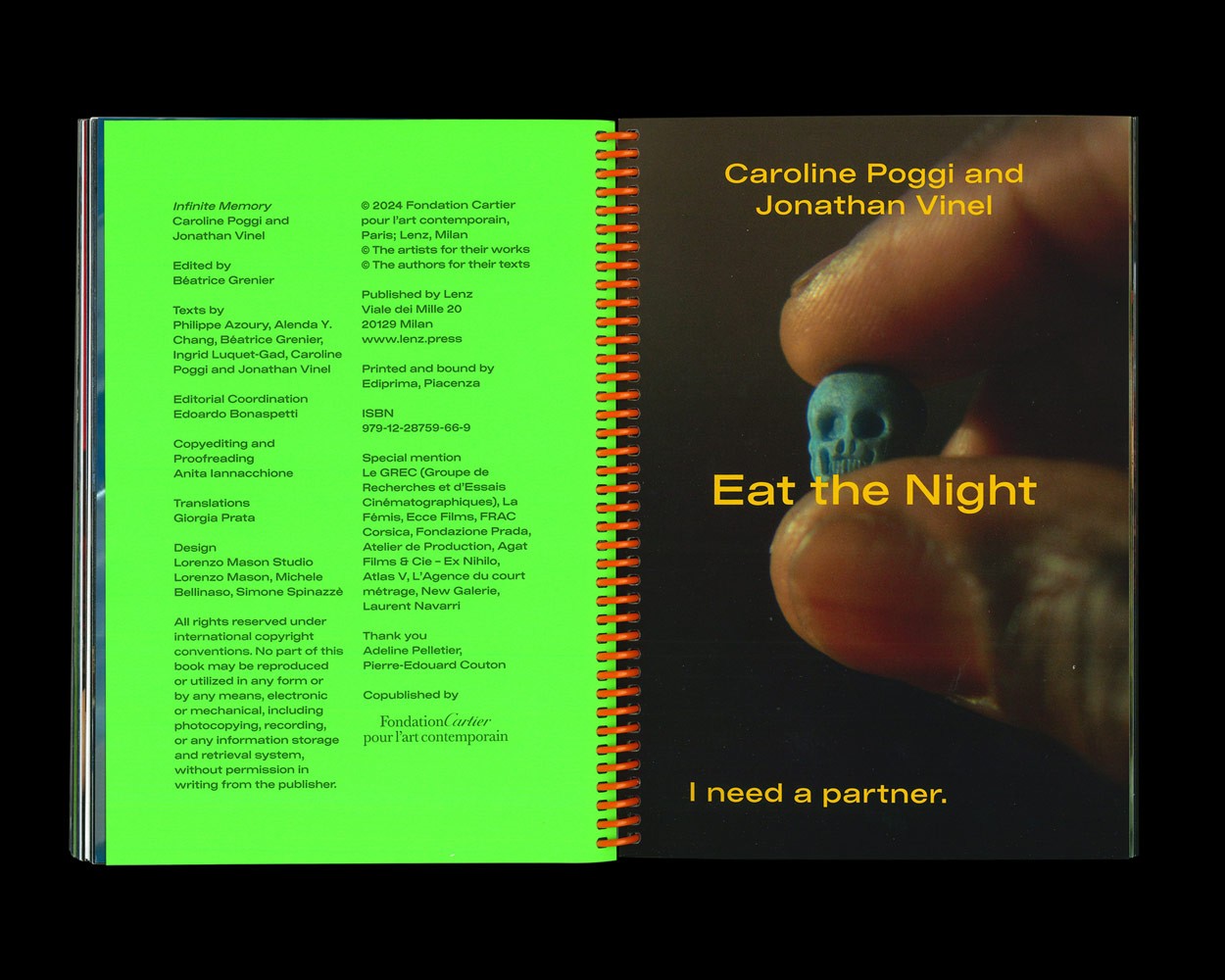
Edited by Béatrice Grenier
Texts by Philippe Azoury, Alenda Y. Chang, Béatrice Grenier, Ingrid Luquet-gad, Caroline Poggi and Jonathan Vinel
Co-published by Fondation Cartier pour l’art contemporain
Designed by Lorenzo Mason Studio
2024, English, 16.8 x 24 cm, 274 pages
ISBN 979-12-80579-66-9
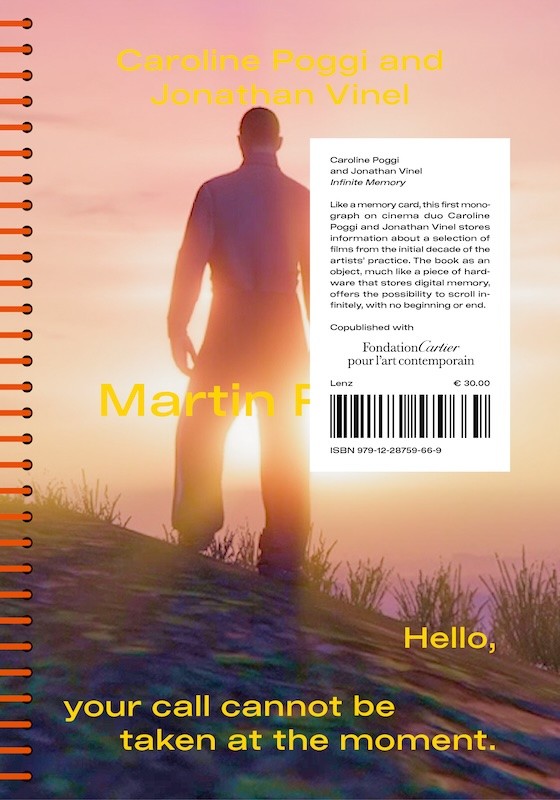
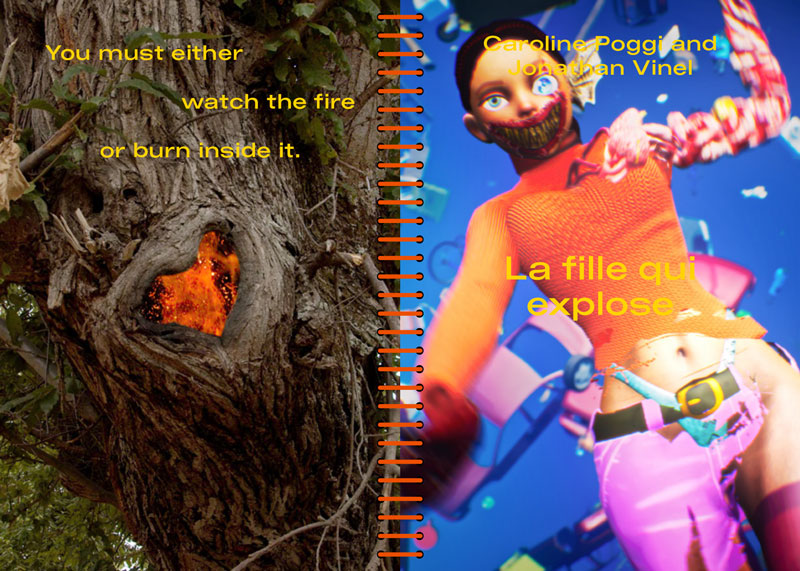
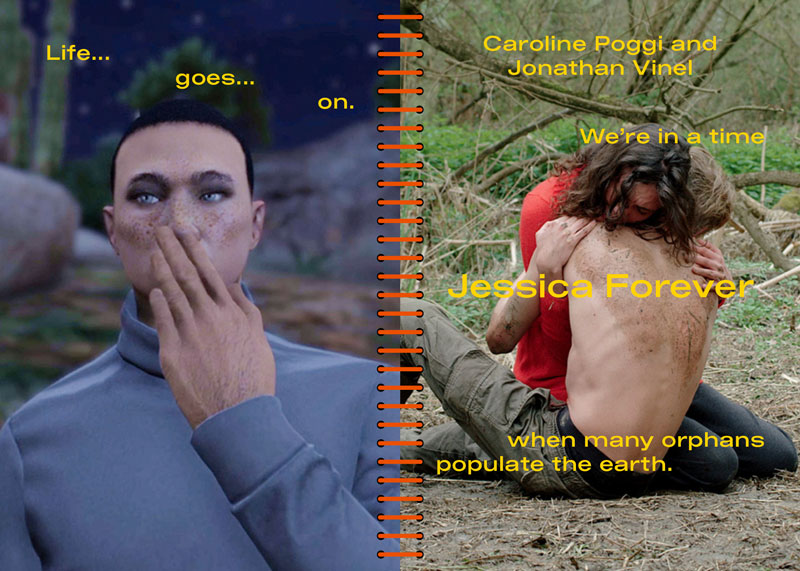
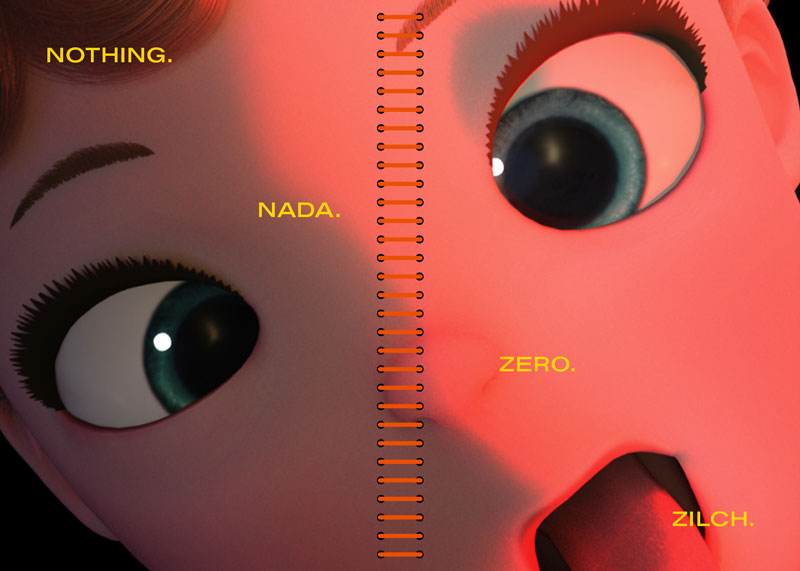
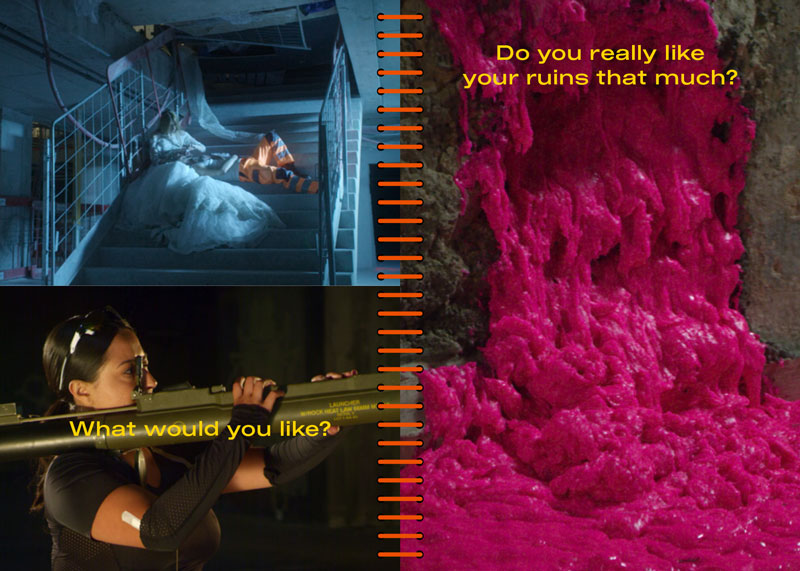
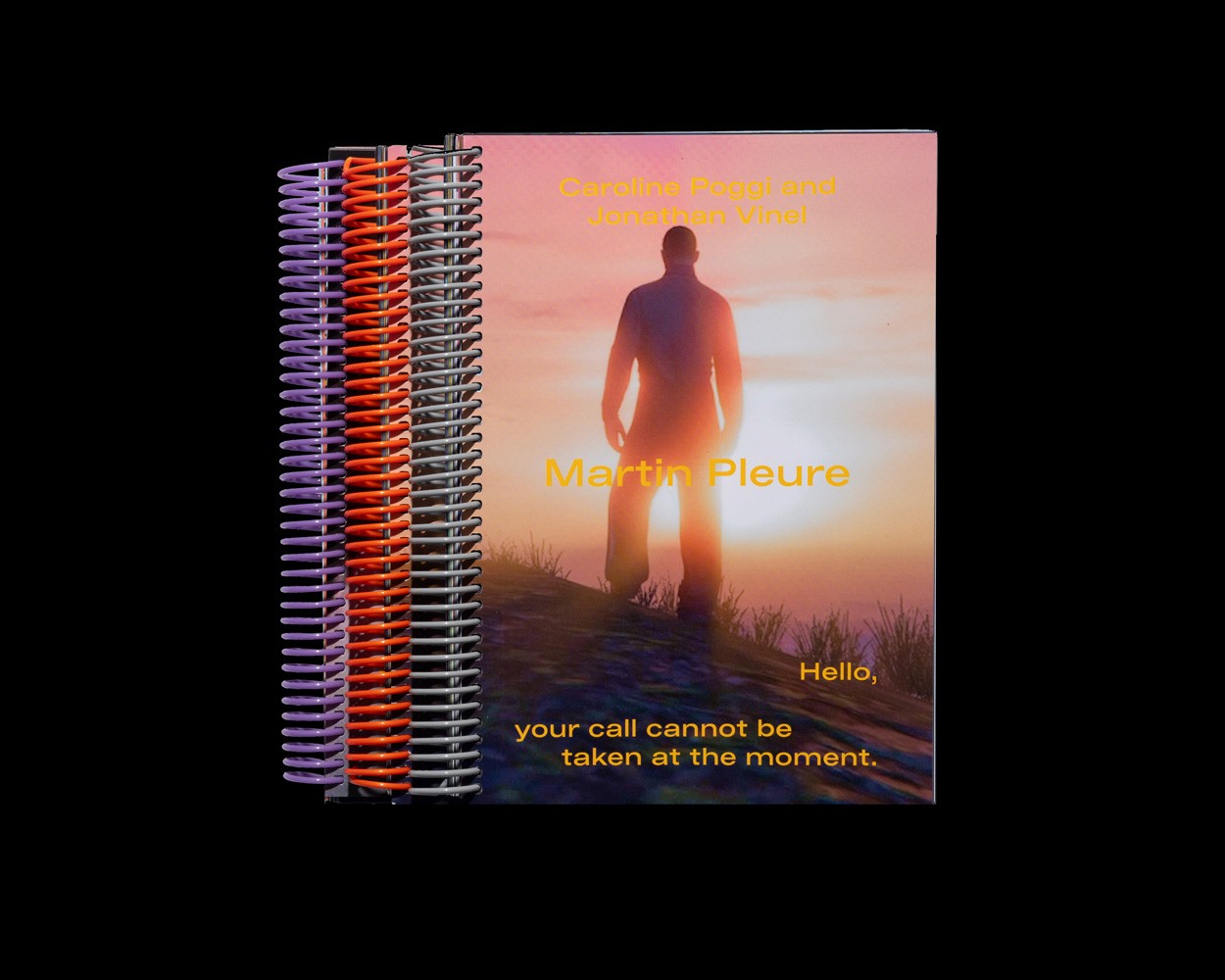
The book is the first monograph of the work of Caroline Poggi and Jonathan Vinel, published in conjunction with the release of the duo’s second feature-length film, titled Eat the Night . Formal experimentation characterises the work of emerging French film-making duo Poggi & Vinel, who employ the languages of video games, archives, and film-making to hybridise genres and break aesthetic conventions. There is ambiguity over the register within which the duo’s work should be situated: is it film, musical score, game or animation?
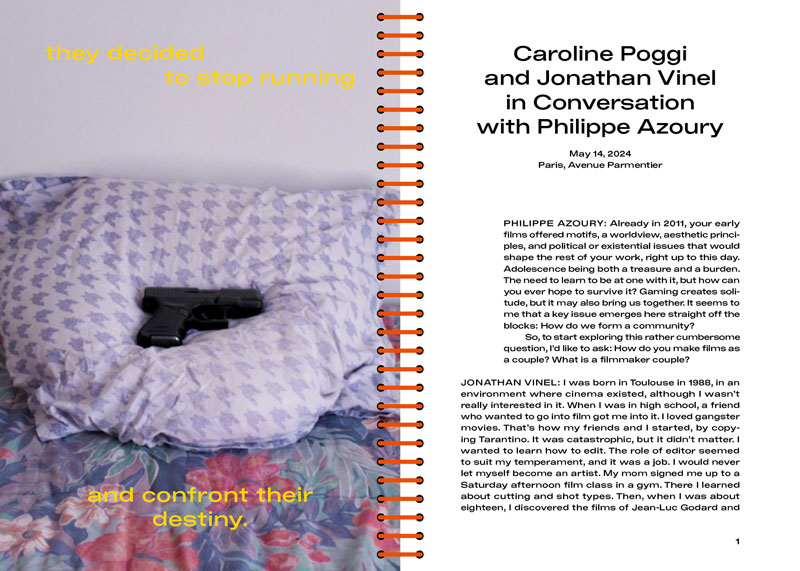
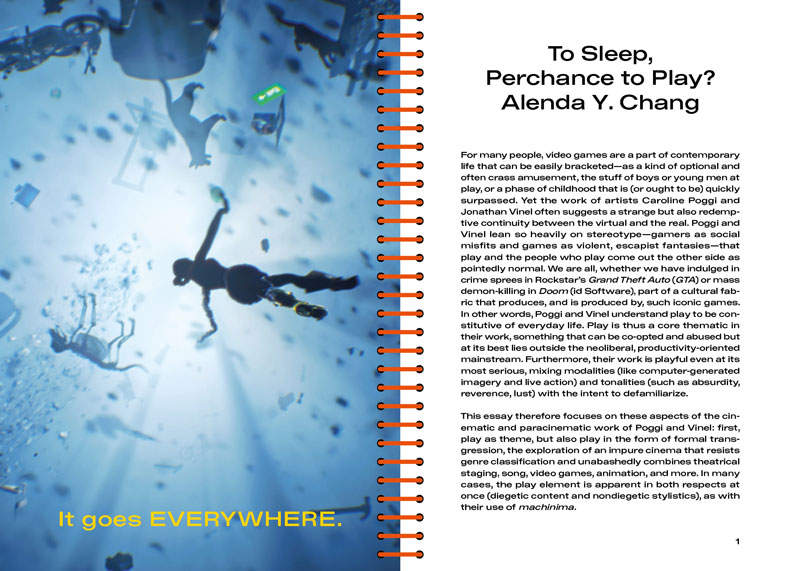
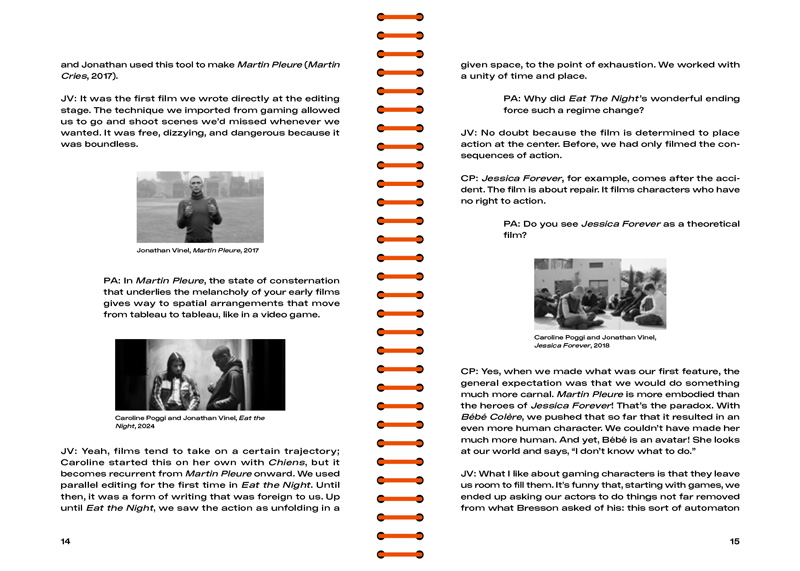
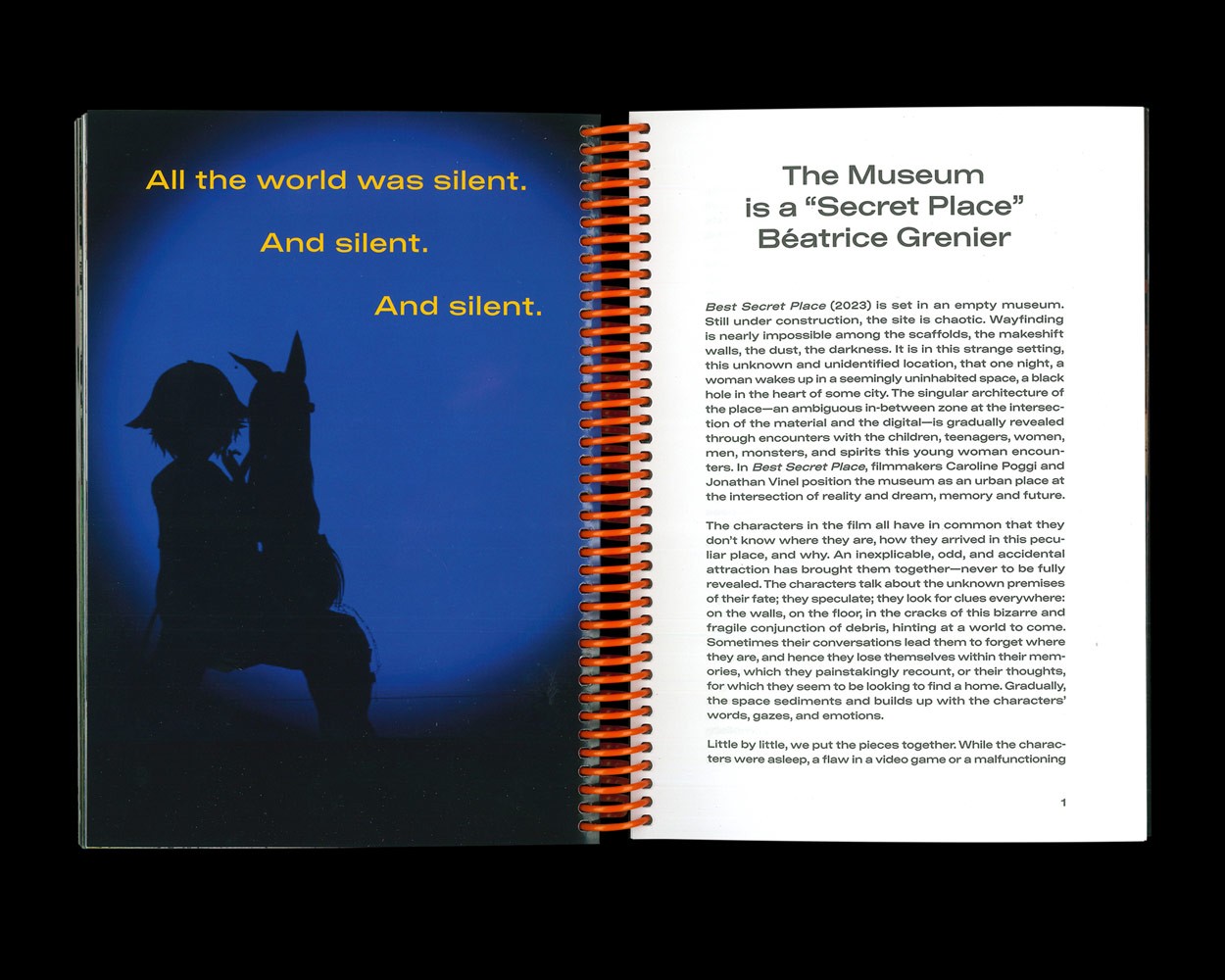
Edited by Béatrice Grenier, considered as an object the book is a formulation of an archive or a record of the duo’s work, encompassing the variety of mediums with which Poggi & Vinel engage, in addition to the overarching question of memory as explored in their practice. Three essays by Alenda Y. Chang, Béatrice Grenier and Ingrid Luquet-gad offer in-depth analyses of the ways in which the work of the duo constitutes a form of preservation through the use and reuse of video-game imagery. Identifying key works and turning points, the book provides a commentary on their particular, ambiguous positioning, somewhere between cinema-video and practice-gaming, and helps to explain why this positioning is critical vis-à-vis contemporary art today. In an interview with Philippe Azoury, the film-makers reflect on the role of community-building both within and outside their films, considering specifically the relationship between the digital characters and the ’real’ characters, and the importance of gaming in acknowledging and understanding other subjectivities.
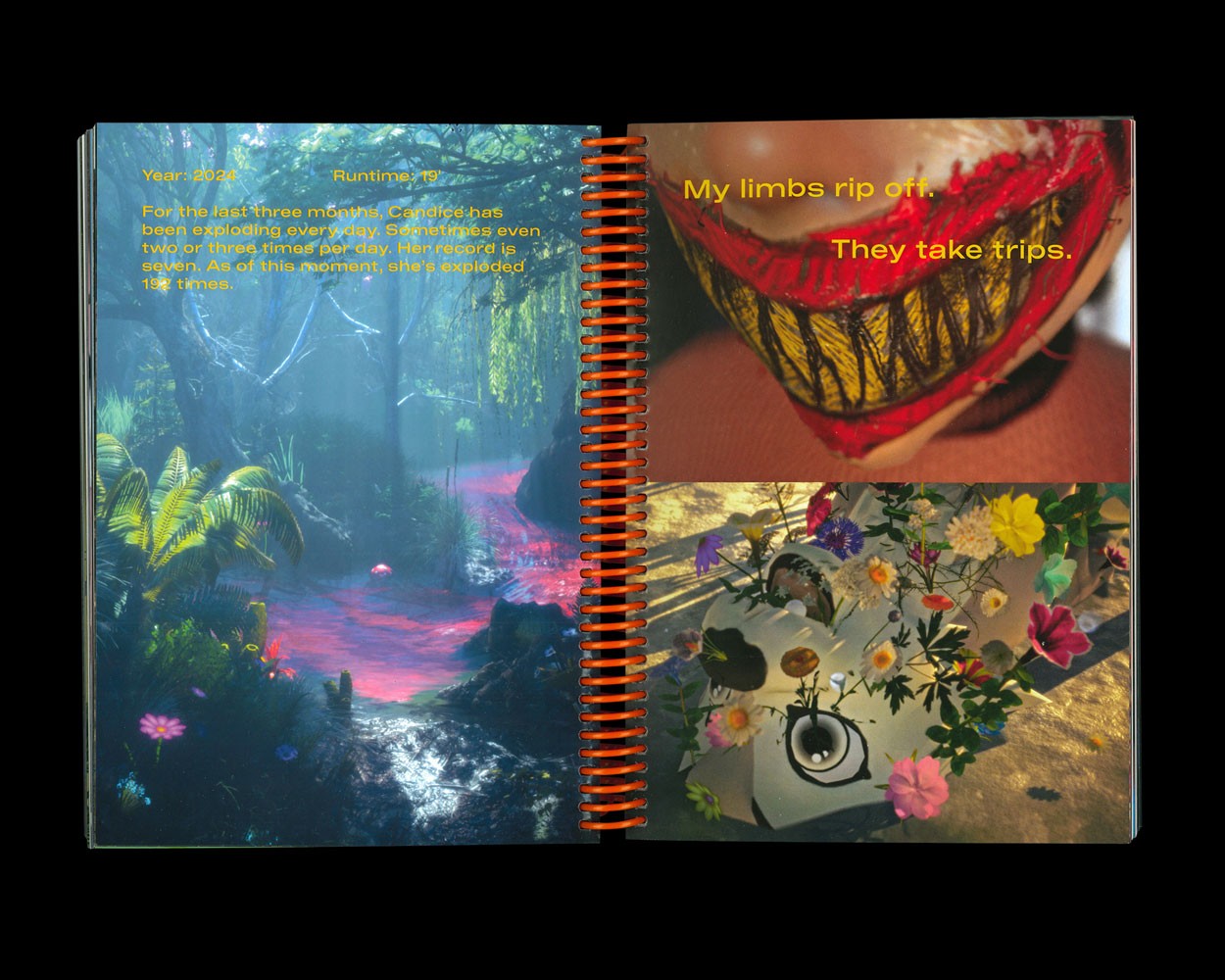
Each film selected for the book is transformed into a photo essay, calling into question the nature of the image—the significance it has when moving or still. Spiral-bound, the book is punctuated by an infinity of potential covers: the object itself has no beginning or end. One can pick off where one left off, or enter the narrative at any point—a formal attempt to transcend the nature of the age-old medium.