Vogliamo tutto. Pratiche culturali e lavoro è una pubblicazione sul lavoro all’interno del contesto socio-culturale in evoluzione: dagli impatti della rivoluzione industriale, al declino post-industriale, fino alla rapida accelerazione dell’era digitale.
Divine Drudgery is an artist book with collages and artworks by James Richards and Leslie Thornton, and contributions by artists, writers and poets centred around liminality and the aesthetics and politics of the invisible.
The book is the first comprehensive monograph on the polymorphous work of Athanasios Argianas. It is published on the occasion of Hollowed Water, a major solo exhibition at Camden Arts Centre in 2020 and ARCH, Athens, in 2021.
Through exquisite craftsmanship, and with reference to romantic nationalism, Ann Böttcher explores how aesthetic and political projections characterize notions of nature, and how such conceptions are taken up by countries, political movements, and other institutions.
Voices (Towards Other Institutions) is the final act of the coral, multiform, articulated, two-year-long experiment carried out by Open, the Russian Federation Pavilion at the 17th International Architecture Exhibition.
The book deals with Diego Marcon’s practice through the analysis of three film and video works. Monelle (2017), Ludwig (2018), and The Parents’ Room (2020) are his most recent and complex projects, and they are all emblematic of central aspects of his production.
Edited by Erlend Hammer
Essay by Erlend Hammer
Designed by Lorenzo Mason Studio
2025, English, softcover, 21 x 29.7 cm, 264 pages
ISBN 979-12-80579-79-9
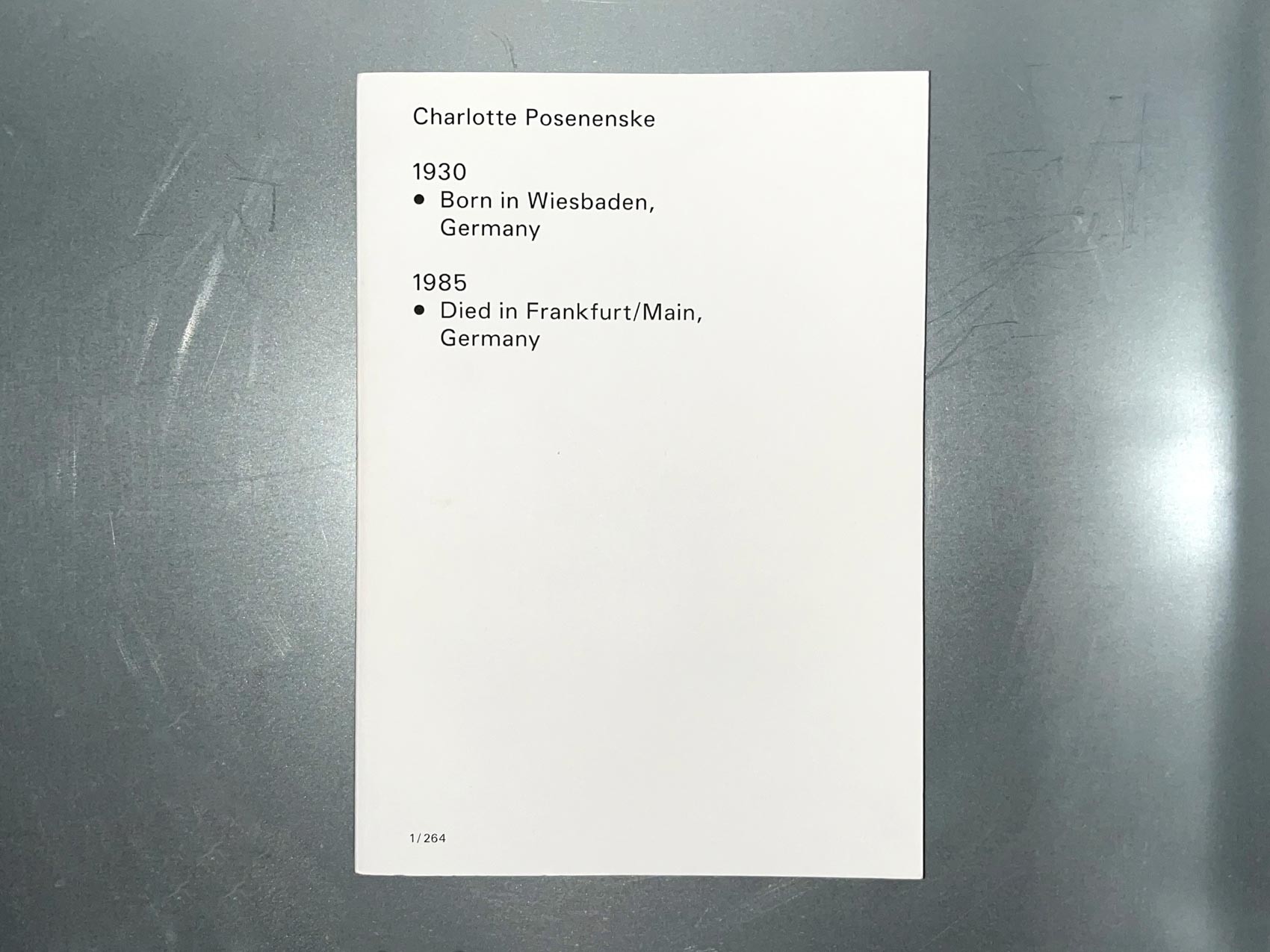
In her Manifesto, Charlotte Posenenske (1930-1985) stated: “I find it difficult to come to terms with the fact that art can contribute nothing to the solution of pressing social problems.”
Developing her artistic practice throughout the 1960s, Posenenske produced a body of work that uniquely combined several strands of the art of the period: conceptualism, minimalism, and socially engaged participatory art. Her Manifesto, published in Art International in May 1968, lays out the social demands on art as well as the impossibility of fulfilling those demands. Shortly after its publication, Posenenske left the art world behind to pursue her studies in sociology, undertaking a new career in that field.
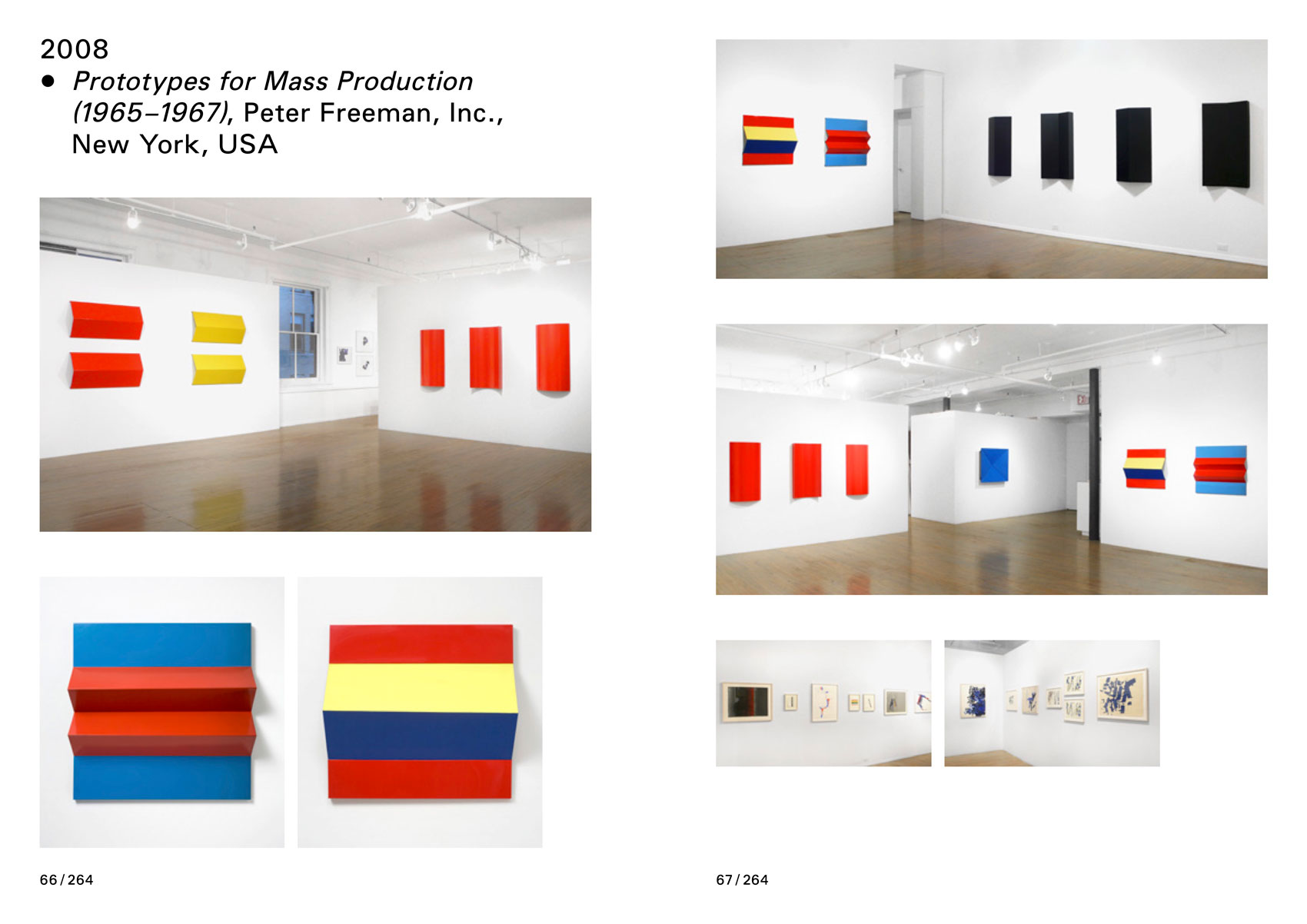
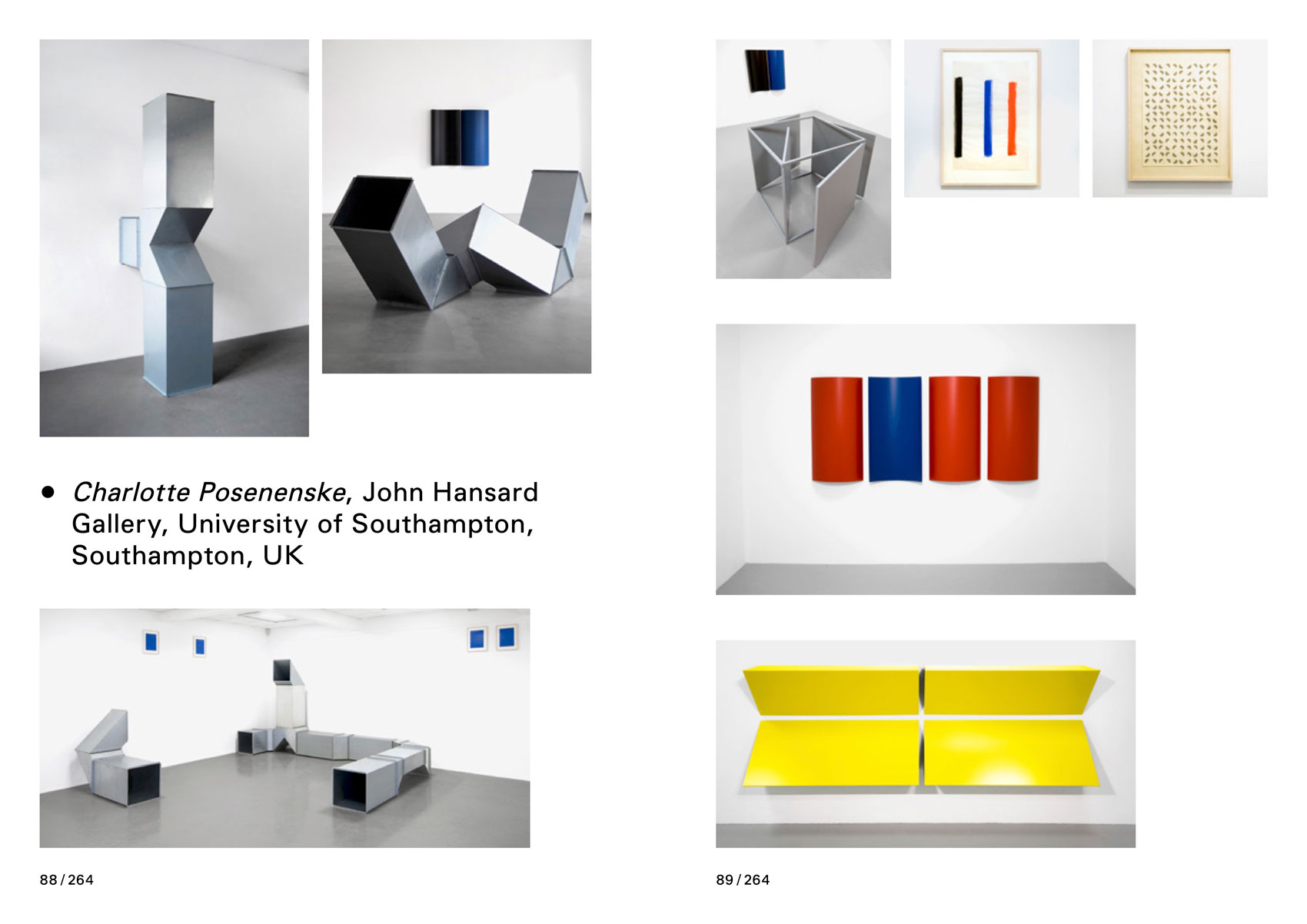
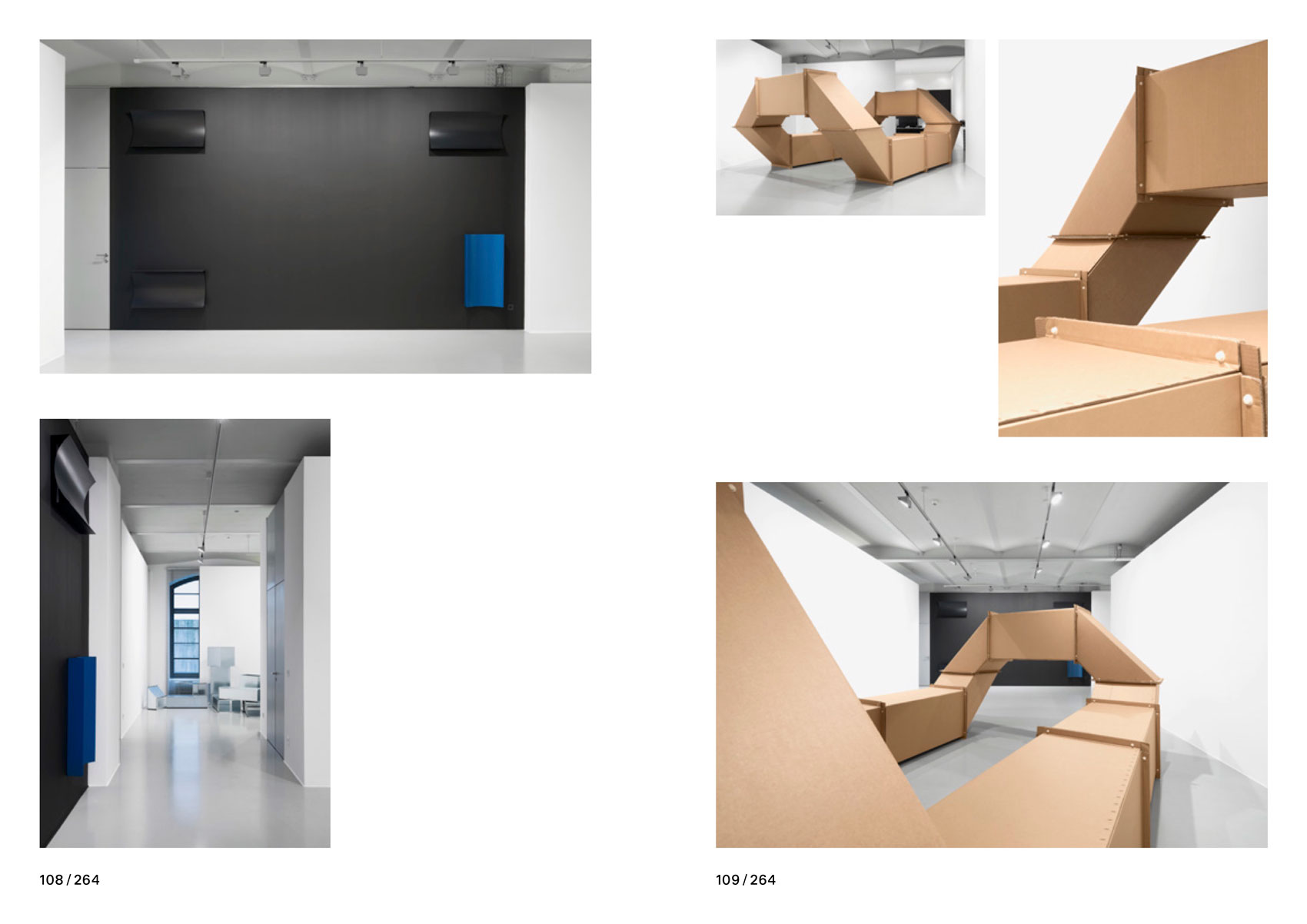
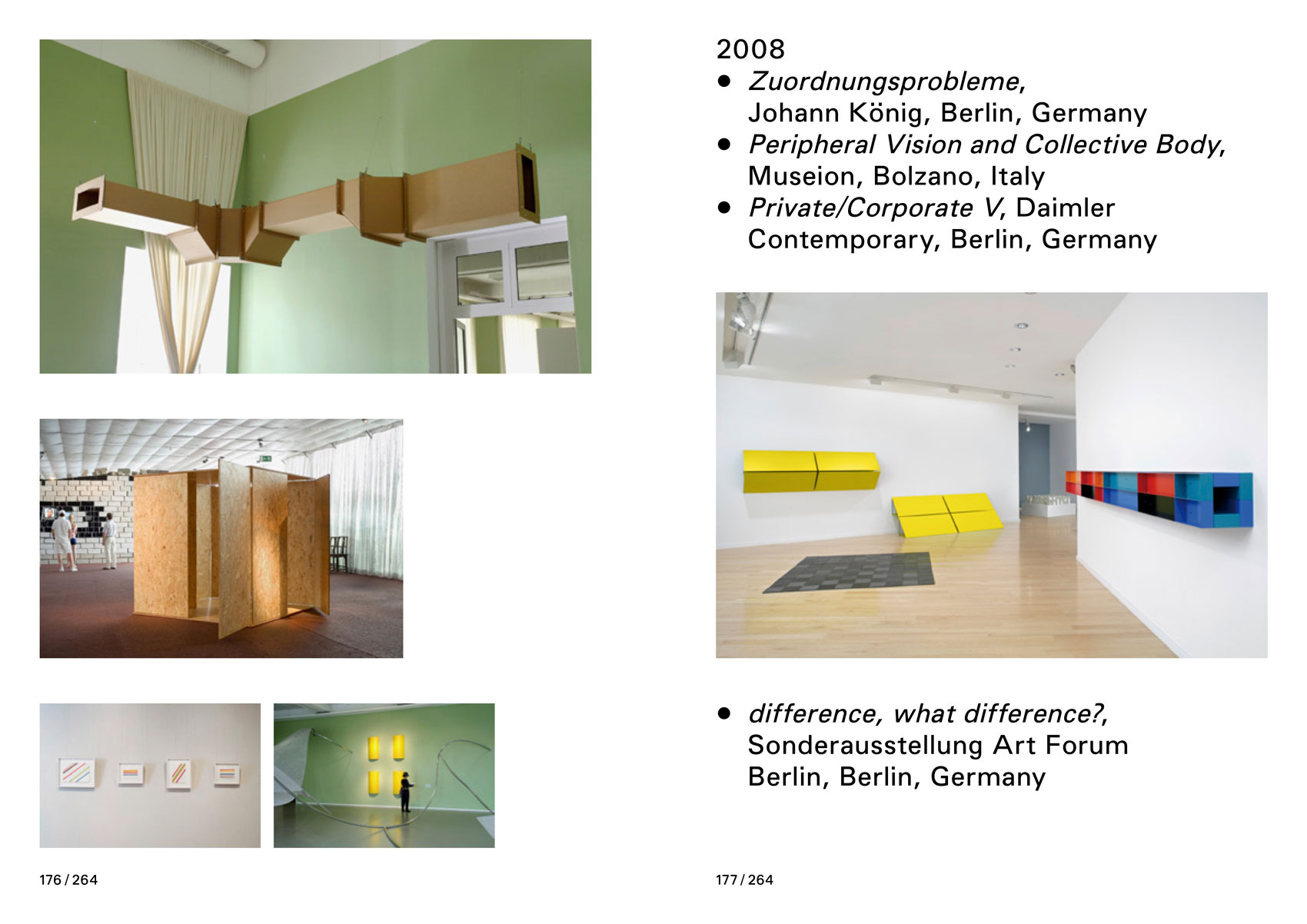
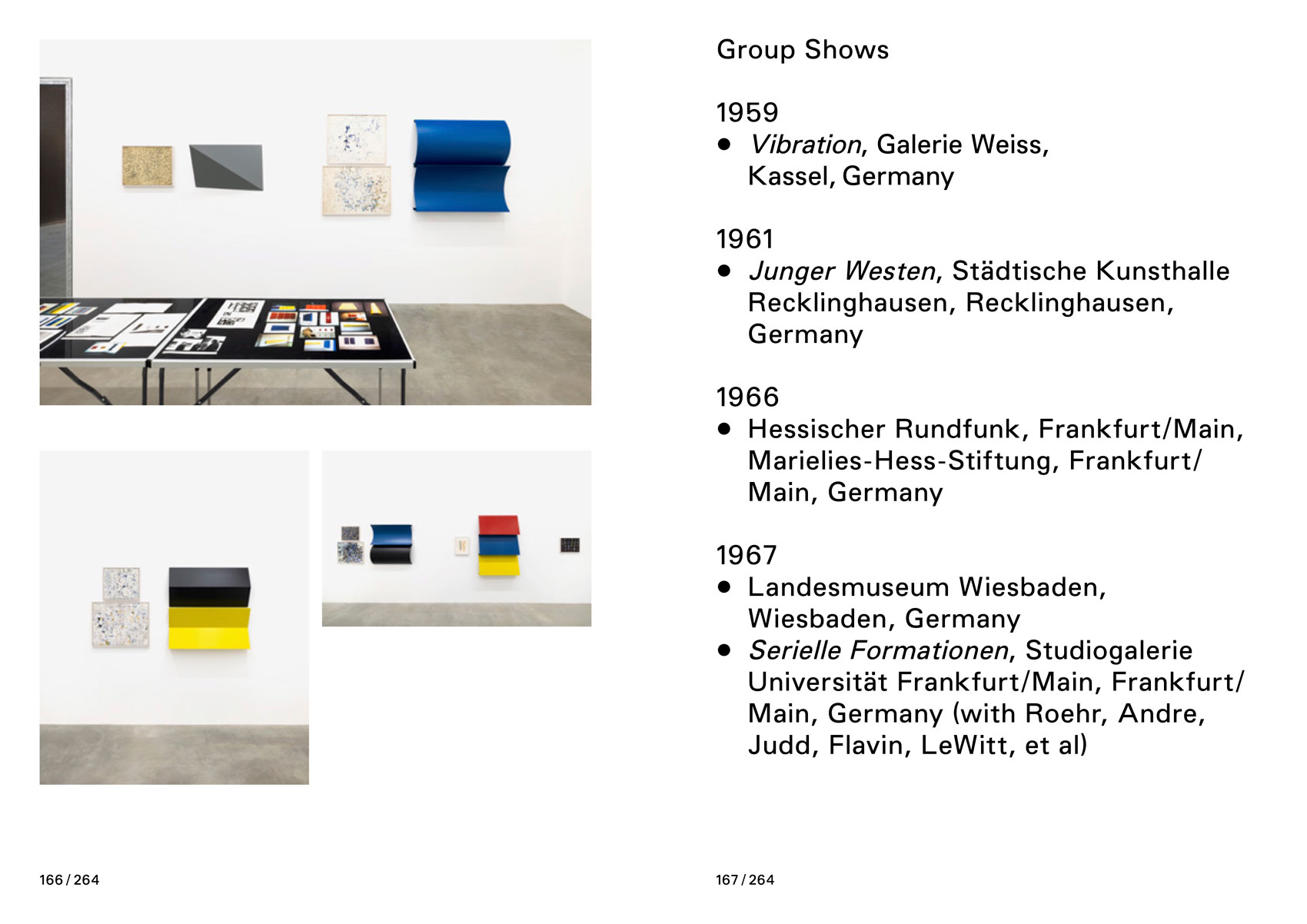
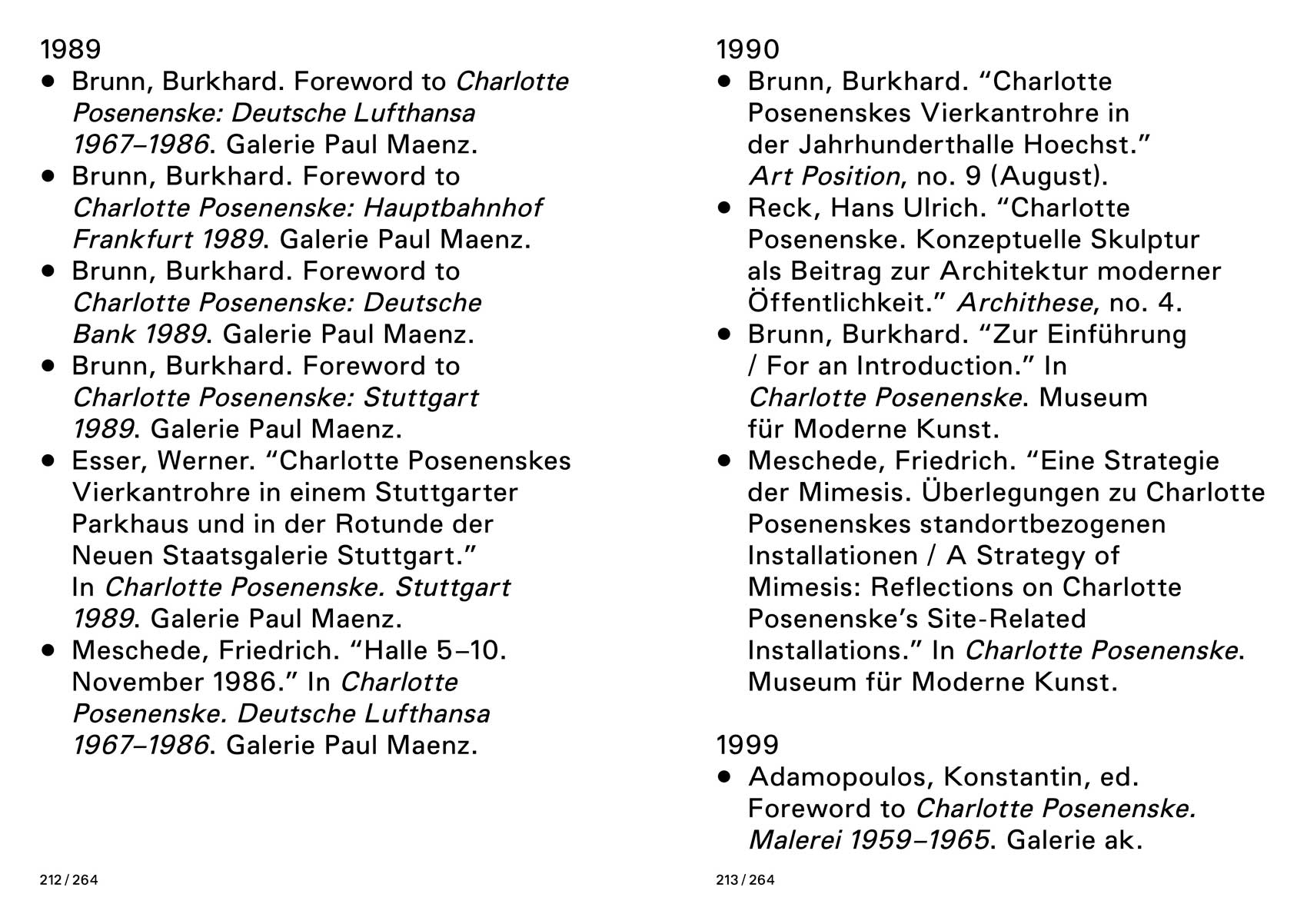
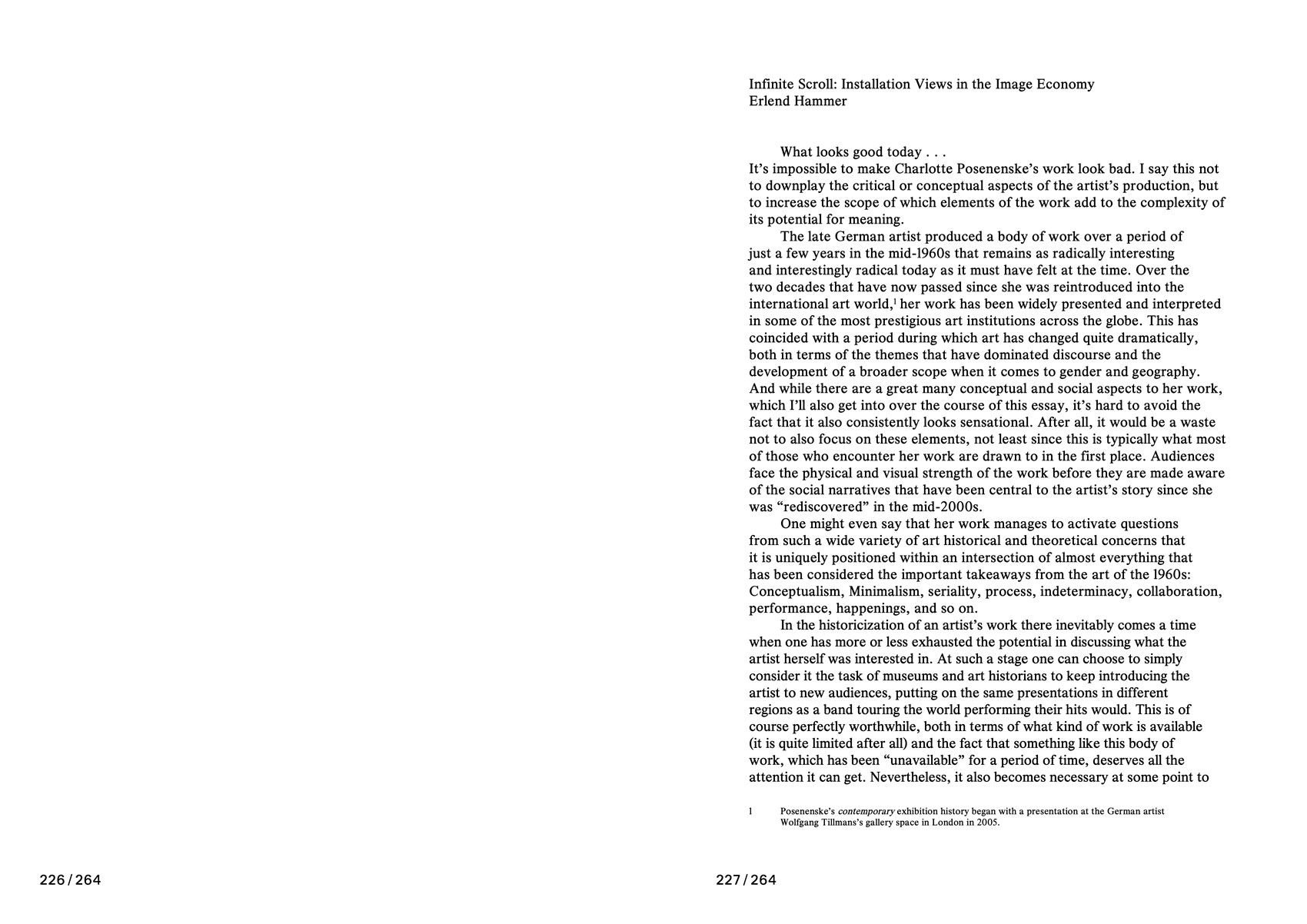
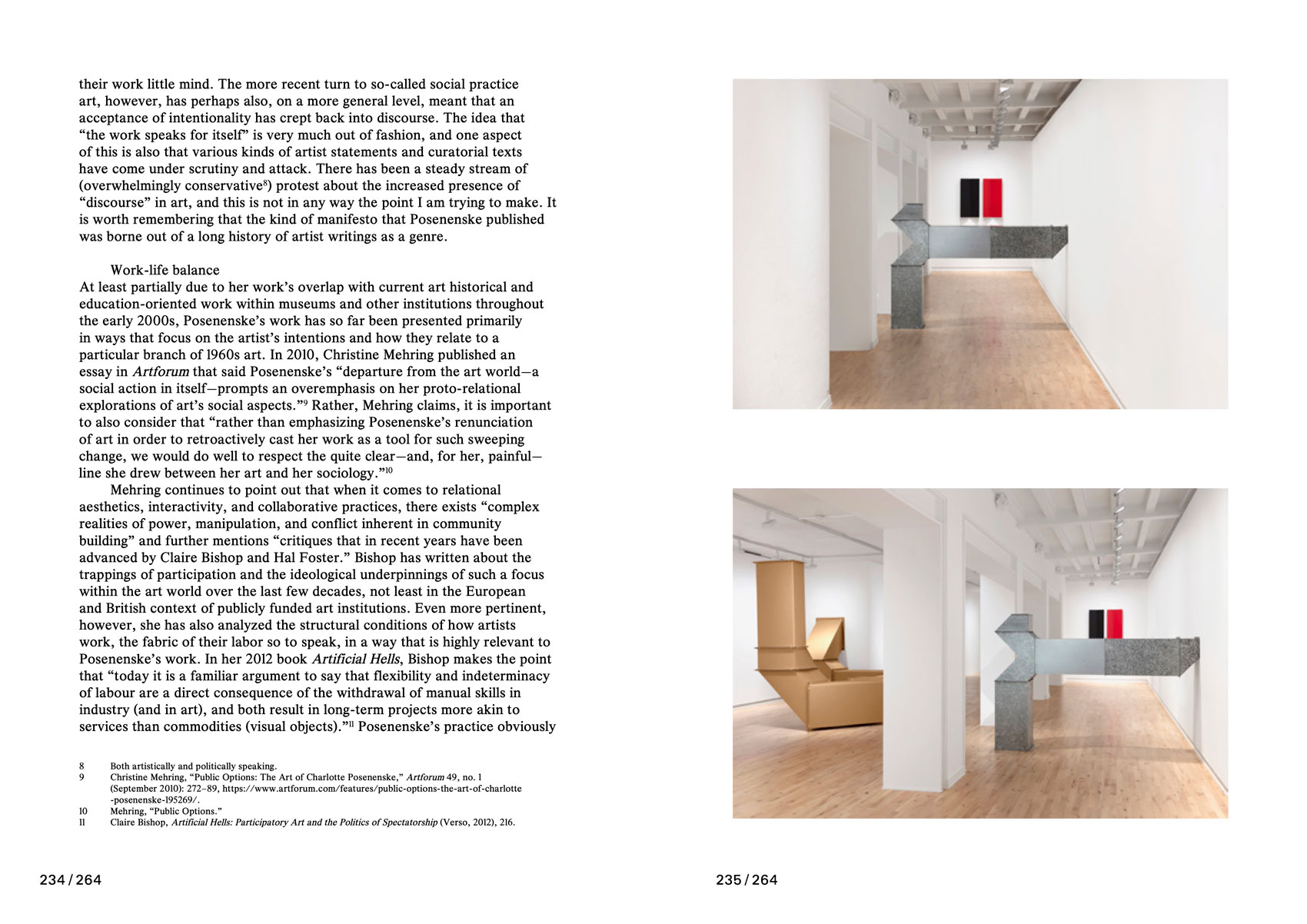
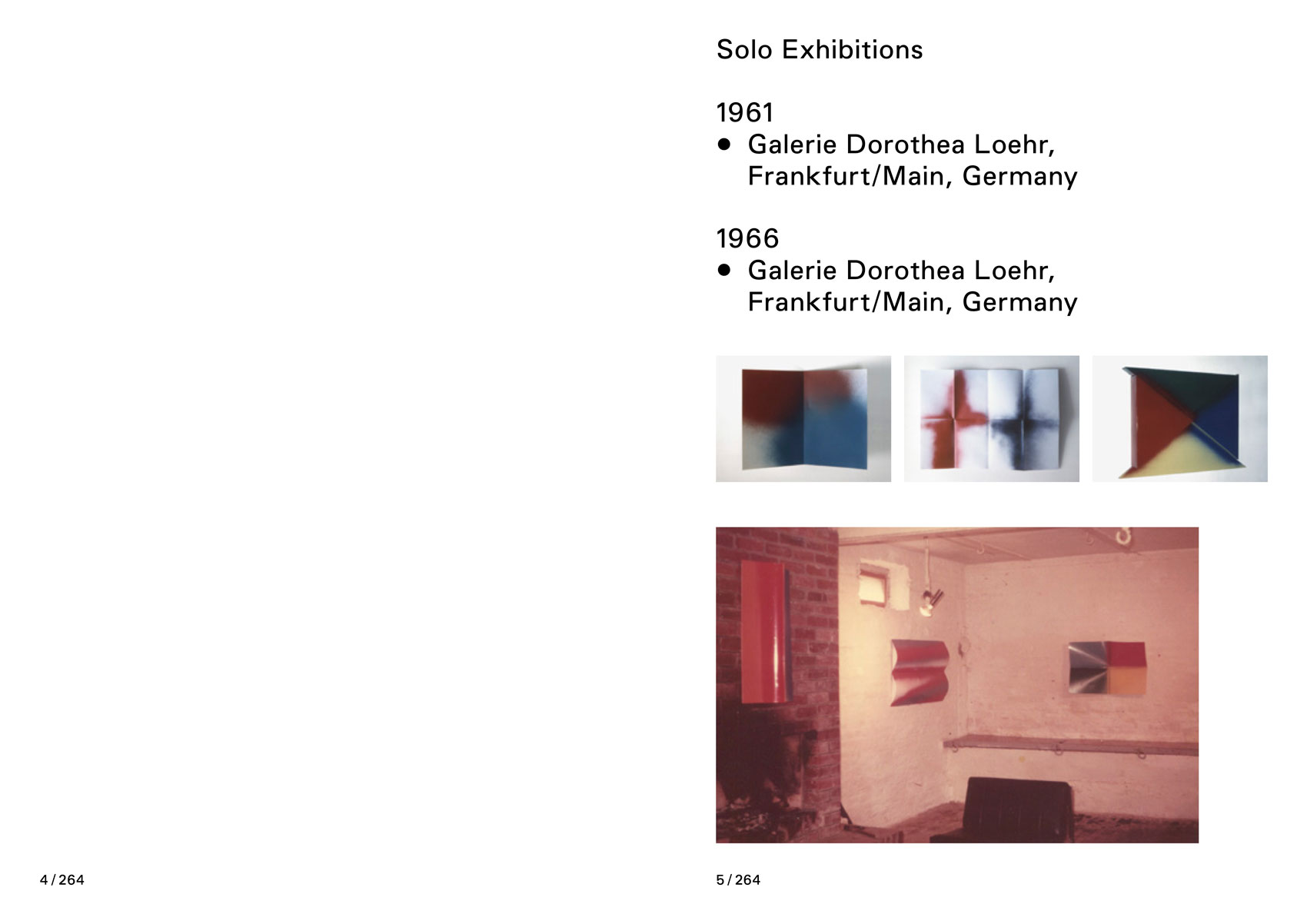
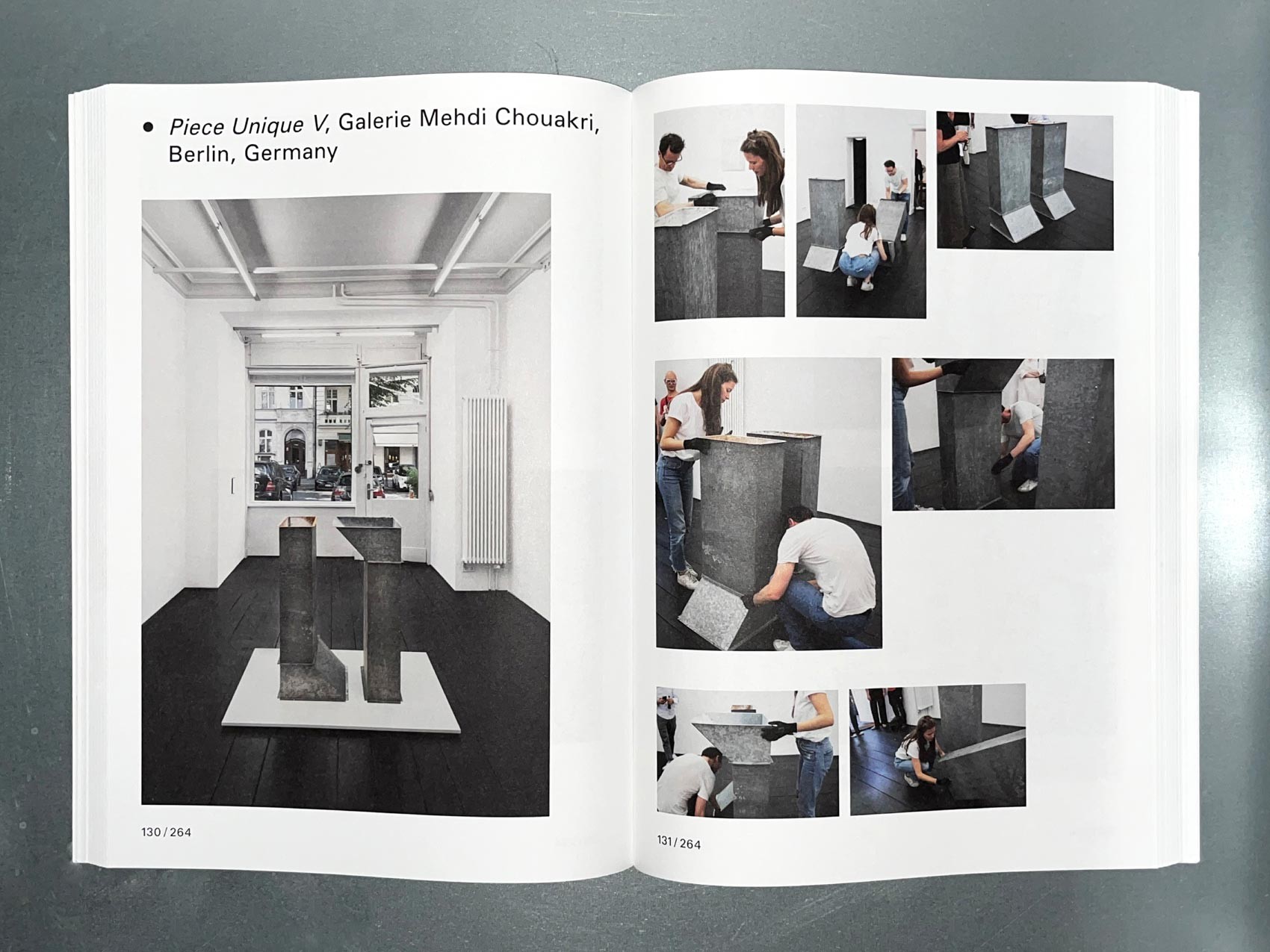
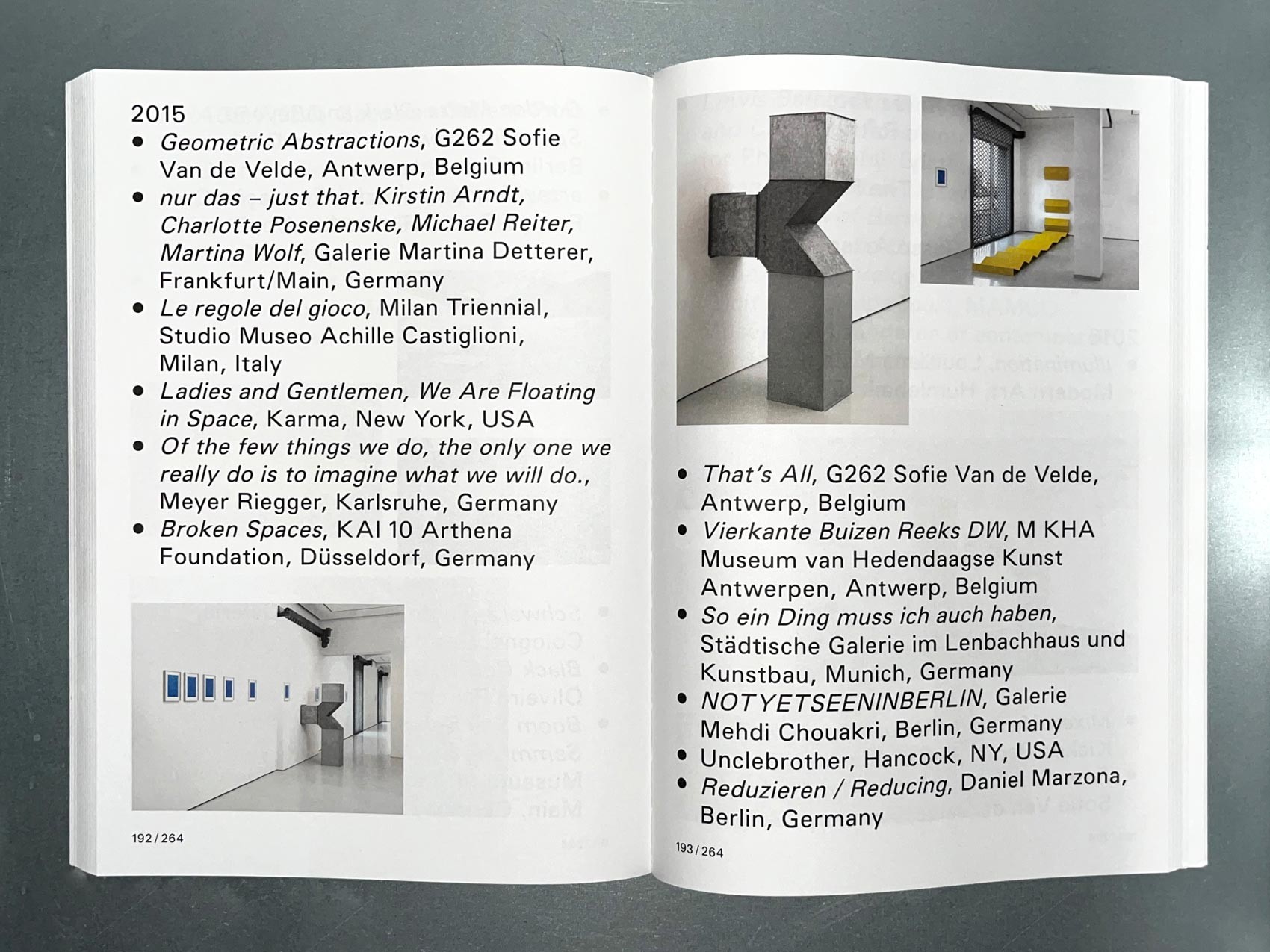
Conceived as a visual résumé, Installation Views provides both a comprehensive overview of Charlotte Posenenske’s solo exhibitions and a record of her numerous group shows. The book features an essay written by curator Erlend Hammer on the role of documentary photographs in the circulation of works of art.
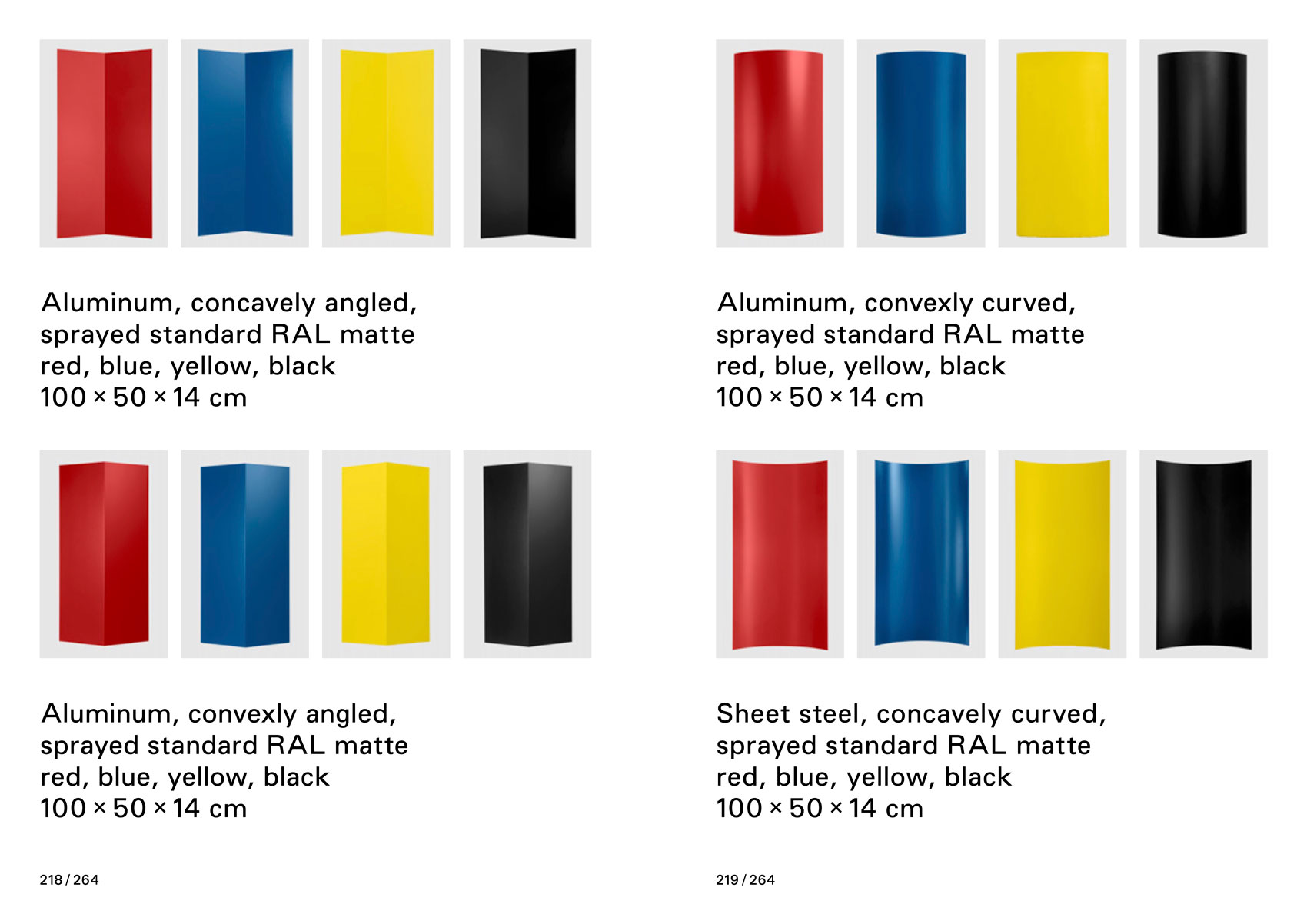
The book was published in conjunction with the eponymous show at the Haugar Art Museum in Tønsberg, Norway—the first full-scale presentation of the artist’s oeuvre in Scandinavia. The exhibition showcased works from all the artist’s major series of modular sculpture. Consisting of works made over the course of less than 12 months, between 1967 and 1968, preceding the abrupt end to Posenenske’s career as an artist, the exhibition had the character of a snapshot. We are left wondering whether her withdrawal from the art world was a logical or necessary consequence of the development of the series. What are we to do with Posenenske’s assertion that art is powerless to effectively change society for the better?