This small anthology reviews some of the central themes of Diego Marcon’s research: from the role of the display in exhibitions to his relationship with cinema, from the use of special effects and animatronics to the sense of community established through his work. Glassa accompanies the exhibition of the same name designed by the artist for the spaces of the Centro per l’arte contemporanea Luigi Pecci in Prato.
Strata raccoglie 37 conversazioni con artisti il cui lavoro ha dato un contributo significativo alla scena artistica italiana e internazionale a partire dal 2000. Questo libro è il resoconto personale di una serie di incontri, amicizie e relazioni professionali che Vincenzo de Bellis e Alessandro Rabottini hanno coltivato negli ultimi vent’anni.
Strata compiles 37 conversations with artists whose work has made a significant contribution to the Italian and international art scene since 2000. This book is the personal account of a number of encounters, friendships, and professional relationships that Vincenzo de Bellis and Alessandro Rabottini have nurtured over the past twenty years.
Pardon Façade documents the artistic output of Luca Monterastelli, showcasing almost all of the sculptures and installations that he produced between 2011 and 2022. Across four chapters—corresponding to four solo shows that he staged in Milan, Otegem, Antwerp, and Naples—the publication provides the first overview of the artist’s work.
More than half a century after its premiere, Yvonne Rainer, in collaboration with choreographer and dancer Emily Coates, directed the 2019 revival of her 1965 performance Parts of Some Sextets. This book poses questions about the trajectories of artworks, performers, and audiences, all while tracing the life—and afterlife—of a dance.
How does technology organize life? This book documents and reflects on the exhibition Proof of Stake: Technological Claims at Kunstverein in Hamburg, curated by Simon Denny and Bettina Steinbrügge. It brings together a unique group of artists and scholars who investigate the technological apparatuses and power relations of organized life.
Edited by Samson Young
Texts by Eric Schuldenfrei, Hsieh Feng-rong, and Katherine Adams
Designed by Lin Guan-ming
Co-published with New Taipei City Art Museum
2026, English / Chinese, hardcover, 19 × 26 cm, 168 pages
ISBN 979-12-80579-97-3
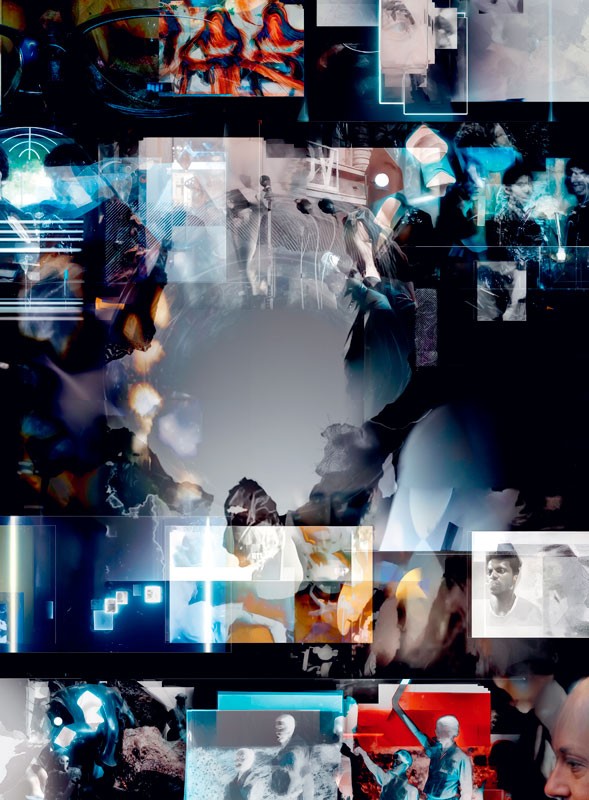
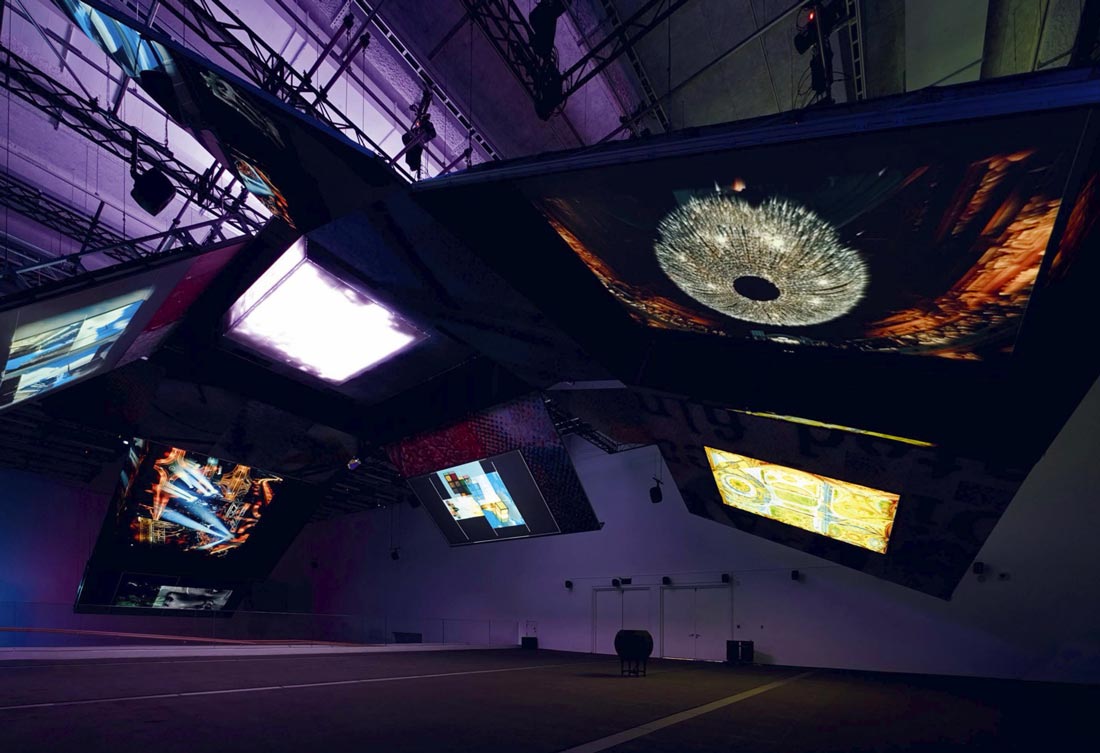
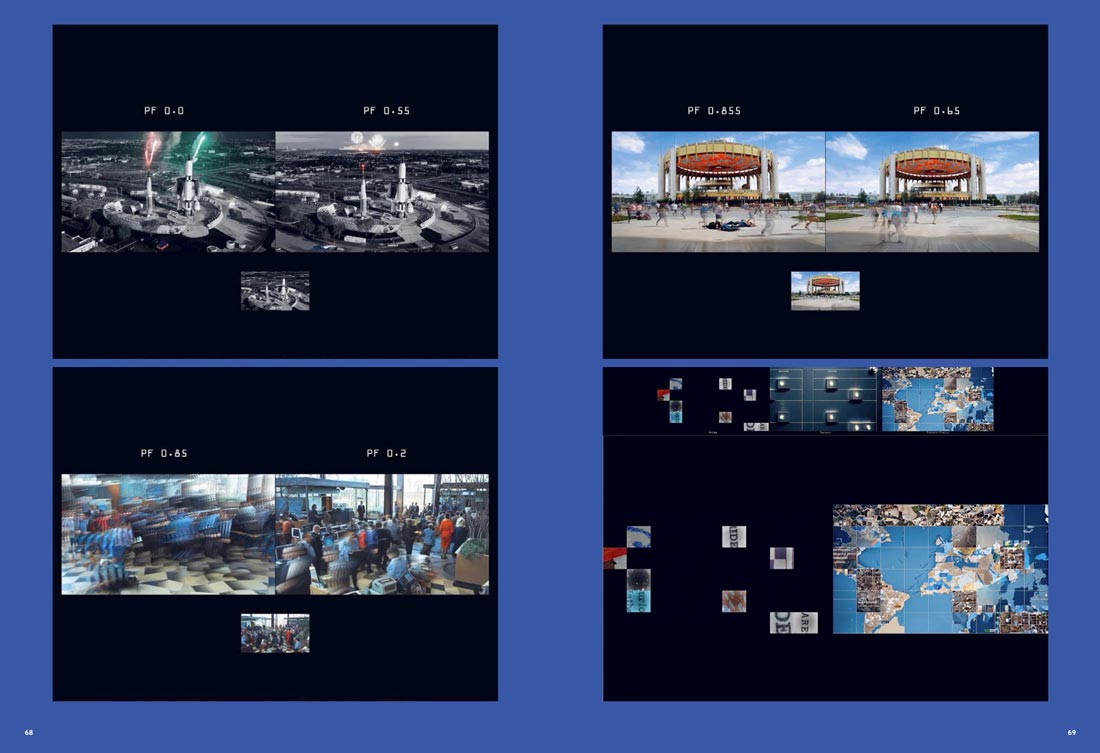
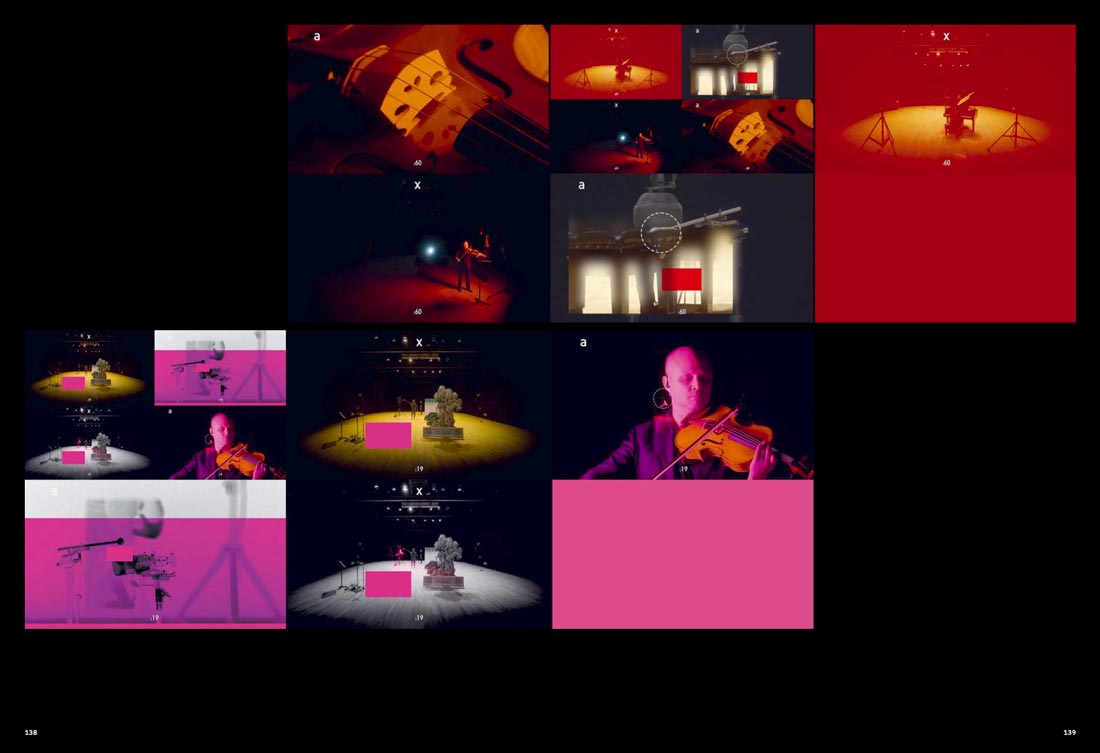
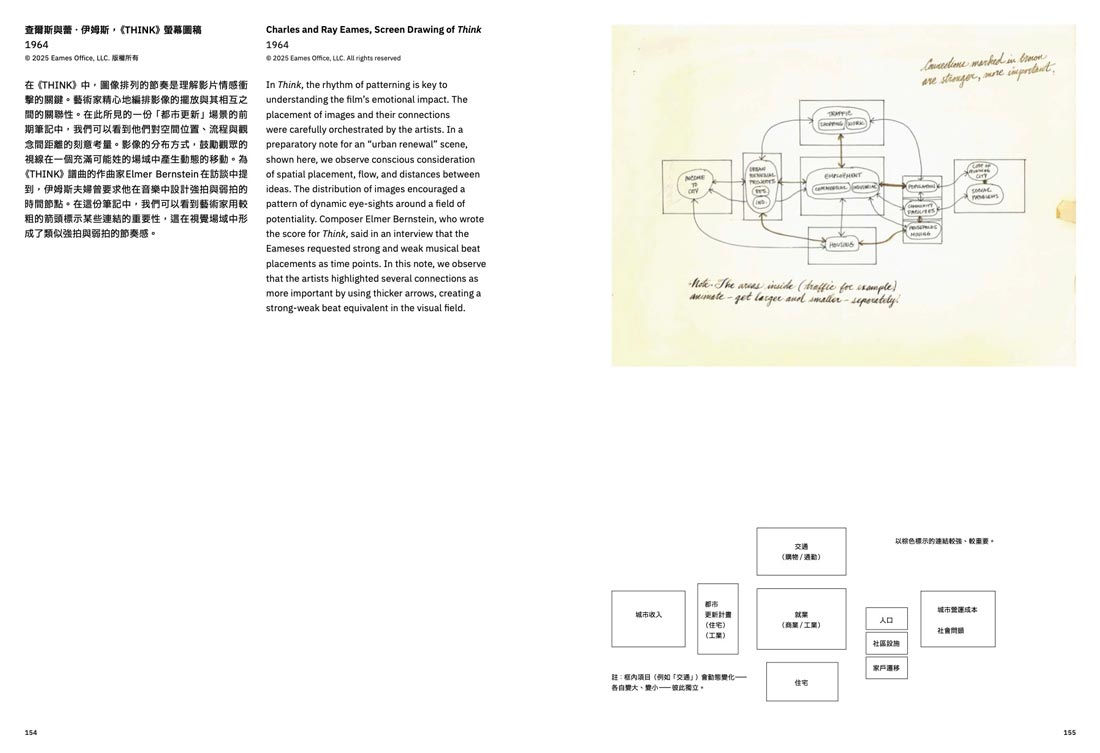
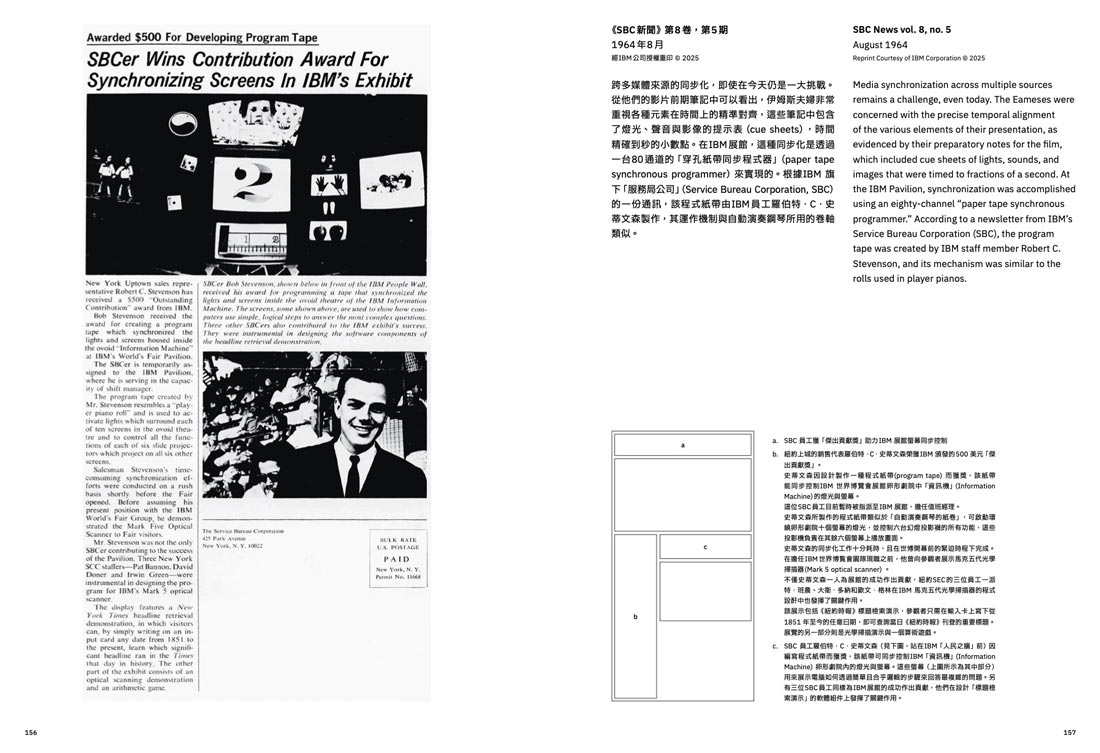
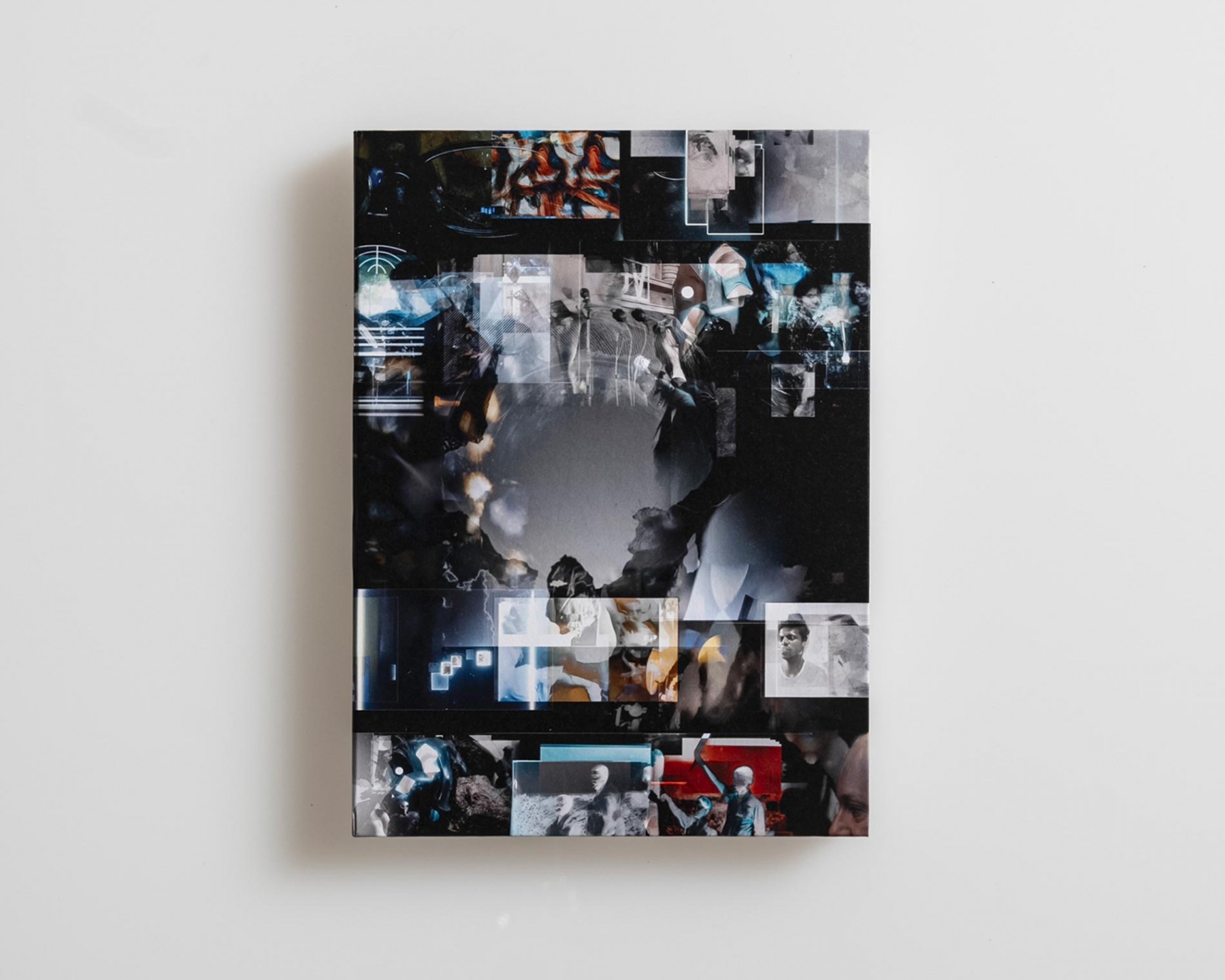
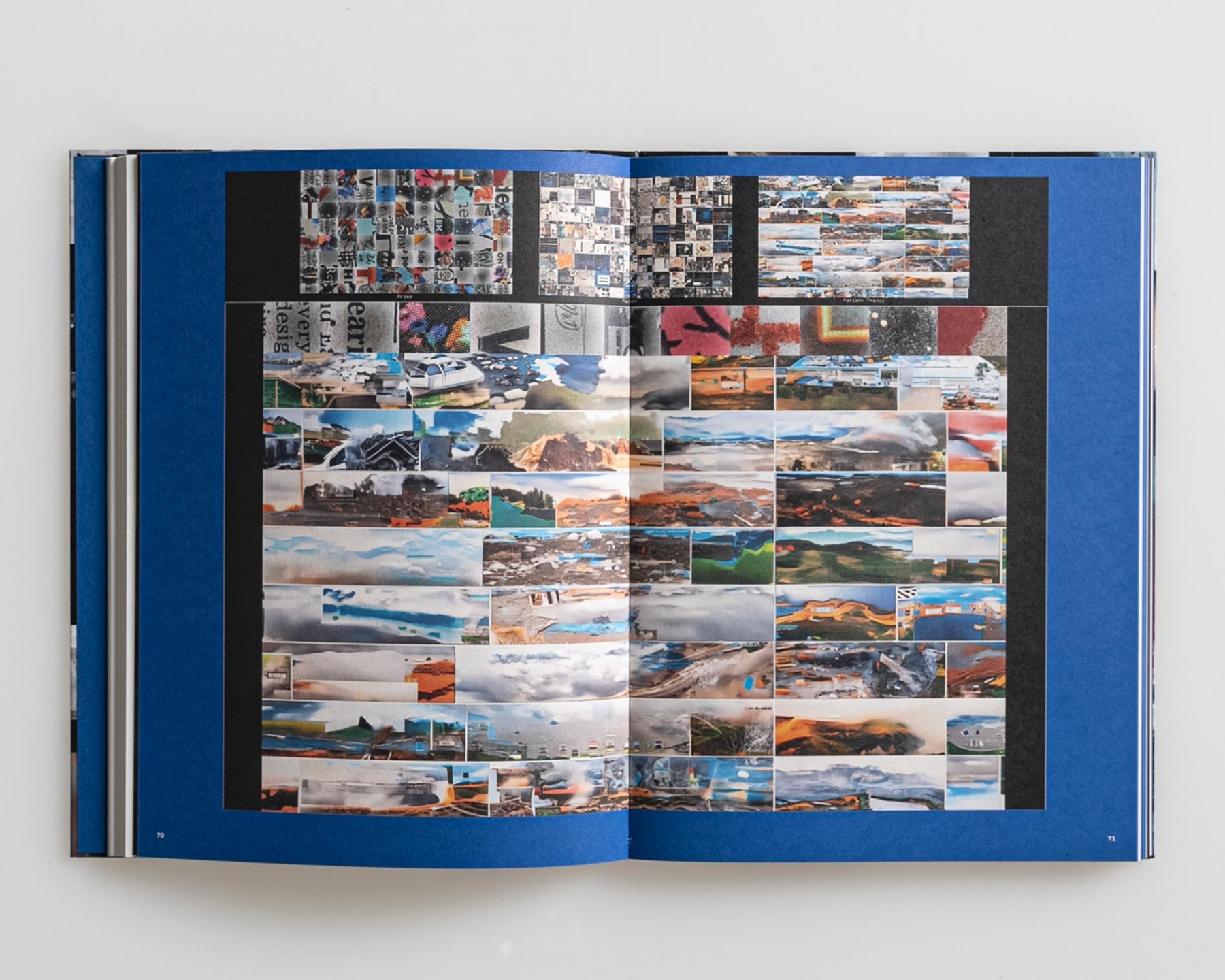
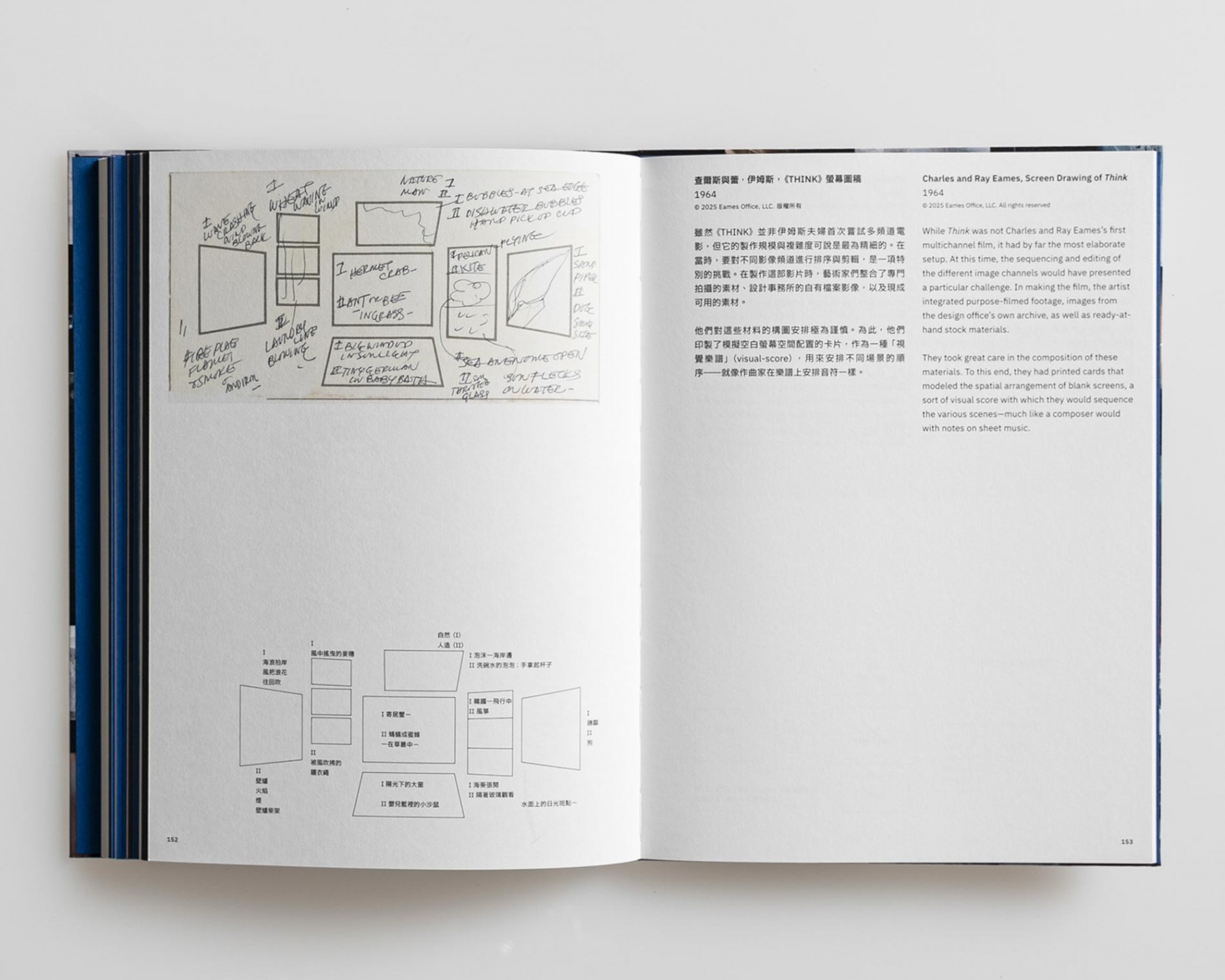
Pavilion by multimedia artist Samson Young explores the legacy of the film THINK, created by Charles and Ray Eames for the IBM Pavilion at the 1964 New York World’s Fair. At the dawn of the computer age, THINK pictured computers as models of how the human mind both receives and processes information, immersing audiences in a dynamic stream of images, sounds, and ideas. Taking as a point of departure THINK’s multiscreen setup and its distinctive orchestration of audio-visual rhythm, Pavilion revisits this early precursor to database cinema and reflects upon the optimism and apprehension that shaped its cultural context, at a time when generative AI has now exponentially increased the scale and speed of data patterning. Pavilion integrates filmed and archival material, and uses generative AI to composite footage iteratively. It features new choral compositions created by the artist for the occasion and performed by members of the Taipei Male Choir, presented in a multi-channel soundscape designed by Hsieh Hsien Te at the Taiwan Sound Lab.
This catalogue is published to coincide with the Pavilion exhibition, part of the NTCAM COMMISSION, a biennial commissioning program organized by the New Taipei City Art Museum. Each edition sees an internationally recognized artist or collective being invited to create new works specifically for one of the museum’s most challenging exhibition spaces.
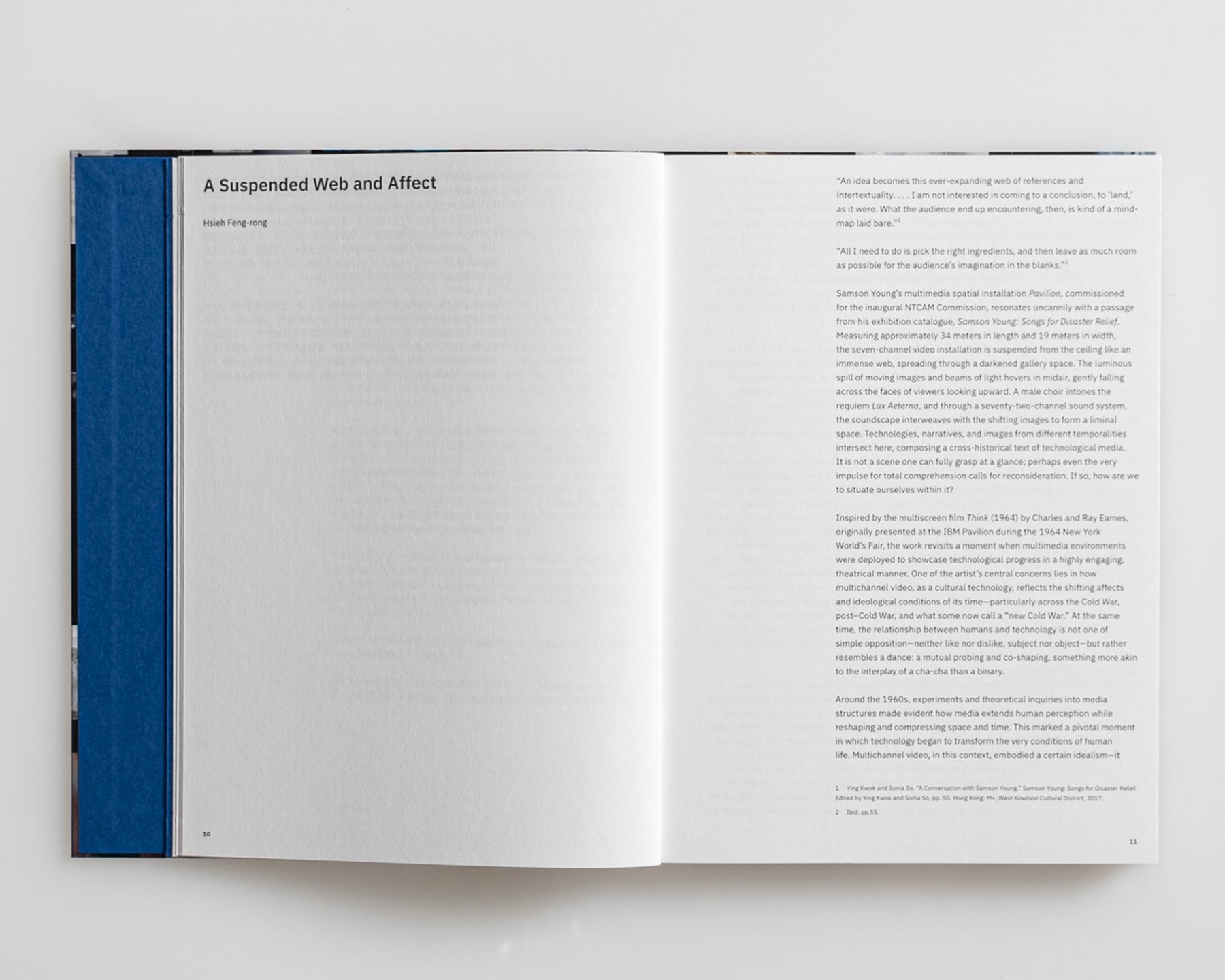
Bringing together new essays by curator Hsieh Feng-rong and architect-scholar Eric Schuldenfrei, author of the monograph The Films of Charles and Ray Eames, the volume also includes two interviews conducted by curator Katherine C. M. Adams. Focusing on the artist’s approach to chance operation and computation, these conversations offer further insight into the work.