This new major monographic publication on the Ghanian artist documents the work that transformed sites and repurposed buildings in his native town of Tamale to transformative outcomes rooted into the idea of art as a tool of understanding, rebalancing, and advancement.
For life and limbs, Austrian artist and curator Anna-Sophie Berger has assembled a group of works, from Arakawa and Gins to Lyle Ashton Harris, that register the body as a habitat that can be imaginatively stretched, altered, modified, adorned, replicated or destroyed.
This two-volume catalog, curated by Andrea Bellini and the New York-based collective DIS, is the outcome of the 2021 edition of the Biennale de l’Image en Mouvement (BIM’21), presented at the Centre d’Art Contemporain Genève.
Christian Frosi was long considered one of the most inspiring and promising Italian artists debuting in the early 2000s. That is until just over ten years into his career, when he decided to make himself unreachable and remove himself from art history, its customs and figures.
Featuring new contributions by Sitara Abuzar Ghaznawi and a wealth of commissioned texts and writings, this book is conceived as a continuation of the exhibition held at Cabaret Voltaire, Zurich and, in a modified form, at Swiss Institute, New York.
In a context in which institutions are facing a surge of public scrutiny, the publication revisits the artistic practice of institutional critique to ask what it means today, and to consider its ability to respond to the urgent social, political, and economic issues of our time.
Edited by Lorenzo Giusti and Valentina Gervasoni
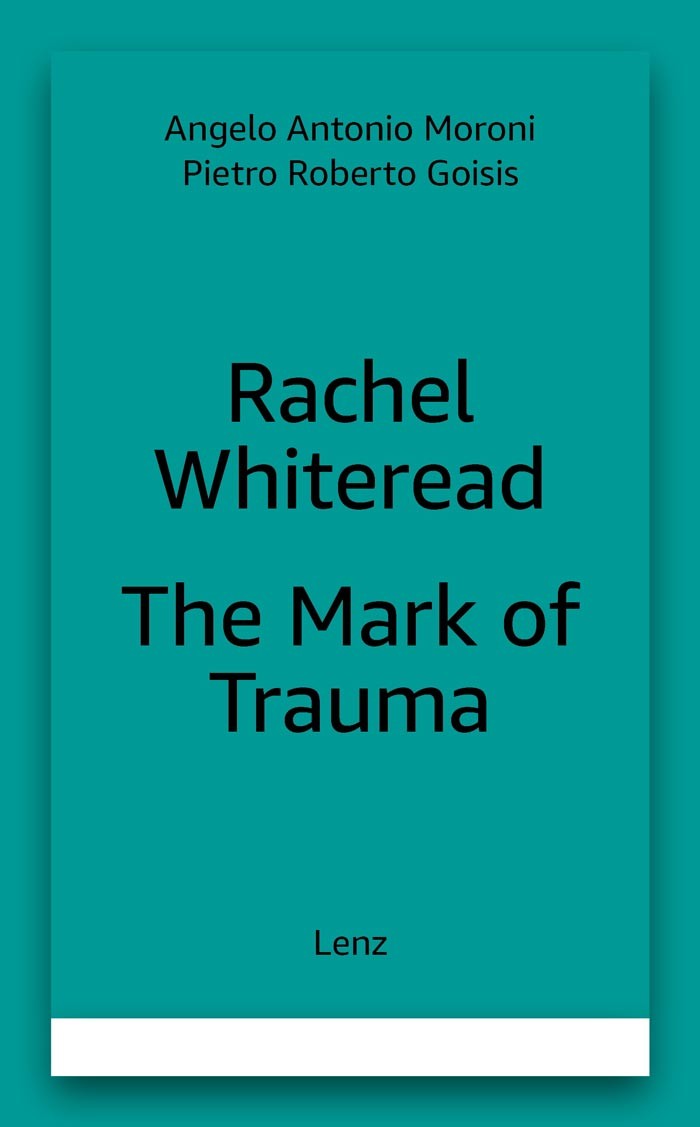
Texts by Pietro Roberto Goisis, Antonio Moroni, and Rachel Whiteread
Designed by Lorenzo Mason Studio
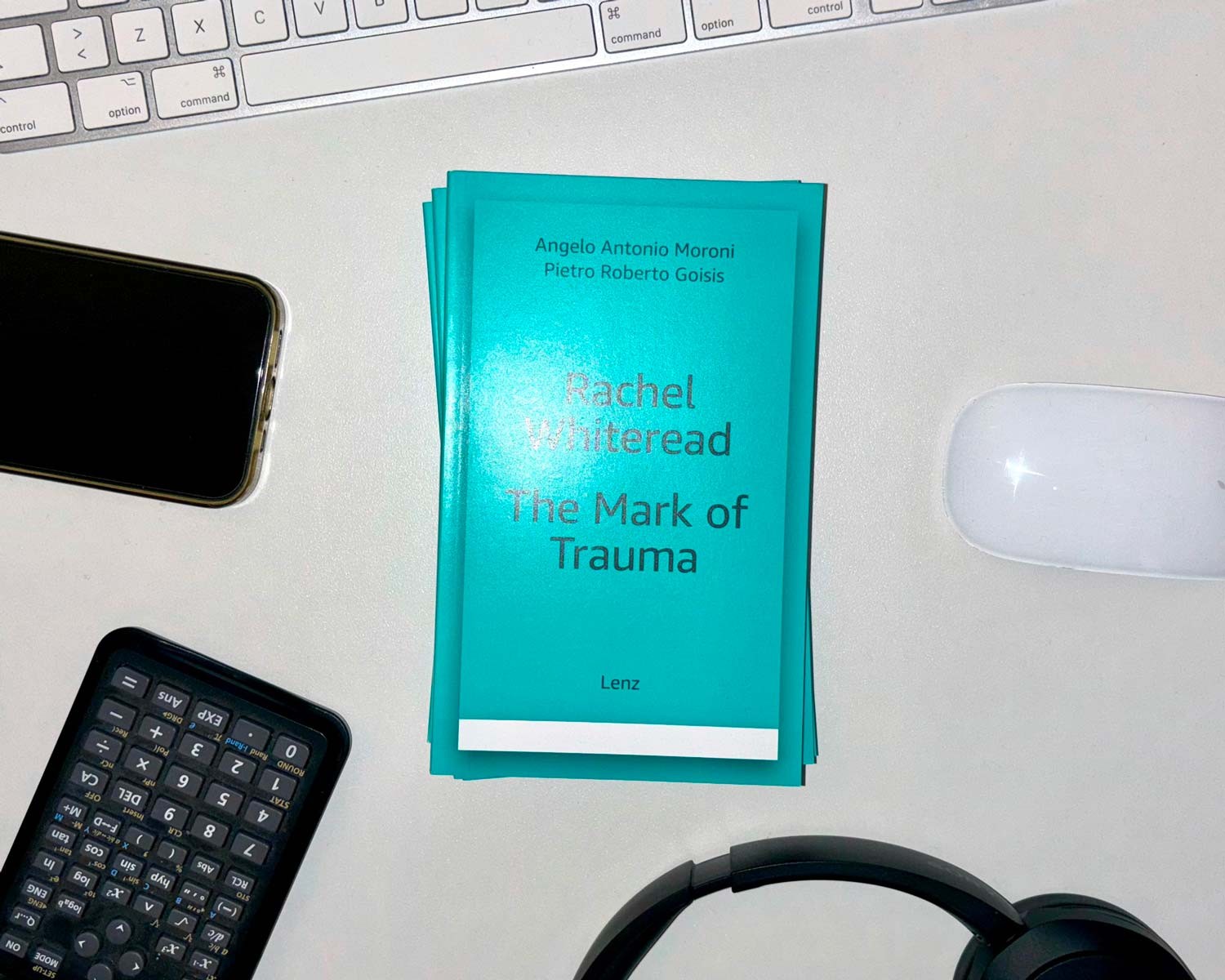
2024, English / Italian, softcover, 11 x 17.7 cm, 96 pages
ISBN 979-12-80579-38-6
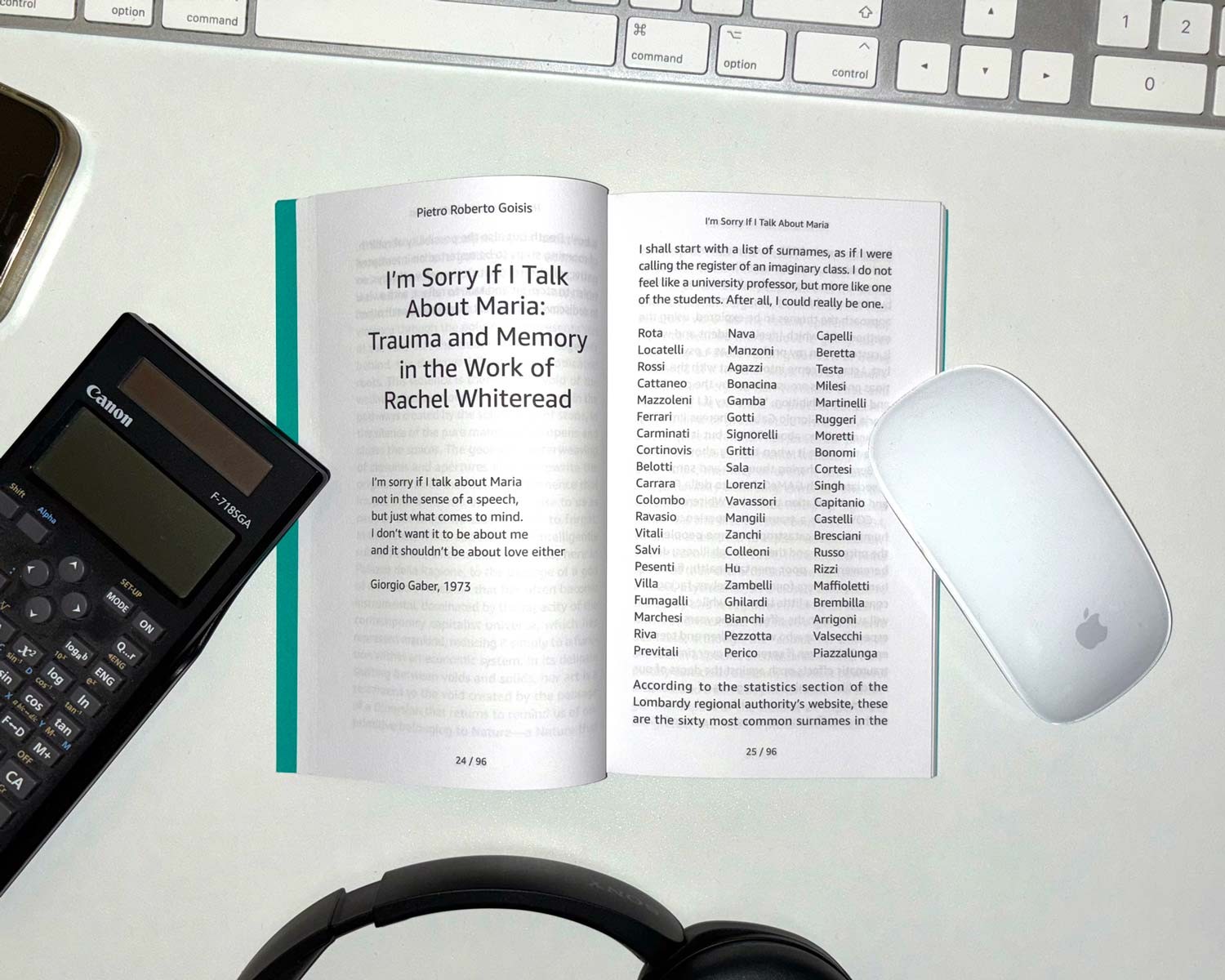
The Mark of Trauma is the first book in a series of short essay collections inspired by the site-specific art projects specially conceived for GAMeC at Palazzo della Ragione, a symbolic, time-honored location within the city of Bergamo that embodies the values of community life and participation. Rachel Whiteread was asked to name an author who interests her—be it a researcher, a philosopher or a scholar—and whose thinking could be said to underpin the project, with a view to finding a path through the complexities of the present day, starting from the work produced but without necessarily lingering on it. Through the words of psychoanalysts Angelo Antonio Moroni and Pietro Roberto Goisis, the book highlights the main characteristics of the collective trauma that gave rise to Rachel Whiteread’s project …And the Animals Were Sold.
For the artist, the exhibition afforded the first opportunity to express herself artistically on the dramatic and alienating experience of the Covid-19 pandemic. Whiteread was so struck by her first visit to Bergamo—one of the first cities to experience a return to pre-pandemic life—that she began thinking about her work as being bound up with the tragic, uncontrolled spread of the pandemic there. As such, the artist wanted to create a close relationship with the Bergamo area and its history, as well as with the architecture of the exhibition venue. Similarly, by adopting the perspective of the city that was the first in the West to experience the sense of vulnerability and collective loss associated with the pandemic, Goisis and Moroni alternate between personal recollection and analytical reflection, building up a composite picture, awash with explorations and memories, which unveils the psyche of an entire geographical region, the substance of this place, of the society here and of its influences.