Vogliamo tutto. Pratiche culturali e lavoro è una pubblicazione sul lavoro all’interno del contesto socio-culturale in evoluzione: dagli impatti della rivoluzione industriale, al declino post-industriale, fino alla rapida accelerazione dell’era digitale.
Divine Drudgery is an artist book with collages and artworks by James Richards and Leslie Thornton, and contributions by artists, writers and poets centred around liminality and the aesthetics and politics of the invisible.
The book is the first comprehensive monograph on the polymorphous work of Athanasios Argianas. It is published on the occasion of Hollowed Water, a major solo exhibition at Camden Arts Centre in 2020 and ARCH, Athens, in 2021.
Through exquisite craftsmanship, and with reference to romantic nationalism, Ann Böttcher explores how aesthetic and political projections characterize notions of nature, and how such conceptions are taken up by countries, political movements, and other institutions.
Voices (Towards Other Institutions) is the final act of the coral, multiform, articulated, two-year-long experiment carried out by Open, the Russian Federation Pavilion at the 17th International Architecture Exhibition.
The book deals with Diego Marcon’s practice through the analysis of three film and video works. Monelle (2017), Ludwig (2018), and The Parents’ Room (2020) are his most recent and complex projects, and they are all emblematic of central aspects of his production.
Edited by Lorenzo Giusti and Valentina Gervasoni
Texts by Pietro Roberto Goisis, Antonio Moroni, and Rachel Whiteread
Designed by Lorenzo Mason Studio
2024, English / Italian, softcover, 11 x 17.7 cm, 96 pages
ISBN 979-12-80579-38-6
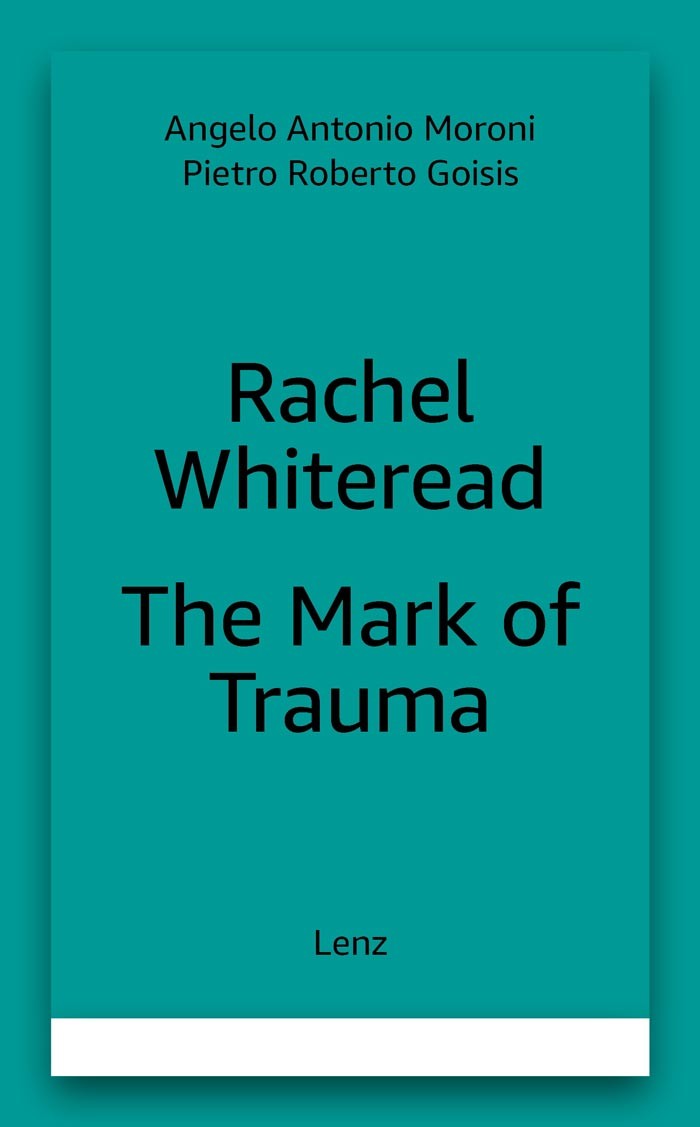
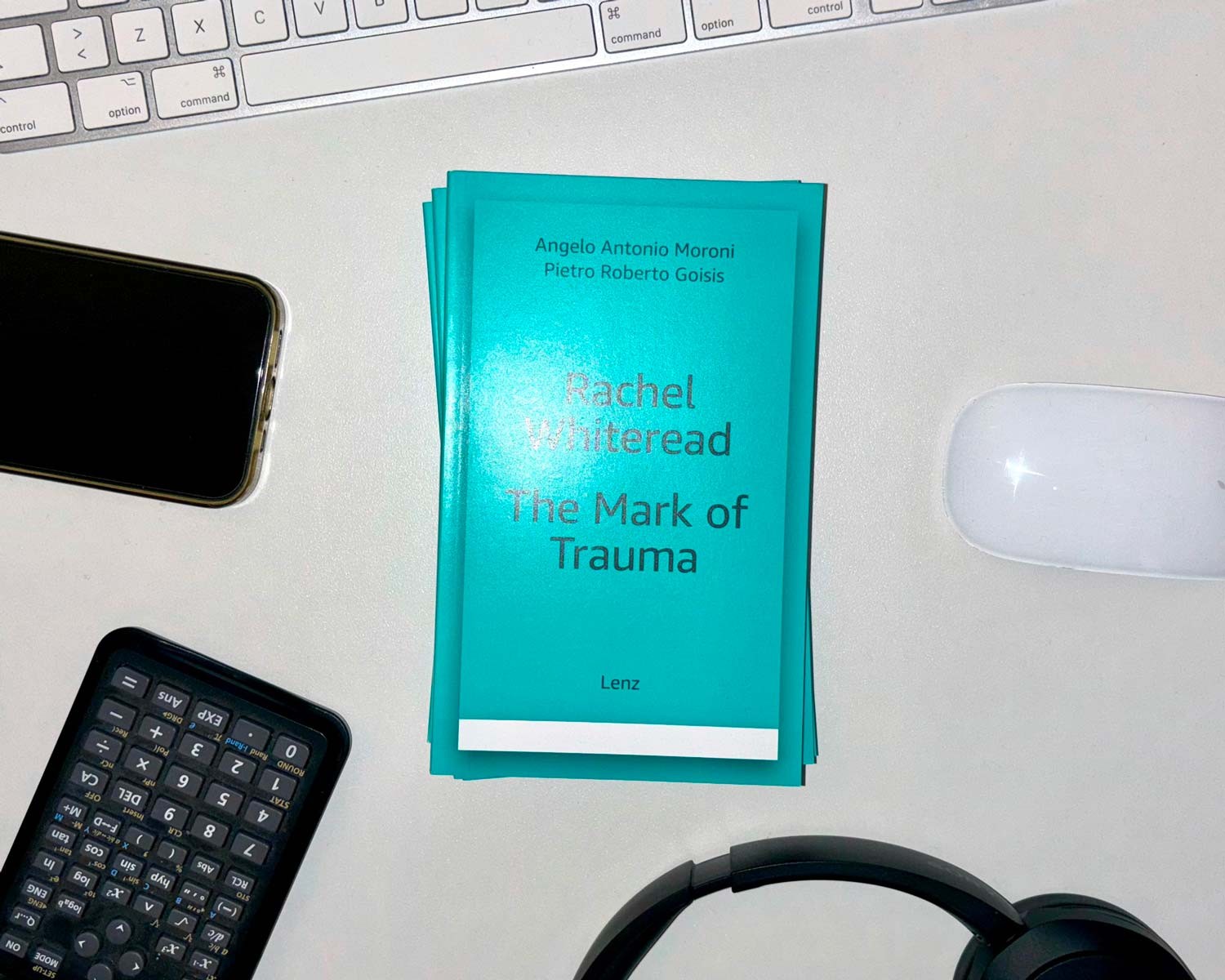
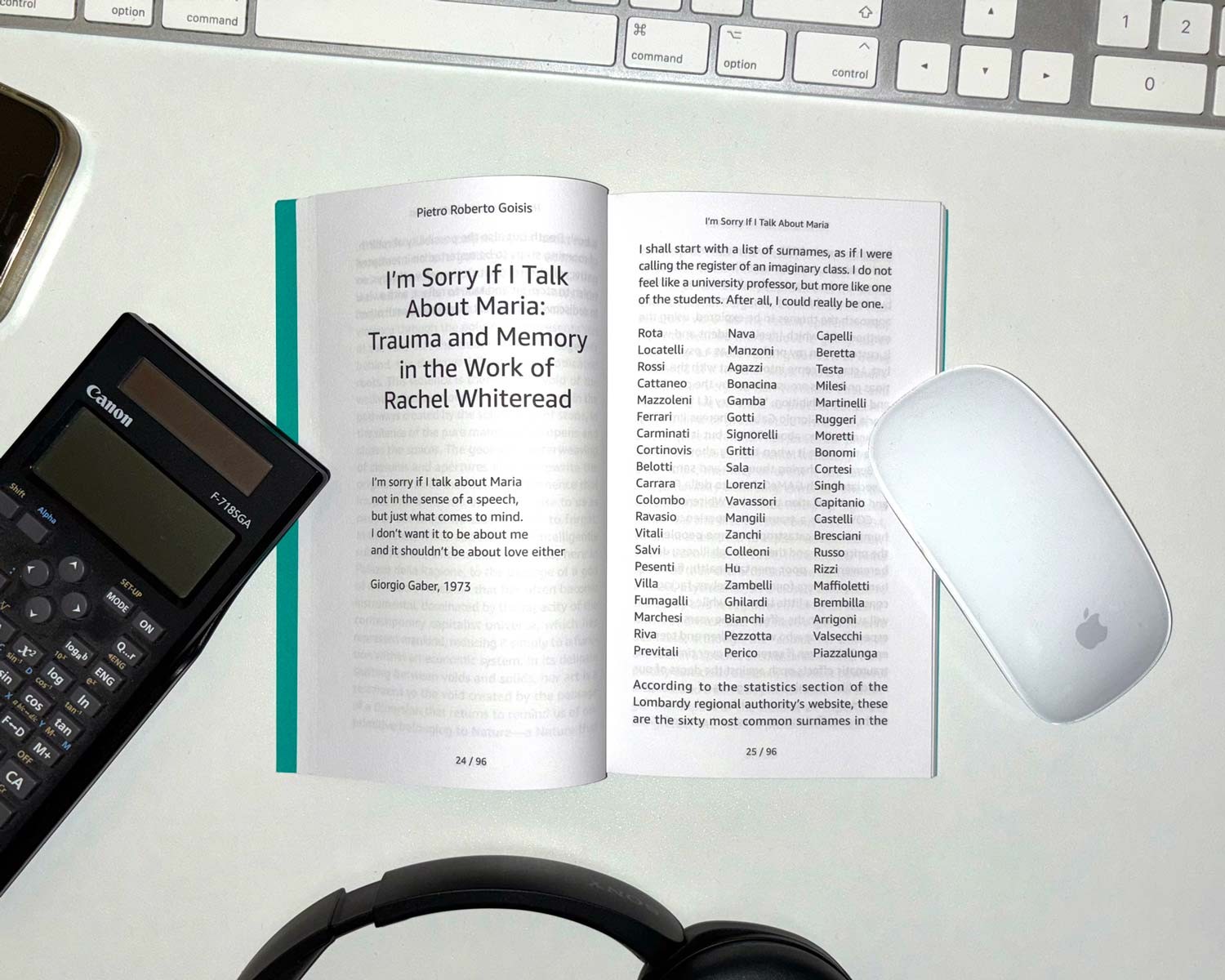
The Mark of Trauma is the first book in a series of short essay collections inspired by the site-specific art projects specially conceived for GAMeC at Palazzo della Ragione, a symbolic, time-honored location within the city of Bergamo that embodies the values of community life and participation. Rachel Whiteread was asked to name an author who interests her—be it a researcher, a philosopher or a scholar—and whose thinking could be said to underpin the project, with a view to finding a path through the complexities of the present day, starting from the work produced but without necessarily lingering on it. Through the words of psychoanalysts Angelo Antonio Moroni and Pietro Roberto Goisis, the book highlights the main characteristics of the collective trauma that gave rise to Rachel Whiteread’s project …And the Animals Were Sold.
For the artist, the exhibition afforded the first opportunity to express herself artistically on the dramatic and alienating experience of the Covid-19 pandemic. Whiteread was so struck by her first visit to Bergamo—one of the first cities to experience a return to pre-pandemic life—that she began thinking about her work as being bound up with the tragic, uncontrolled spread of the pandemic there. As such, the artist wanted to create a close relationship with the Bergamo area and its history, as well as with the architecture of the exhibition venue. Similarly, by adopting the perspective of the city that was the first in the West to experience the sense of vulnerability and collective loss associated with the pandemic, Goisis and Moroni alternate between personal recollection and analytical reflection, building up a composite picture, awash with explorations and memories, which unveils the psyche of an entire geographical region, the substance of this place, of the society here and of its influences.