This book accompanies 5 Works, Lydia Ourahmane’s first institutional solo show in Italy, staged at the Nicoletta Fiorucci Foundation in Venice and curated by Polly Staple, during the 61st Venice Biennale, and includes newly commissioned texts and images that further contextualize the artist’s practice and work.
Museums of Tears extends Francesco Vezzoli’s 2024 exhibition at Museo Correr, Venice, combining historical works and new commissions to explore antiquity, emotion and illusion. Conceived as an artist’s book rather than a catalogue, it transforms the museum guide into a hybrid archive and portable museum of memory, beauty and mourning.
A project by Fondazione In Between Art Film, edited by Carla Subrizi, Paola Ugolini, and Maria Alicata, this illustrated volume investigates the cinematic, documentary, and video output of women artists and filmmakers operating in Italy in the 1960s and 1970s, situating their research at the intersection of artistic experimentation, politics, society, and technology.
A multifaceted perspective on contemporary sculpture that explores the practices and concepts of the medium through different approaches. The publication interweaves works by Yu Ji, Bronwyn Katz, Dan Lie, Trương Công Tùng, and Luana Vitra, with essays by Federico Giani, Sohrab Mohebbi, Julia Morandeira Arrizabalaga, Chiara Nuzzi, and Anne Reeve.
Suffused with specially conceived collages of the artist’s research materials, notes, and sketches, this is the first monograph on Castelli’s painting and sculpture, with essays by Sarah Crowe and Lillian Davies, and an artist interview by Francesco Manacorda. Published with Castello di Rivoli Museo d’Arte Contemporanea and Kunsthalle Wien.
What if the shadow moved first? From March through May 2026, the exhibition The Second Shadow. Dozie Kanu Mirroring Marc Camille Chaimowicz, with Shared Echoes and Kindred Spirits at Fondazione ICA Milano unfolds online through a series of voices and crossings that shift its gravity. Not an extension. A displacement.
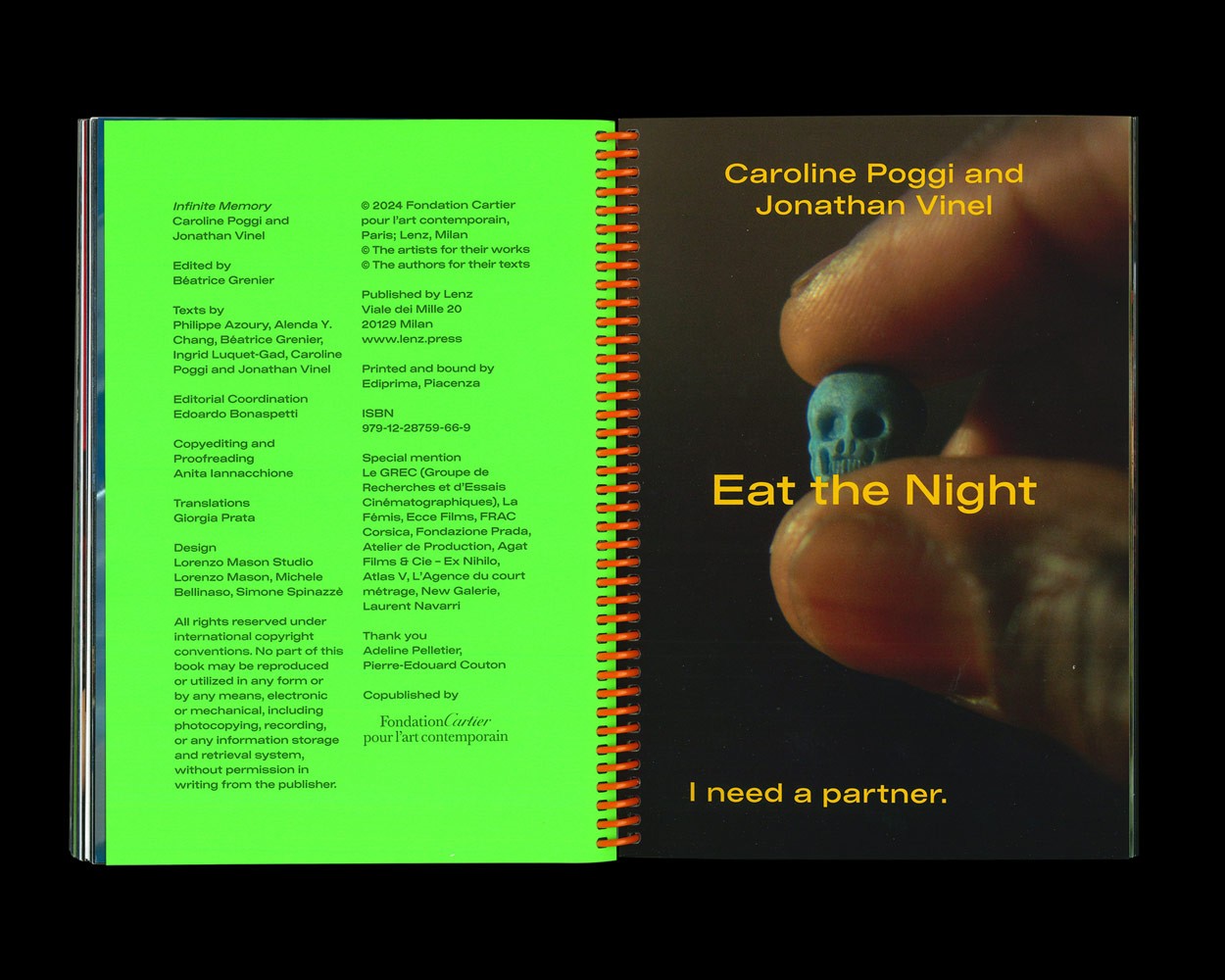
Edited by Béatrice Grenier
Texts by Philippe Azoury, Alenda Y. Chang, Béatrice Grenier, Ingrid Luquet-gad, Caroline Poggi and Jonathan Vinel
Co-published by Fondation Cartier pour l’art contemporain
Designed by Lorenzo Mason Studio
2024, English, 16.8 x 24 cm, 274 pages
ISBN 979-12-80579-66-9
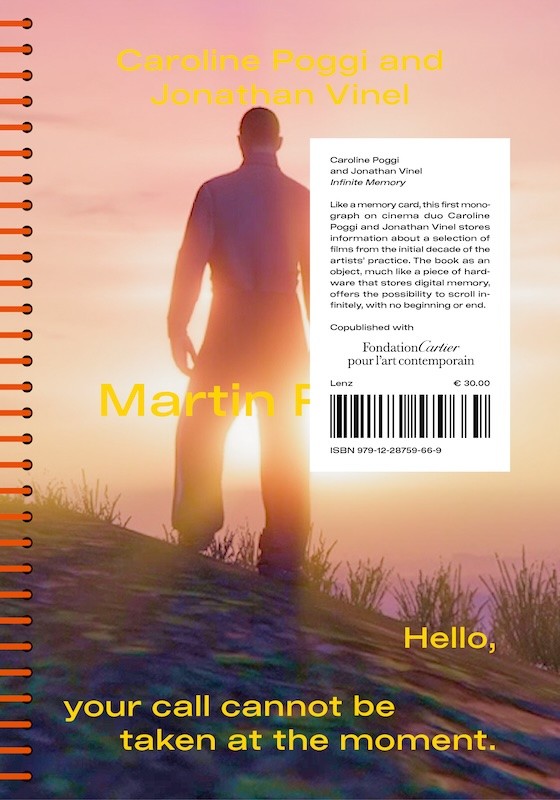
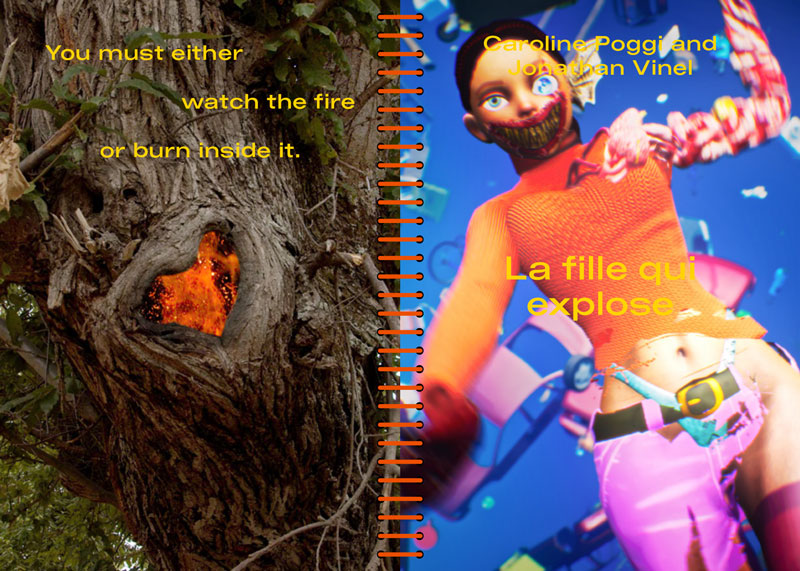
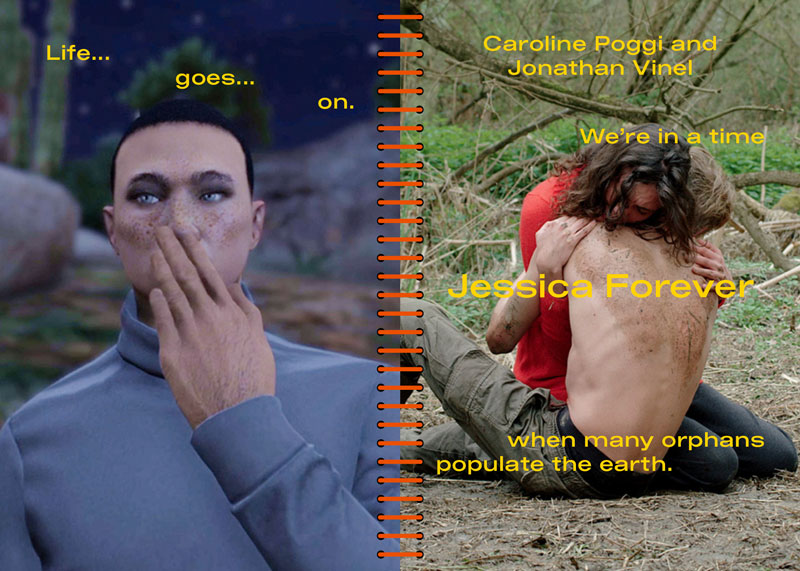
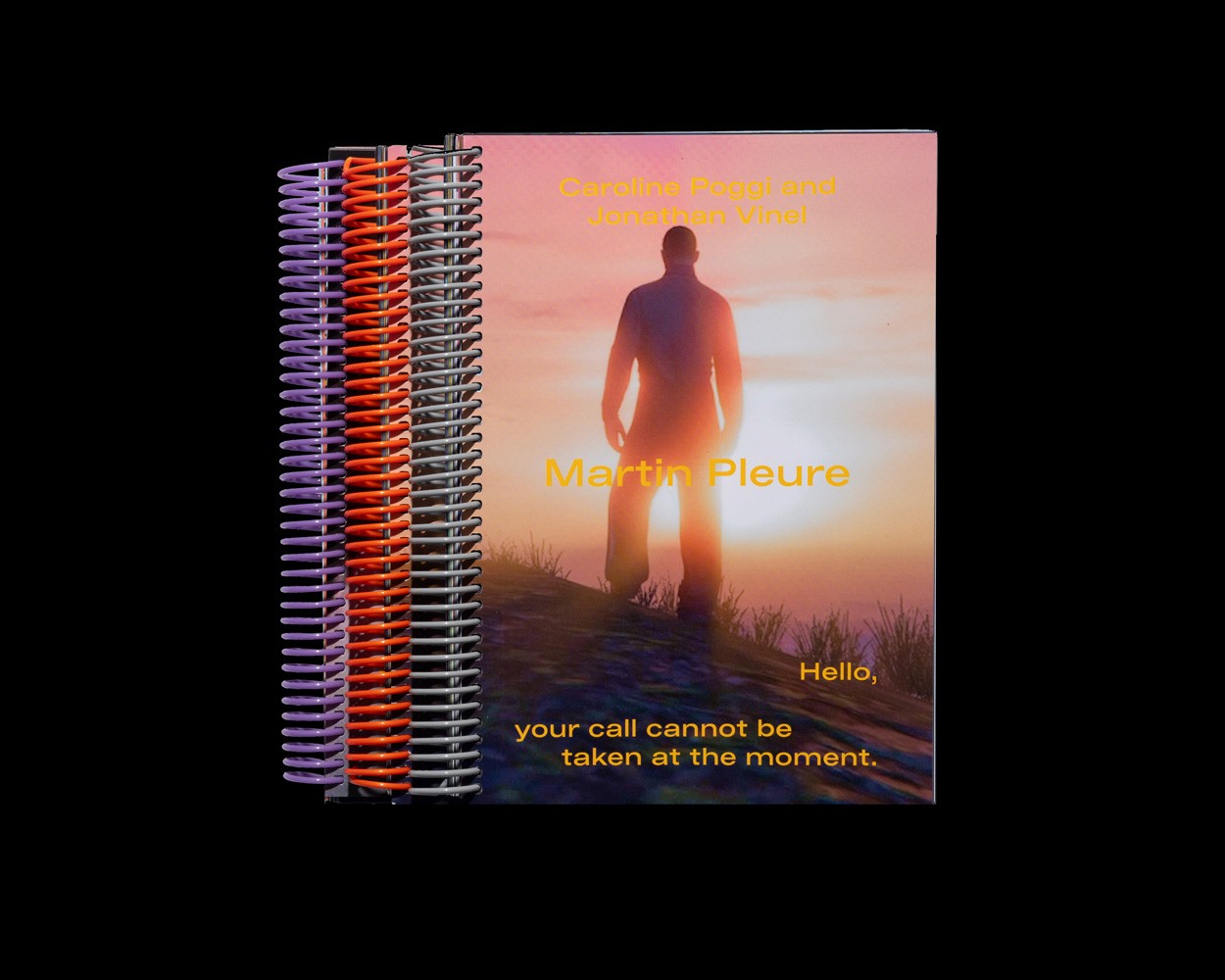
The book is the first monograph of the work of Caroline Poggi and Jonathan Vinel, published in conjunction with the release of the duo’s second feature-length film, titled Eat the Night . Formal experimentation characterises the work of emerging French film-making duo Poggi & Vinel, who employ the languages of video games, archives, and film-making to hybridise genres and break aesthetic conventions. There is ambiguity over the register within which the duo’s work should be situated: is it film, musical score, game or animation?
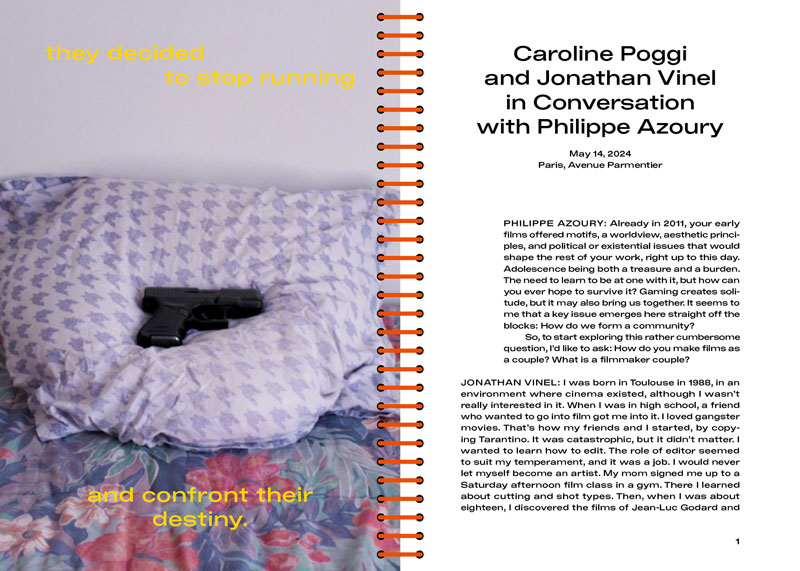
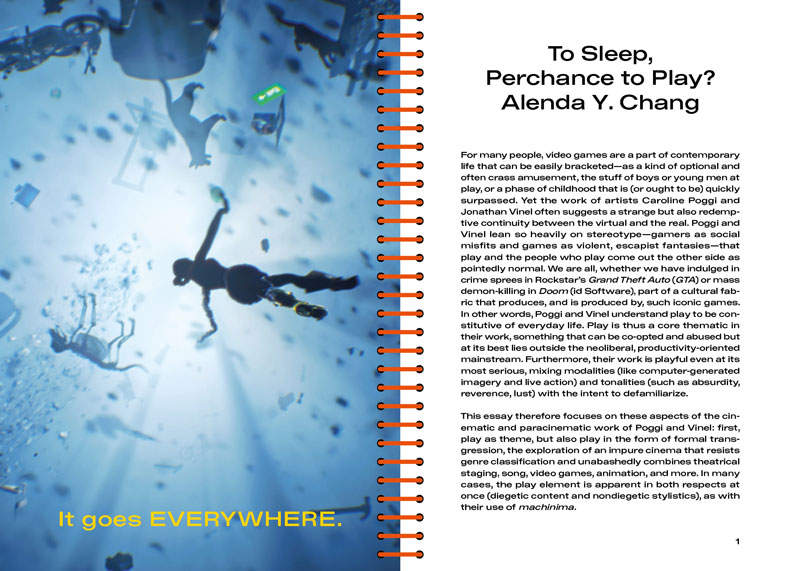
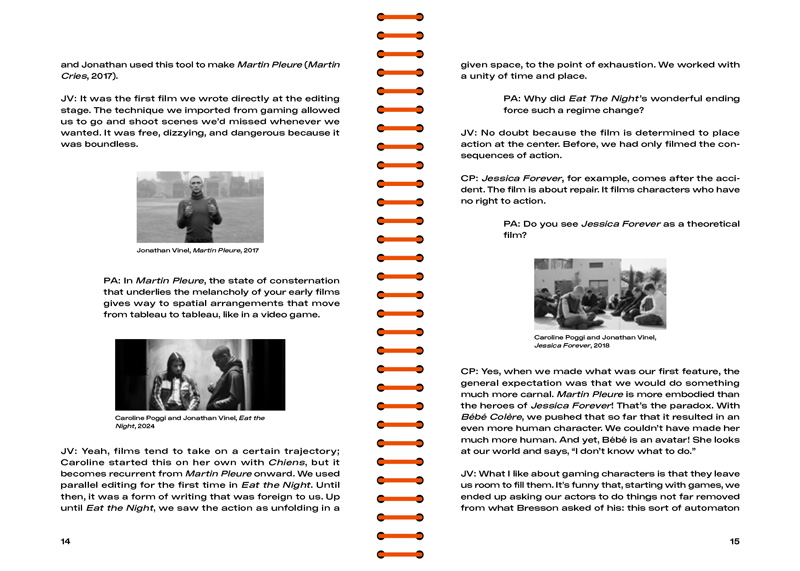
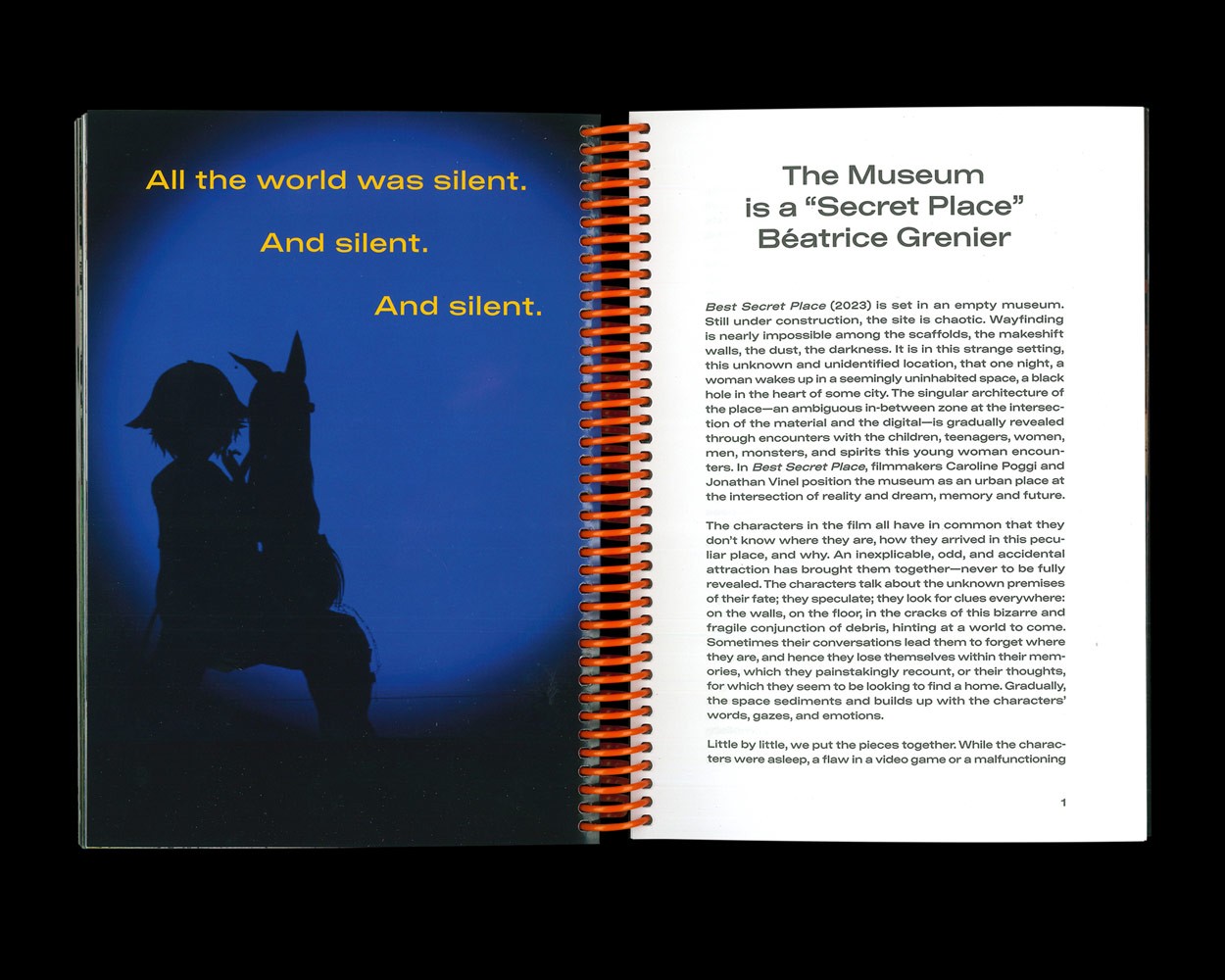
Edited by Béatrice Grenier, considered as an object the book is a formulation of an archive or a record of the duo’s work, encompassing the variety of mediums with which Poggi & Vinel engage, in addition to the overarching question of memory as explored in their practice. Three essays by Alenda Y. Chang, Béatrice Grenier and Ingrid Luquet-gad offer in-depth analyses of the ways in which the work of the duo constitutes a form of preservation through the use and reuse of video-game imagery. Identifying key works and turning points, the book provides a commentary on their particular, ambiguous positioning, somewhere between cinema-video and practice-gaming, and helps to explain why this positioning is critical vis-à-vis contemporary art today. In an interview with Philippe Azoury, the film-makers reflect on the role of community-building both within and outside their films, considering specifically the relationship between the digital characters and the ’real’ characters, and the importance of gaming in acknowledging and understanding other subjectivities.
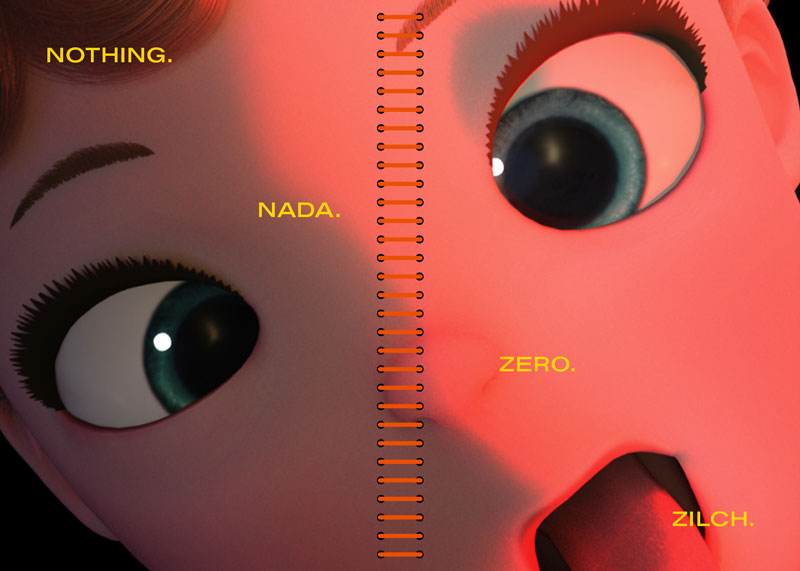
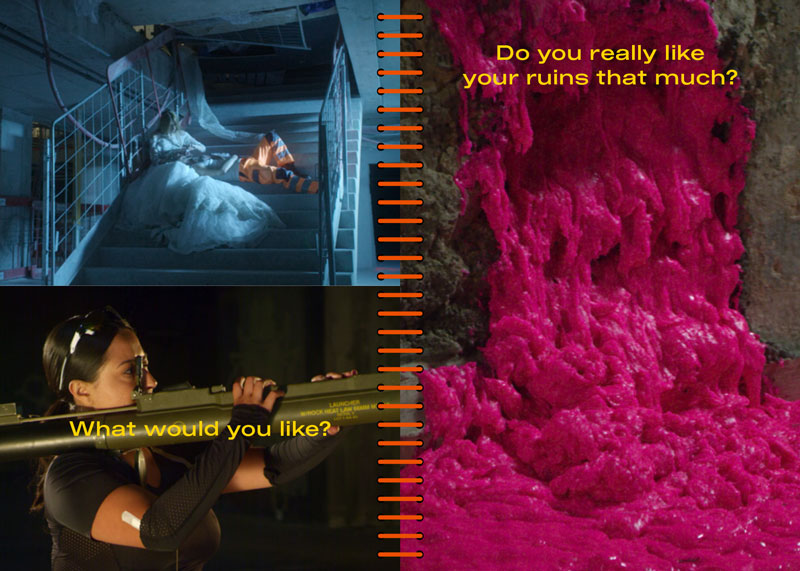
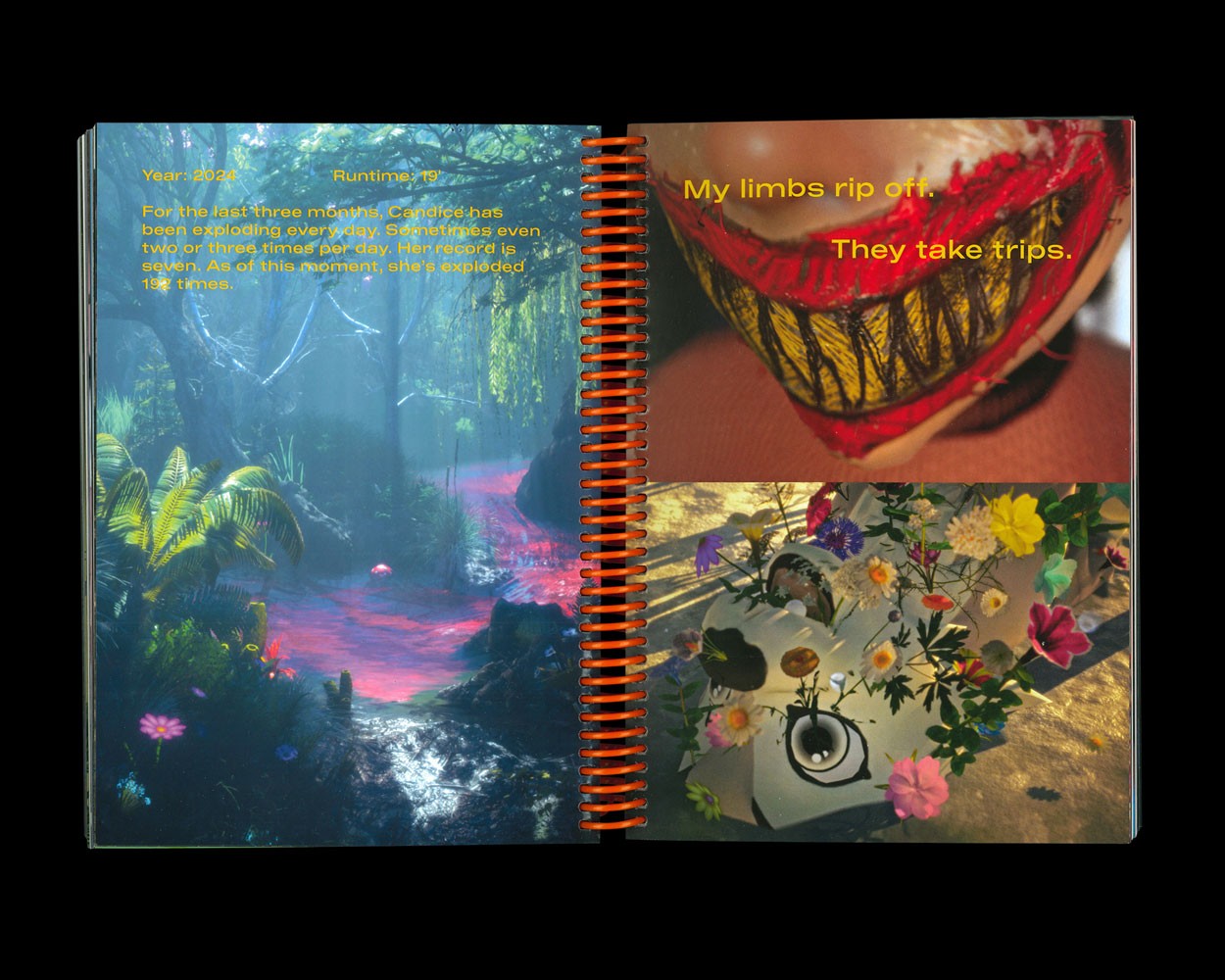
Each film selected for the book is transformed into a photo essay, calling into question the nature of the image—the significance it has when moving or still. Spiral-bound, the book is punctuated by an infinity of potential covers: the object itself has no beginning or end. One can pick off where one left off, or enter the narrative at any point—a formal attempt to transcend the nature of the age-old medium.