Between 1998 and 1999, the London-based art collective BANK operated the Fax-Bak Service. The group’s members proof-read and copy-edited more than 300 press releases by galleries. The publication is the most comprehensive record of this notorious project.
SOLD OUT
Sold Out
Listen
On how The BANK Fax-Bak Service started and how it came to be a book
In the Villa Santo Sospir, Jean Cocteau conceived his pictorial work through accumulation, inspired by Greek mythology and the Mediterranean landscape. Architecture permeates the subjects of Mauro Restiffe from a viewpoint that amplifies and reverberates the simple historical record.
Oh mio cagnetto, is the artist’s first book of writings, conceived as an artwork. It is a collection of 81 little poems that revolve around the missed and mourned figure of a puppy. It intentionally plays on the ambiguity of its nature, as both a book distributed in conventional ways and an art object.
When she started writing the Corona Tales, Chus Martínez had been weighing how people and the media were addressing the outbreak of the virus as an unprecedented disaster. One possible contribution, as curator and writer, would be to write a short story a day…
Edited by Fabian Schöneich
Texts by Lawrence Abu Hamdan, Natasha Ginwala, Ruba Katrib, Andrea Lissoni, Ramona Naddaff,
Fabian Schöneich, Yasmine Seale, Theodor Ringborg, Eyal Weizman
Designed by David Bennewith
Co-published with Bonnier Konsthall
2022, English, hardcover, 19 x 25 cm, 256 pages
ISBN 979-12-80579-08-9
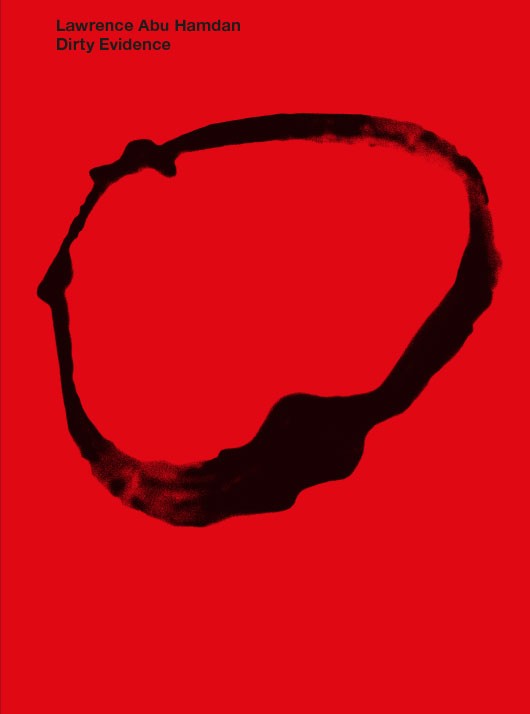
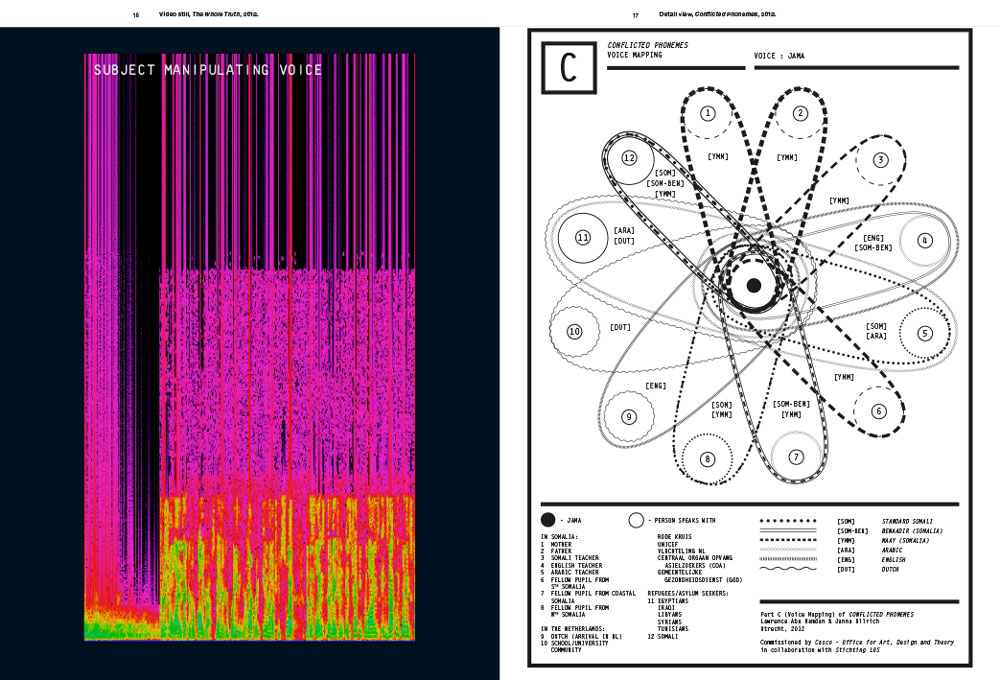
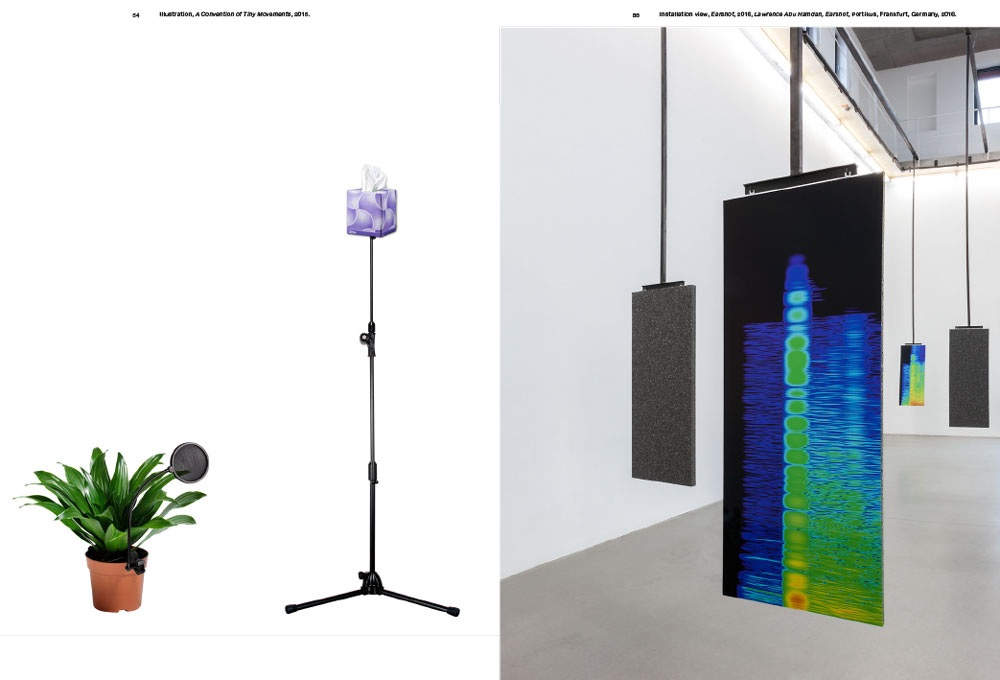
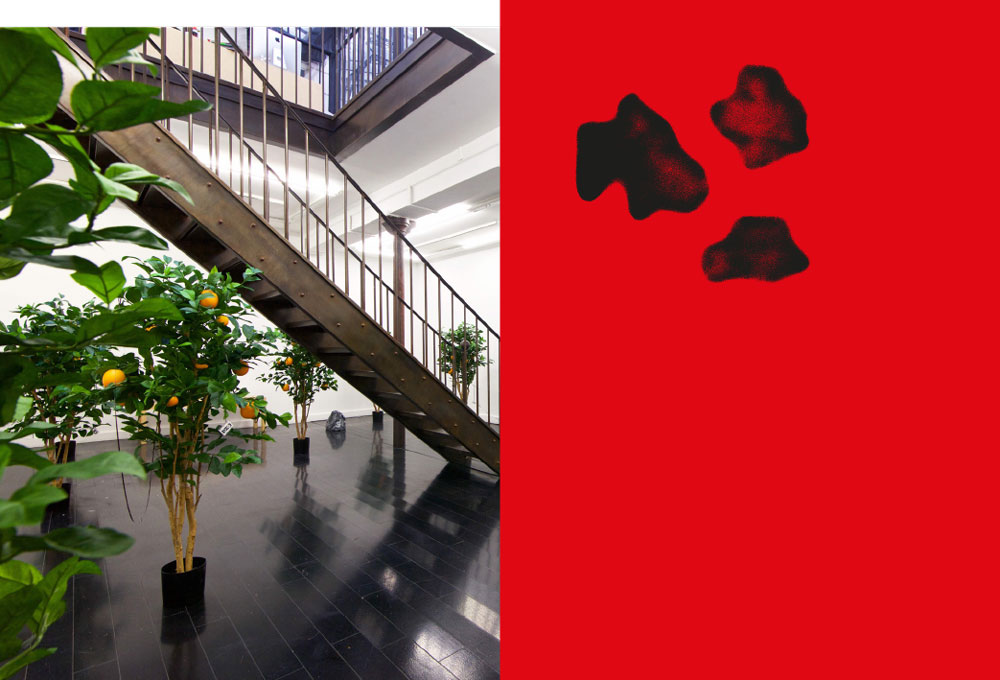
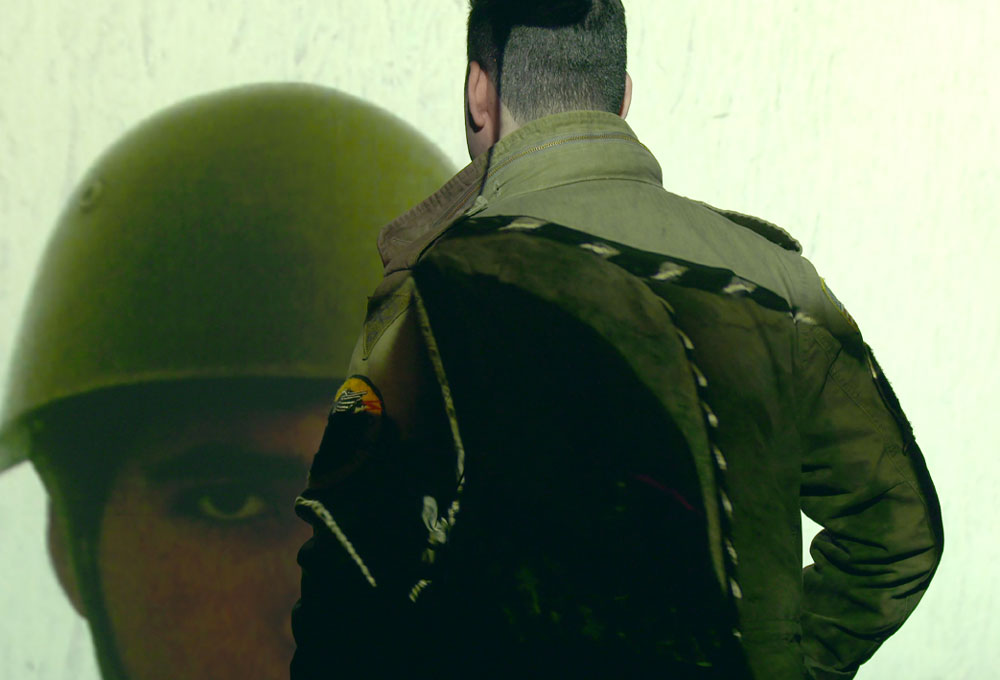
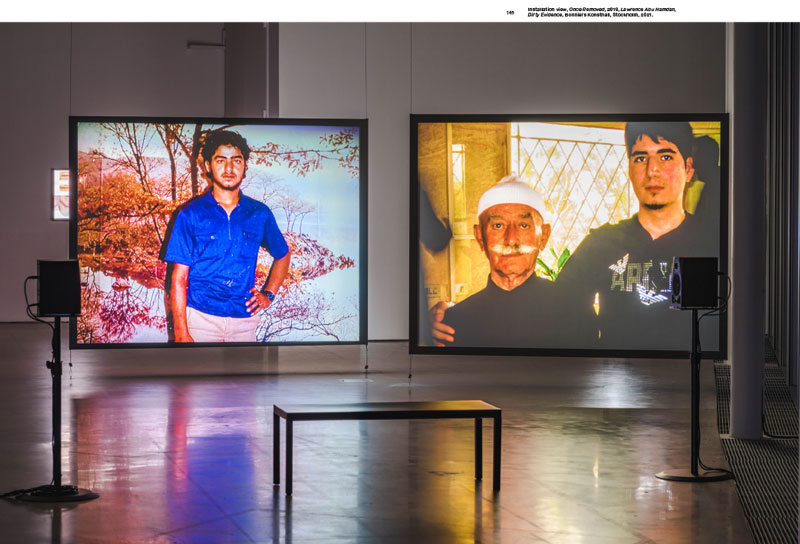
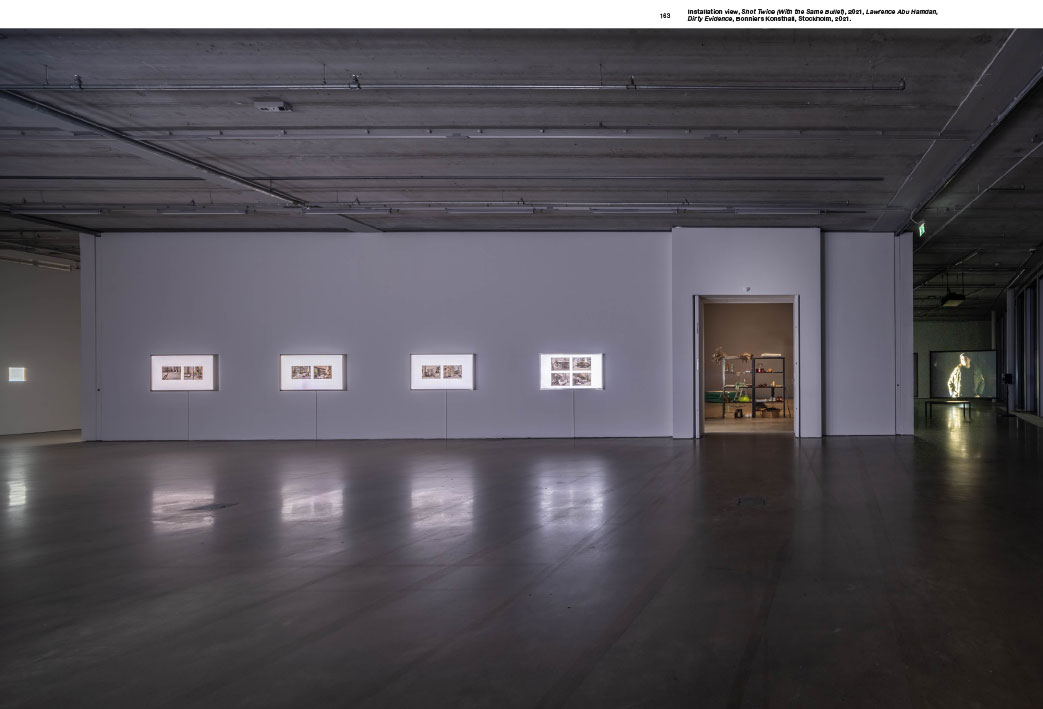
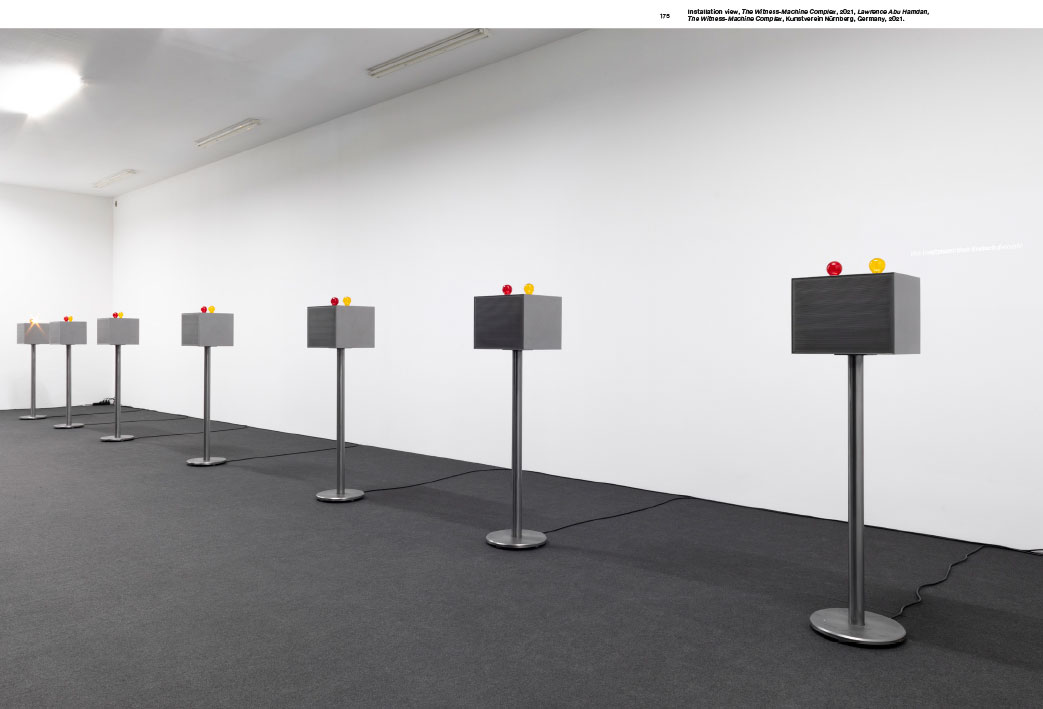
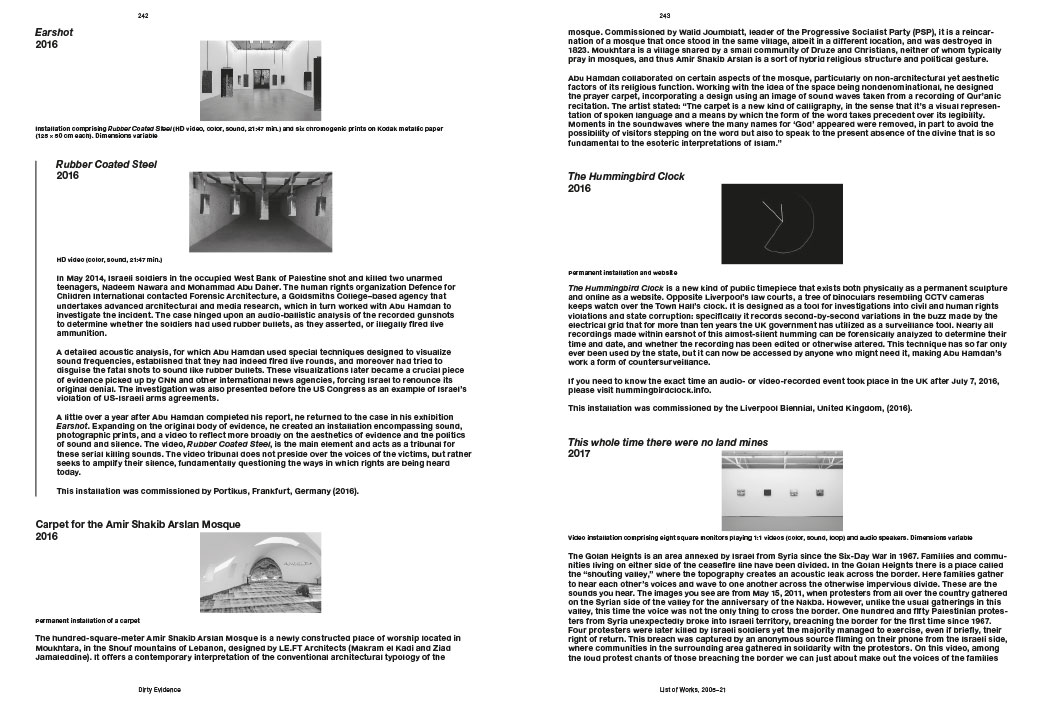
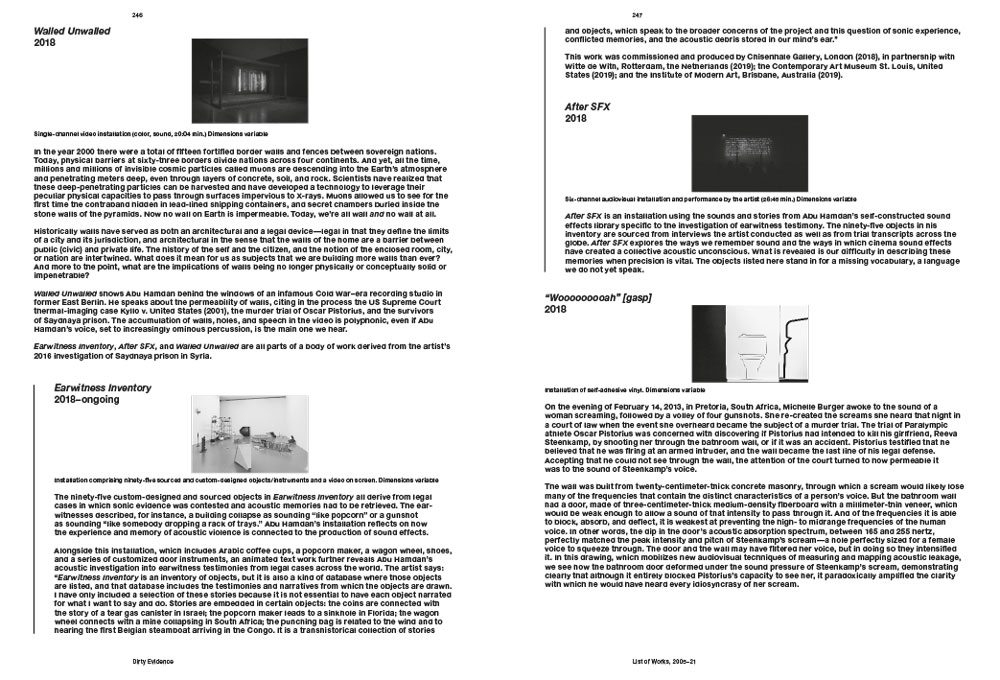
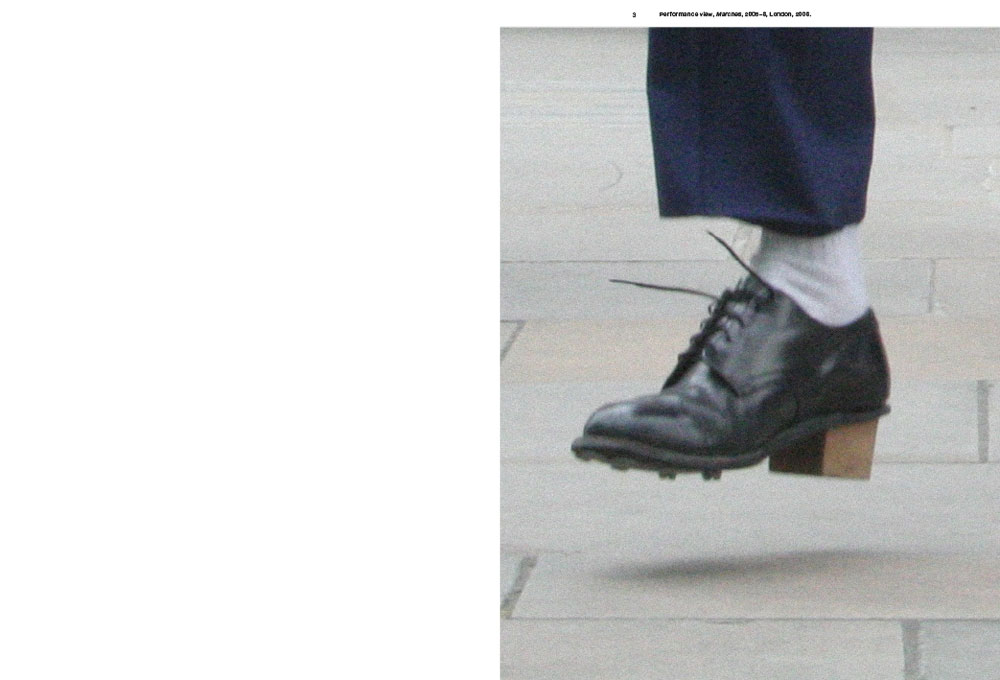
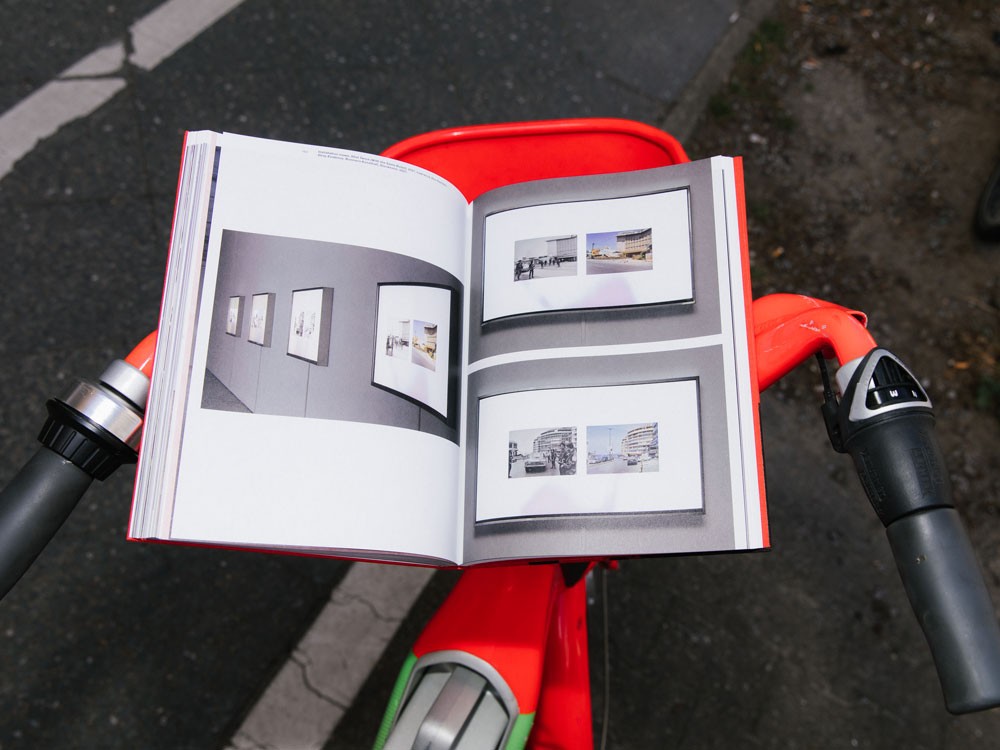
Richly illustrated, this book provides for the first time a visual overview of Lawrence Abu Hamdan’s works of more than a decade, and elaborates on a formal vocabulary characterized by the aesthetics of sound and language. Published on the occasion of his exhibition at Bonniers Konsthall in Stockholm, a group of authors have been invited to engage with individual works and their underlying concepts. Abu Hamdan recognizes the space for art as a site where attention can be drawn to real socio-political conditions in order to challenge the structures behind them. The artist can therefore push at the boundaries of what constitutes testimony. The title “Dirty Evidence” comes from Abu Hamdan’s definition of evidence in which a truth value is derived from its very inadmissibility before the law. It is precisely the evidence’s figurative dirt and dirtiness that works toward the production of truth.