Over the last ten years, Raphael Hefti has created an astonishingly body of work consisting of sculptures and installations, performance and “art-in-public-spaces.” The first comprehensive monograph is published on the occasion of his major exhibition at Kunsthalle Basel.
Between 1998 and 1999, the London-based art collective BANK operated the Fax-Bak Service. The group’s members proof-read and copy-edited more than 300 press releases by galleries. The publication is the most comprehensive record of this notorious project.
SOLD OUT
Sold Out
Listen
On how The BANK Fax-Bak Service started and how it came to be a book
In the Villa Santo Sospir, Jean Cocteau conceived his pictorial work through accumulation, inspired by Greek mythology and the Mediterranean landscape. Architecture permeates the subjects of Mauro Restiffe from a viewpoint that amplifies and reverberates the simple historical record.
Oh mio cagnetto, is the artist’s first book of writings, conceived as an artwork. It is a collection of 81 little poems that revolve around the missed and mourned figure of a puppy. It intentionally plays on the ambiguity of its nature, as both a book distributed in conventional ways and an art object.
When she started writing the Corona Tales, Chus Martínez had been weighing how people and the media were addressing the outbreak of the virus as an unprecedented disaster. One possible contribution, as curator and writer, would be to write a short story a day…
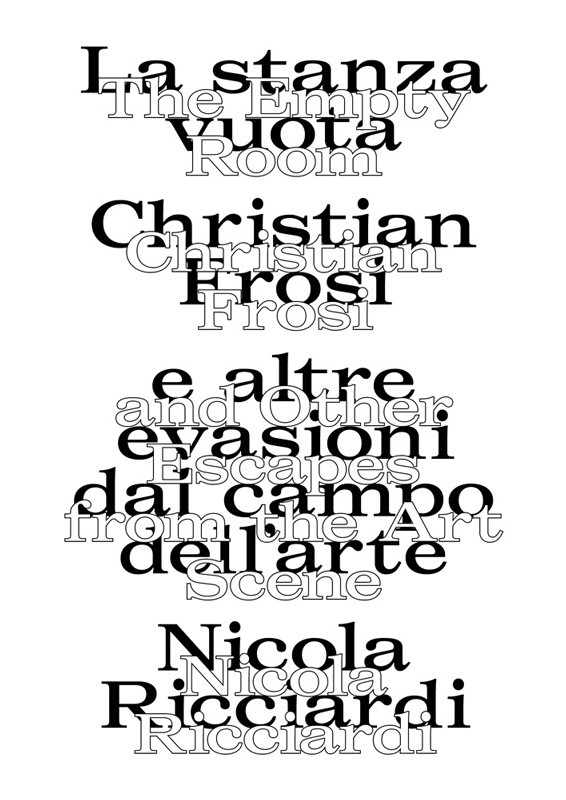
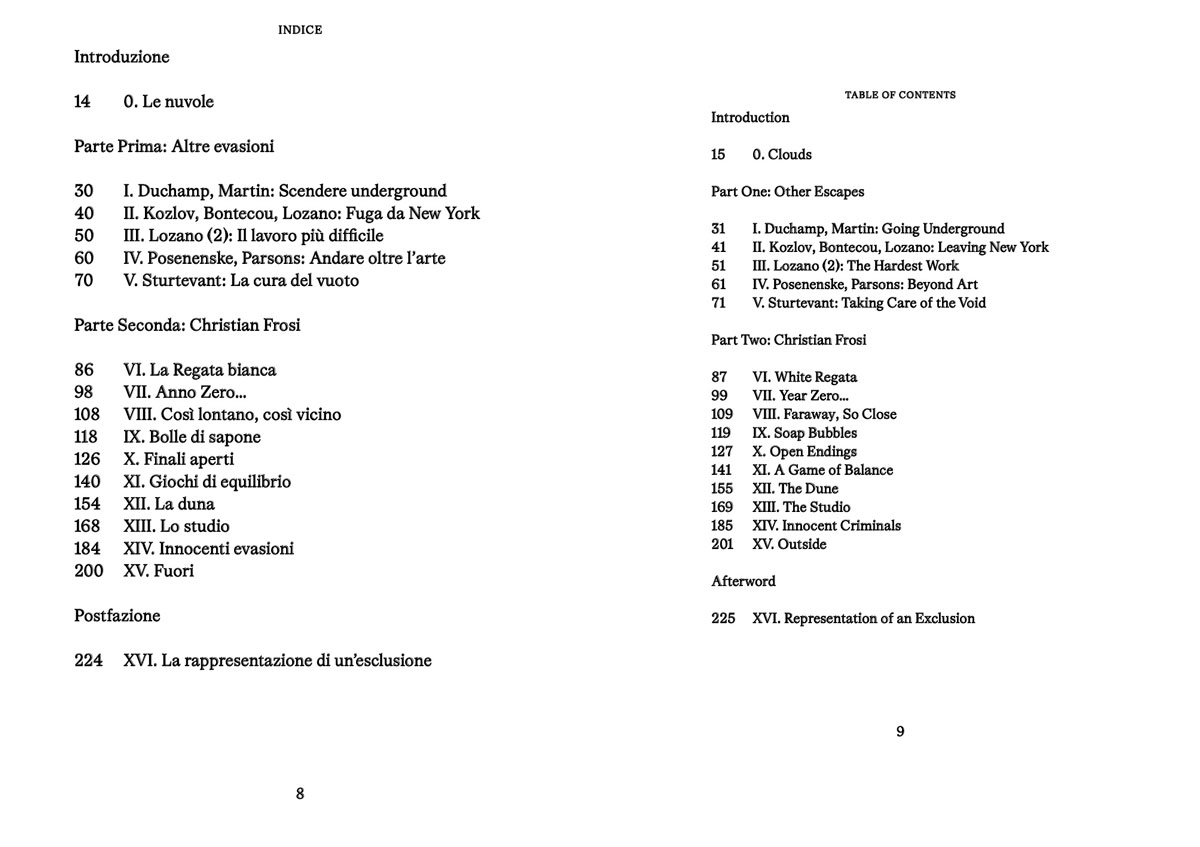
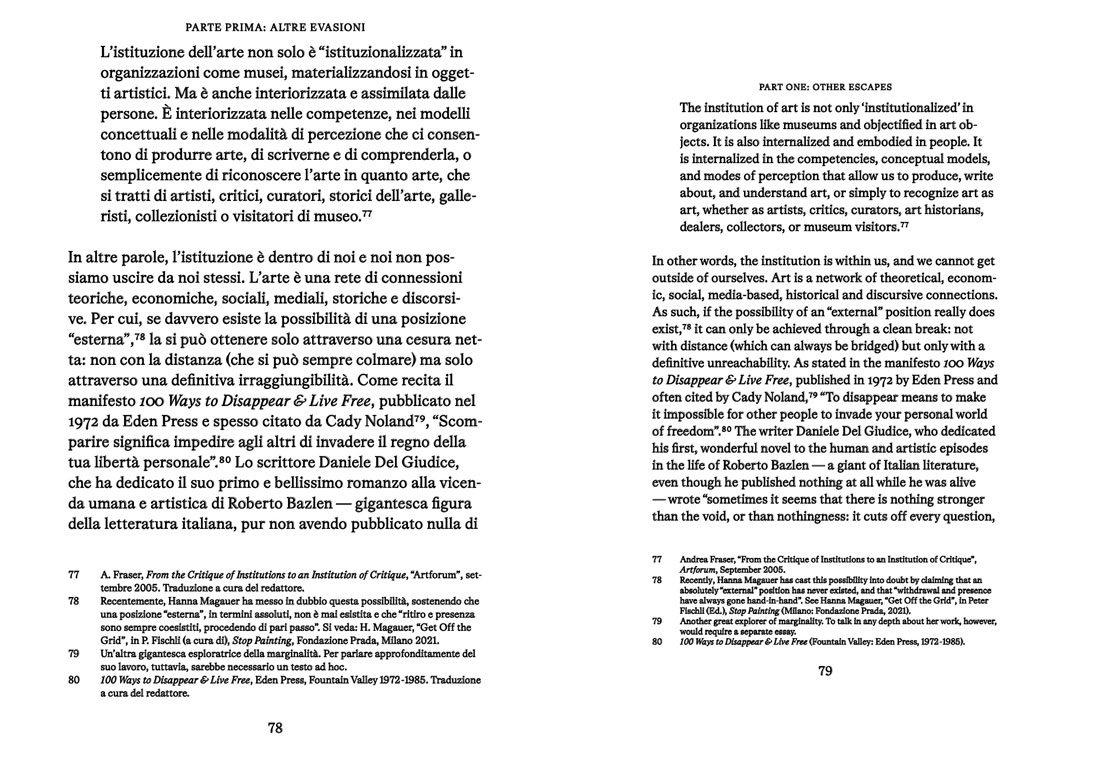
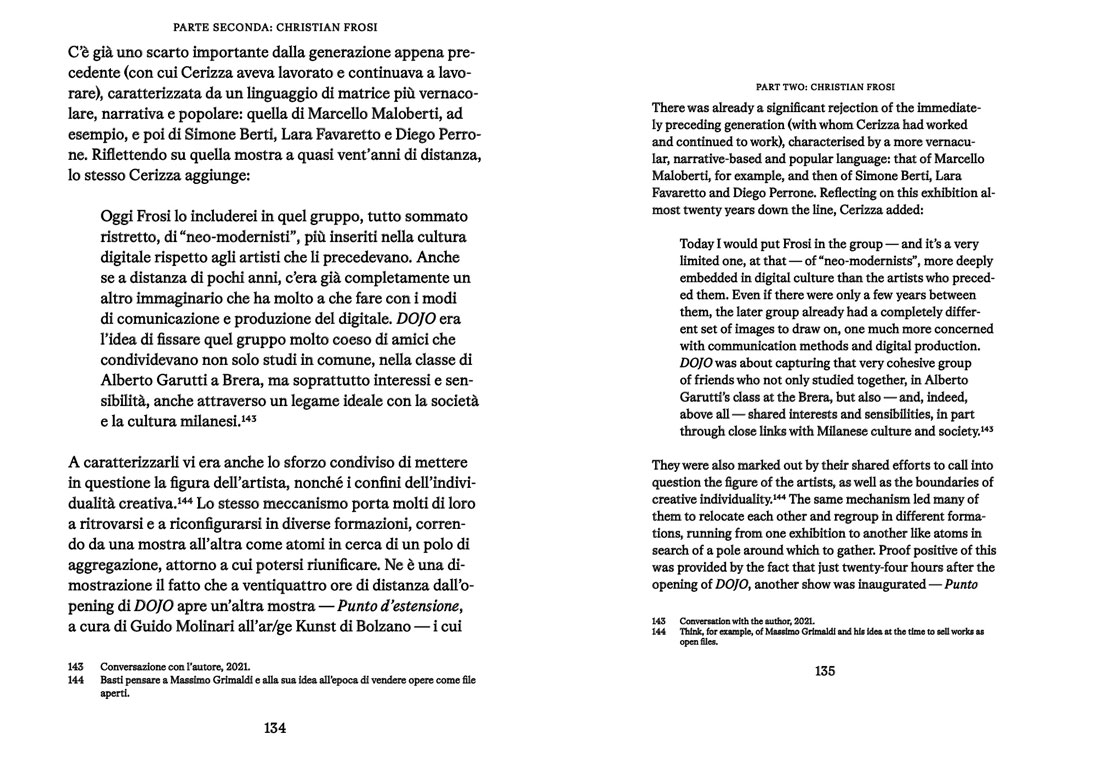
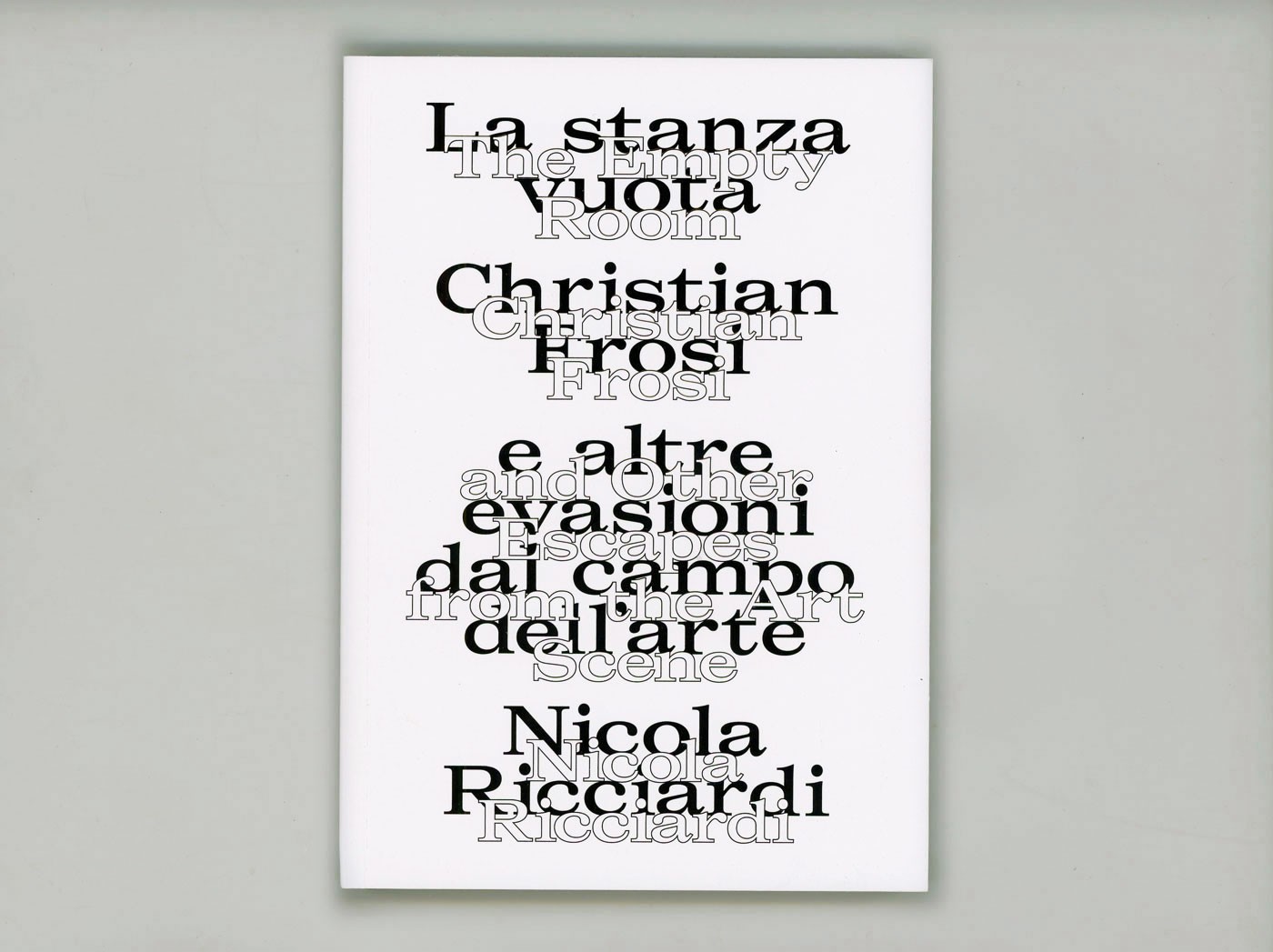
The Empty Room Christian Frosi and Other Escapes from the Art Scene
Edited by Nicola Ricciardi
Design by Lorenzo Mason Studio
2022, English / Italian, softcover, 240 pages, 17 x 24 cm
ISBN 979-12-80579-28-7
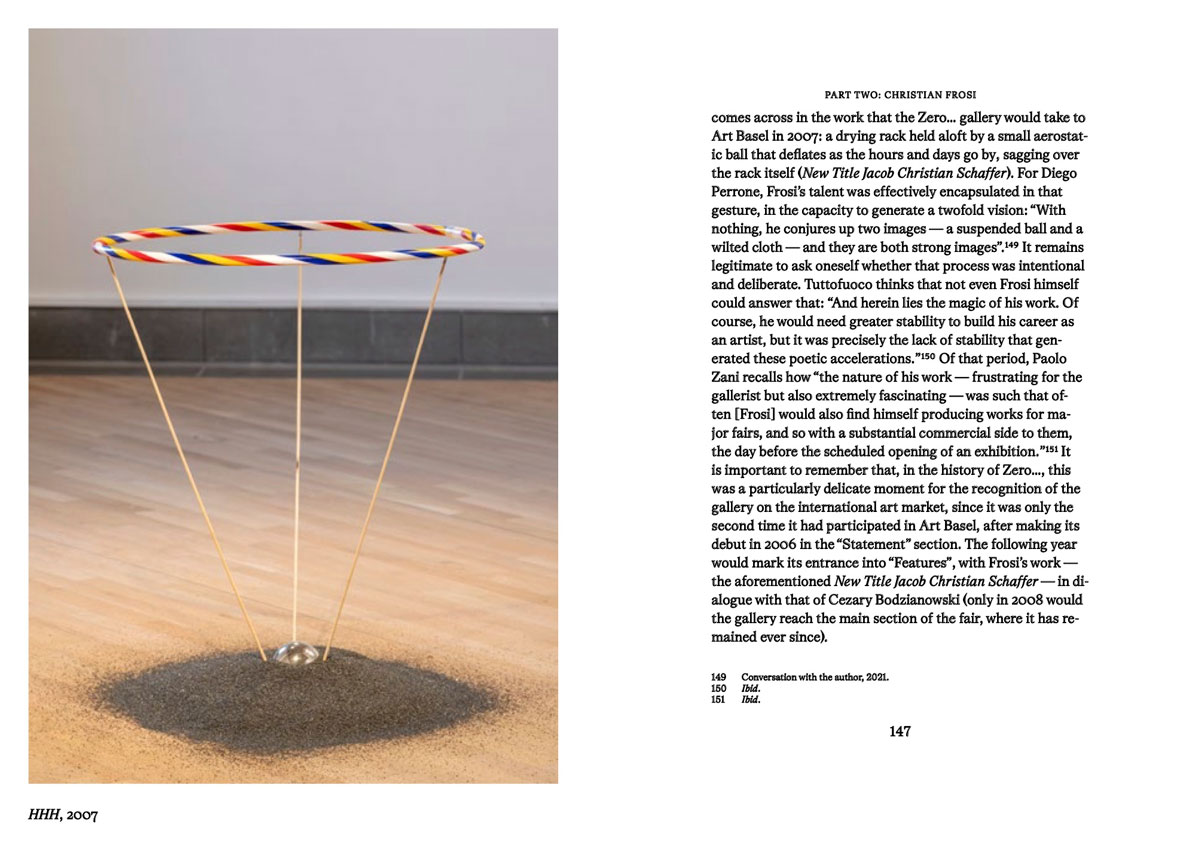
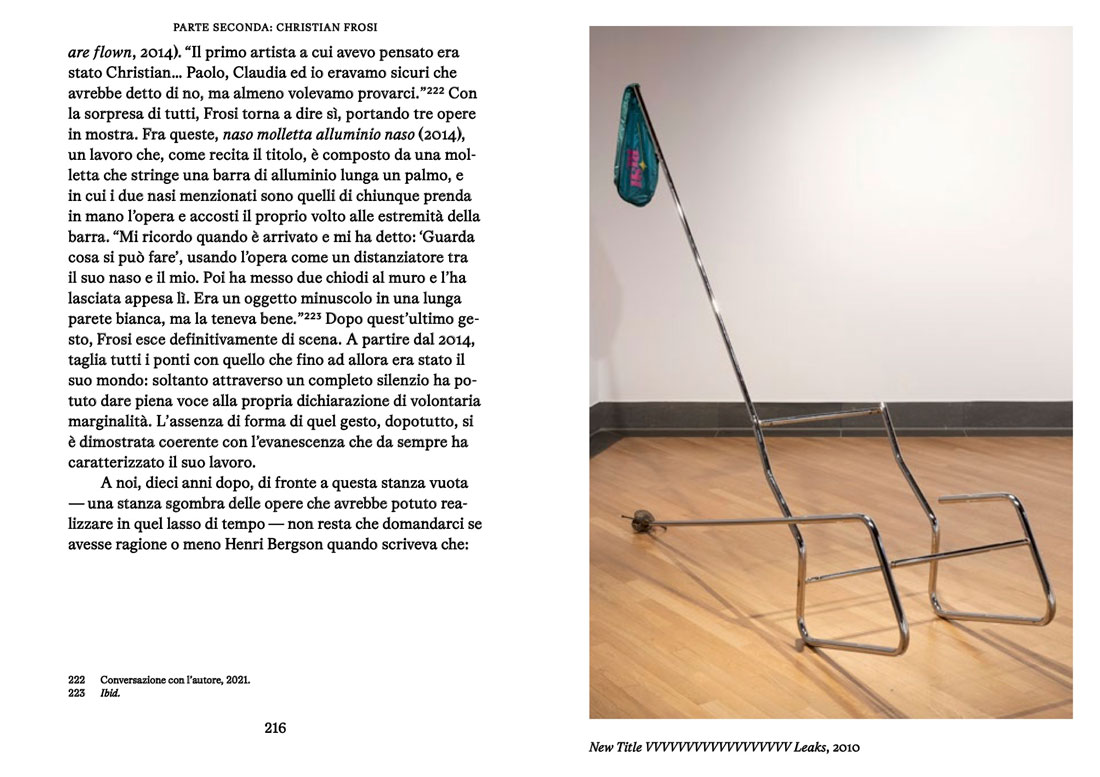
Christian Frosi (Milan, 1973) was long considered one of the most inspiring and promising Italian artists debuting in the early 2000s. That is until just over ten years into his career, when he decided to make himself unreachable and remove himself from art history, its customs and figures.
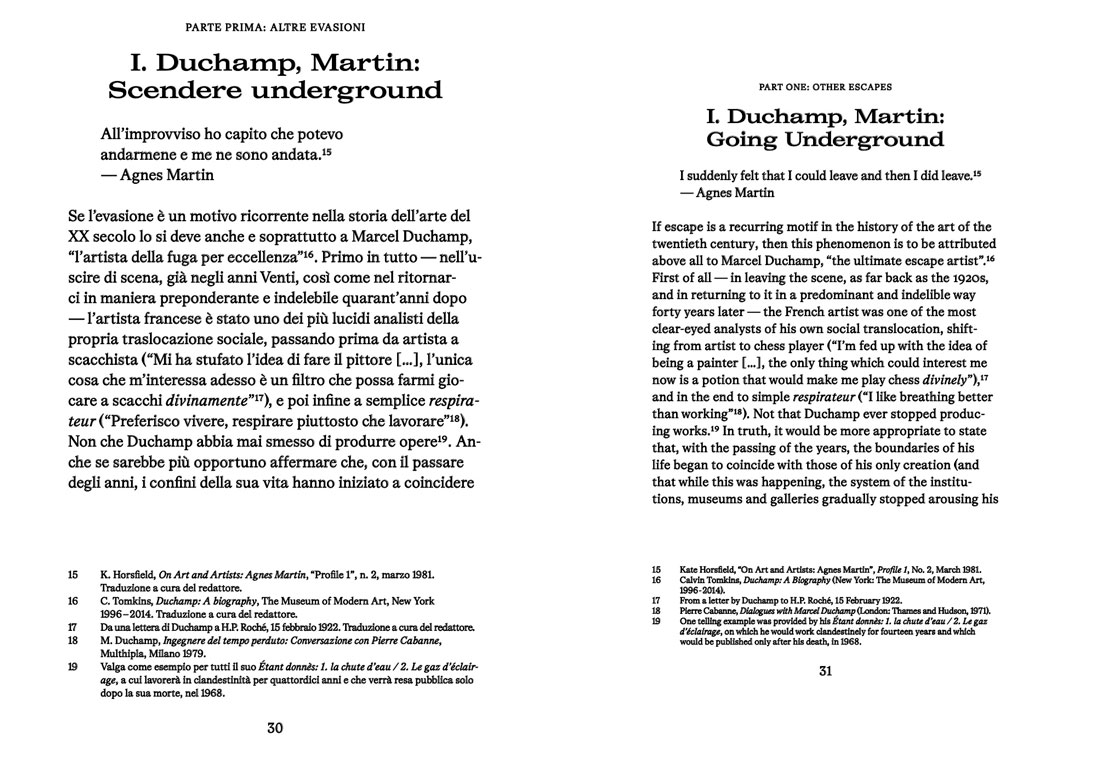
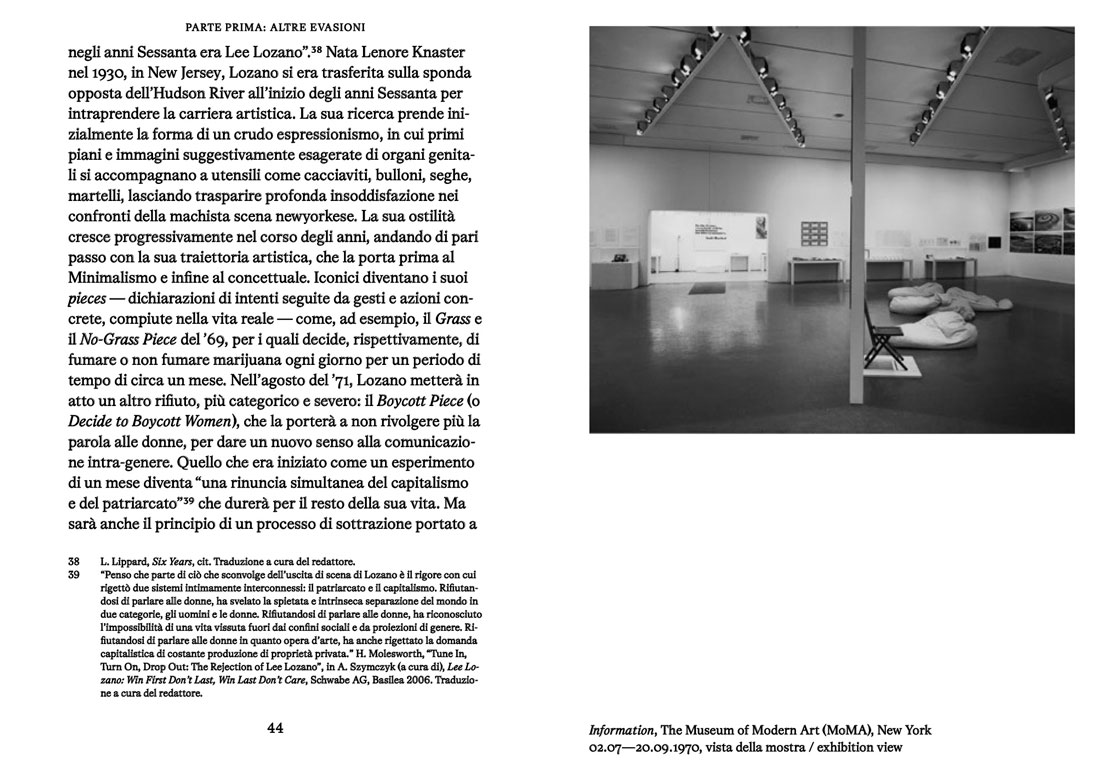
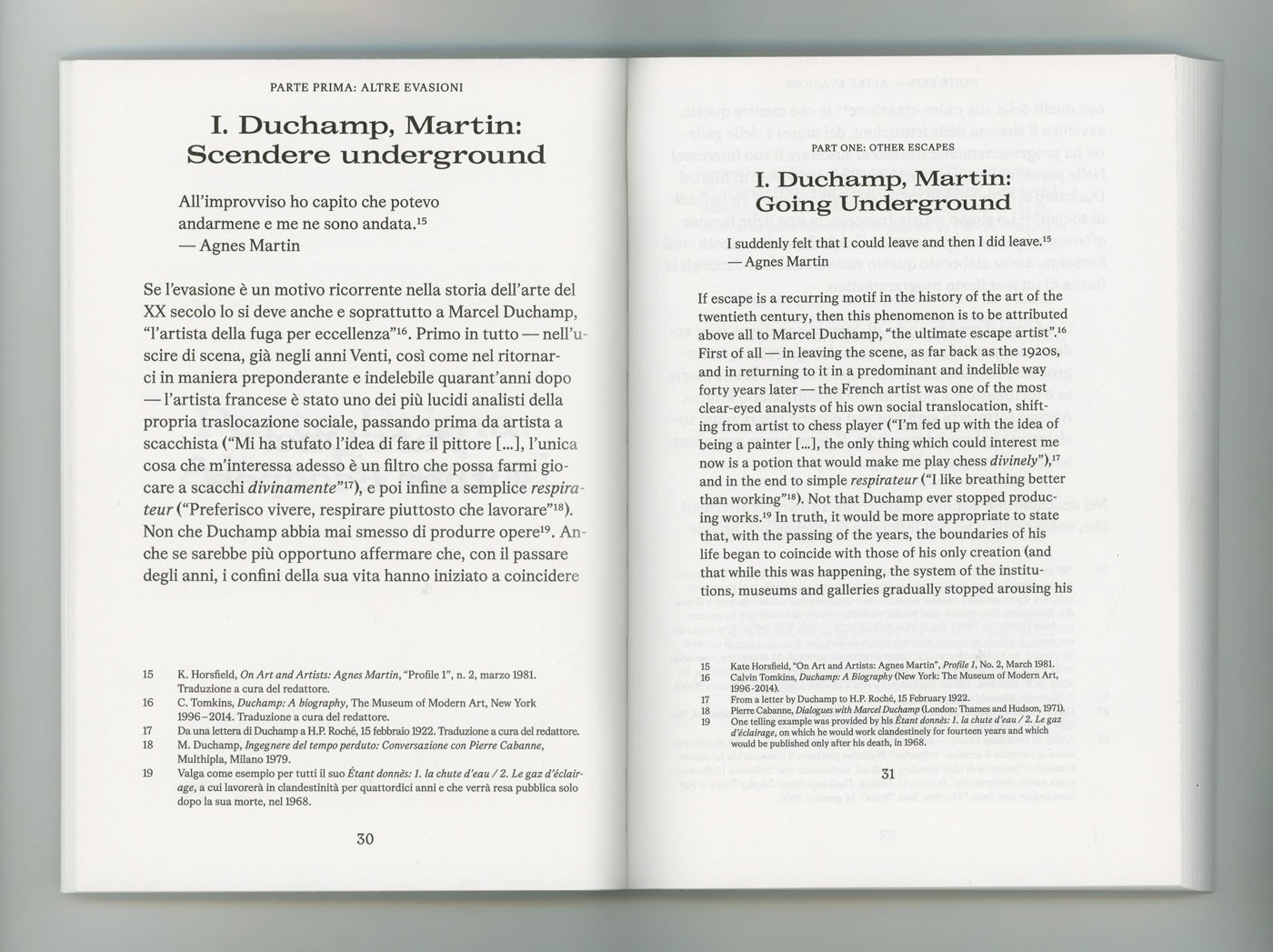
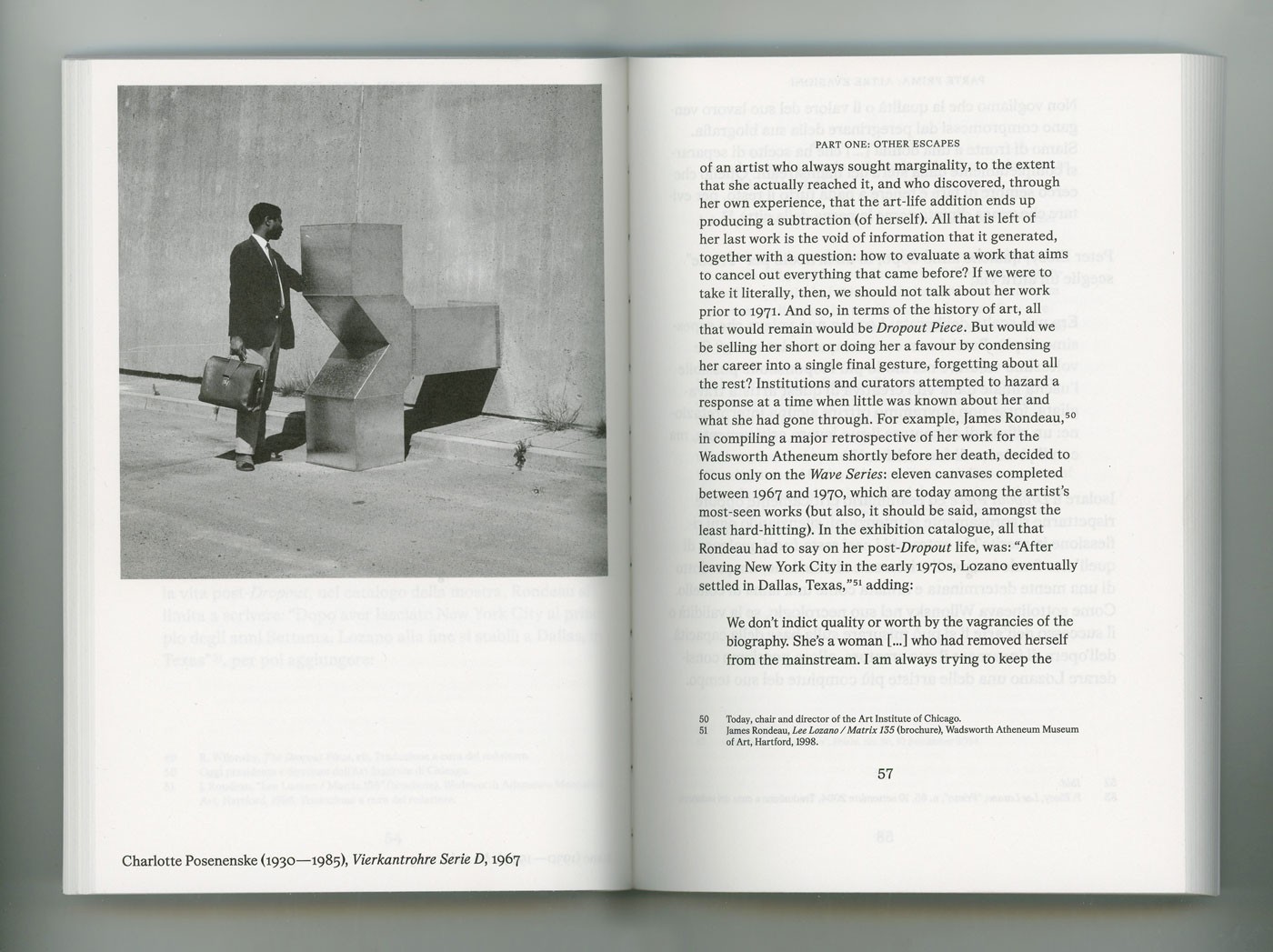
This choice brings him abstractly close to Marcel Duchamp, Agnes Martin, Lee Lozano, Charlotte Posenenske and the many other artists before him who decided of their own volition to stop producing art and participating in the art world (sometimes for a few years, sometimes forever). This publication speaks of all of them, with a twofold purpose: on one hand to write the history of Christian Frosi’s works and exhibitions — for the first time in an organized and timely manner — and on the other, to relativize the pages left blank through the stories of other “dropout artists,” each with their own particular destiny yet united by a common desire to escape.
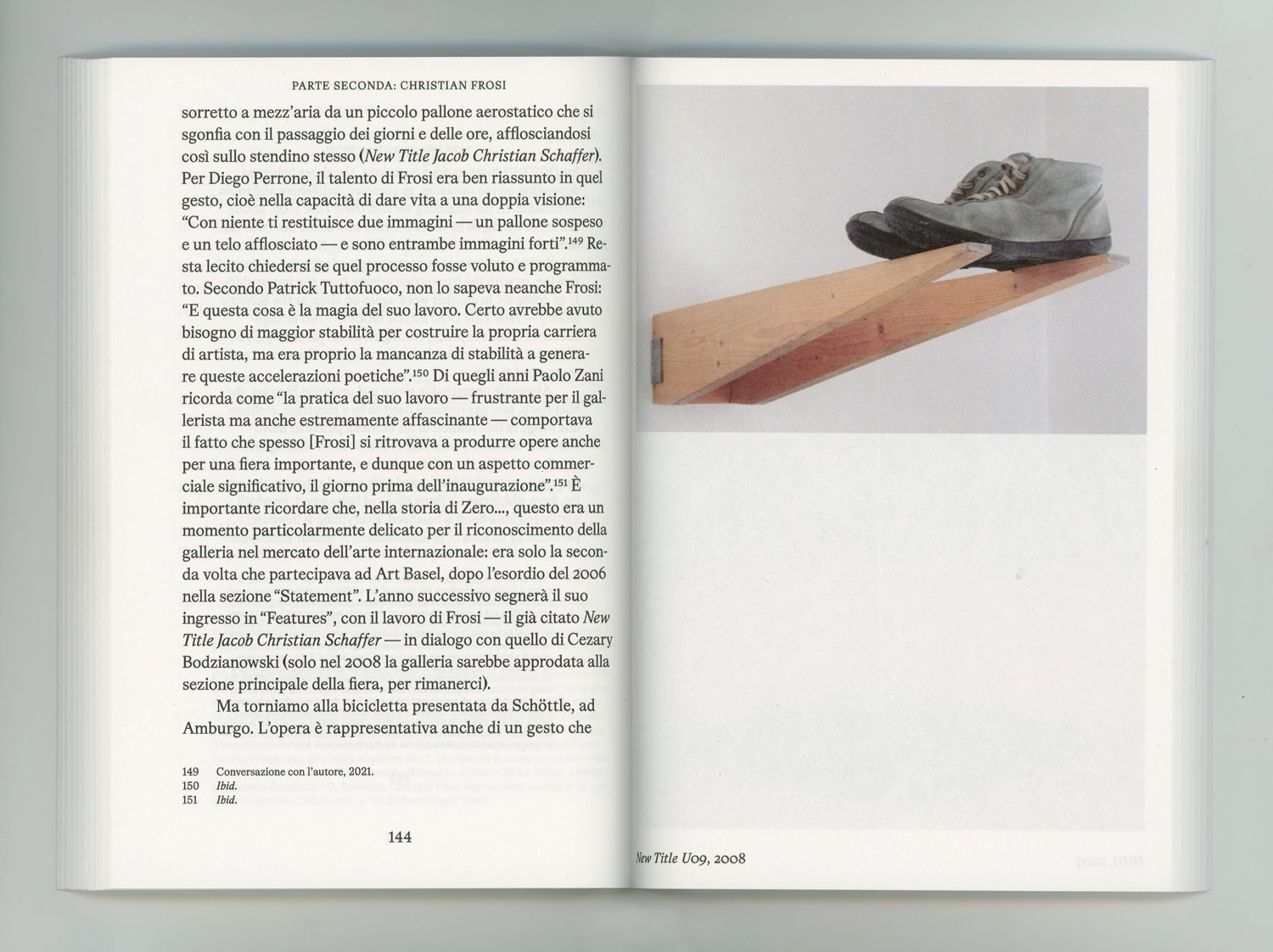
The book is published in conjunction with the exhibition La Stanza Vuota [The Empty Room], curated by Nicola Riccardi and staged at GAMeC in Bergamo. This first-ever retrospective of Christian Frosi’s oeuvre featured more than thirty works embodying precariousness, transience and evanescence — constant elements in his enigmatic, transitory output.